

Executive Summary:
Israel Aerospace Industries has introduced the DIAMOND distributed naval warfare system designed to improve frigate combat flexibility, survivability, and weapon integration.
The system decentralizes combat management functions across naval platforms, allowing warships to maintain operational capability even during electronic or kinetic attacks.
The unveiling reflects a broader shift toward distributed maritime warfare as naval forces face increasingly complex missile and drone threats.
Israel Aerospace Industries Introduces DIAMOND Naval Warfare System
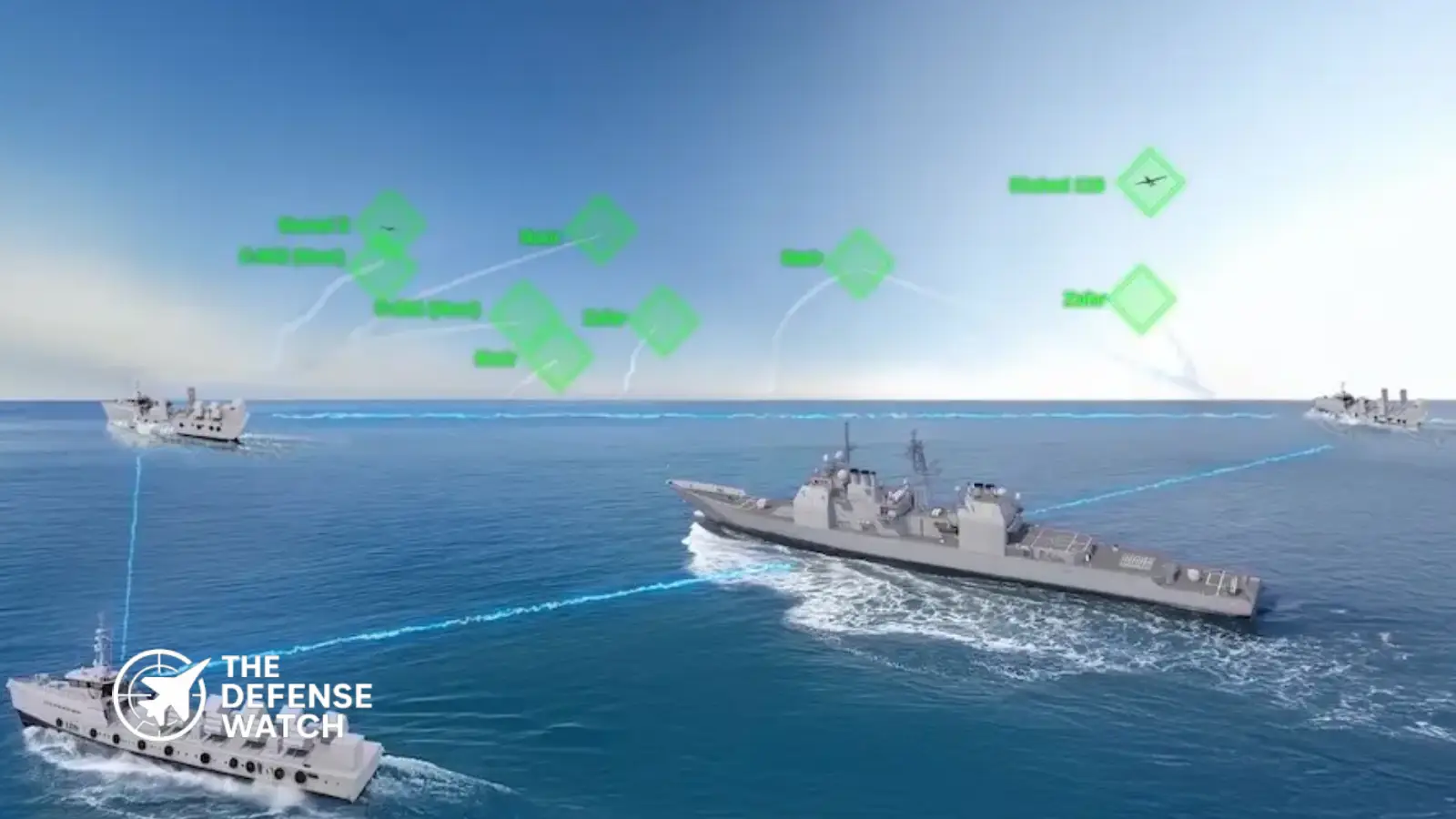
The DIAMOND naval warfare system unveiled by Israel Aerospace Industries is designed to reshape how modern frigates manage combat operations in contested maritime environments.
According to the company, DIAMOND uses a distributed architecture that disperses critical combat functions across multiple nodes rather than relying on a centralized combat management structure. The approach is intended to improve operational resilience if portions of a vessel’s combat system are damaged or electronically disrupted.
The unveiling comes as naval forces worldwide adapt to growing threats from anti ship missiles, unmanned systems, electronic warfare, and long range precision weapons. Distributed combat systems are increasingly viewed as essential for maintaining survivability in high intensity naval warfare.
The DIAMOND system can reportedly integrate sensors, interceptors, command systems, and effectors into a unified operational framework while enabling greater flexibility for future upgrades.
Focus On Distributed Naval Warfare
The DIAMOND naval warfare system reflects a wider strategic trend toward distributed maritime operations among NATO and regional naval powers.
Traditional warship combat systems often rely heavily on centralized command nodes. While highly capable, those architectures can create vulnerabilities if adversaries successfully target command infrastructure through missile strikes, cyber attacks, or electronic warfare.
DIAMOND appears designed to reduce that risk by decentralizing key combat management processes. In practice, this could allow sections of a frigate to continue operating independently if communications or central systems are degraded.
The concept mirrors broader defense industry efforts focused on resilient command and control systems. Similar approaches are being explored across U.S., European, and Indo Pacific naval modernization programs as fleets prepare for multi domain warfare environments.
For modern frigates operating in crowded and heavily contested waters, maintaining continuous combat functionality has become a critical operational requirement.
Expanding Frigate Firepower And Flexibility
A central feature of the DIAMOND naval warfare system is its emphasis on scalable weapon integration.
According to available information, the architecture is designed to support multiple weapon systems and sensor packages simultaneously. This could allow navies to configure ships for specific missions ranging from air defense and anti submarine warfare to maritime interdiction and drone defense.
The modular design may also simplify future modernization efforts by enabling rapid integration of emerging technologies without requiring a complete redesign of the combat management system.
That flexibility is increasingly important as naval forces seek to counter evolving threats such as swarm drones, hypersonic missiles, and autonomous surface vessels.
The DIAMOND naval warfare system could also support distributed engagement concepts in which several ships share targeting and sensor data across a networked battlespace. Such capabilities are becoming central to modern naval doctrine, particularly in regions facing high saturation missile threats.
Strategic Importance For Regional Naval Security
The unveiling of the DIAMOND system highlights Israel’s continued investment in advanced maritime defense technologies amid rising regional tensions in the Eastern Mediterranean and Red Sea.
Naval threats in the region have expanded significantly in recent years due to the proliferation of long range anti ship missiles, loitering munitions, and unmanned maritime systems operated by state and non state actors.
Israel has increasingly prioritized maritime security to protect offshore energy infrastructure, commercial shipping lanes, and strategic naval assets.
The introduction of DIAMOND also reinforces the growing role of Israeli defense firms in the global naval modernization market. Israeli companies have become major suppliers of radar systems, missile defense technologies, electronic warfare platforms, and unmanned systems for international customers.
From a broader strategic perspective, distributed naval warfare architectures are expected to play a larger role in future fleet design as countries seek survivable and adaptable maritime capabilities.
Industry Trend Toward Resilient Naval Combat Systems
The DIAMOND naval warfare system enters a competitive global market where defense firms are racing to develop next generation naval combat architectures.
Defense companies in the United States and Europe are also pursuing distributed mission systems capable of operating in degraded communications environments. Lessons from recent conflicts have accelerated demand for survivable command and control networks that can continue functioning during electronic attack or precision strikes.
Modern naval operations increasingly depend on real time data sharing between ships, aircraft, drones, and shore based systems. As a result, resilient networked warfare capabilities are becoming as important as kinetic weapons themselves.
For frigate operators, distributed combat systems offer an opportunity to extend platform relevance without dramatically increasing ship size or crew requirements.
The DIAMOND naval warfare system therefore represents more than a single product launch. It reflects an ongoing transformation in naval warfare doctrine centered on resilience, flexibility, and networked combat operations.
