
- Home
- Defense Systems
- Compare
- J-10C vs JF-17 Thunder: Which Fighter Is More Capable?
J-10C vs JF-17 Thunder: Which Fighter Is More Capable?
The Chengdu J-10C, exported to Pakistan as the J-10CE, and the Pakistan-China-developed JF-17 Thunder are two important components of the Pakistan Air Force’s combat aircraft fleet. Both can perform multirole missions and use modern air-to-air weapons, but they were designed around different priorities.
The J-10CE is a larger, more powerful single-engine fighter intended to provide greater performance and capacity in demanding air combat missions. The JF-17 is a lighter, jointly developed fighter designed to give Pakistan a domestically supported aircraft that can be produced, upgraded, and operated at comparatively manageable cost.
The difference is not simply that one is advanced and the other is basic. The JF-17 Block III incorporates an active electronically scanned array radar and can carry the PL-15 beyond-visual-range air-to-air missile, bringing important modern combat capabilities to a smaller airframe. The J-10CE nevertheless retains advantages associated with its larger design and higher overall performance potential.
The central question is how those differences affect operational effectiveness, acquisition priorities, weapons capacity, sustainment, and Pakistan’s ability to deploy fighters in sufficient numbers.
Tactical and Operational Overview
J-10CE: A higher-performance fighter for demanding missions
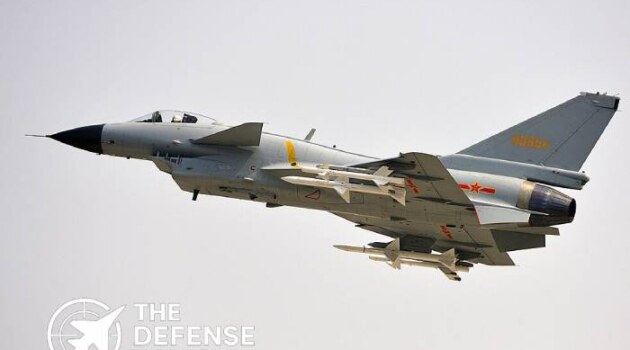
The J-10C is a Chinese-designed multirole fighter, while the J-10CE is the export variant operated by Pakistan. Its canard-delta configuration, single-engine arrangement, and larger airframe distinguish it from the JF-17.
The J-10CE is intended to support air superiority, interception, and multirole operations. Its larger design offers room for a substantial fuel load, sensors, and weapons, although actual mission range and payload depend on the configuration and flight profile.
The aircraft’s integration with modern Chinese-origin air-to-air weapons is especially relevant to beyond-visual-range combat. However, the exact performance of its radar, electronic warfare suite, and weapons under operational conditions cannot be established from public specifications alone.
Pakistan’s acquisition added a more capable Chinese-origin fighter to a fleet that had relied on a mixture of older aircraft, F-16s, and the JF-17 family.
JF-17 Thunder: A lighter fighter built around affordability and local support
The JF-17 Thunder was developed through cooperation between Pakistan Aeronautical Complex and China’s Chengdu Aircraft Corporation. Its primary purpose is to provide a modern multirole fighter that Pakistan can manufacture and sustain with meaningful domestic industrial participation.
The aircraft’s smaller size and lighter design make it suitable for a force structure that requires substantial fighter numbers without depending entirely on larger or more expensive foreign aircraft.
Block III is particularly important because it introduces an AESA radar, upgraded avionics, and compatibility with newer weapons. The Pakistan Air Force has publicly displayed a JF-17 Block III carrying four PL-15 beyond-visual-range missiles, providing visible evidence of that integration.
The JF-17 therefore cannot be treated as merely an older or less capable alternative. Its Block III configuration gives Pakistan another platform for modern air combat, although the aircraft’s smaller size still imposes physical constraints.
Key Takeaways
- The J-10CE is the larger fighter, with greater overall performance potential and more room for fuel and equipment.
- The JF-17 Block III combines a lighter airframe with an AESA radar and modern air-to-air weapons.
- Both aircraft can employ the PL-15 family, reducing the extent to which long-range missile capability separates them.
- The JF-17’s domestic production and support arrangements are important to Pakistan’s long-term force structure.
- Actual combat effectiveness depends on training, radar performance, electronic warfare, missile variants, targeting information, and support from the wider air force.
These differences make the aircraft complementary rather than interchangeable in every mission.
Technical Specifications: J-10CE vs JF-17 Block III
The following table compares the Pakistani J-10CE with the JF-17 Block III. Specifications vary by configuration, and publicly available information does not establish every detail of the aircraft’s operational systems.
| Specification | J-10CE | JF-17 Block III |
|---|---|---|
| Country of design | China | Pakistan and China |
| Primary role | Multirole fighter | Light multirole fighter |
| Configuration | Single-engine, canard-delta | Single-engine, conventional wing and tail |
| Engine | One WS-10-series turbofan, exact export configuration not fully established publicly | One RD-93-family turbofan on established production aircraft; precise configuration should be checked by variant |
| Maximum speed | Commonly reported around Mach 1.8 to 2.0; precise operational conditions matter | Commonly reported around Mach 1.6 |
| Radar | AESA radar; exact export performance not publicly established | KLJ-7A AESA radar, according to specialist reporting |
| Beyond-visual-range weapons | PL-15E export missile | PL-15 family integration publicly demonstrated |
| Short-range air-to-air weapons | PL-10-family missile integration reported | PL-10-family missile integration reported |
| Maximum takeoff weight | Approximately 19,000 to 20,000 kg, depending on source and configuration | Approximately 13,500 kg in published specifications |
| Service ceiling | Exact operational figure depends on configuration and source | Approximately 16,500 m in published specifications |
| Crew | One | One in the single-seat Block III |
| Unit cost | No sufficiently comparable, verified current flyaway price | No sufficiently comparable, verified current flyaway price |
| Operational status | In service with the Pakistan Air Force | In service with the Pakistan Air Force |
Specification note: Some performance figures in secondary sources refer to the Chinese J-10C rather than the export J-10CE, or to earlier JF-17 variants rather than Block III. The speed and weight figures above should therefore be treated as indicative published values, not a complete, officially verified comparison of the two aircraft in identical configurations. Engine designations, radar detection ranges, combat radii, and exact weapons capacities should not be treated as settled without variant-specific documentation.
1. Airframe Design, Performance and Survivability
The most immediately apparent difference is size. The J-10CE has a larger airframe, canard foreplanes, and a delta wing. The JF-17 uses a more compact layout with a conventional tail arrangement.
The J-10CE’s design gives it greater potential for fuel and equipment capacity. Its aerodynamic configuration and propulsion also support a higher published maximum-speed envelope. These characteristics can matter during interception, high-energy maneuvering, and missions that require a combination of fuel and weapons.
However, maximum speed alone does not establish which aircraft performs better in combat. Acceleration, sustained turn performance, altitude, fuel state, external stores, and missile employment all influence the result.
The JF-17 Block III’s smaller airframe supports its role as a lighter fighter, but it also limits how much fuel, equipment, and weapon mass it can accommodate compared with a larger aircraft.
Neither aircraft is a purpose-built stealth fighter. The JF-17 Block III has been reported to incorporate greater use of composite materials and measures intended to reduce radar signature relative to earlier versions. That does not make it a stealth aircraft, and a reliable numerical radar cross-section comparison with the J-10CE is not publicly available.
The practical conclusion is that the J-10CE has more physical capacity for demanding missions, while the JF-17’s smaller design supports a different balance between performance, cost, and fleet size.
2. Radar, Sensors and Situational Awareness
Modern fighter combat depends on more than the aircraft’s maximum speed or radar’s advertised range. A pilot needs to detect, identify, track, and engage targets while managing interference and coordinating with other aircraft.
J-10CE radar and avionics
The J-10CE is equipped with an AESA radar according to open-source reporting. AESA technology uses electronically controlled antenna elements to direct radar beams without mechanically moving the entire antenna.
Depending on the design and implementation, AESA radars can support rapid beam steering, multiple tracking functions, and improved flexibility under electronic interference. The actual advantage depends on the radar’s hardware, software, processing, cooling, and electronic protection.
Detailed performance figures for the J-10CE’s export radar, including detection ranges against targets of specified radar cross-sections, are not reliably established in public sources. It would therefore be misleading to assign it a precise detection advantage over the JF-17 Block III.
JF-17 Block III radar
The JF-17 Block III is associated with the KLJ-7A AESA radar. Specialist reporting identifies improvements in tracking and electronic protection compared with the earlier JF-17 Block II radar.
That upgrade is significant because it brings modern radar technology to a lighter aircraft. It also reduces the technological gap between the JF-17 and larger fighters in the same air force.
However, the presence of AESA radar in both aircraft does not mean their performance is identical. Antenna size, transmitter power, processing, software, cooling, and target characteristics can all affect radar performance. Publicly available evidence does not establish a definitive, like-for-like detection range comparison.
Why the supporting network matters
Both aircraft can benefit from airborne early warning, ground-based radar coverage, secure communications, and off-board targeting information. These systems can help fighters build a broader air picture and reduce reliance on their own radar alone.
Pakistan’s mixed fleet includes aircraft and supporting systems from several countries. The effectiveness of that network depends on data-link compatibility, command-and-control integration, training, and the ability to share useful targeting information in a contested electromagnetic environment.
A fighter with a nominally more powerful radar does not automatically win an engagement if its opponent receives better external targeting information or operates under more favorable conditions.
3. Weapons and Beyond-Visual-Range Combat
Weapons integration is one of the most important aspects of the J-10CE versus JF-17 Block III comparison.
PL-15 and PL-15E
The PL-15 is a Chinese beyond-visual-range air-to-air missile. The PL-15E is its export variant. Public reporting often discusses the two together, but their performance should not be assumed to be identical.
The J-10CE can employ the export missile family, while Pakistan’s air force has also publicly shown the JF-17 Block III carrying four PL-15 missiles. The same footage showed PL-10-family short-range missiles on the JF-17. This is useful evidence of integration, although it does not establish every aspect of the aircraft’s operational capability.
The ability to carry the same missile family is important because it gives both aircraft a common element in Pakistan’s air-to-air arsenal.
Nevertheless, a missile’s advertised maximum range is not the same as its effective engagement range. Actual performance depends on launch altitude, launch speed, target direction, target maneuvering, electronic countermeasures, and the missile’s remaining energy at interception.
A long-range missile also needs sufficiently accurate targeting information and an opportunity to engage. Radar performance, external sensors, communications, and tactics can be just as important as the weapon’s nominal range.
Weapons capacity and flexibility
The J-10CE’s larger airframe offers greater potential for carrying fuel and equipment alongside weapons. This can be useful when a mission requires a longer flight profile or a larger combination of stores.
The JF-17 Block III has demonstrated a configuration with four PL-15 missiles and additional short-range missiles. That is a meaningful air-to-air load, but one public configuration does not establish every possible operational loadout.
Both aircraft are multirole platforms, and their precise air-to-ground weapons options depend on integration, certification, and the configuration supplied to the operator. A detailed comparison should not assume that every weapon available to one variant is automatically available to the other.
The evidence supports a clear distinction: the J-10CE offers a larger platform for carrying mission equipment and fuel, while the JF-17 Block III can deliver modern beyond-visual-range capability in a lighter aircraft.
4. Range, Endurance and Mission Flexibility
Range figures require particular care because maximum ferry range, combat radius, and practical operational reach describe different things.
Ferry range generally assumes a transfer flight with a particular fuel and external-tank configuration. Combat radius accounts for flying to an operational area, performing a mission, and returning, with assumptions about fuel reserves and the mission profile.
Neither figure can be used interchangeably without explanation.
The J-10CE’s larger airframe provides greater potential fuel capacity than the JF-17. This can be useful in missions that require time on station, interception at distance, or carrying a substantial weapons load.
The JF-17’s smaller airframe can still support demanding missions, especially when operations take place within the coverage of ground-based radar and command networks. External fuel tanks can also change its range, although they affect drag and available weapon stations.
The actual advantage in a particular mission depends on fuel configuration, altitude, speed, payload, reserve requirements, and support from tankers or forward operating bases. Reliable, directly comparable combat-radius figures for both Pakistani variants under identical conditions are not publicly established.
For this reason, the J-10CE’s greater size should be treated as a meaningful design advantage, not proof that it will always have greater useful range in every configuration.
5. Electronic Warfare, Networking and Mission Integration
Electronic warfare can determine whether a fighter can maintain a radar track, protect its communications, recognize threats, and use its weapons effectively.
Both aircraft have modern avionics, but detailed technical information about their radar warning receivers, jamming systems, electronic support measures, and counter-countermeasures is limited in public sources.
It is therefore not possible to rank their complete electronic warfare suites confidently using available evidence.
The JF-17 Block III’s avionics modernization improves its ability to operate as a contemporary multirole fighter. The J-10CE’s larger platform and more advanced overall design provide room for substantial mission systems, but the specific operational advantage depends on the equipment fitted to the export aircraft.
Interoperability also matters. Shared Chinese-origin weapons and technology can help Pakistan simplify some aspects of training, weapons support, and mission planning across the two aircraft families.
However, common weapons do not guarantee identical interfaces, identical maintenance procedures, or fully interchangeable mission software. The level of integration must be established through technical documentation and operational practice.
The broader lesson is that combat capability belongs to the entire force, not just the individual aircraft. Training, mission planning, intelligence, maintenance, data links, and support aircraft influence how much capability either fighter can deliver.
6. Cost, Production and Sustainment
The JF-17’s main strategic attraction is its role as a jointly developed fighter with Pakistani industrial participation. Pakistan Aeronautical Complex supports the production and development effort, giving the country a greater role in the aircraft’s industrial base than it has with a fighter imported as a complete product.
That participation matters for long-term sustainment, local technical expertise, upgrades, and potential exports. It does not mean every component is domestically manufactured or that the program is independent of foreign suppliers.
The J-10CE is a Chinese-built export fighter. Acquiring it gives Pakistan access to a larger fighter design and its associated weapons and support ecosystem, but it also creates dependence on the supplier for aircraft-specific components, software support, and other contracted services.
A reliable price comparison is difficult. Published figures can refer to the airframe alone, an aircraft procurement package, weapons, spare parts, training, infrastructure, or long-term support. Comparing those figures without separating their contents can produce a misleading conclusion.
The JF-17 is generally positioned as the more economical fighter, but a rigorous comparison of lifetime costs would require consistent information about acquisition prices, fuel consumption, maintenance hours, engine overhaul, availability, and service life. Those comparable figures are not publicly available in sufficient detail.
For Pakistan, the strategic choice is therefore not simply between two aircraft prices. It concerns the balance between higher individual aircraft capability, affordable fleet numbers, local industrial participation, and long-term operational readiness.
Advantages and Limitations
J-10CE
Advantages
- Larger airframe with greater potential fuel and equipment capacity.
- Designed for demanding multirole and air-to-air missions.
- AESA radar and integration with modern Chinese air-to-air weapons.
- Greater published maximum-speed performance than the JF-17.
- Adds a higher-performance aircraft category to Pakistan’s fighter fleet.
Limitations
- More dependent on Chinese suppliers for aircraft-specific support and components.
- Higher acquisition and sustainment costs are plausible, but comparable lifetime cost data are unavailable.
- Export-specific radar, electronic warfare, and weapons performance are not fully documented publicly.
- Larger size and higher performance do not guarantee better results in every combat scenario.
JF-17 Block III
Advantages
- Lighter multirole design suited to maintaining fighter numbers.
- AESA radar and modern beyond-visual-range missile integration.
- Pakistani industrial participation in production and support.
- Potentially lower acquisition costs than the larger J-10CE.
- Common weapons and technology links can support coordination within Pakistan’s fleet.
Limitations
- Smaller airframe limits its physical capacity for fuel and equipment compared with the J-10CE.
- Its maximum-speed performance is lower in commonly published specifications.
- Some critical engine, avionics, and weapons supply chains remain dependent on foreign partners.
- Detailed performance data for the Block III radar and electronic warfare systems remain limited.
These assessments reflect publicly documented design characteristics and reported capabilities. Cost and operational advantages are not quantified where comparable evidence is unavailable.
Mission-Based Comparison
| Mission | Relevant advantage | Important qualification |
|---|---|---|
| Long-range air interception | J-10CE’s larger platform and performance potential | Depends on radar, missile configuration, and targeting support |
| Beyond-visual-range combat | Both have relevant modern missile integration | Missile variant, launch conditions, and electronic warfare can determine the outcome |
| Short-range air combat | Both have modern short-range missile integration | Pilot training, energy state, sensors, and maneuvering matter |
| Sustained fleet operations | JF-17’s local industrial participation and lighter design | Actual availability and operating costs are not publicly comparable |
| Missions requiring substantial fuel and equipment | J-10CE’s larger airframe | Actual endurance depends on loadout, profile, and external support |
| Affordable fleet expansion | JF-17’s established role in Pakistan’s production strategy | Production cost and lifetime cost are different measures |
Where the J-10CE Has the Advantage
The J-10CE has the stronger design case when the requirement favors a larger fighter with greater performance potential, fuel and equipment capacity, and a broad multirole mission profile.
It is particularly relevant to high-end interception and air-to-air missions in which performance, sensors, weapons, and external targeting information must work together.
That does not establish that the J-10CE will defeat a JF-17 Block III in every engagement. The result depends on the aircraft’s configuration and the conditions in which it operates.
Where the JF-17 Block III Has the Advantage
The JF-17 Block III has a strong case when the priority is to field modern combat aircraft in substantial numbers while retaining domestic industrial participation.
Its AESA radar and PL-15 integration mean that it is not limited to short-range interception or basic attack missions. It can contribute to beyond-visual-range combat while serving as part of a broader force structure.
For a country balancing modernization against budget and sustainment constraints, those attributes can matter as much as the performance of an individual aircraft.
Where the Difference Is Less Clear
In a beyond-visual-range engagement, the aircraft with the better published specifications does not necessarily prevail. The quality of the targeting track, missile launch conditions, electronic warfare, tactical coordination, and pilot decisions can change the outcome.
The same applies to fleet effectiveness. A smaller force of highly capable aircraft may have advantages in certain missions, while a larger and better-supported force may sustain operations more effectively over time.
Without verified, directly comparable operational data, assigning a numerical probability of victory to either fighter would be misleading.
Strategic Context: Why Pakistan Operates Both Fighters
Pakistan’s decision to operate both aircraft reflects two connected priorities: improving combat capability and maintaining a sustainable domestic fighter production base.
The J-10CE provides access to a larger Chinese fighter platform. The JF-17 offers Pakistan a jointly developed aircraft family that it can manufacture, support, and continue upgrading with its Chinese partner.
This arrangement resembles a high-low fleet mix, although the distinction is not absolute. The JF-17 Block III has modernized sensors and weapons, while the J-10CE also performs multirole missions. Their capabilities overlap, but their physical size, performance envelope, and industrial arrangements differ.
There are also practical benefits to operating aircraft with overlapping weapons and technology. Shared missile families may help simplify parts of weapons procurement, training, and operational planning. Those benefits depend on the degree of commonality actually achieved.
The arrangement also creates dependencies. Both programs rely on Chinese industrial cooperation for important technologies, while the JF-17 adds a domestic production and support dimension. Pakistan’s ability to sustain both aircraft over the long term will depend on supplier relationships, component availability, engine support, upgrade funding, and trained personnel.
For the wider South Asian air balance, the most relevant measure is not a simple comparison of two airframes. It is how each aircraft contributes to the Pakistan Air Force’s overall readiness, force structure, sensor network, weapons inventory, and operational planning.
Final Verdict: J-10CE vs JF-17 Thunder
The J-10CE and JF-17 Block III serve different but overlapping purposes within Pakistan’s air force.
The J-10CE has the stronger case for missions that benefit from a larger airframe and greater performance potential. The JF-17 Block III offers modern radar and long-range missile capability in a lighter fighter that supports Pakistan’s domestic production strategy.
The JF-17’s modern weapons integration narrows the practical capability gap in some missions, but it does not eliminate the differences in airframe size, fuel capacity, and performance. Conversely, the J-10CE’s larger design does not automatically make it the more effective aircraft in every engagement.
The most defensible conclusion is that the J-10CE supplies a higher-performance fighter option, while the JF-17 Block III supports affordable force structure and domestic industrial participation. Which aircraft is more suitable depends on the mission, the weapons and sensors fitted, available support, and the resources needed to keep the fleet operational.
10. Technical Specifications Table
For publication, the following compact table is suitable for a mobile-friendly comparison module.
| Feature | J-10CE | JF-17 Block III |
|---|---|---|
| Design origin | China | Pakistan and China |
| Fighter category | Larger multirole fighter | Light multirole fighter |
| Engines | One turbofan | One turbofan |
| Radar | AESA | KLJ-7A AESA, according to specialist reporting |
| BVR missile integration | PL-15E | PL-15 family integration demonstrated |
| Short-range missile | PL-10 family | PL-10 family |
| Maximum speed | Commonly reported around Mach 1.8 to 2.0 | Commonly reported around Mach 1.6 |
| Maximum takeoff weight | Approximately 19 to 20 tonnes, depending on source | Approximately 13.5 tonnes |
| Production model | Chinese-built export aircraft | Joint development with Pakistani production participation |
| Pakistani service status | Operational | Operational |
| Publicly verified comparative operating cost | Not available | Not available |
Sources: Japanese Ministry of Defense, Pakistan Aeronautical Complex product information, and Janes reporting on JF-17 Block III radar and weapons integration.
The performance figures in this table are indicative open-source values, not a substitute for official variant-specific technical documentation.

| |
| Price | |
| Our Rating | |
| Manufacturer | Chengdu Aircraft Industry Group (CAIG) PAC - Pakistan Aeronautical Complex |
| Category | Fighter Jets Fighter Jets |
General Information
| Name | Chengdu J-10C (Vigorous Dragon) JF-17 Thunder / FC-1 Xiaolong |
| Manufacturer | Chengdu Aircraft Industry Group (CAIG) Pakistan Aeronautical Complex (PAC) & Chengdu Aircraft Industry Group (CAIG) |
| Country of Origin | China Pakistan / China |
| Type / Role | Multirole Fighter Multirole Fighter |
| Generation | 4.5th 4.5th |
| Status | In service Active Service |
| First Flight | 2013 August 25, 2003 |
| Introduction / In Service Since | 2018 2010 |
| Number Built | 200+ 175+ units |
| Operators | China, Pakistan Pakistan, Myanmar, Nigeria, Azerbaijan |
Dimensions & Structure
| Length | 16.9 m 14.33 m (47 ft) |
| Wingspan | 9.8 m 9.44 m (31 ft) |
| Height | 5.4 m 4.57 m (15 ft) |
| Wing Area | 33 m² 24.4 m² (263 sq ft) |
| Empty Weight | 9,750 kg 6,586 kg (14,520 lbs) |
| Maximum Takeoff Weight (MTOW) | 19,200 kg 13,500 kg (29,762 lbs) |
| Internal Weapons Bay | None None |
| External Hardpoints | 11 8 (including wingtip rails) |
Performance
| Maximum Speed | Mach 2.0 Mach 1.8 (1,910 km/h / 1,187 mph) |
| Range | 1,850 km 3,482 km (2,164 mi) with external drop tanks |
| Combat Radius | ~1,000 km 900 km (560 mi) on internal fuel |
| Service Ceiling | 56,000 ft 16,916 m (55,500 ft) |
| Rate of Climb | 60,000 ft/min 300 m/s (59,000 ft/min) |
| Thrust-to-Weight Ratio | 1.1 1.07 (with full afterburner) |
| G Limits | +9 +8 / -3 |
Powerplant
| Engine Type | WS-10B Taihang Turbofan Klimov RD-93MA afterburning turbofan |
| No. of Engines | 1 1 |
| Thrust (each) | 13,200 kgf (with afterburner) 50.4 kN dry / 91.2 kN with afterburner |
| Thrust Vectoring | Optional variant No |
| Fuel Capacity | ~4,500 kg internal 2,268 kg (5,000 lbs) internal |
Armament
| Gun | 23mm GSh-23 twin-barrel cannon 1 × 23 mm GSh-23-2 twin-barrel autocannon |
| Missiles (Air-to-Air) | PL-10, PL-12, PL-15 PL-5E, PL-10, PL-12, PL-15E (BVR) |
| Missiles (Air-to-Ground) | KD-88, YJ-91, LT-series Ra'ad ALCM, CM-400AKG, C-802AK Anti-Ship |
| Bombs | LS-6, LT-2 guided bombs LT-2 (Laser-guided), LS-6 (GPS-guided), Mk-82/84 |
| Hardpoints | 11 8 |
| Payload Capacity | 6,000 kg 3,600 kg (7,936 lbs) |
Avionics & Systems
| Radar | KLJ-7A AESA KLJ-7A Active Electronically Scanned Array (AESA) |
| Radar Range | ~170 km 160–170 km (against fighter-sized target) |
| Electronic Warfare (EW) System | ECM suite with radar warning receiver Integrated digital EW suite & Missile Approach Warning System |
| Targeting System | Electro-optical/laser pod Aselsan ASELPOD / WMD-7 targeting pods |
| Helmet Display | Yes Helmet-Mounted Display and Sight (HMD/S) |
| Navigation | INS/GPS hybrid INS + GPS/Beidou satellite navigation |
| Autopilot / AI Assistance | Fly-by-wire with limited AI assist Three-axis digital Fly-By-Wire (FBW) system |
| Communication | Data link with PLAAF C4ISR network Secure, jam-resistant tactical data link |
Stealth & Technology
| Radar Cross Section (RCS) | ~1.0 m² (reduced) Reduced frontal RCS compared to older blocks |
| Stealth Features | RAM coatings, intake shaping Radar-absorbent material coatings & minor airframe shaping |
| Infrared Signature Reduction | Partial exhaust masking Limited |
| Sensor Fusion | Integrated data fusion Partial multi-sensor architecture |
| Networking Capabilities | Compatible with KJ-500 AEW&C systems Real-time command data sharing with ground/AWACS |
Variants
| Special Export Versions | J-10CE (Pakistan) JF-17N (Nigeria) – customized avionics and weapon suite; JF-17M (Myanmar) – tailored for local integration; JF-17E (Export) – export-optimized with optional Western avionics and weapon compatibility. |
Operational History
| Major Conflicts / Deployments | None (peacetime operations) Operation Swift Retort (2019), Counter-insurgency ops |
| Notable Operators | PLAAF, Pakistan Air Force Pakistan Air Force, Azerbaijan Air Force |
| Combat Proven? | Not yet Yes |
| Mission Types | Air superiority, strike, interception Air Defense, Interdiction, Close Air Support, Anti-Ship Strike |
Cost & Program
| Unit Cost | ~$35–40 million $25 million – $35 million (estimated variant dependent) |
| Development Cost | Classified $500 million (jointly shared initial program) |
| Program Name | J-10 Development Program Super-7 / JF-17 Thunder Program |
| Funding Countries | China Pakistan and China |
Additional Information
| Upgrades Planned | WS-15E engine, enhanced EW suite Enhanced software integration and localized missile adaptations. |
| Future Replacement | Sixth-generation Chinese fighter Project AZM Next-Gen Fighter / Fifth-Gen acquisitions. |
| Export Restrictions | Moderate (friendly nations only) Subject to joint approval by Pakistan and China. |
| Notable Achievements | First PLAAF jet with AESA radar Successful integration of true long-range PL-15E BVR system. |
| Competitors | F-16V, Rafale, Gripen E HAL Tejas (India), JAS 39 Gripen (Sweden), F-16 Fighting Falcon (USA) |
|
Disclaimer Note
The information provided on TheDefenseWatch.com is for general informational purposes only. While we strive to ensure the accuracy, completeness, and timeliness of our content regarding defense and aerospace products, technologies, and specifications, we cannot guarantee that all information is 100% accurate or up-to-date due to the evolving nature of military technology and classified data.TheDefenseWatch.com does not warrant the reliability, suitability, or availability of the information for any specific purpose. Users are advised to consult official sources, such as manufacturers, government publications, or defense agencies, for precise and verified data before making decisions based on our content.We are not affiliated with any defense manufacturers, governments, or military organizations mentioned. Opinions, reviews, and ratings reflect expert analysis but are subjective and should not be considered endorsements. TheDefenseWatch.com is not responsible for any errors, omissions, or consequences arising from the use of this website’s content.External links are provided for convenience and do not imply endorsement. TheDefenseWatch.com reserves the right to update or modify content without prior notice. By using this website, you agree to our Privacy & Cookies Policy.
New Arrivals












Popular Comparisons
-
 Tejas vs Gripen: Key Differences and Capabilities
View Comparison →
Tejas vs Gripen: Key Differences and Capabilities
View Comparison → -
Tejas vs MiG-21 Bison: How India Replaced Its Iconic Supersonic Fighter
View Comparison →
-
F-35 vs F-16: Stealth, Sensors and Combat Roles
View Comparison →
-
Tejas Fighter Jet vs F-16 Fighting Falcon: Capability Compared
View Comparison →
-
Rafale Fighter Jet vs F-16 Fighting Falcon : Which Fighter Has the Edge?
View Comparison →
-
Su-57 Fighter Jet vs J-20 Fighter Jet: Stealth and Air Combat Compared
View Comparison →
-
Mirage 2000 vs Tejas Mk1A: Legacy Combat Power vs Indigenous Modernization
View Comparison →
-
Rafale Fighter Jet vs F-22 Raptor: Which Air Dominance Fighter Has the Edge?
View Comparison →
-
Tejas Fighter Jet vs. Rafale Fighter Jet: India’s Indigenous Fighter Meets France’s Proven Multirole Combat Aircraft
View Comparison →
-
F-22 Raptor vs. F-35 Joint Strike Fighter: Which Fifth Generation Fighter Has the Edge?
View Comparison →


- Israel Signs Deal for 12 AH-64E Apache Attack Helicopters

- Nepal Orders Robinson Unmanned SPIRIT Drones for Army Operations
- Draken Deploys Sting and Phantom Sky Training System Together for First Time
- Ukraine Says Neptune Strike Damaged Six Russian Su-34 Aircraft
- Why Pakistan Still Relies on F-16 Fighters Despite Chinese Advances
- US Military Weighs MOAB for Potential Future Strikes on Iran, CNN Reports
- Saab Wins $120 Million Order for New Gripen Flight Control Computer
- L3Harris Delivers First VAMPIRE Counter-Drone Systems to U.S. Army
- Lockheed Martin Invests $300 Million in Texas Munitions Expansion, Plans 6,000 U.S. Jobs
- Lockheed Martin Taps Avio for ER GMLRS and PrSM Rocket Motor Production


Fighter Jets
-
 MIG-31 Fighter Jet
-
J-10CE Fighter Jet
-
Chengdu J-10 Fighter Jet
-
Chengdu J-10C Fighter Jet
-
Gripen E Fighter Jet
-
Tejas Mk1A Fighter Jet
-
Tejas Mk‑2 Fighter Jet
-
F-16V Viper Block 70 Fighter Jet
-
F-15EX Eagle II Fighter
-
Boeing F/A-XX Fighter
-
F-15E Strike Eagle Fighter
-
F/A-18E/F Super Hornet Fighter Jet
-
Saab Gripen F Fighter Jet
-
JAS 39E/F Gripen Fighter Jet
-
JAS 39 Gripen Fighter Jet
-
F-35A Lightning II Fighter Jet
-
F/A-18F Super Hornet
-
J-50 Fighter Jet
-
Spanish EF-18 Hornet Fighter
-
F-47 Fighter Jet
-
F-35i Adir Fighter Jet
-
F-16 Fighting Falcon
-
AIDC T-5 Brave Eagle
-
F-CK-1 Ching-Kuo Fighter








Recent Compares
-
Tejas vs Gripen: Key Differences and Capabilities
View Comparison →
-
Tejas vs MiG-21 Bison: How India Replaced Its Iconic Supersonic Fighter
View Comparison →
-
F-35 vs F-16: Stealth, Sensors and Combat Roles
View Comparison →
-
Tejas Fighter Jet vs F-16 Fighting Falcon: Capability Compared
View Comparison →
-
Rafale Fighter Jet vs F-16 Fighting Falcon : Which Fighter Has the Edge?
View Comparison →
Latest Defense Systems
10 Compares Defense Systems
-
Tejas vs Gripen: Key Differences and Capabilities
View Comparison →
-
Tejas vs MiG-21 Bison: How India Replaced Its Iconic Supersonic Fighter
View Comparison →
-
F-35 vs F-16: Stealth, Sensors and Combat Roles
View Comparison →
-
Tejas Fighter Jet vs F-16 Fighting Falcon: Capability Compared
View Comparison →
-
Rafale Fighter Jet vs F-16 Fighting Falcon : Which Fighter Has the Edge?
View Comparison →
-
Su-57 Fighter Jet vs J-20 Fighter Jet: Stealth and Air Combat Compared
View Comparison →
-
Mirage 2000 vs Tejas Mk1A: Legacy Combat Power vs Indigenous Modernization
View Comparison →
-
Rafale Fighter Jet vs F-22 Raptor: Which Air Dominance Fighter Has the Edge?
View Comparison →
-
Tejas Fighter Jet vs. Rafale Fighter Jet: India’s Indigenous Fighter Meets France’s Proven Multirole Combat Aircraft
View Comparison →
-
F-22 Raptor vs. F-35 Joint Strike Fighter: Which Fifth Generation Fighter Has the Edge?
View Comparison →
- Israel Signs Deal for 12 AH-64E Apache Attack Helicopters
- Nepal Orders Robinson Unmanned SPIRIT Drones for Army Operations
- Draken Deploys Sting and Phantom Sky Training System Together for First Time
- Ukraine Says Neptune Strike Damaged Six Russian Su-34 Aircraft
- Why Pakistan Still Relies on F-16 Fighters Despite Chinese Advances