
- Home
- Defense Systems
- Bombers & Strategic Aircraft
- Japan E-767 Airborne
Japan E-767 Airborne
Defense Systems Full Specifications
1. General Information
| Name | Boeing E-767 AWACS |
| Manufacturer | Boeing |
| Country of Origin | United States |
| Introduction / In Service Since | 2000 |
| Status | Active |
| Category | Airborne Early Warning and Control |
| Crew | 2 pilots and up to 19 mission operators |
| Unit Cost | Not publicly established |
2. Dimensions & Structure
| Length | 48.51 m |
| Wingspan | 47.57 m |
| Height | 15.85 m |
| Wing Area | Approximately 283.3 m² |
| Empty Weight | Not reliably published |
| Maximum Takeoff Weight (MTOW) | Approximately 174,635 kg |
3. Performance
| Maximum Speed | Approximately 840 km/h |
| Range | Approximately 9,000 km |
| Combat Radius | Not applicable, mission-dependent operating radius |
| Service Ceiling | Approximately 12,200 m |
| Rate of Climb | Approximately 12,200 m |
4. Powerplant
| Engine Type | 2 × General Electric CF6-80C2 |
| Thrust (per engine) | Approximately 61,500 lbf (273.6 kN) |
| Total Thrust | Approximately 123,000 lbf (547.2 kN) |
5. Payload & Armament
| Internal Payload Capacity | Mission electronics and surveillance equipment |
| Weapons Bay | None |
| Compatible Weapons | None |
| Hardpoints | None |
6. Avionics & Systems
| Radar System | AN/APY-2 airborne surveillance radar |
| Navigation | Advanced inertial navigation and aircraft navigation systems |
| Electronic Warfare (EW) | Electronic warfare support measures included in modernization |
| Stealth Features | None |
7. Operational History
| Primary Operator | Japan Air Self-Defense Force (JASDF) |
| Conflict Usage | No publicly established combat deployment |
| Notable Missions | National airspace surveillance, air defense exercises, and multinational training |
8. Additional Information
| Variants | E-767 |
| Successor / Future Replacement | No formally designated direct replacement |
| Notable Features | Rotating radar dome, airborne command center, 360-degree surveillance |
| Estimated Operational Life | Not publicly specified |
PROS
- Long-range airborne radar surveillance.
- 360-degree radar coverage.
- Large mission cabin for multiple operators.
- Effective airborne command and control capabilities.
- Supports coordination with fighter aircraft.
CONS
- Large aircraft requires substantial maintenance.
- Not designed for direct combat.
- No onboard offensive weapons.
- High operating and sustainment requirements.
- Large radar-equipped airframe is not stealthy.
Japan E-767 AWACS, Airborne Warning and Control System
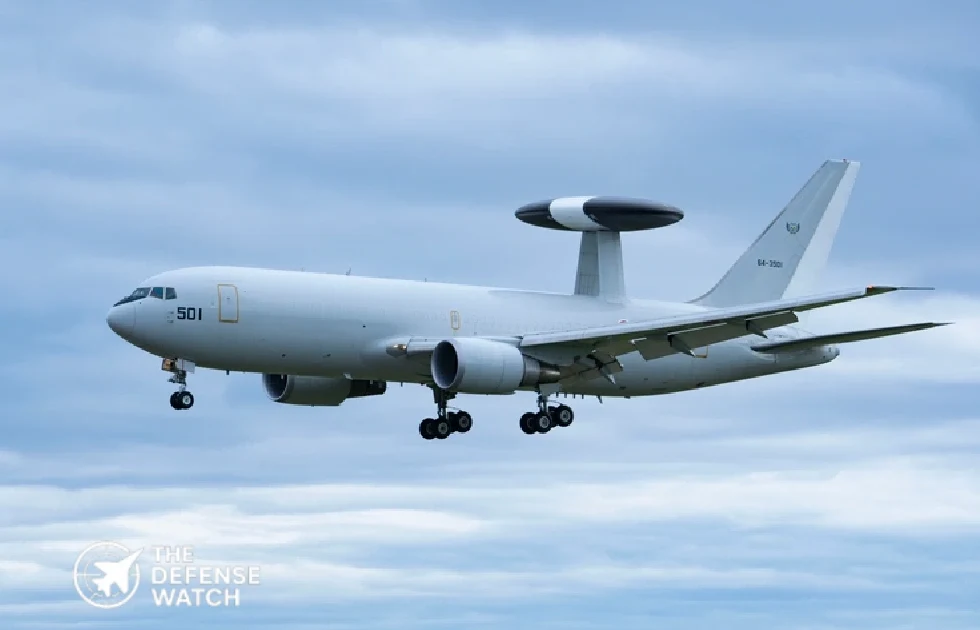
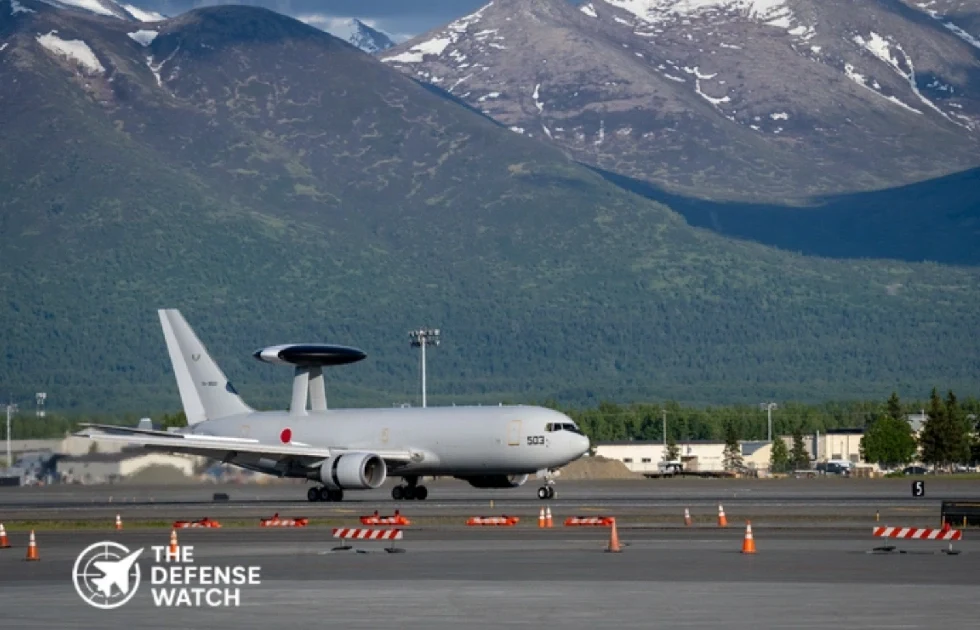
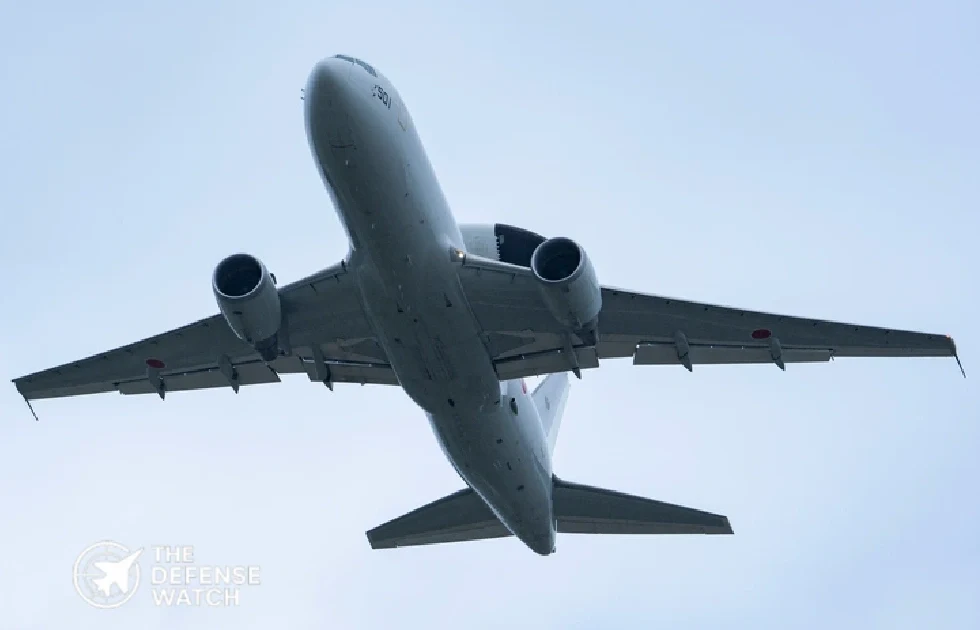
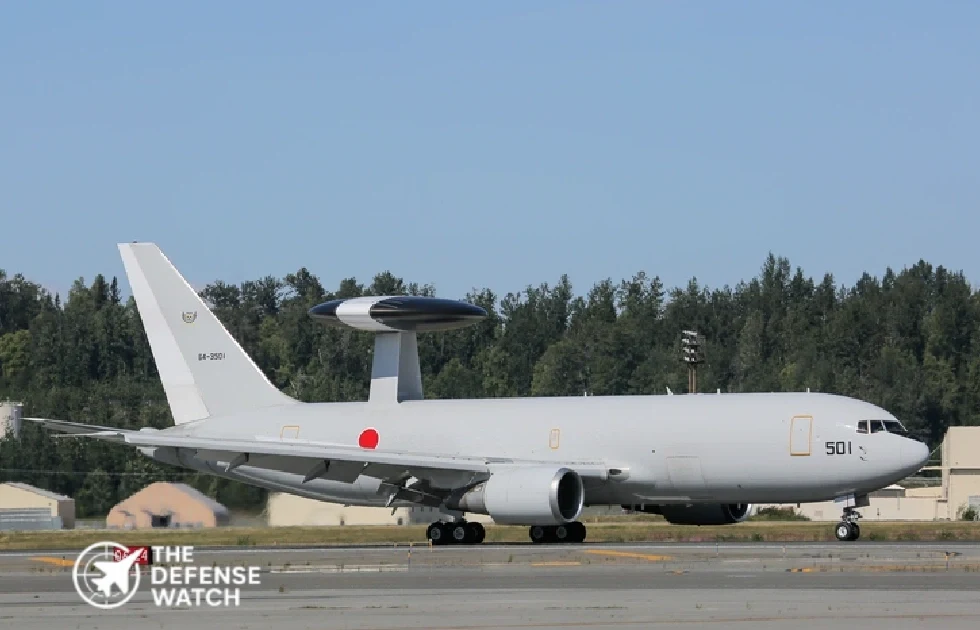
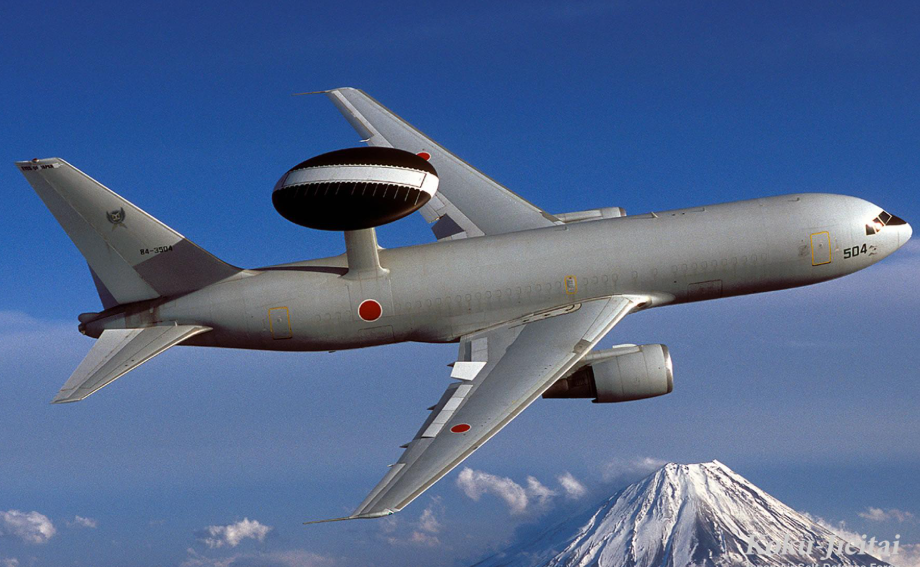
The Japan E-767 Airborne Warning and Control System (AWACS) is a long-range airborne surveillance and command aircraft designed to strengthen Japan’s air defense network. Based on the Boeing 767-200ER commercial airliner, the E-767 combines a large aircraft platform with advanced radar, communications, and mission management systems. Its primary role is to detect and track airborne threats, monitor airspace, and coordinate friendly fighter aircraft during defensive operations.
The aircraft carries a rotating radar dome above its fuselage, providing 360-degree surveillance. Its mission systems support the identification and tracking of multiple airborne contacts, helping Japanese forces maintain an updated operational picture across large areas.
Manufacturer
Developed by Boeing in the United States, the E-767 was specifically developed for the Japan Air Self-Defense Force (JASDF). Its surveillance system is based on the technology used by the E-3 Sentry AWACS.
Japan received four aircraft between 1998 and 1999, and they entered operational service in May 2000. The aircraft operates alongside Japanese fighter platforms, including the F-15J, supporting air defense and command coordination.
Speed and Range
Powered by two General Electric CF6-80C2 turbofan engines, the E-767 reaches approximately 450 knots (834 km/h). Its published range is approximately 9,000 kilometers, allowing extended surveillance missions over distant areas.
The aircraft can operate at high altitude, improving radar coverage and detection opportunities. Its endurance and large mission cabin allow it to accommodate flight crew and specialist operators during lengthy missions.
Cost/Price
Japan’s E-767 acquisition was a specialized military procurement program. A reliable, publicly established current unit price is unavailable. Operating costs depend on maintenance, radar upgrades, personnel, and long-term sustainment requirements.
Disclaimer Note
The information provided on TheDefenseWatch.com is for general informational purposes only. While we strive to ensure the accuracy, completeness, and timeliness of our content regarding defense and aerospace products, technologies, and specifications, we cannot guarantee that all information is 100% accurate or up-to-date due to the evolving nature of military technology and classified data.TheDefenseWatch.com does not warrant the reliability, suitability, or availability of the information for any specific purpose. Users are advised to consult official sources, such as manufacturers, government publications, or defense agencies, for precise and verified data before making decisions based on our content.We are not affiliated with any defense manufacturers, governments, or military organizations mentioned. Opinions, reviews, and ratings reflect expert analysis but are subjective and should not be considered endorsements. TheDefenseWatch.com is not responsible for any errors, omissions, or consequences arising from the use of this website’s content.External links are provided for convenience and do not imply endorsement. TheDefenseWatch.com reserves the right to update or modify content without prior notice. By using this website, you agree to our Privacy & Cookies Policy.
New Arrivals












Popular Comparisons
-
 J-10C vs JF-17 Thunder: Which Fighter Is More Capable?
View Comparison →
-
Tejas vs Gripen: Key Differences and Capabilities
View Comparison →
-
Tejas vs MiG-21 Bison: How India Replaced Its Iconic Supersonic Fighter
View Comparison →
-
F-35 vs F-16: Stealth, Sensors and Combat Roles
View Comparison →
-
Tejas Fighter Jet vs F-16 Fighting Falcon: Capability Compared
View Comparison →
-
Rafale Fighter Jet vs F-16 Fighting Falcon : Which Fighter Has the Edge?
View Comparison →
-
Su-57 Fighter Jet vs J-20 Fighter Jet: Stealth and Air Combat Compared
View Comparison →
-
Mirage 2000 vs Tejas Mk1A: Legacy Combat Power vs Indigenous Modernization
View Comparison →
-
Rafale Fighter Jet vs F-22 Raptor: Which Air Dominance Fighter Has the Edge?
View Comparison →
-
Tejas Fighter Jet vs. Rafale Fighter Jet: India’s Indigenous Fighter Meets France’s Proven Multirole Combat Aircraft
View Comparison →


- Remington 870 in Military Service: Mark 1 to MCS

- Boeing Receives $16.9 Million Contract Modification for Japan’s E-767 AWACS Support
- Lockheed Martin Wins $80 Million Air Force Mission Planning Software Contract
- Pakistan Tests Indigenous Fa’az Air-to-Air Missile for First Time
- Operation Unified Resolve Reports 70% Drop in Rio Grande Valley Border Crossings
- Iran Releases Footage of Underground Missile Tunnels Amid Rising US Military Tensions
- China Says HQ Missile Systems Intercepted Two New Missile Types in PLA Drill
- Phoenix Defense Ventures Wins $310.5 Million HH-60W Training Contract
- Rolls-Royce Showcases Naval Engines and Automation Systems at Euronaval 2026
- North Korea Tests Cruise Missile With Dispersal Warhead, KCNA Says




Fighter Jets
-
 F-100 Super Sabre
-
North American F-86 Sabre
-
Northrop YF-23 Fighter
-
Rafale F5 Fighter
-
SU-57 Felon Stealth Fighter
-
Boeing F/A-XX Fighter
-
JF-17 Thunder Fighter Jet
-
F-47 Fighter Jet
-
MIG-31 Fighter Jet
-
J-10CE Fighter Jet
-
Chengdu J-10 Fighter Jet
-
Chengdu J-10C Fighter Jet
-
Gripen E Fighter Jet
-
Tejas Mk1A Fighter Jet
-
Tejas Mk‑2 Fighter Jet
-
F-16V Viper Block 70 Fighter Jet
-
F-15EX Eagle II Fighter
-
F-15E Strike Eagle Fighter
-
F/A-18E/F Super Hornet Fighter Jet
-
Saab Gripen F Fighter Jet
-
JAS 39E/F Gripen Fighter Jet
-
JAS 39 Gripen Fighter Jet
-
F-35A Lightning II Fighter Jet
-
F/A-18F Super Hornet










Recent Compares
-
J-10C vs JF-17 Thunder: Which Fighter Is More Capable?
View Comparison →
-
Tejas vs Gripen: Key Differences and Capabilities
View Comparison →
-
Tejas vs MiG-21 Bison: How India Replaced Its Iconic Supersonic Fighter
View Comparison →
-
F-35 vs F-16: Stealth, Sensors and Combat Roles
View Comparison →
-
Tejas Fighter Jet vs F-16 Fighting Falcon: Capability Compared
View Comparison →
Latest Defense Systems
10 Compares Defense Systems
-
J-10C vs JF-17 Thunder: Which Fighter Is More Capable?
View Comparison →
-
Tejas vs Gripen: Key Differences and Capabilities
View Comparison →
-
Tejas vs MiG-21 Bison: How India Replaced Its Iconic Supersonic Fighter
View Comparison →
-
F-35 vs F-16: Stealth, Sensors and Combat Roles
View Comparison →
-
Tejas Fighter Jet vs F-16 Fighting Falcon: Capability Compared
View Comparison →
-
Rafale Fighter Jet vs F-16 Fighting Falcon : Which Fighter Has the Edge?
View Comparison →
-
Su-57 Fighter Jet vs J-20 Fighter Jet: Stealth and Air Combat Compared
View Comparison →
-
Mirage 2000 vs Tejas Mk1A: Legacy Combat Power vs Indigenous Modernization
View Comparison →
-
Rafale Fighter Jet vs F-22 Raptor: Which Air Dominance Fighter Has the Edge?
View Comparison →
-
Tejas Fighter Jet vs. Rafale Fighter Jet: India’s Indigenous Fighter Meets France’s Proven Multirole Combat Aircraft
View Comparison →
- Remington 870 in Military Service: Mark 1 to MCS
- Boeing Receives $16.9 Million Contract Modification for Japan’s E-767 AWACS Support
- Lockheed Martin Wins $80 Million Air Force Mission Planning Software Contract
- Pakistan Tests Indigenous Fa’az Air-to-Air Missile for First Time
- Operation Unified Resolve Reports 70% Drop in Rio Grande Valley Border Crossings