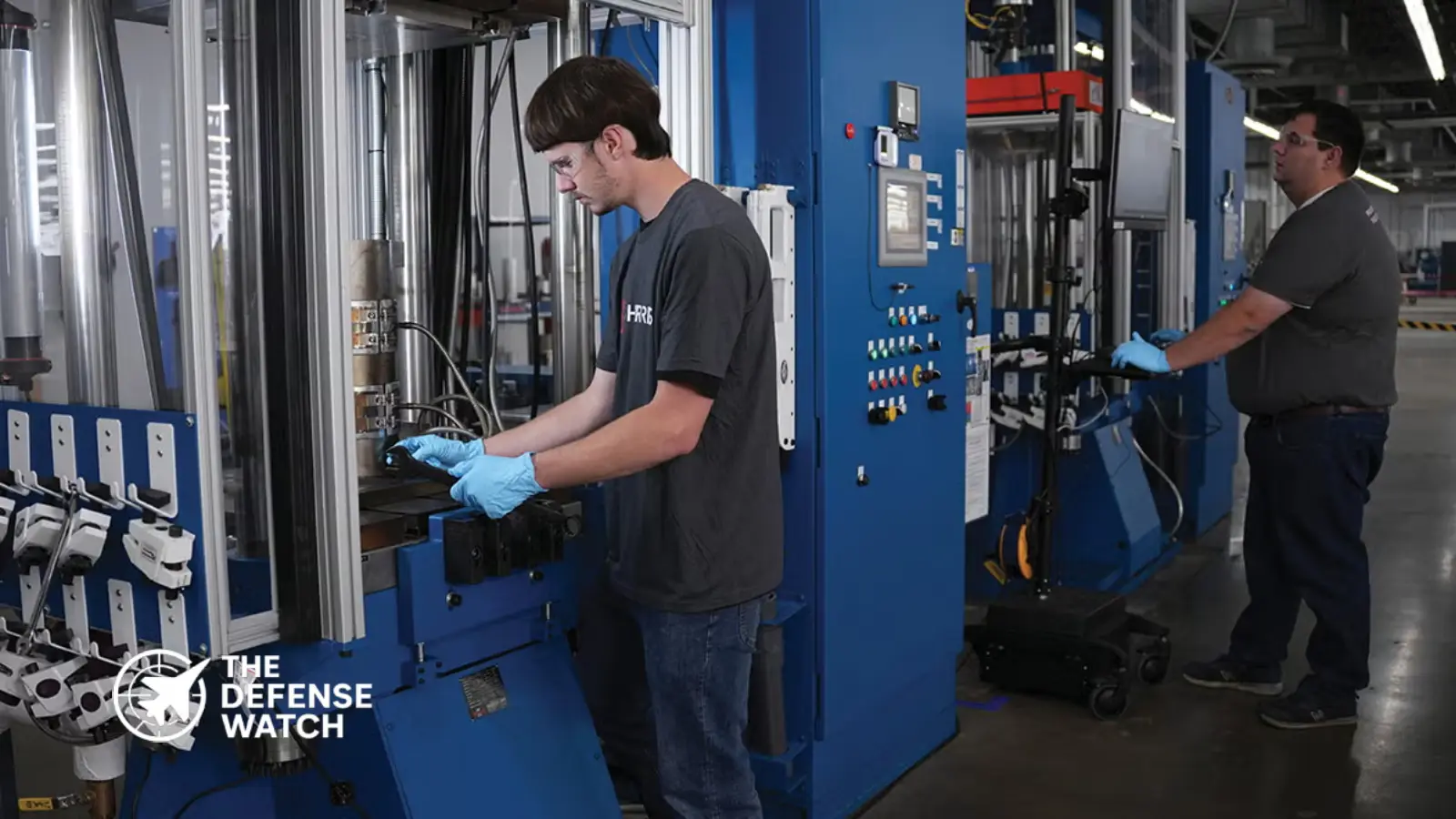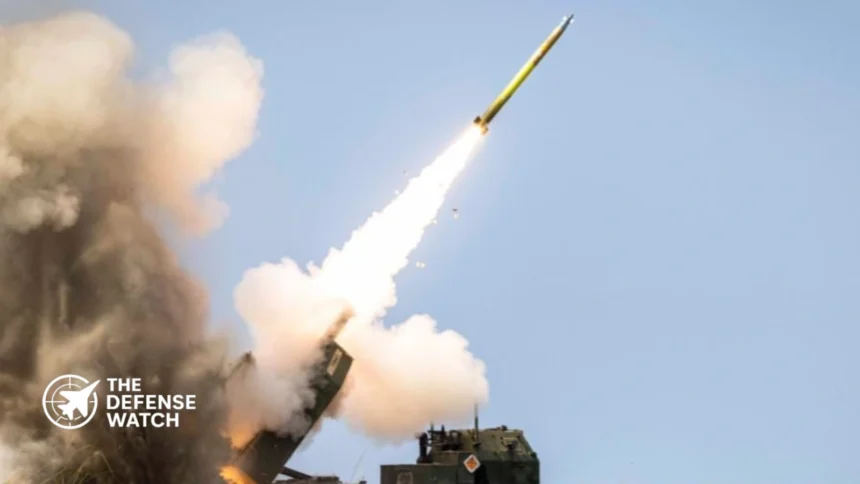
Lockheed Martin is now producing nearly 14,000 Guided Multiple Launch Rocket System (GMLRS) rockets annually, reflecting a substantial expansion of U.S. industrial capacity for precision-guided ground-launched munitions.
The production milestone comes as the U.S. Army seeks to replenish and expand its precision-fire inventory, while preparing the Extended-Range GMLRS (ER GMLRS) to enter operational service. The effort involves more than increasing assembly output. Motor production, component availability, supplier capacity and procurement planning will all influence how quickly additional rockets reach military units.
On November 10, 2026, Lockheed Martin announced that it had delivered its 100,000th GMLRS rocket and reached an annual production rate of nearly 14,000 units. The company also reported completing the first test of a new solid rocket motor developed with General Dynamics Ordnance and Tactical Systems, an initiative intended to strengthen the missile family’s propulsion supply chain.
Production capacity becomes a central Army priority
GMLRS is the principal precision-guided rocket family used by the U.S. Army’s M270 Multiple Launch Rocket System and M142 High Mobility Artillery Rocket System (HIMARS).
The rockets provide ground forces with the ability to engage targets at extended distances without relying exclusively on conventional tube artillery or more expensive tactical missile systems.
The existing GMLRS family includes unitary and Alternative Warhead (AW) configurations. The unitary version uses a single high-explosive warhead for point targets, while the Alternative Warhead is designed to engage area targets using an alternative payload arrangement.
The Army’s procurement planning shows why production capacity matters. Its fiscal year 2027 Missile Procurement budget requests approximately $1.058 billion for 4,824 GMLRS-family rockets, including 2,928 standard unitary rockets, 1,596 standard Alternative Warhead rockets and 300 ER GMLRS Alternative Warhead rockets.
The same budget document identifies an annual production capacity of 14,004 rockets across the variants. This provides an important distinction between industrial capacity and actual annual procurement. The Army’s planned purchases do not automatically equal the manufacturer’s maximum output.
A new propulsion supply chain is part of the expansion
Increasing the number of completed rockets requires a dependable supply of propulsion systems and other critical components.
Lockheed Martin’s November announcement identified a new solid rocket motor developed in collaboration with General Dynamics Ordnance and Tactical Systems. The first test has been completed, but further testing and qualification remain necessary before the motor can be treated as a fully established production source.
The initiative is important because solid rocket motors are a critical component of GMLRS manufacturing. A shortage of qualified propulsion units could constrain deliveries even if other parts of the rocket assembly process have sufficient capacity.
Another supplier development came in October 2026, when L3Harris announced a $250 million follow-on contract from Lockheed Martin for standard-range GMLRS propulsion units. The company said the work would be carried out at its new Arsenal of Freedom facility in Camden, Arkansas.
These developments indicate that the production expansion involves a wider industrial network rather than a single manufacturing facility.
However, the new General Dynamics motor has not yet completed its qualification process. Its eventual contribution to production capacity will depend on the outcome of continued testing and the Army’s acceptance requirements.
ER GMLRS adds another dimension to the program
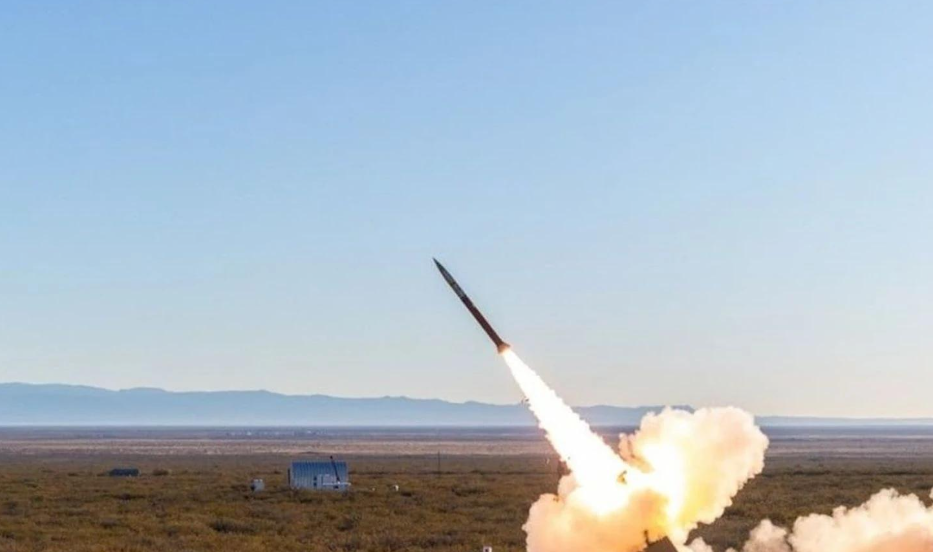
Alongside standard GMLRS production, Lockheed Martin is advancing the Extended-Range GMLRS, a variant designed to increase the weapon family’s reach while retaining compatibility with existing launch platforms.
The ER GMLRS is designed to reach approximately 150 kilometers, compared with roughly 70 kilometers for standard GMLRS. The increased range gives Army commanders more options for engaging targets while keeping launch units farther from opposing forces.
The new rocket is intended to operate with HIMARS and M270A2 launchers. This approach reduces the need for a separate launcher fleet and allows the Army to build on equipment already in service.
Testing has progressed through several important milestones.
In December 2025, the Army conducted an ER GMLRS Alternative Warhead flight test from a HIMARS launcher at White Sands Missile Range. The rocket traveled 112 kilometers and demonstrated its ability to engage an area target.
In January 2026, the Army conducted another flight test, demonstrating engagement of area targets beyond 100 kilometers. The service subsequently reported completion of Alternative Warhead qualification activities.
In October 2026, Lockheed Martin announced that both the ER GMLRS Alternative Warhead and Unitary variants had completed Soldier-led operational testing. The company also said the Army had approved Milestone C, allowing the program to move toward production and fielding.
The distinction between qualification, operational testing and fielding is important. Successful testing demonstrates progress, but it does not establish that the entire Army inventory has received the new weapon.
The industrial base behind GMLRS output
The production network is considerably larger than Lockheed Martin’s final assembly operation.
According to the company’s November announcement, the GMLRS program involves more than 200 suppliers across 35 U.S. states. More than 50 of those suppliers are designated small businesses.
The Camden, Arkansas, operation supports more than 200 employees involved in GMLRS production. Lockheed Martin also reported workforce expansion to support higher output across several munitions programs.
This distributed manufacturing structure matters because a higher production target places pressure on multiple parts of the supply chain simultaneously. Warhead components, rocket motors, electronic assemblies, guidance equipment and launch containers must all be available in sufficient quantities.
The new General Dynamics motor is intended to provide another domestic source of propulsion components. However, Lockheed Martin says qualification is planned for 2027, so the additional source should be viewed as a future capacity measure rather than an already operational production solution.
Army procurement plans show the scale of demand
The Army’s procurement documents provide a more useful measure of demand than manufacturer production announcements alone.
Its fiscal year 2027 budget identifies a four-year multiyear procurement arrangement covering fiscal years 2024 through 2027. It also allocates $49.106 million in advance procurement funding for long-lead materials intended to support GMLRS production in fiscal year 2028.
The Army specifically states that advance procurement is intended to reduce production lead times from 36 months to 24 months and help mitigate supply-chain volatility.
This is an important part of the manufacturing challenge. Increasing nominal factory capacity does not necessarily translate into faster deliveries if critical components still require lengthy procurement and production cycles.
The Army’s documents also distinguish between the different GMLRS configurations, reflecting their different costs, schedules and performance requirements.
In August 2025, the Army increased the ceiling of its existing GMLRS production contract with Lockheed Martin by approximately $4.235 billion, bringing the overall contract value to approximately $13.265 billion. The contract period extends through fiscal year 2027.
That figure represents the revised contract ceiling, not the amount of money paid for rockets already delivered.
What the production expansion means for U.S. forces
The GMLRS production effort addresses a basic requirement of modern ground warfare: maintaining sufficient stocks of precision-guided ammunition for sustained operations.
The conflict in Ukraine has demonstrated the importance of artillery and rocket ammunition availability during prolonged high-intensity fighting. Precision weapons can reduce the number of rounds required for particular engagements, but they do not eliminate the need for large inventories.
For the U.S. Army, GMLRS supports mobile precision fires through launchers that can operate alongside maneuver forces. HIMARS provides a highly mobile launch platform, while the tracked M270 family offers another option for delivering the same general family of munitions.
The introduction of ER GMLRS adds a longer-range option without requiring the Army to replace its existing launcher infrastructure.
However, greater range does not independently guarantee battlefield effectiveness. Target detection, intelligence quality, communications, launcher survivability, ammunition availability and the ability to operate under electronic warfare conditions remain important factors.
The manufacturing expansion therefore addresses only one part of the Army’s wider precision-fires requirement. Its practical value will depend on whether increased production translates into sustained deliveries, adequate stockpiles and reliable availability across operational units.
For now, the clearest evidence of progress is measurable: Lockheed Martin has reached the 100,000-rocket delivery milestone, annual output is approaching 14,000 units, and the Army’s procurement plan explicitly supports continued production investment.
The next challenge is maintaining that output while introducing additional GMLRS variants and expanding the supplier base.
Enjoying our coverage?
Make The Defense Watch a preferred source on Google to see more of our geopolitical and defense insights when relevant to you.