











@2026 – All Right Reserved. TheDefenseWatch.com
- Home
- Defense Systems
- Compare
- F-35 vs F-16: Stealth, Sensors and Combat Roles
F-35 vs F-16: Stealth, Sensors and Combat Roles
Executive Summary
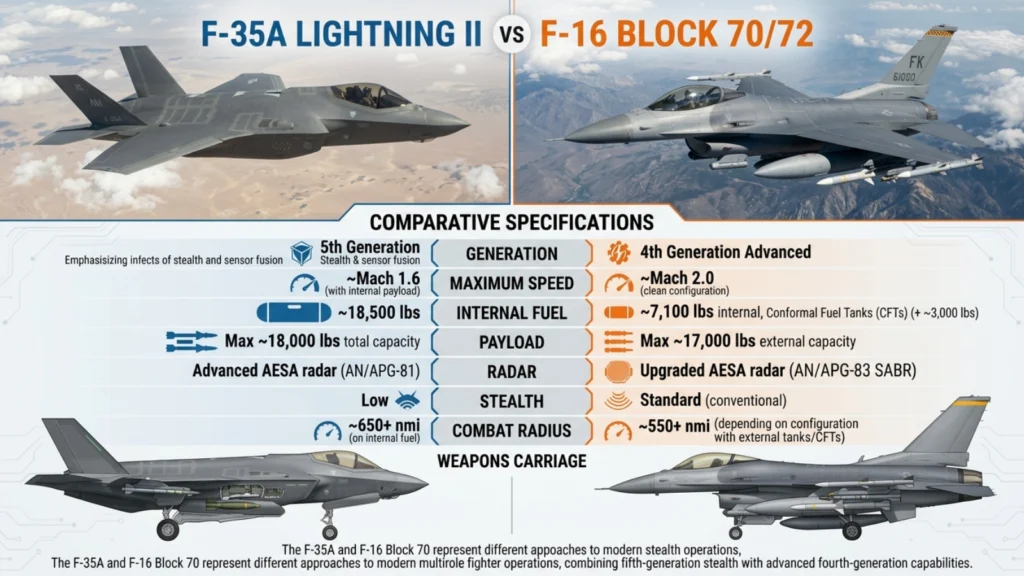
The F-35A Lightning II and F-16 Fighting Falcon are both multirole fighters, but they were designed around different operational concepts. The F-35A emphasizes low observability, integrated sensors, electronic warfare and information sharing, while the F-16 was designed as a smaller, highly maneuverable multirole fighter and has evolved through successive upgrades into the current Block 70/72 configuration.
The comparison therefore isn’t simply about speed or payload. The central distinction is how each aircraft is intended to detect, survive, engage and contribute to a networked air operation.
Tactical Overview
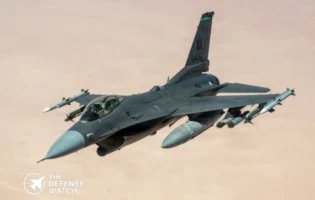
The F-16 first entered operational service in the late 1970s and has accumulated decades of combat and expeditionary experience. Its design emphasizes relatively low weight, high maneuverability, external weapons carriage and adaptability across air-to-air and air-to-ground missions. The U.S. Air Force lists a maximum speed of about Mach 2 and a ferry range exceeding 2,002 miles for the F-16C/D.
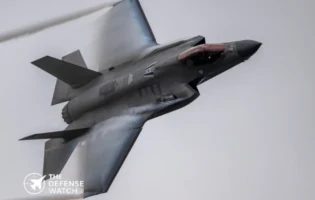
The F-35A represents a later generation of fighter design. Its defining characteristics are stealth shaping, internal weapons carriage, sensor fusion and an integrated avionics architecture. The Air Force lists a maximum speed of Mach 1.6, more than 1,350 miles of range with internal fuel, a 70,000-pound-class maximum takeoff weight and an 18,000-pound payload capacity.
The latest F-16 Block 70/72 substantially narrows the avionics gap with older fourth-generation fighters. It incorporates the APG-83 AESA radar, upgraded mission computing, modern cockpit displays, advanced datalinks, IRST integration and an extended 12,000-hour structural life.
Key Takeaways
F-35A Lightning II
- Fifth-generation multirole fighter built around low observability and integrated sensors.
- Sensor fusion combines information from multiple onboard systems.
- Internal weapons carriage supports low-observable strike missions.
- Designed for operations in heavily contested electromagnetic and air-defense environments.
F-16 Block 70/72
- Advanced fourth-generation multirole fighter with extensive global infrastructure.
- APG-83 AESA radar provides modern air-to-air and air-to-ground radar capabilities.
- Large external weapons and fuel carriage provides substantial mission flexibility.
- 12,000-hour structural life extends the platform’s service potential.
Strategic Context
The F-35A and F-16 Block 70/72 are not interchangeable designs. The F-35A is optimized around survivability, sensor fusion, electronic warfare and information advantage in contested airspace. The F-16 Block 70/72 retains the Falcon’s multirole flexibility while adding AESA radar, modern avionics, IRST integration and an extended structural life. Their different characteristics allow air forces to match aircraft to mission requirements rather than treating fighter performance as a single metric.
Technical Specifications Matrix
| Specification | F-35A Lightning II | F-16 Block 70/72 |
|---|---|---|
| Generation / Type | Fifth-generation multirole fighter | Advanced fourth-generation multirole fighter |
| Engine | Pratt & Whitney F135 | F100 or F110 family, configuration dependent |
| Maximum Speed | Mach 1.6 | Mach 2+ |
| Internal Fuel | 18,498 lb | Approximately 7,000 lb on the baseline F-16C/D specification |
| Range | More than 1,350 miles with internal fuel, according to USAF fact sheet | More than 2,002 miles ferry range for F-16C/D baseline |
| Maximum Takeoff Weight | 70,000 lb class | 48,000 lb for Block 70/72 |
| Payload | Up to 18,000 lb | External weapons and stores across multiple stations |
| Radar | AESA radar integrated into the F-35 sensor architecture | Northrop Grumman APG-83 AESA |
| Sensor Architecture | Integrated sensor fusion, electro-optical and electronic warfare systems | AESA radar, targeting systems, IRST integration and upgraded avionics |
| Stealth | Low-observable design with internal weapons carriage | Conventional fourth-generation aerodynamic design |
| Service Life | Program dependent | 12,000 hours for Block 70/72 |
| Unit Cost | Current configuration pricing varies by production lot and procurement package | Contract price varies by customer and configuration |
| Primary Design Philosophy | Survivability, information dominance and multirole operations | Maneuverability, flexibility, weapons carriage and affordability |
The figures need careful qualification. The USAF’s published F-35A fact sheet lists Mach 1.6, more than 1,350 miles of internal-fuel range and an 18,000-pound payload, while the USAF F-16C/D fact sheet lists Mach 2, more than 2,002 miles of ferry range and a 37,500-pound maximum takeoff weight. Those are not identical test conditions, and the F-16 Block 70/72 has a higher 48,000-pound maximum takeoff gross weight than the older F-16C/D specification.
Cost also requires caution. The F-35 program’s reported unit figures vary depending on whether the measurement is recurring flyaway cost, procurement unit cost or broader program acquisition cost. A Congressional Research Service report citing the 2023 Selected Acquisition Report placed the F-35A average recurring flyaway cost at $62.2 million in constant 2012 dollars, while its average procurement unit cost was $132.7 million. These figures should not be presented as a direct current purchase price.
Deep-Dive Analysis
1. Stealth, Survivability and Contested Airspace
The most important architectural difference between the two aircraft is low observability.
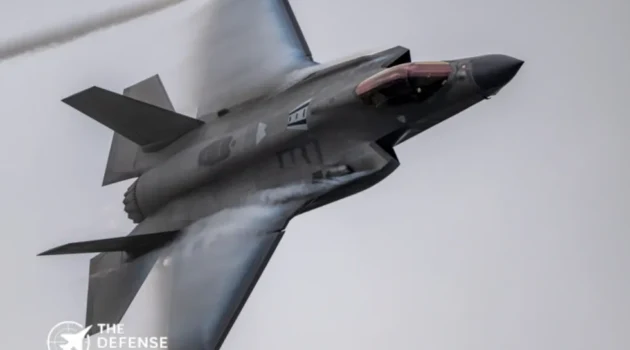
The F-35A was designed from the beginning around stealth. Its external geometry, materials, apertures and weapons carriage are integrated into a low-observable configuration. Internal carriage allows the aircraft to carry weapons without placing large external stores directly into the airflow and radar signature of the aircraft during missions where reduced observability is important.
The aircraft also combines stealth with electronic warfare and sensor fusion. The Air Force describes the F-35A as combining stealth, sensor fusion and situational awareness, with its sensor package designed to collect and fuse information before distributing it to other users.
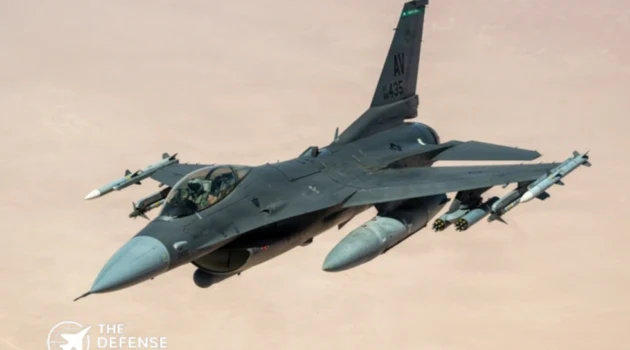
The F-16 takes a different approach. It does not possess the F-35’s low-observable architecture. Instead, survivability comes from speed, maneuverability, electronic countermeasures, weapons, pilot training, tactics, networking and supporting aircraft.
That doesn’t make the F-16 obsolete. The latest Block 70/72 includes modern electronic warfare capabilities and can integrate advanced targeting and IRST systems. It also benefits from a mature global support network and decades of weapons integration.
The distinction becomes especially important against modern integrated air defense systems. A fourth-generation aircraft can employ stand-off weapons, electronic warfare, suppression assets and other tactics to reduce exposure. The F-35, however, was designed to reduce exposure through its own aircraft architecture as well as through its sensors and electronic warfare systems.
This is why raw speed isn’t an adequate measure of survivability.
The F-16 is faster, with the Block 70/72 retaining a Mach 2+ maximum speed. The F-35A is limited to approximately Mach 1.6. Yet speed is only one component of a fighter’s ability to survive. Detection, identification, electronic warfare, weapons employment, networking and the ability to operate inside an adversary’s sensor and weapon engagement zones can be more important in a heavily contested environment.
2. Sensors, Radar and Targeting Capabilities
The F-35’s most significant technological advantage is not simply its radar. It is the integration of multiple sensors into a common picture.
The aircraft was designed to combine radar, electro-optical systems, electronic warfare information and other inputs so the pilot receives a consolidated representation of the battlespace. This reduces the requirement for the pilot to interpret several independent systems manually.
That architecture changes the role of the fighter. The F-35 can function as a shooter, sensor, electronic warfare platform and information node within a larger force.
The F-16 Block 70/72 has made substantial progress in this area.
Its APG-83 AESA radar provides improved detection, tracking and mapping functions compared with older mechanically scanned F-16 radars. Lockheed Martin says the radar uses hardware and software commonality with AESA systems developed for the F-22 and F-35. The Block 70/72 also incorporates a modernized cockpit, advanced datalinks, targeting pod integration and IRST capability.
That makes the Block 70/72 substantially more capable than earlier F-16 configurations.
However, an AESA radar alone does not turn a fourth-generation fighter into a fifth-generation aircraft. The distinction involves the broader architecture, including low observability, sensor fusion, electronic warfare integration, software, data processing and weapons employment.
The F-16 can receive information from external sensors and networks, while the F-35 is designed around the fusion of information from its own onboard sensors and external sources.
This distinction is particularly relevant in networked warfare. A modern fighter doesn’t necessarily need to detect every threat using its own radar. It can receive information from other aircraft, ground systems, ships and command networks. The aircraft that can process and distribute that information efficiently can influence the engagement without necessarily being the aircraft that launches the weapon.
3. Payload Options and Operational Deployments
The F-16’s external carriage architecture remains one of its major strengths.
The aircraft has accumulated extensive integration experience with air-to-air missiles, precision-guided bombs, targeting pods, electronic warfare equipment and other stores. Lockheed Martin says the F-16 program has certified more than 3,300 carriage and release configurations involving more than 180 weapon and store types.
This provides substantial flexibility for missions where stealth is less important than payload, persistence, weapons variety or cost control.
The F-35 also supports external weapons carriage, but its internal weapons bays are central to its low-observable mission configuration. When stealth requirements are reduced, external carriage can expand the aircraft’s weapons capacity.
The two aircraft therefore can perform many of the same mission categories, including air-to-air combat, precision strike, suppression of enemy air defenses and battlefield support. Their strengths emerge from different parts of the mission architecture.
The F-16 has an extensive combat record. U.S. Air Force documentation records F-16 operations in missions including suppression of enemy air defenses, offensive counterair, defensive counterair, close air support and forward air control.
The F-35 has a newer operational history, but its intended role is broader than replacing the F-16 on a one-for-one basis. The USAF identifies air interdiction, offensive and defensive counterair, close air support, strategic attack and suppression of enemy air defenses among the F-35A’s missions.
The F-16 also retains a significant global industrial and operational ecosystem. Lockheed Martin reported more than 3,100 F-16s operating internationally in 2024, while newer Block 70 aircraft continue to enter service.
That installed base matters because fighter effectiveness depends on more than the aircraft itself. Training pipelines, weapons stocks, maintenance infrastructure, simulators, spare parts, personnel and allied interoperability all affect operational output.
F-35 vs F-16: Mission-by-Mission Comparison
| Mission Requirement | F-35A | F-16 Block 70/72 |
|---|---|---|
| Contested airspace penetration | Low-observable architecture is central to the design | Requires tactics, electronic warfare, stand-off weapons and supporting assets |
| Beyond-visual-range combat | Strong emphasis on sensor fusion and networked targeting | Advanced AESA radar, datalinks and modern weapons |
| Close-in maneuvering | 9g-capable aircraft | 9g-capable aircraft |
| High-speed interception | Mach 1.6 | Mach 2+ |
| Precision strike | Internal and external weapons options | Extensive external weapons integration |
| Stealth strike | Designed for low-observable operations | Not a stealth aircraft |
| Electronic warfare | Integrated into aircraft architecture | Modern EW capability in Block 70/72 |
| Sensor fusion | Core design feature | Improved networking and avionics, but different architecture |
| Large external payload | Possible when stealth is not required | Major strength of the platform |
| Global support network | Expanding multinational F-35 fleet | Very mature global F-16 ecosystem |
Sustainment and Force Structure
The acquisition price of a fighter doesn’t tell the complete financial story.
The F-35 program has faced continuing sustainment challenges. The Government Accountability Office reported in June 2026 that projected F-35 sustainment costs had continued to increase. Its 2025 estimate for steady-state annual sustainment of an F-35A was $7.4 million per aircraft in constant 2012 dollars, compared with a $6.8 million Air Force affordability target.
The F-16 benefits from a much longer production and support history. The Block 70/72 also incorporates a 12,000-hour structural life, which Lockheed Martin says is more than 50 percent beyond previous production F-16 aircraft.
For an air force planning a future fighter fleet, this creates a broader force-structure question.
The F-35 provides capabilities that the F-16 cannot reproduce simply by adding a newer radar. But the F-16 can provide substantial combat capability, particularly when integrated with airborne early warning, electronic warfare, tankers, surface-based air defenses and other networked assets.
The practical question is therefore not whether one aircraft makes the other irrelevant. It is how many aircraft an air force needs, what threats it expects to face, what weapons it can obtain, and how its fighters fit into the wider air and joint force.
Strategic Verdict & Tactical Scenarios
Rather than treating the F-35 and F-16 as direct substitutes, their characteristics point toward different mission priorities.
When the F-35A Is Better Suited
Highly contested air-defense environments: The F-35A’s low-observable design, sensor fusion and electronic warfare architecture are intended to improve survivability against sophisticated air-defense and fighter threats.
Stealth penetration and precision strike: Internal weapons carriage allows the F-35A to preserve its low-observable configuration for missions where external stores could increase detectability.
Sensor and information missions: Its integrated sensor architecture allows the F-35 to contribute information to other platforms rather than functioning only as a conventional weapons carrier.
Networked operations: The aircraft is designed to operate as part of a broader force in which information sharing is central to mission execution.
When the F-16 Block 70/72 Is Better Suited
Missions where stealth is less critical: The F-16’s external carriage architecture supports a broad range of weapons, targeting pods and other equipment.
High-speed interception: Its Mach 2+ maximum speed gives it a higher published maximum velocity than the F-35A.
Modern fourth-generation fleet replacement: The Block 70/72 combines the established F-16 airframe with APG-83 AESA radar, modern avionics, IRST integration and a 12,000-hour structural life.
Countries prioritizing established infrastructure: The F-16’s large international operator base provides an existing ecosystem of training, weapons, maintenance and interoperability.
Bottom Line
The F-35A and F-16 Block 70/72 represent two different approaches to modern fighter warfare.
The F-16 remains a highly capable multirole aircraft whose latest configuration incorporates AESA radar, modern mission systems, electronic warfare improvements and a significantly extended structural life. Its speed, external weapons flexibility and mature global ecosystem remain important operational characteristics.
The F-35A places greater emphasis on low observability, integrated sensing, electronic warfare and information sharing. Its maximum speed is lower than the F-16’s, but its design is focused less on raw aircraft performance and more on survivability and information advantage within a contested battlespace.
For modern air forces, the comparison is therefore best understood as stealth and integrated sensing versus mature multirole flexibility and external weapons capacity, rather than simply F-35 versus F-16 on speed, range or payload.
The two aircraft can also complement each other. An F-35 can contribute low-observable sensing and targeting, while F-16s can provide additional weapons capacity and multirole sortie generation. The resulting force can be more diverse than either aircraft considered independently.
| |
| Price | |
| Our Rating | |
| Manufacturer | Lockheed Martin Lockheed Martin |
| Category | Fighter Jets Fighter Jets |
General Information
| Name | F-35 Lightning II F-16 Fighting Falcon |
| Manufacturer | Lockheed Martin General Dynamics / Lockheed Martin |
| Country of Origin | United States United States |
| Type / Role | Multirole Stealth Fighter Multirole Fighter |
| Generation | 5th 4th |
| Status | In Service Active / In Service |
| First Flight | December 15, 2006 January 20, 1974 |
| Introduction / In Service Since | 2015 1978 |
| Number Built | 1,200+ (as of 2025) Over 4,600 |
| Operators | USA, UK, Japan, Israel, Italy, Australia, and others USA, Israel, Turkey, Greece, South Korea, etc. |
Dimensions & Structure
| Length | 51.2 ft (15.6 m) 49 ft 5 in (15.06 m) |
| Wingspan | 35 ft (10.7 m) 32 ft 8 in (9.96 m) |
| Height | 14.4 ft (4.38 m) 16 ft 8 in (5.09 m) |
| Wing Area | 460 sq ft (42.7 m²) 300 sq ft (27.87 m²) |
| Empty Weight | 29,300 lb (13,300 kg) 18,900 lb (8,573 kg) |
| Maximum Takeoff Weight (MTOW) | 70,000 lb (31,800 kg) 42,300 lb (19,187 kg) |
| Internal Weapons Bay | 2 (up to 5,700 lb payload) None |
| External Hardpoints | 6–10 (up to 18,000 lb total) 9 |
Performance
| Maximum Speed | Mach 1.6 Mach 2.0 |
| Range | 1,380 mi (2,220 km) 2,620 mi (4,220 km) with drop tanks |
| Combat Radius | ~670 mi (1,080 km) ~500 mi (800 km) |
| Service Ceiling | 50,000 ft (15,240 m) 50,000 ft (15,240 m) |
| Rate of Climb | 45,000 ft/min 50,000 ft/min |
| Thrust-to-Weight Ratio | 0.87 1.095 |
| G Limits | +9 +9 / -3 |
Powerplant
| Engine Type | Pratt & Whitney F135-PW-100 Pratt & Whitney F100-PW-229 / GE F110-GE-129 |
| No. of Engines | 1 1 |
| Thrust (each) | 43,000 lbf 29,000 lbf (afterburner) |
| Thrust Vectoring | Yes (on F-35B variant) No |
| Fuel Capacity | ~18,500 lb internal 7,000 lb internal |
Armament
| Gun | GAU-22/A 25mm cannon (F-35A) 1× M61A1 20mm Vulcan |
| Missiles (Air-to-Air) | AIM-120 AMRAAM, AIM-9X AIM-9, AIM-120 |
| Missiles (Air-to-Ground) | AGM-154 JSOW, AGM-158 JASSM AGM-65, AGM-88 |
| Bombs | JDAM, Paveway II/III, SDB I/II JDAM, Paveway, Cluster bombs |
| Hardpoints | 6 external + 2 internal 9 |
| Payload Capacity | ~18,000 lb 17,000 lb (7,700 kg) |
Avionics & Systems
| Radar | AN/APG-81 AESA AN/APG-68 / AN/APG-83 AESA |
| Radar Range | ~150+ km ~160 km |
| Electronic Warfare (EW) System | AN/ASQ-239 suite AN/ALQ-213, ALQ-131 |
| Targeting System | EOTS (Electro-Optical Targeting System) Sniper XR / LANTIRN |
| Helmet Display | HMDS Gen III JHMCS |
| Navigation | GPS/INS with terrain-following GPS/INS |
| Autopilot / AI Assistance | Advanced flight management Digital Fly-by-Wire |
| Communication | MADL & Link 16 secure data links Link 16, Secure UHF/VHF |
Stealth & Technology
| Radar Cross Section (RCS) | ~0.001 m² ~1.2 m² |
| Stealth Features | RAM coating, internal weapons bay, edge alignment Limited shaping, radar-absorbent coatings |
| Infrared Signature Reduction | Yes Moderate |
| Sensor Fusion | Full 360° data integration Partial (F-16V upgrade) |
| Networking Capabilities | Distributed data-sharing with allied units Link 16, Joint operations compatible |
Variants
| Special Export Versions | F-35I (Israel), F-35A (Japan), etc. F-16I (Israel), KF-16 (South Korea) |
Operational History
| Major Conflicts / Deployments | Middle East operations (Iraq, Syria) Gulf War, Kosovo, Iraq, Afghanistan |
| Notable Operators | USAF, USN, USMC, RAF, IDF USAF, Israel, Turkey, Taiwan, UAE |
| Combat Proven? | Yes Yes |
| Mission Types | Air superiority, strike, SEAD, ISR Air superiority, strike, SEAD, CAS |
Cost & Program
| Unit Cost | $80–100 million (variant-dependent) ~$35 million (Block 70) |
| Development Cost | ~$400 billion (program total) ~$8 billion (program total) |
| Program Name | Joint Strike Fighter (JSF) Lightweight Fighter (LWF) |
| Funding Countries | USA, UK, Italy, Netherlands, Canada, Australia, etc. United States, NATO partners |
Additional Information
| Upgrades Planned | Block 4, Tech Refresh 3 AESA radar, datalink, EW suite |
| Future Replacement | NGAD (2035+) F-35A Lightning II |
| Export Restrictions | U.S. FMS approval required Controlled under ITAR |
| Notable Achievements | Widest global fighter program in history Most exported Western fighter |
| Competitors | Su-57, J-20, Tempest, KF-21 JAS 39 Gripen, MiG-29, Mirage 2000 |
|
Disclaimer Note
The information provided on TheDefenseWatch.com is for general informational purposes only. While we strive to ensure the accuracy, completeness, and timeliness of our content regarding defense and aerospace products, technologies, and specifications, we cannot guarantee that all information is 100% accurate or up-to-date due to the evolving nature of military technology and classified data.TheDefenseWatch.com does not warrant the reliability, suitability, or availability of the information for any specific purpose. Users are advised to consult official sources, such as manufacturers, government publications, or defense agencies, for precise and verified data before making decisions based on our content.We are not affiliated with any defense manufacturers, governments, or military organizations mentioned. Opinions, reviews, and ratings reflect expert analysis but are subjective and should not be considered endorsements. TheDefenseWatch.com is not responsible for any errors, omissions, or consequences arising from the use of this website’s content.External links are provided for convenience and do not imply endorsement. TheDefenseWatch.com reserves the right to update or modify content without prior notice. By using this website, you agree to our Privacy & Cookies Policy.
New Arrivals
-
 SR-71 Blackbird Aircraft
-
Boeing F/A-XX Fighter
-
F-15E Strike Eagle Fighter
-
F/A-18E/F Super Hornet Fighter Jet
-
Saab Gripen F Fighter Jet
-
JAS 39E/F Gripen Fighter Jet
-
JAS 39 Gripen Fighter Jet
-
F-35A Lightning II Fighter Jet
-
F/A-18F Super Hornet
-
PAC-2 Patriot Missile System
-
Patriot PAC-3 Missile Defense System
-
EA-18G Growler
Popular Comparisons
-
 Tejas Fighter Jet vs F-16 Fighting Falcon: Capability Compared
View Comparison →
Tejas Fighter Jet vs F-16 Fighting Falcon: Capability Compared
View Comparison → -
Rafale Fighter Jet vs F-16 Fighting Falcon : Which Fighter Has the Edge?
View Comparison →
-
Su-57 Fighter Jet vs J-20 Fighter Jet: Stealth and Air Combat Compared
View Comparison →
-
Mirage 2000 vs Tejas Mk1A: Legacy Combat Power vs Indigenous Modernization
View Comparison →
-
Rafale Fighter Jet vs F-22 Raptor: Which Air Dominance Fighter Has the Edge?
View Comparison →
-
Tejas Fighter Jet vs. Rafale Fighter Jet: India’s Indigenous Fighter Meets France’s Proven Multirole Combat Aircraft
View Comparison →
-
F-22 Raptor vs. F-35 Joint Strike Fighter: Which Fifth Generation Fighter Has the Edge?
View Comparison →
-
F-35A vs. F-22 Raptor: Which U.S. Stealth Fighter Dominates Modern Air Combat?
View Comparison →
-
AGM-114 Hellfire vs. AGM-179 JAGM: Which U.S. Precision Missile Is Better?
View Comparison →
-
Patriot (PAC-3) vs. THAAD: Complete Missile Defense System Comparison, Capabilities, Range, and Strategic Roles
View Comparison →
- NASA Moves SR-71 Tail 844 Into Hangar Amid Return-to-Flight Assessment

- Belgium to Accelerate Delivery of Three F-16s to Ukraine by End of 2026
- Saudi Arabia Rejects Israeli Request to Retrieve Passengers From Diverted Flydubai Flight
- Boeing Wins $26.2M F-15E Windows 11 Upgrade Contract
- Boeing Wins U.S. Navy F/A-XX Contract Worth More Than $20 Billion
- Sweden to Deploy Gripen Fighters Over Poland for NATO Air Defense and Ukraine Aid Protection
- L3 Technologies Wins $10.75M Navy Contract for 176 Modernized Radios
- Lockheed Martin Gets $52.1M F-35 Lot 18-19 Engineering Modification
- Lockheed Martin Wins $245 Million Navy F/A-18 IRST Block II Contract
- Navy Awards $975 Million Construction IDIQ for Marine Corps East Coast Facilities