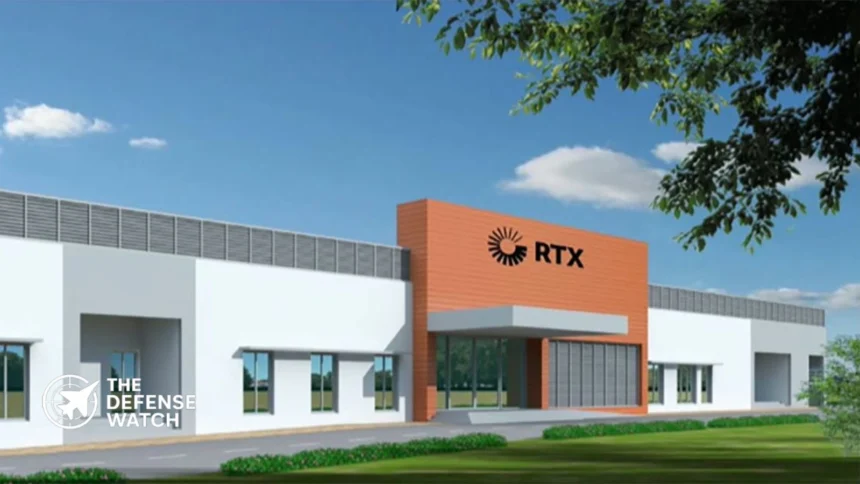
Collins Aerospace has started construction of a dedicated aircraft propeller maintenance, repair and overhaul (MRO) facility in Bengaluru, India, expanding its regional support network for commercial turboprop aircraft and military transport platforms.
The project, announced by parent company RTX on November 17, 2026, will support propeller systems used on ATR 42 and ATR 72 regional aircraft, as well as the Airbus C-295 military transport. The facility is expected to begin operations in early 2029 and serve customers across the Asia-Pacific region.
The investment is relevant to India’s aerospace industry because it brings specialized propeller maintenance closer to aircraft operators. It also extends Collins Aerospace’s existing engineering and manufacturing presence in the country into a more specialized aftermarket service.
Bengaluru to become a regional propeller maintenance center
The new facility will be located at the Collins India Operations Center (CIOC) within KIADB Aerospace Park in Bengaluru.
RTX describes the project as India’s first propeller MRO facility authorized by a foreign aerospace original equipment manufacturer (OEM). The company has characterized the investment as a multi-million-dollar commitment but has not disclosed its exact value.
The planned operation will employ up to 50 specialized technicians and engineers, with staffing expected to increase as service demand grows. Collins has not publicly specified the facility’s annual maintenance capacity or the number of propeller assemblies it will process.
The distinction between manufacturing and MRO is important. Manufacturing supplies new aerospace components, while MRO facilities inspect, repair and restore existing equipment to maintain its serviceability. Establishing local repair capabilities can reduce dependence on overseas maintenance centers and shorten the time aircraft components remain unavailable.
The 568F propeller system and aircraft supported
The facility will focus on Collins Aerospace’s 568F series propeller systems, which are used on three aircraft types:
- ATR 42: A regional turboprop aircraft used on short-haul passenger routes.
- ATR 72: A larger regional turboprop serving domestic and international short-haul networks.
- Airbus C-295: A twin-engine military transport aircraft operated by the Indian Air Force.
The inclusion of the C-295 gives the project a direct military aviation support dimension. The aircraft is part of India’s effort to modernize its tactical airlift fleet, replacing older transport platforms with newer aircraft.
For the Indian Air Force, access to authorized propeller maintenance within India could help simplify component servicing and reduce reliance on overseas repair facilities.
Business Standard reported that Collins currently sends propellers requiring repair from Indian operators to its facility in France. According to company executives interviewed by the publication, transporting components internationally can add several weeks to the maintenance process, depending on whether air or sea freight is used.
Why local MRO capacity matters for military aviation
Aircraft availability depends on more than the number of airframes delivered to an operator. Engines, propellers, avionics and other components must remain serviceable, while damaged or worn equipment requires inspection and repair.
For transport aircraft, maintenance delays can affect logistics availability, personnel movement, cargo delivery and other routine military operations.
The C-295’s inclusion is therefore important beyond the commercial aviation market. A domestic authorized repair capability could make it easier for Indian operators to maintain the aircraft’s propeller systems without sending components to Europe.
However, the new center should not be confused with a complete C-295 maintenance depot. RTX’s announcement specifically identifies propeller MRO. It does not establish that the facility will perform airframe maintenance, engine overhauls or complete aircraft servicing.
The project also does not mean that the Indian Air Force will receive a new aircraft maintenance capability across all C-295 subsystems. Its stated scope is considerably narrower.
India’s growing aerospace maintenance market
Collins Aerospace’s investment comes as India seeks to expand its share of the global aircraft maintenance industry.
Reuters reported that India’s MRO market represents approximately 2% of global activity, with an estimated value of $2.5 billion. The market could reach $6.9 billion by 2035, according to projections attributed to KPMG.
Collins said its new investment builds on more than $200 million deployed in India over the preceding five years across engineering, manufacturing, testing and aftermarket services.
The company’s existing Collins India Operations Center opened in November 2025. Located at KIADB Aerospace Park, the 26-acre facility supports the production of more than 70 products, including mechanical, electromechanical and electronic systems.
The new MRO operation adds a different capability to this industrial presence. Instead of concentrating exclusively on component production, Collins will also support the service life of aircraft already operating in the region.
That distinction matters because aerospace companies increasingly compete through their aftermarket networks as well as their manufacturing programs. Access to approved repair facilities can influence maintenance costs, aircraft availability and long-term customer relationships.
Investment timeline and remaining details
RTX has not disclosed the exact financial value of the new project. It has also not published detailed information about annual repair capacity, the number of maintenance bays or the full equipment configuration.
There is a minor difference in the publicly reported opening timeline. Reuters reported an expectation of operations by 2028, while RTX’s November 17 announcement specifies early 2029. Business Standard also reported an early 2029 target following an interview with a Collins executive. The company’s published announcement is the clearest current reference for the stated opening schedule.
The planned workforce of up to 50 technicians and engineers provides an indication of the facility’s initial staffing scale, but does not establish its eventual maintenance throughput.
For now, the most concrete outcome is the establishment of an authorized propeller repair capability in Bengaluru serving both regional commercial aircraft and military transports. Its longer-term contribution will depend on the facility’s completed capacity, certification scope and the number of operators using its services once operations begin.
Enjoying our coverage?
Make The Defense Watch a preferred source on Google to see more of our geopolitical and defense insights when relevant to you.