









@2026 – All Right Reserved. TheDefenseWatch.com
- Home
- Defense Systems
- Compare
- Tejas vs MiG-21 Bison: How India Replaced Its Iconic Supersonic Fighter
Tejas vs MiG-21 Bison: How India Replaced Its Iconic Supersonic Fighter
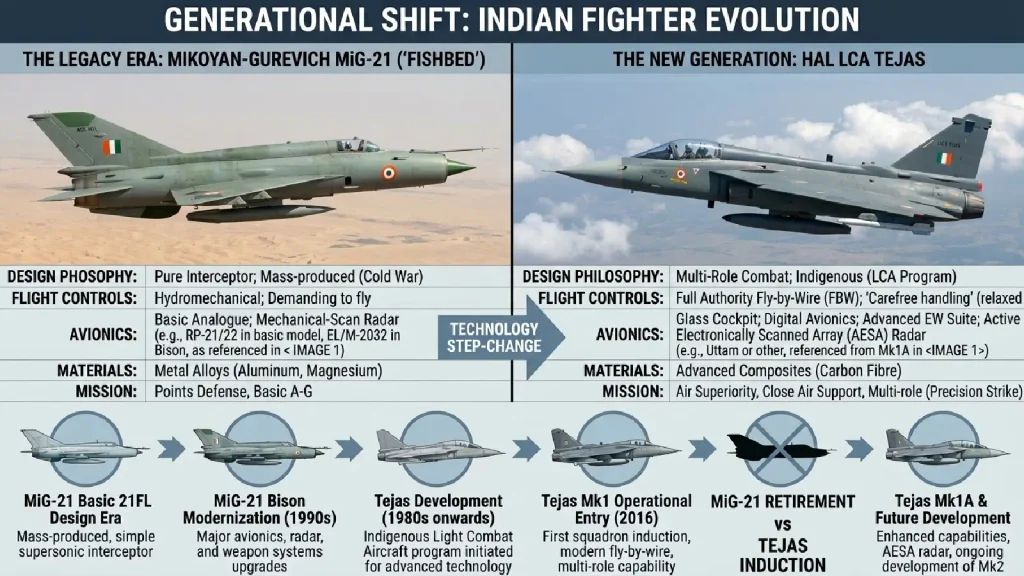
The Tejas and MiG-21 represent two very different generations of Indian fighter aviation. The MiG-21 was a Soviet designed supersonic interceptor that entered Indian service in 1963 and remained in operational use, through upgraded variants, for more than six decades. The LCA Tejas was developed as a modern lightweight multirole fighter with digital flight controls, modern avionics and precision weapon capability. The comparison is therefore less about a simple aircraft versus aircraft contest and more about the technological transition from a legacy interceptor to a contemporary multirole platform.
Mission and Combat Capability
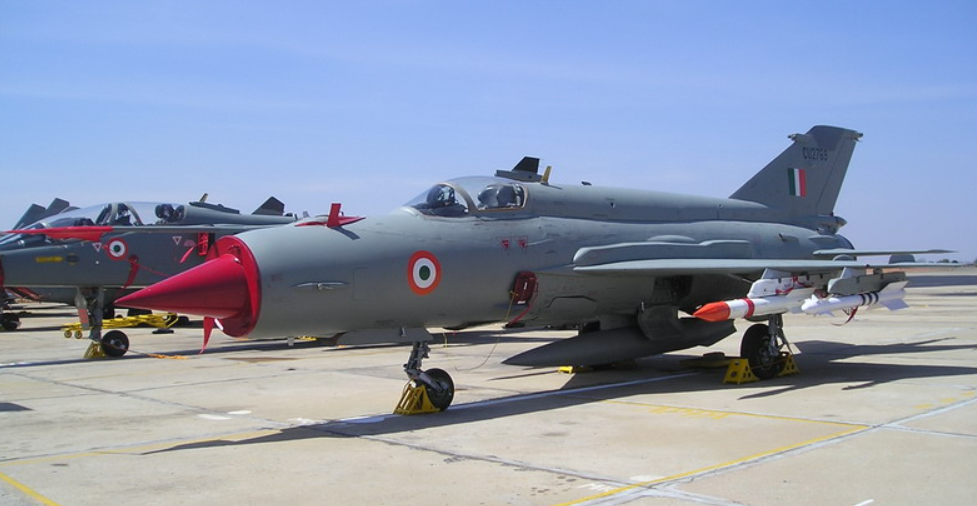
The MiG-21 was fundamentally shaped around interception and air defense, although Indian variants were progressively upgraded for additional missions. The Indian Ministry of Defence says the aircraft served as an interceptor, ground attack platform, frontline air defense fighter and trainer. Its long service life depended heavily on successive upgrades to avionics, radar and weapons.
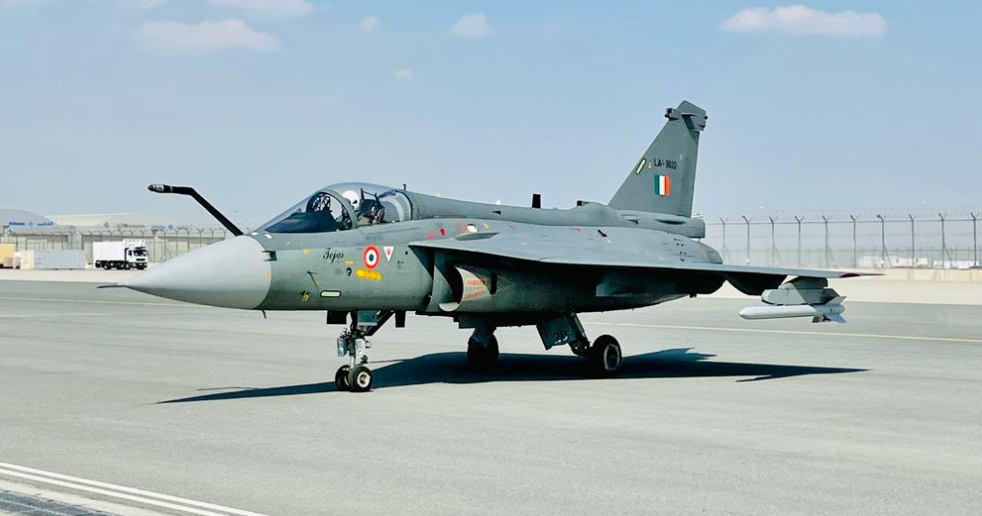
Tejas was designed from the outset as a multirole fighter. HAL identifies air combat, offensive air support, reconnaissance and anti shipping operations among its roles. Later Tejas variants add capabilities such as AESA radar, electronic warfare equipment and beyond visual range weapons.
Sensors, Avionics and Survivability
This is one of the clearest differences. Tejas uses a digital fly by wire flight control system, modern mission computing and a glass cockpit architecture. The Mk1A adds an AESA radar and electronic warfare suite intended to improve situational awareness and survivability.
The MiG-21 fleet received substantial modernization during its Indian service, but its underlying airframe and design philosophy originated in the 1950s. It was ultimately retired from IAF operational service on September 26, 2025.
Tejas: Strengths and Limitations
Strengths
- Modern digital flight controls and avionics
- Designed for multirole operations
- Greater scope for modern sensors, electronic warfare and precision weapons
Limitations
- The Tejas program continues to evolve through different variants
- Capability depends on the specific Tejas version being considered
MiG-21: Strengths and Limitations
Strengths
- Long operational record and extensive Indian service experience
- Proven interceptor and air defense heritage
- Successfully upgraded through several generations of Indian service
Limitations
- Legacy airframe and design architecture
- Limited compared with modern fighters in sensors, avionics and networked combat capability
- No longer operational with the Indian Air Force following its 2025 retirement
Which Is Better?
Tejas may be better for: modern air defense, multirole operations, precision strike and operations requiring contemporary avionics, sensors and electronic warfare capabilities.
MiG-21 may be more relevant for: historical analysis of Indian air power, legacy interceptor operations and understanding the development path that preceded modern Indian fighters.
For a current combat aircraft comparison, Tejas has the clear advantage because the two aircraft belong to fundamentally different technological generations.
Quick Verdict
The Tejas is the more capable modern fighter and is the more relevant platform for current Indian air combat requirements. The MiG-21 remains important because of its extraordinary service history and influence on Indian military aviation, but its operational era has ended. The transition from MiG-21 to Tejas illustrates India’s shift from operating a long serving imported fighter family toward fielding an indigenously developed multirole combat aircraft.

| |
| Price | |
| Our Rating | |
| Manufacturer | Hindustan Aeronautics Limited (HAL) Mikoyan |
| Category | Fighter Jets Fighter Jets |
General Information
| Name | HAL Tejas Mk1A MiG 21 |
| Manufacturer | Hindustan Aeronautics Limited (HAL) Mikoyan Gurevich |
| Country of Origin | India Soviet Union |
| Type / Role | Multirole Light Fighter Interceptor Fighter |
| Generation | 4.5th Second |
| Status | In production / Entering service Mostly Retired |
| First Flight | 28 March 2024 (prototype) 1955 |
| Introduction / In Service Since | 2025 1959 |
| Number Built | 83 on order (IAF) Over 11000 |
| Operators | Indian Air Force (IAF) India, Russia, Egypt, Vietnam (former) |
Dimensions & Structure
| Length | 13.2 m 15.76 m |
| Wingspan | 8.2 m 7.15 m |
| Height | 4.4 m 4.12 m |
| Wing Area | 38.4 m² 23.0 sq m |
| Empty Weight | 6,560 kg 5350 kg |
| Maximum Takeoff Weight (MTOW) | 13,500 kg 9800 kg |
| Internal Weapons Bay | None (external only) None |
| External Hardpoints | 8 4 |
Performance
| Maximum Speed | Mach 1.8 (2,205 km/h) Mach 2.05 |
| Range | 3,000 km (ferry) 1200 km |
| Combat Radius | 500 km 500 km |
| Service Ceiling | 16,000 m (52,500 ft) 17000 m |
| Rate of Climb | 213 m/s 225 m per second |
| Thrust-to-Weight Ratio | 1.07 0.85 |
| G Limits | +8 / –3.5 g +8 |
Powerplant
| Engine Type | GE F404-IN20 afterburning turbofan Turbojet |
| No. of Engines | 1 1 |
| Thrust (each) | 84 kN (with afterburner) 64 kN with afterburner |
| Thrust Vectoring | No No |
| Fuel Capacity | 3,060 L internal (+ drop tanks) 2850 liters |
Armament
| Gun | 23 mm GSh-23 cannon 23 mm cannon |
| Missiles (Air-to-Air) | Astra Mk 1/2, Derby, R-73 R 3, R 60 |
| Missiles (Air-to-Ground) | Spice-2000, Crystal Maze, Harop (UCAV control capable) Limited capability |
| Bombs | Mk-82/84, LGBs, SAAW Free fall bombs |
| Hardpoints | 8 4 |
| Payload Capacity | 5,300 kg 2000 kg |
Avionics & Systems
| Radar | Uttam GaN-based AESA RP 21 Sapfir |
| Radar Range | 200 km (class) 15 to 20 km |
| Electronic Warfare (EW) System | Unified EW Suite (DARE) Basic RWR |
| Targeting System | Litening Pod Optical sight |
| Helmet Display | HMDS No |
| Navigation | GPS/INS Inertial |
| Autopilot / AI Assistance | Digital Fly-By-Wire Basic autopilot |
| Communication | V/UHF + Indigenous Data Link Analog radio |
Stealth & Technology
| Radar Cross Section (RCS) | ≈ 0.5 m² High |
| Stealth Features | 45 % composite airframe None |
| Infrared Signature Reduction | Yes None |
| Sensor Fusion | Yes No |
| Networking Capabilities | Secure Indigenous Data Links None |
Variants
| Special Export Versions | Customized for foreign clients (planned) MiG 21F, MiG 21PF, MiG 21MF, MiG 21bis |
Operational History
| Major Conflicts / Deployments | None – Mk1 used in training & exercises Vietnam War, Indo Pakistan Wars |
| Notable Operators | Indian Air Force India, Vietnam, Egypt |
| Combat Proven? | No (Mk1A new platform) Yes |
| Mission Types | Air superiority, ground attack, reconnaissance Interception, air defense |
Cost & Program
| Unit Cost | ≈ $48 million USD 1 to 2 million USD (historical) |
| Development Cost | ≈ $2.5 billion (LCA program) State funded |
| Program Name | Light Combat Aircraft (LCA) MiG 21 |
| Funding Countries | India Soviet Union |
Additional Information
| Upgrades Planned | Mk2 with GE F414 engine & canards Limited modernization only |
| Future Replacement | Advanced Medium Combat Aircraft (AMCA) MiG 29, Su 30, Tejas |
| Export Restrictions | None (‘Make in India’ program) None historically |
| Notable Achievements | Uttam AESA radar now 100 % indigenous Most produced supersonic fighter |
| Competitors | JF-17 Block III, Saab Gripen C/D, KAI FA-50 F 104 Starfighter |


|
Disclaimer Note
The information provided on TheDefenseWatch.com is for general informational purposes only. While we strive to ensure the accuracy, completeness, and timeliness of our content regarding defense and aerospace products, technologies, and specifications, we cannot guarantee that all information is 100% accurate or up-to-date due to the evolving nature of military technology and classified data.TheDefenseWatch.com does not warrant the reliability, suitability, or availability of the information for any specific purpose. Users are advised to consult official sources, such as manufacturers, government publications, or defense agencies, for precise and verified data before making decisions based on our content.We are not affiliated with any defense manufacturers, governments, or military organizations mentioned. Opinions, reviews, and ratings reflect expert analysis but are subjective and should not be considered endorsements. TheDefenseWatch.com is not responsible for any errors, omissions, or consequences arising from the use of this website’s content.External links are provided for convenience and do not imply endorsement. TheDefenseWatch.com reserves the right to update or modify content without prior notice. By using this website, you agree to our Privacy & Cookies Policy.
New Arrivals
Popular Comparisons
-
 Tejas vs Gripen: Key Differences and Capabilities
View Comparison →
Tejas vs Gripen: Key Differences and Capabilities
View Comparison → -
F-35 vs F-16: Stealth, Sensors and Combat Roles
View Comparison →
-
Tejas Fighter Jet vs F-16 Fighting Falcon: Capability Compared
View Comparison →
-
Rafale Fighter Jet vs F-16 Fighting Falcon : Which Fighter Has the Edge?
View Comparison →
-
Su-57 Fighter Jet vs J-20 Fighter Jet: Stealth and Air Combat Compared
View Comparison →
-
Mirage 2000 vs Tejas Mk1A: Legacy Combat Power vs Indigenous Modernization
View Comparison →
-
Rafale Fighter Jet vs F-22 Raptor: Which Air Dominance Fighter Has the Edge?
View Comparison →
-
Tejas Fighter Jet vs. Rafale Fighter Jet: India’s Indigenous Fighter Meets France’s Proven Multirole Combat Aircraft
View Comparison →
-
F-22 Raptor vs. F-35 Joint Strike Fighter: Which Fifth Generation Fighter Has the Edge?
View Comparison →
-
F-35A vs. F-22 Raptor: Which U.S. Stealth Fighter Dominates Modern Air Combat?
View Comparison →
- F-15E Shot Down Over Iran: How the Dude 44 Crew Was Brought Home

- Operation Mount Hope III: How Two Night Stalker Chinooks Carried a Libyan Hind Out of Chad
- North Korea Fires Ballistic Missile From Wonsan Toward East Sea
- BAE Systems Wins $70.5 Million Trident II D5 Support Contract
- Saudi Arabia Weighs Yemen Offensive to Retake Bab el-Mandeb
- L3Harris Expands WESCAM Manufacturing Focus for Mission-Ready EO/IR Systems
- Northrop Grumman Unveils FORTITUDE RF Chip for Faster Defense Systems
- Northrop Grumman YFQ-48A Talon Blue Completes Autonomous Flight Test
- U.S. Warns Defense Industry Lacks Capacity for Rapid Weapons Surge
- NATO Uses B-1B Bomber in Baltic Air Defense Training