











@2026 – All Right Reserved. TheDefenseWatch.com
- Home
- Defense Systems
- Fighter Jets
- F-18 Hornet Fighter Jet
F-18 Hornet Fighter Jet
Defense Systems Full Specifications
General Information
| Name | EF-18 Hornet / EF-18M |
| Manufacturer | McDonnell Douglas, with Spanish industry participation |
| Country of Origin | United States |
| Type / Role | Multirole fighter |
| Generation | 4th |
| Status | In service |
| First Flight | November 18, 1978 |
| Introduction / In Service Since | Spain, 1986 |
| Number Built | 72 originally acquired under FACA; additional F/A-18 aircraft were later obtained |
| Operators | Spain |
Dimensions & Structure
| Length | 17.07 m |
| Wingspan | 11.43 m |
| Height | 4.67 m |
| Wing Area | Approx. 37.2 m² |
| Empty Weight | 12,701 kg |
| Maximum Takeoff Weight (MTOW) | 25,400 kg |
| Internal Weapons Bay | None |
| External Hardpoints | 9 |
Performance
| Maximum Speed | Mach 1.8 |
| Range | Approx. 780 km |
| Combat Radius | Mission dependent |
| Service Ceiling | 15,240 m |
| Rate of Climb | Approx. 254 m/s |
| Thrust-to-Weight Ratio | Approx. 0.9, configuration dependent |
| G Limits | Approximately +7.5 g |
Powerplant
| Engine Type | General Electric F404 afterburning turbofan |
| No. of Engines | 2 |
| Thrust (each) | Approx. 48.9 kN dry, up to 79 kN with afterburner |
| Thrust Vectoring | No |
| Fuel Capacity | Approx. 4,900 kg internal |
Armament
| Gun | M61A1 Vulcan, 20 mm |
| Missiles (Air-to-Air) | AIM-9 Sidewinder, AIM-120 AMRAAM, legacy AIM-7 Sparrow |
| Missiles (Air-to-Ground) | AGM-65 Maverick, AGM-88 HARM, Taurus KEPD 350 |
| Bombs | GBU-series precision-guided bombs, Mk 80 series and Spanish weapons |
| Hardpoints | 9 external stations |
| Payload Capacity | Up to approximately 7,700 kg |
Avionics & Systems
| Radar | AN/APG-65 family, upgraded through Spanish modernization programs |
| Radar Range | Not publicly confirmed |
| Electronic Warfare (EW) System | Integrated electronic warfare and defensive systems |
| Targeting System | Litening and other targeting pods on configured aircraft |
| Helmet Display | Modernized helmet-mounted systems may vary by configuration |
| Navigation | GPS, inertial navigation and updated navigation systems |
| Autopilot / AI Assistance | Conventional flight-control and mission-computer assistance |
| Communication | Secure tactical communications, including MIDS |
Stealth & Technology
| Radar Cross Section (RCS) | Not publicly disclosed |
| Stealth Features | No true stealth design |
| Infrared Signature Reduction | Limited conventional fighter measures |
| Sensor Fusion | Modernized mission-system integration |
| Networking Capabilities | MIDS and NATO-compatible tactical networking |
Variants
| Special Export Versions | EF-18A / C.15, EF-18B / CE.15, EF-18A+ / B+, EF-18M / BM, F/A-18A |
Operational History
| Major Conflicts / Deployments | NATO air policing, Balkans, Baltic air policing and other allied operations |
| Notable Operators | Spanish Air and Space Force |
| Combat Proven? | Yes |
| Mission Types | Air defense, interception, air superiority, strike, reconnaissance and NATO air policing |
Cost & Program
| Unit Cost | No current production price; original program averaged roughly $35 million per aircraft based on contemporary $2.5 billion program value |
| Development Cost | Not separately applicable to Spain |
| Program Name | FACA, Future Combat and Attack Aircraft |
| Funding Countries | Spain, with U.S. government and industrial participation |
Additional Information
| Upgrades Planned | Continued life-extension and avionics improvements |
| Future Replacement | Eurofighter and future sixth-generation FCAS capabilities |
| Export Restrictions | U.S. origin systems remain subject to applicable U.S. export controls |
| Notable Achievements | Long-term NATO service and repeated air-policing deployments |
| Competitors | F-16, Mirage 2000, Tornado, MiG-29 and other 4th-generation fighters |
PROS
- Strong multirole capability
- Mach 1.8 maximum speed
- Proven NATO interoperability
- Wide range of compatible weapons
- Effective modernization potential
CONS
- Aging airframe design
- No internal weapons bay
- Limited stealth characteristics
- Higher sustainment demands with age
- Being replaced by newer-generation fighters
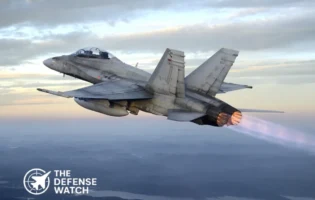
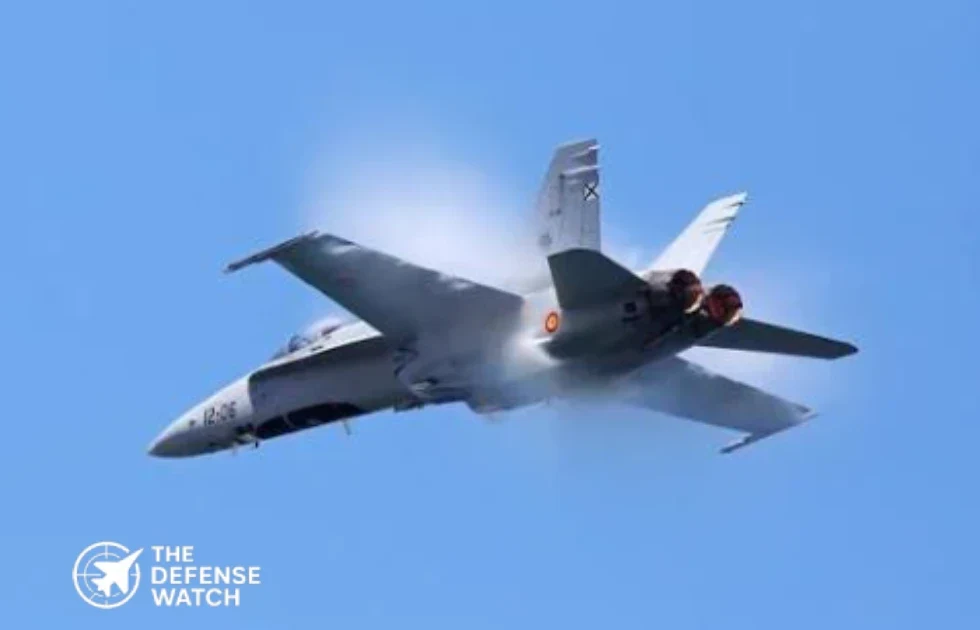
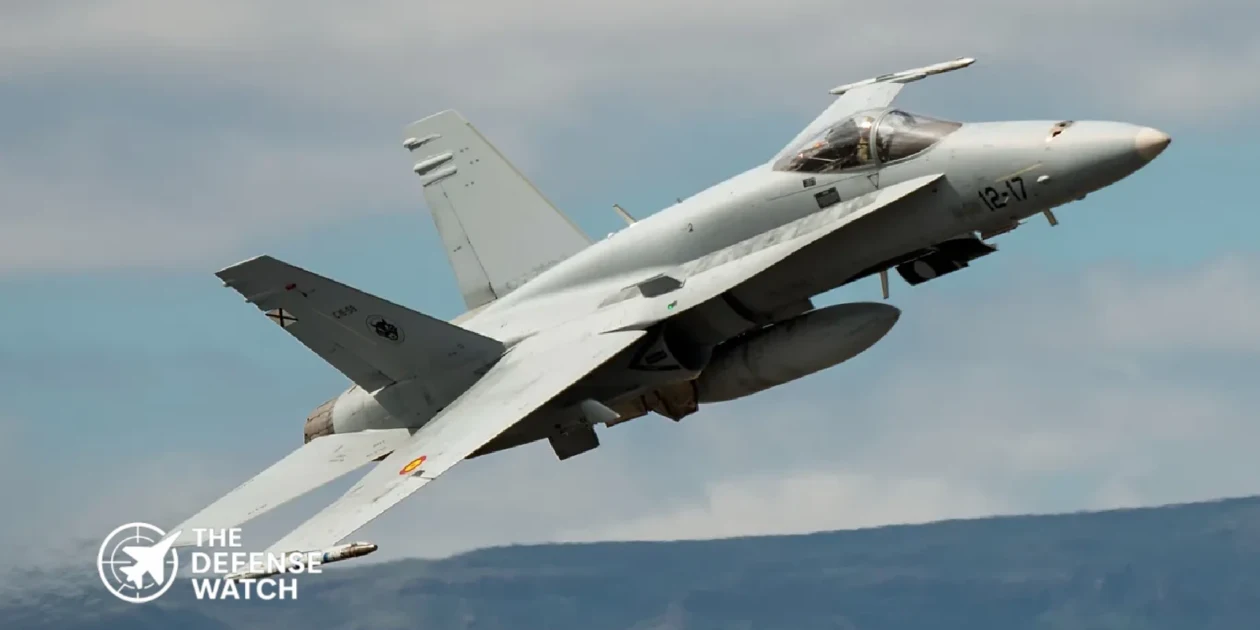
Spanish F-18 Hornet: EF-18M Fighter Jet
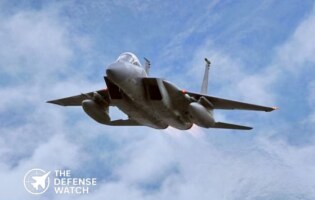
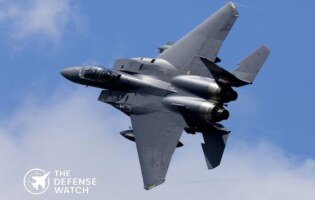
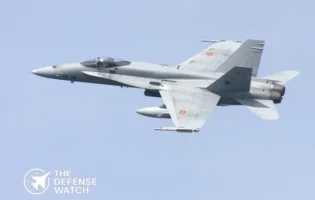
The Spanish F-18, officially designated EF-18 Hornet and later upgraded to the EF-18M, is a multirole fighter operated by the Spanish Air and Space Force. Based on the American McDonnell Douglas F/A-18A/B Hornet, the aircraft was selected by Spain under the FACA program in 1983 and entered Spanish service in 1986. Spain originally acquired 72 aircraft, including 60 single-seat and 12 two-seat variants.
Manufacturer and Purpose
The original aircraft was manufactured by McDonnell Douglas in the United States, with Spanish aerospace industry participation and later modernization work. The EF-18 was developed for both air-to-air and air-to-ground missions. Spain’s aircraft received upgrades that improved avionics, communications, mission computers, electronic warfare capabilities, and weapons integration. The Spanish Air and Space Force identifies the aircraft as the C.15, with modernized aircraft designated C.15M.
Speed, Range and Armament
The Spanish F-18 has a maximum speed of approximately Mach 1.8, a service ceiling of about 50,000 feet, and a published range of roughly 780 km, with ferry range reaching about 3,700 km. It uses two General Electric F404 afterburning turbofan engines.
Its weapons suite includes the M61 20 mm Vulcan cannon, AIM-9 Sidewinder and AIM-120 AMRAAM air-to-air missiles, as well as air-to-ground weapons including AGM-65 Maverick, AGM-88 HARM, precision-guided bombs, and Taurus cruise missiles on appropriately configured aircraft.
The aircraft remains relevant to NATO air policing. On August 16, 2026, a Spanish F-18 operating from Romania under NATO’s air-policing mission shot down a drone that had entered Romanian airspace.
Cost and Price
There is no meaningful current production price because the original Hornet is no longer in production. Spain’s 1983 purchase of 72 F/A-18A aircraft was valued at approximately $2.5 billion in contemporary reporting.
Spanish F-18 Variants
| EF-18A / C.15 | Spanish single-seat fighter |
| EF-18B / CE.15 | Spanish two-seat trainer and combat variant |
| EF-18A+ / B+ | Earlier Spanish modernization standard |
| EF-18M / BM | Modernized Spanish Hornet fleet |
| F/A-18A | Additional aircraft acquired by Spain |
Disclaimer Note
The information provided on TheDefenseWatch.com is for general informational purposes only. While we strive to ensure the accuracy, completeness, and timeliness of our content regarding defense and aerospace products, technologies, and specifications, we cannot guarantee that all information is 100% accurate or up-to-date due to the evolving nature of military technology and classified data.TheDefenseWatch.com does not warrant the reliability, suitability, or availability of the information for any specific purpose. Users are advised to consult official sources, such as manufacturers, government publications, or defense agencies, for precise and verified data before making decisions based on our content.We are not affiliated with any defense manufacturers, governments, or military organizations mentioned. Opinions, reviews, and ratings reflect expert analysis but are subjective and should not be considered endorsements. TheDefenseWatch.com is not responsible for any errors, omissions, or consequences arising from the use of this website’s content.External links are provided for convenience and do not imply endorsement. TheDefenseWatch.com reserves the right to update or modify content without prior notice. By using this website, you agree to our Privacy & Cookies Policy.
New Arrivals
-
 F-15EX Eagle II Fighter
-
UH-60M Black Hawk Helicopter
-
AN/SPY-6(V)1 Air and Missile Defense Radar
-
SR-71 Blackbird Aircraft
-
Boeing F/A-XX Fighter
-
F-15E Strike Eagle Fighter
-
F/A-18E/F Super Hornet Fighter Jet
-
Saab Gripen F Fighter Jet
-
JAS 39E/F Gripen Fighter Jet
-
JAS 39 Gripen Fighter Jet
-
F-35A Lightning II Fighter Jet
-
F/A-18F Super Hornet
Popular Comparisons
-
 F-35 vs F-16: Stealth, Sensors and Combat Roles
View Comparison →
F-35 vs F-16: Stealth, Sensors and Combat Roles
View Comparison → -
Tejas Fighter Jet vs F-16 Fighting Falcon: Capability Compared
View Comparison →
-
Rafale Fighter Jet vs F-16 Fighting Falcon : Which Fighter Has the Edge?
View Comparison →
-
Su-57 Fighter Jet vs J-20 Fighter Jet: Stealth and Air Combat Compared
View Comparison →
-
Mirage 2000 vs Tejas Mk1A: Legacy Combat Power vs Indigenous Modernization
View Comparison →
-
Rafale Fighter Jet vs F-22 Raptor: Which Air Dominance Fighter Has the Edge?
View Comparison →
-
Tejas Fighter Jet vs. Rafale Fighter Jet: India’s Indigenous Fighter Meets France’s Proven Multirole Combat Aircraft
View Comparison →
-
F-22 Raptor vs. F-35 Joint Strike Fighter: Which Fifth Generation Fighter Has the Edge?
View Comparison →
-
F-35A vs. F-22 Raptor: Which U.S. Stealth Fighter Dominates Modern Air Combat?
View Comparison →
-
AGM-114 Hellfire vs. AGM-179 JAGM: Which U.S. Precision Missile Is Better?
View Comparison →
- Finland Begins F-35 Fighter Transition as Arctic and NATO Roles Expand

- Nokia and ICEYE Develop Sovereign LEO Satellite Communications for Defense
- SpaceX Launches Crew-13 to International Space Station
- U.S. Army Selects Five Companies for PrSM Increment 4 Prototypes
- Boeing Wins $2.38 Billion Contract for 22 F-15EX Eagle II Fighters
- Captain Smit Machchhar, Indian Pilot Stabbed Aboard Flydubai Flight, Helped Prevent Disaster
- Hegseth Orders Creation of Autonomous Warfare Command
- Russia Reportedly Uses KRSN Cutting Warhead on Jet-Powered Drone Against Ukraine
- U.S. Army Expands UH-60 Black Hawk Production Pipeline Beyond 100 Aircraft
- Northrop Grumman Uses Robotics and AI to Accelerate F-35 Avionics Production