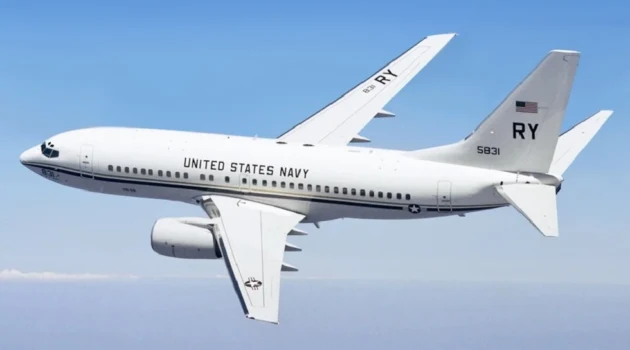
- Northrop Grumman received a contract worth up to $1.196 billion to produce three E-2D Advanced Hawkeye Block II aircraft for the U.S. Navy.
- Naval Air Systems Command awarded the undefinitized production contract, with work continuing through December 2031.
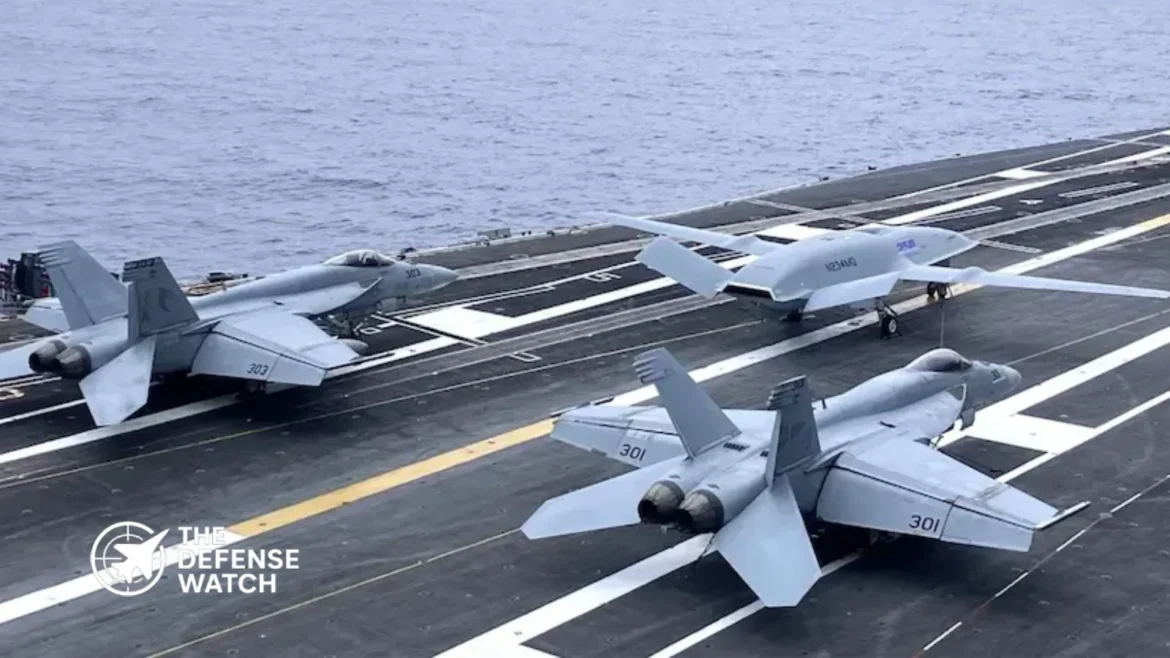
- The E-2D serves as the Navy’s primary airborne early warning, battle management, and network command aircraft for carrier strike groups.
- Initial funding of $583.4 million from Fiscal Year 2026 Navy aircraft procurement has been obligated at contract award.
- The aircraft will strengthen the Navy’s ability to detect cruise missiles, aircraft, drones, and maritime threats over long distances.
The U.S. Navy has awarded Northrop Grumman Systems Corp., Aerospace Systems a not to exceed $1.196 billion undefinitized cost, no fee contract to manufacture, deliver, and support three E-2D Advanced Hawkeye Block II airborne early warning aircraft. According to the Naval Air Systems Command (NAVAIR), headquartered at Patuxent River, Maryland, the program will continue through December 2031 and is funded through Fiscal Year 2026 Navy aircraft procurement appropriations.
NAVAIR stated that $583.39 million in FY2026 aircraft procurement funding has been obligated immediately following contract award. The acquisition was awarded on a sole source basis under 10 U.S. Code 2304(c)(1), which permits noncompetitive awards when only one responsible source is capable of fulfilling the government’s requirements.
Deep Technical & Strategic Context Analysis
The E-2D Advanced Hawkeye Block II is widely regarded as one of the world’s most capable airborne early warning and command and control aircraft. Built around the AN/APY-9 UHF AESA radar, the aircraft can simultaneously detect and track aircraft, cruise missiles, low observable targets, ballistic missile threats, unmanned systems, and surface contacts across hundreds of miles. Unlike conventional surveillance aircraft, the Hawkeye also functions as an airborne battle management node, distributing targeting information through Cooperative Engagement Capability (CEC), Link 16, and emerging Joint All Domain Command and Control (JADC2) architectures.
The platform has become increasingly important as the U.S. Navy prepares for potential high intensity operations in the Indo Pacific and other contested theaters where long range anti ship missiles, stealth aircraft, and drone swarms present growing challenges. Operating from aircraft carriers, the E-2D extends the sensor horizon well beyond that of shipboard radars, allowing carrier strike groups to identify threats earlier and coordinate intercepts using systems such as the SM 6, Standard Missile family, and the F-35C Lightning II. The latest Block II configuration also incorporates improved computing power, expanded networking capacity, and software upgrades designed to support future distributed maritime operations.
The awarded agreement is an undefinitized contract, meaning work can begin before all final pricing terms are negotiated. This procurement approach is typically used when maintaining production schedules is operationally critical. A cost, no fee structure reimburses allowable costs but does not include an additional profit fee during the undefinitized phase, helping the government accelerate procurement while limiting financial exposure until contract terms are finalized.
Contract Breakdown & Details
Contract Value
- Maximum contract value: $1.196 billion
- Contract type: Cost, no fee, undefinitized production contract
- Prime contractor: Northrop Grumman Systems Corp., Aerospace Systems
- Aircraft ordered: Three E-2D Advanced Hawkeye Block II aircraft
- Completion date: December 2031
Funding
- Initial obligation: $583.394 million
- Funding source: Fiscal Year 2026 Navy Aircraft Procurement
Contracting Authority
- Awarding agency: Naval Air Systems Command (NAVAIR)
- Contract number: N0001926C1017
- Competition: Sole source under 10 U.S. Code 2304(c)(1)
Workshare By Location
- Melbourne, Florida: 29.88%
- St. Augustine, Florida: 17.68%
- Liverpool, New York: 13.85%
- Indianapolis, Indiana: 4.95%
- Largo, Florida: 3.66%
- San Leandro, California: 2.52%
- Woodland Hills, California: 2.42%
- Aire sur l’Adour, France: 2.09%
- Rolling Meadows, Illinois: 1.72%
- Wimborne Minster, Dorset, United Kingdom: 0.01%
- Various U.S. locations: 21.22%
Why This Procurement Matters
The E-2D fleet represents one of the Navy’s highest priority aviation capabilities because it serves as the command and sensing hub for carrier air wings. As potential adversaries field increasingly sophisticated long range missiles, electronic warfare systems, and unmanned aircraft, maintaining production of the Hawkeye ensures the Navy preserves its ability to detect, classify, and coordinate responses against complex, multi domain threats.
The latest procurement also supports the broader modernization of the Navy’s carrier strike groups by integrating next generation networking technologies that connect fighters, destroyers, submarines, and joint forces into a common operational picture. As the Navy continues expanding distributed maritime operations and joint force integration, the E-2D remains one of the key enablers of future U.S. naval air power.
Executive Summary:
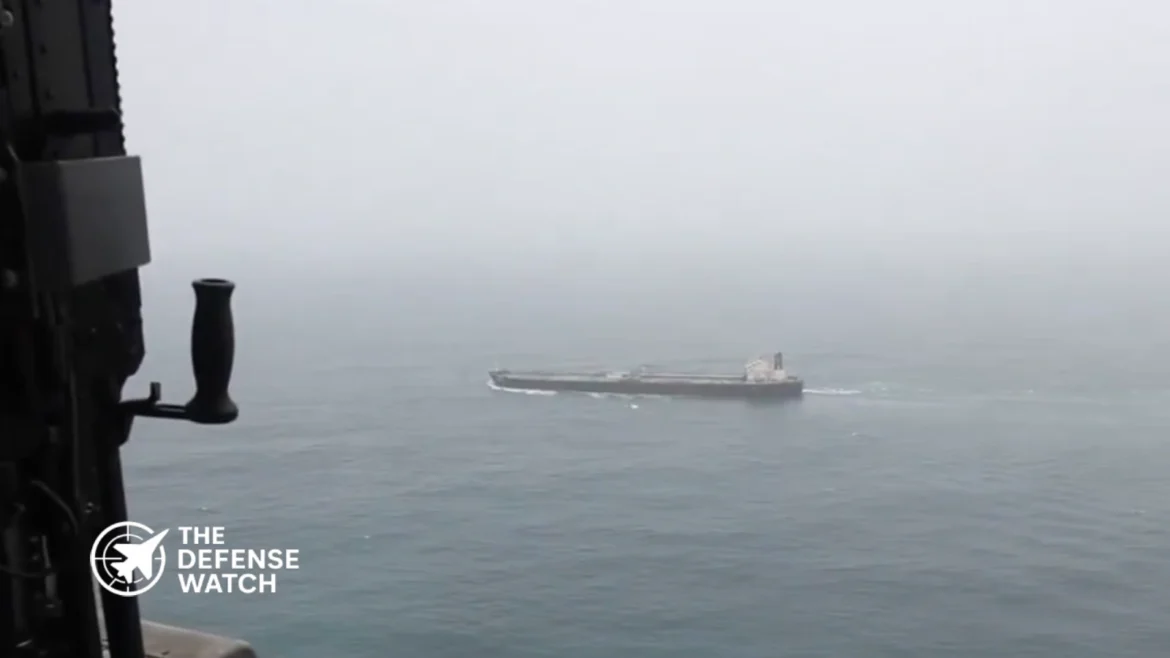
U.S. Marines assigned to the 11th Marine Expeditionary Unit conducted a verification boarding of the commercial tanker M/T Wen Yao in the Gulf of Oman on July 16 as part of ongoing American maritime security operations. U.S. officials stated that forces have redirected multiple commercial vessels, disabled one non-compliant vessel, and boarded another while enforcing the current U.S. naval blockade targeting maritime traffic associated with Iran.
U.S. Naval Blockade Operations Expand With Marine Boarding In Gulf Of Oman
The U.S. naval blockade entered a new operational phase after Marines from the 11th Marine Expeditionary Unit (MEU) conducted a verification boarding of the commercial tanker M/T Wen Yao in the Gulf of Oman on July 16. According to official U.S. military statements, the operation formed part of broader maritime security activities supporting the ongoing blockade directed against Iran.
American officials stated that, as of July 17, U.S. forces had redirected three commercial vessels attempting to pass through the blockade, disabled one vessel after it failed to comply with instructions, and completed one verification boarding to ensure compliance with U.S. maritime enforcement measures.
The operation comes amid heightened military activity across the northern Arabian Sea and the Strait of Hormuz, one of the world’s most strategically important maritime chokepoints.
Marines Execute Verification Boarding
The boarding operation involved Marines from the 11th Marine Expeditionary Unit, a forward deployed crisis response force that routinely operates alongside U.S. Navy amphibious ready groups throughout the Indo-Pacific and Middle East.
Verification boardings are standard maritime interdiction procedures designed to:
- Confirm vessel identity
- Inspect cargo documentation
- Verify compliance with applicable military directives
- Ensure no prohibited materials or sanctioned cargo are being transported
Unlike full seizures, verification boardings are generally intended to establish compliance while minimizing disruption to lawful commercial shipping.
According to the U.S. military, the boarding of M/T Wen Yao concluded after Marines verified the vessel’s status.
U.S. Reports Multiple Enforcement Actions
American military officials stated that blockade enforcement has produced several operational outcomes since implementation.
| Reported Enforcement Action | Status |
|---|---|
| Commercial vessels redirected | 3 |
| Vessel disabled after non-compliance | 1 |
| Verification boarding completed | 1 |
Officials said the Strait of Hormuz and surrounding international waters remain open to lawful maritime traffic while enforcement actions continue against vessels attempting to violate the U.S. blockade.
No additional operational details regarding the disabled vessel or redirected ships were immediately released.
Why The Strait Of Hormuz Matters
The Strait of Hormuz remains one of the world’s most strategically significant maritime corridors.
Approximately one-fifth of globally traded crude oil typically transits through the narrow waterway, linking Gulf energy producers with markets across Asia, Europe, and North America. Any sustained military activity in the region has immediate implications for global shipping, insurance costs, and naval force posture.
The Gulf of Oman serves as the primary approach to the Strait, making it a key operating area for U.S. and coalition naval forces responsible for monitoring commercial shipping and maintaining maritime security.
Maritime Interdiction Is A Core Naval Capability
Verification boardings are conducted under established maritime interdiction procedures using specially trained boarding teams.
Marine Expeditionary Units routinely maintain Visit, Board, Search, and Seizure (VBSS) capabilities that allow personnel to:
- Conduct compliant boardings
- Inspect commercial vessels
- Secure crews when required
- Verify manifests and cargo
- Support sanctions and embargo enforcement
These missions are typically supported by helicopters, rigid hull inflatable boats, unmanned surveillance assets, and nearby U.S. Navy surface combatants that provide force protection throughout the operation.
Strategic Analysis
The latest boarding demonstrates that the current U.S. operation extends beyond maintaining naval presence to active maritime enforcement.
Verification boardings provide commanders with an intermediate option between passive monitoring and kinetic action. They enable U.S. forces to inspect vessels, gather intelligence, verify cargo documentation, and reinforce compliance without immediately escalating to vessel seizure.
The reported redirection of commercial ships, combined with the disabling of a non-compliant vessel, indicates that enforcement measures now include graduated responses based on vessel behavior. Such actions are intended to preserve freedom of navigation for lawful commercial traffic while preventing movement that U.S. authorities consider inconsistent with blockade requirements.
Operationally, maintaining continuous enforcement across the Gulf of Oman and Strait of Hormuz requires significant naval resources. Surface combatants, maritime patrol aircraft, intelligence assets, logistics support ships, and Marine boarding teams must operate together to monitor one of the world’s busiest maritime transit routes.
From a broader defense perspective, the operation highlights the importance of expeditionary Marine forces in maritime security missions. Modern Marine Expeditionary Units are increasingly employed not only for amphibious assault and crisis response, but also for interdiction, shipping security, and enforcement operations in contested maritime environments.
Regional Security Outlook
The Gulf of Oman and Strait of Hormuz remain central to regional security planning due to their importance for global commerce and military mobility.
Continued U.S. enforcement operations are expected to maintain a significant naval presence in the area while monitoring commercial shipping and responding to vessels that fail to comply with operational directives.
Military officials have emphasized that lawful commercial navigation remains open while enforcement efforts focus specifically on vessels determined to be violating the blockade.
Deep Technical & Strategic Context Analysis
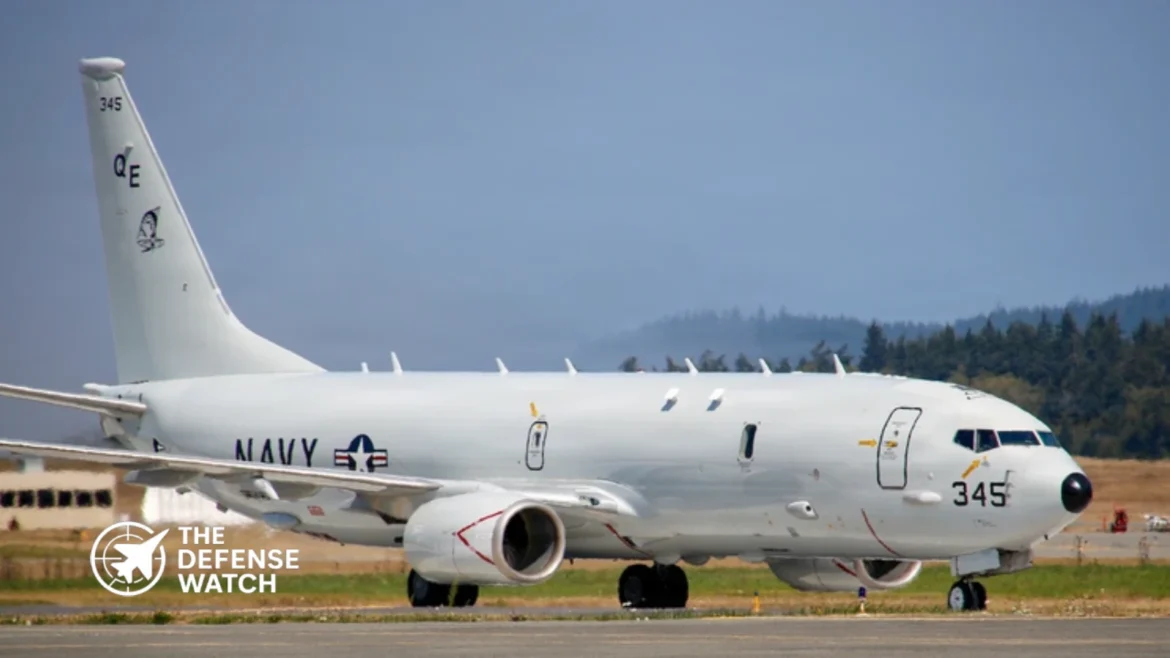
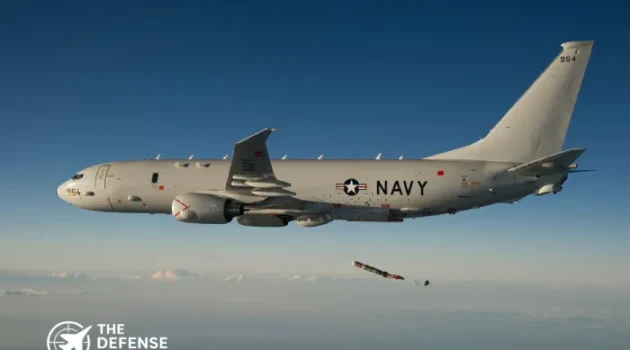
The Boeing P-8A Poseidon has become the U.S. Navy’s principal maritime patrol and reconnaissance aircraft, replacing the aging P-3C Orion fleet. Based on the commercial Boeing 737-800ERX airframe, the aircraft combines long-range endurance with advanced sensors, electronic support measures, secure communications, and anti-submarine warfare capabilities. Equipped with the AN/APY-10 maritime surveillance radar, acoustic processing systems for sonobuoys, electro-optical and infrared sensors, and a comprehensive mission management suite, the P-8A is designed to detect, track, and engage submarines and surface vessels across vast ocean areas.
- The U.S. Navy awarded Raytheon a $13.5 million contract to supply 50 weapon repairable assemblies for the P-8A Poseidon fleet.
- The sustainment effort runs from July 2026 through September 2029 and supports long-term fleet readiness.
- Germany will receive support under the Foreign Military Sales program, accounting for approximately 2 percent of the contract value.
- Weapon repairable assemblies are critical line replaceable components that help maintain mission capable aircraft while reducing lifecycle costs.
- The award reinforces continued investment in sustaining the Navy’s primary long range maritime patrol and anti-submarine warfare aircraft.
Beyond anti-submarine warfare, the platform increasingly supports maritime domain awareness, intelligence collection, over-the-horizon targeting, and joint operations across the Indo-Pacific, North Atlantic, and European theaters. Allied operators, including Germany, the United Kingdom, Australia, Norway, New Zealand, South Korea, and India, have expanded the global P-8 fleet, making logistics and sustainment increasingly important for coalition operations.
The contract specifically covers weapon repairable assemblies (WRAs), which are complex line-replaceable electronic and weapon interface components designed to be repaired rather than discarded after failure. Maintaining an inventory of WRAs enables maintainers to rapidly replace malfunctioning equipment, minimizing aircraft downtime while defective assemblies are refurbished. This approach significantly improves fleet availability and lowers long-term sustainment costs.
The award is structured as a firm-fixed-price delivery order, meaning Raytheon assumes responsibility for delivering the required assemblies at an agreed price regardless of production costs. Unlike cost-reimbursement contracts, this structure transfers greater financial risk to the contractor while providing predictable budgeting for the Navy, particularly for mature production and sustainment requirements.
Contract Breakdown & Details
Contract Overview
- Contract Value: $13,522,168
- Contractor: Raytheon Co.
- Location: McKinney, Texas
- Contract Type: Firm-Fixed-Price Delivery Order
- Ordering Agreement: N00383-23-G-SV01
- Delivery Order: N00383-26-F-SV0B
- Performance Period: July 2026 through September 2029
- Contracting Activity: Naval Supply Systems Command Weapon Systems Support (NAVSUP WSS), Philadelphia, Pennsylvania
Scope of Work
- Procurement of four different weapon repairable assembly types
- Total Quantity: 50 assemblies
- Supports sustainment of the P-8A Poseidon maritime patrol aircraft fleet
- Production and support work performed entirely in McKinney, Texas
Funding Breakdown
- U.S. Navy Fiscal Year 2026 Working Capital Funds: $13,308,427 (98%)
- Foreign Military Sales (Germany): $213,741 (2%)
Foreign Military Sales
- Supports Germany’s P-8A Poseidon program
- German participation represents 2 percent of the contract value
- Demonstrates expanding multinational sustainment cooperation among P-8 operators
Procurement Details
- Solicitation: Sole-source
- Authority: 10 U.S. Code 3204(a)(1)
- Offers Received: One
Why This Contract Matters
Although relatively modest in dollar value, sustainment contracts like this form the backbone of military readiness. Modern maritime patrol aircraft rely on hundreds of sophisticated electronic modules and mission system components that require continuous replacement and repair throughout decades of service.
As the U.S. Navy expands P-8A operations across contested maritime regions, particularly in the Indo-Pacific and North Atlantic, maintaining high mission capable rates is as strategically important as acquiring new aircraft. Reliable availability of repairable assemblies ensures aircraft spend more time conducting operational missions and less time awaiting maintenance.
The inclusion of Germany under the Foreign Military Sales program also reflects the growing international P-8 logistics network. Common sustainment arrangements improve interoperability, simplify supply chains, and strengthen coalition maritime surveillance capabilities among allied operators.
Executive Summary:
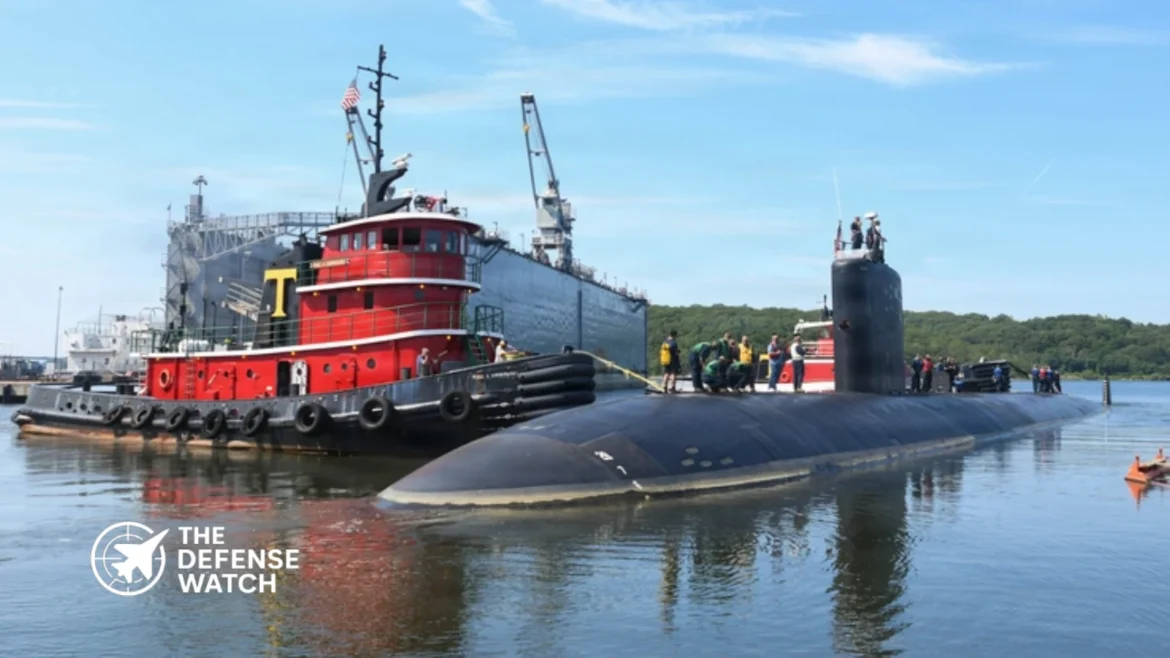
The U.S. Navy has announced that the Los Angeles-class fast attack submarine USS Jefferson City (SSN 759) will shift its homeport from Guam to Joint Base Pearl Harbor-Hickam in Hawaii. The move reflects an ongoing redistribution of U.S. submarine forces across the Indo-Pacific while maintaining forward undersea capabilities in one of the world’s most strategically contested maritime regions.
USS Jefferson City Homeport Change Marks Latest U.S. Navy Force Realignment
The USS Jefferson City homeport change represents another step in the U.S. Navy’s long-term effort to optimize submarine operations throughout the Indo-Pacific. According to the U.S. Navy, the Los Angeles-class attack submarine will relocate from Naval Base Guam to Joint Base Pearl Harbor-Hickam during 2026 following nearly four years of forward-deployed operations.
Navy officials stated that the relocation supports operational readiness while balancing maintenance requirements, crew sustainability, and fleet distribution across the Pacific theater.
USS Jefferson City has operated from Guam since November 2022, serving as one of several nuclear-powered attack submarines positioned close to potential operational hotspots in the Western Pacific.
Guam Remains A Critical Forward Submarine Hub
Although USS Jefferson City is leaving Guam, the island remains one of the U.S. Navy’s most important forward submarine bases.
Naval Base Guam enables attack submarines to operate significantly closer to the East China Sea, South China Sea, Philippine Sea, and Taiwan Strait than submarines deploying from Hawaii or the U.S. West Coast. The location reduces transit times and allows submarines to spend more time conducting intelligence collection, surveillance, anti-submarine warfare, and deterrence patrols.
The Navy routinely rotates Virginia-class and Los Angeles-class submarines through Guam to sustain a continuous forward presence.
Rather than indicating a reduction in regional commitment, the relocation appears to be part of the Navy’s broader rotational management of submarine assets.
USS Jefferson City’s Operational History
Commissioned in 1992, USS Jefferson City (SSN 759) is a Flight III Los Angeles-class nuclear-powered fast attack submarine built by Newport News Shipbuilding.
Designed for multi-mission operations, the submarine supports:
- Anti-submarine warfare
- Anti-surface warfare
- Intelligence, surveillance, and reconnaissance (ISR)
- Land-attack missions using Tomahawk cruise missiles
- Special operations support
- Maritime strike operations
Like other improved Los Angeles-class submarines, USS Jefferson City incorporates vertical launch tubes for Tomahawk missiles alongside torpedo tube-launched weapons.
USS Jefferson City Specifications
Specification Details Class Los Angeles-class (Flight III) Hull Number SSN 759 Commissioned 1992 Length Approximately 110.3 meters (362 feet) Beam 10 meters Displacement Approximately 6,900 tons submerged Propulsion S6G nuclear reactor Speed More than 25 knots submerged Primary Weapons Mk 48 torpedoes, Tomahawk cruise missiles, naval mines Homeport (Current) Naval Base Guam Future Homeport Joint Base Pearl Harbor-Hickam Why Pearl Harbor Matters
Joint Base Pearl Harbor-Hickam serves as one of the Navy’s principal submarine centers in the Pacific.
The installation supports multiple fast attack submarines, maintenance infrastructure, logistics facilities, submarine squadron headquarters, and extensive training resources.
Moving Jefferson City to Hawaii provides several operational advantages:
- Improved access to depot-level maintenance.
- Integration with Pacific Fleet training activities.
- Reduced operational strain on Guam’s expanding naval infrastructure.
- Greater flexibility for future submarine force rotations.
Pearl Harbor also acts as a central staging location for submarines deploying throughout the Indo-Pacific, enabling rapid movement toward Northeast Asia, Southeast Asia, or the Central Pacific depending on operational requirements.
Strategic Context: Balancing Forward Presence And Fleet Sustainment
The homeport change comes as the U.S. Navy continues modernizing its submarine force while maintaining persistent undersea deterrence across the Indo-Pacific.
Attack submarines remain among the Navy’s most valuable strategic assets because they can operate covertly for extended periods, conduct intelligence collection, strike land targets with precision weapons, and track adversary submarines without revealing their position.
At the same time, the Navy faces increasing maintenance demands across its submarine fleet. Efficiently distributing submarines among Guam, Pearl Harbor, San Diego, and other Pacific bases helps balance operational availability with long-term fleet readiness.
The Navy is also gradually expanding the number of Virginia-class submarines available for Pacific operations. As newer submarines enter service and older Los Angeles-class boats approach retirement, periodic homeport adjustments allow commanders to position the right capabilities where they are most needed.
Operational Implications For The Indo-Pacific
From a strategic perspective, the relocation does not significantly alter the United States’ undersea posture in the Western Pacific.
Instead, it reflects a force management approach that emphasizes rotational deployments rather than permanently assigning every submarine to forward bases.
Guam continues to host rotational attack submarines capable of rapidly responding to regional contingencies, while Pearl Harbor remains the primary logistics and sustainment hub supporting sustained Pacific submarine operations.
This balance allows the Navy to preserve high operational readiness while ensuring submarines receive timely maintenance, modernization, and crew support.
As competition intensifies across the Indo-Pacific maritime domain, maintaining an agile and resilient submarine force remains central to U.S. deterrence strategy. Homeport adjustments such as the USS Jefferson City relocation illustrate how logistical planning and force distribution contribute to broader operational effectiveness without reducing forward military presence.
Executive Summary:
The United States is scheduled to begin enforcing a maritime blockade on Iran on Tuesday as part of a broader effort to increase economic and military pressure on Tehran. The operation is expected to focus on preventing the movement of restricted cargo and military-related supplies while maintaining security across critical regional shipping lanes.
U.S. Begins Maritime Blockade On Iran
The U.S. maritime blockade on Iran is set to begin Tuesday, representing one of Washington’s most significant maritime enforcement measures in recent years. According to Defense News, the operation follows U.S. government directives aimed at tightening restrictions on Iran’s maritime trade while increasing military presence across the region.
The enforcement effort will involve U.S. naval assets operating in and around key waterways, including the Persian Gulf, Gulf of Oman, and approaches to the Strait of Hormuz. These areas remain among the world’s most strategically important maritime corridors due to the volume of global energy shipments that transit through them each day.
Officials have stated that the mission is intended to intercept prohibited cargo, enforce existing sanctions, and prevent the transfer of military equipment or other restricted materials.
Why The Strait Of Hormuz Matters
The Strait of Hormuz remains one of the world’s most important maritime chokepoints.
Approximately one-fifth of globally traded crude oil passes through the narrow waterway, making uninterrupted navigation essential for international energy markets. Any increase in military activity within the region attracts close attention from governments, commercial shipping companies, and global energy traders.
Key characteristics include:
| Strategic Factor | Significance |
|---|---|
| Global oil shipments | Roughly 20% of global crude exports transit the Strait |
| Commercial traffic | Hundreds of merchant vessels operate through the area each month |
| Military presence | U.S., allied, and regional naval forces regularly conduct patrols |
| Regional importance | Connects the Persian Gulf with international shipping lanes |
U.S. Navy Expected To Lead Enforcement Operations
Although operational details remain limited, the enforcement mission is expected to rely primarily on U.S. Navy surface combatants supported by maritime patrol aircraft, intelligence assets, and logistics vessels already deployed within U.S. Central Command’s area of responsibility.
Carrier strike groups, guided missile destroyers, cruisers, and surveillance aircraft routinely operate throughout the region, providing the United States with substantial maritime domain awareness.
These assets allow commanders to:
- Monitor commercial shipping traffic.
- Conduct vessel identification and tracking.
- Perform compliant maritime interdiction operations.
- Coordinate with coalition naval partners.
- Maintain freedom of navigation across international waters.
Officials have not publicly disclosed the full rules governing inspections or interdictions, but maritime enforcement operations typically follow established international legal frameworks and sanctions authorities.
Strategic Implications For Regional Security
The blockade represents more than a naval deployment. It reflects a broader shift toward using maritime power to increase economic and strategic pressure on Iran without immediately expanding conventional military operations.
From a defense planning perspective, maritime enforcement offers several advantages:
- Naval forces can maintain a persistent presence without establishing additional land bases.
- Maritime interdiction enables targeted enforcement against prohibited cargo rather than broad restrictions on commercial shipping.
- Coalition naval operations improve intelligence sharing and surveillance across a large operating area.
For U.S. military planners, maintaining credible maritime control in the Persian Gulf also supports broader objectives such as protecting allied shipping, reassuring regional partners, and preserving freedom of navigation.
Operational Challenges
Despite significant naval capabilities, enforcing a maritime blockade presents considerable operational complexity.
The Persian Gulf is among the busiest commercial waterways in the world. Distinguishing legitimate commercial cargo from prohibited shipments requires extensive intelligence collection, legal review, and coordination among military and civilian agencies.
Additional operational challenges include:
- High commercial shipping density.
- Limited maneuvering space within the Strait of Hormuz.
- Potential use of smaller vessels for covert logistics.
- Continuous surveillance requirements across a large maritime area.
- Close coordination with allied navies and regional governments.
These factors require sustained intelligence, reconnaissance, and command-and-control capabilities rather than relying solely on naval firepower.
Broader Defense And Geopolitical Context
The enforcement action comes amid continued instability across the Middle East, where maritime security has become an increasingly important component of regional defense strategy.
In recent years, the United States has expanded multinational maritime security initiatives to protect commercial shipping from attacks, deter weapons smuggling, and ensure access to critical sea lanes. These missions have included cooperation with allied naval forces operating under combined maritime task forces.
For Washington, maintaining secure maritime routes remains a strategic priority because disruptions in the Gulf can affect global energy markets, international trade, and military logistics across multiple theaters.
The latest blockade also underscores the growing role of naval power as a tool of economic and strategic competition, complementing sanctions, diplomatic measures, and regional security partnerships.
Outlook
The coming days will likely determine how the maritime blockade is implemented in practice and whether enforcement operations remain limited to inspections and sanctions compliance or evolve into a longer-term naval security mission.
Defense analysts will closely monitor the operational tempo of U.S. naval forces, commercial shipping activity through the Strait of Hormuz, and any changes in regional maritime security conditions.
While the long-term effectiveness of the blockade will depend on sustained enforcement and international cooperation, the operation represents a significant development in U.S. naval strategy in the Middle East and reinforces the central role of maritime power in contemporary geopolitical competition.
- The U.S. Navy awarded TOTE Services a $2.206 billion contract to manage construction of up to eight Medium Landing Ships.
- Contract options could increase the total value to approximately $2.61 billion through September 2031.
- The program directly supports the Marine Corps’ Force Design modernization and distributed maritime operations strategy.
- Construction work will primarily take place in Wisconsin and Louisiana with funding already obligated for FY2025 and FY2026.
The U.S. Navy has awarded TOTE Services LLC of Jacksonville, Florida, a $2.206 billion firm-fixed-price contract to manage construction of up to eight Medium Landing Ships (LSMs), marking one of the largest recent investments in the Marine Corps’ next-generation amphibious logistics fleet.
According to the Naval Sea Systems Command (NAVSEA), which serves as the contracting activity, TOTE Services will oversee vessel construction management, including awarding and administering shipbuilder subcontracts for the new fleet. If all contract options are exercised, the total value could rise to $2.605 billion, with work extending through September 2031.
The award is financed through fiscal year 2025 and fiscal year 2026 Shipbuilding and Conversion (Navy) appropriations and is specifically supported by funding provided under the One Big Beautiful Bill Act (Public Law 119-21), which includes measures intended to expand America’s naval industrial base and strengthen domestic shipbuilding capacity.
Deep Technical & Strategic Context Analysis
The Medium Landing Ship, formerly known as the Light Amphibious Warship (LAW) during its early development, is a cornerstone of the U.S. Marine Corps‘ Force Design 2030 transformation. Rather than relying exclusively on large amphibious assault ships, the Marine Corps plans to employ numerous smaller, lower-signature vessels capable of transporting Marines, vehicles, missile systems, and logistics supplies between dispersed islands and coastal operating locations.
These ships are designed to support Expeditionary Advanced Base Operations (EABO), a concept that emphasizes distributed forces operating inside contested maritime environments, particularly across the Indo-Pacific. In a potential high-end conflict, Medium Landing Ships would enable Marine Littoral Regiments to rapidly reposition anti-ship missile batteries, sustain forward forces, and complicate an adversary’s targeting by avoiding predictable operating patterns associated with larger amphibious ships.
The contract awarded to TOTE Services is notable because it is structured as a firm-fixed-price agreement, meaning the contractor assumes greater responsibility for controlling project costs. Unlike cost-reimbursement contracts, where the government bears much of the financial risk associated with unforeseen expenses, a firm-fixed-price contract establishes a predetermined payment, encouraging efficient schedule management and cost discipline. In this case, TOTE Services is acting as the vessel construction manager, coordinating multiple shipbuilders and subcontractors rather than serving as the primary shipbuilder itself, an approach intended to leverage commercial shipbuilding expertise while accelerating production.
Contract Breakdown & Details
Contract Overview
- Prime contractor: TOTE Services LLC, Jacksonville, Florida
- Contract value: $2.206 billion
- Maximum value with options: $2.605 billion
- Contract type: Firm-fixed-price
- Program: Medium Landing Ship (LSM)
- Contracting authority: Naval Sea Systems Command (NAVSEA)
Workshare Distribution
- Marinette, Wisconsin: 65%
- Houma, Louisiana: 16%
- Jacksonville, Florida: 9%
- Other U.S. locations: 10%
Schedule
- Base contract completion: June 2030
- With all options exercised: September 2031
Funding Breakdown
- FY2025 Shipbuilding and Conversion (Navy): $1.934 billion (88%)
- FY2026 Shipbuilding and Conversion (Navy): $272.1 million (12%)
- Funding obligated at award: 100%
- Funds expire: No, they remain available beyond the current fiscal year.
Procurement Process
- Competition: Full and open competition through SAM.gov
- Offers received: One
- Contract number: N00024-26-C-2421
Strategic Importance for U.S. Shipbuilding
The award represents more than the acquisition of a new class of naval vessels. It also reflects Washington’s broader effort to rebuild domestic shipbuilding capacity after years of industrial base constraints. By distributing work across multiple shipyards and suppliers in Wisconsin, Louisiana, Florida, and other locations, the program supports skilled manufacturing jobs while expanding production capacity for future Navy and Marine Corps requirements.
The Medium Landing Ship program has gained increasing importance as the Pentagon shifts its focus toward maritime competition in the Indo-Pacific. Smaller, commercially derived vessels that can operate in shallow waters and austere ports are expected to provide greater operational flexibility than traditional amphibious platforms during distributed operations against near-peer adversaries.
If delivered on schedule, the first ships from this contract will significantly enhance the Marine Corps’ ability to sustain expeditionary forces across contested littoral regions while supporting the Navy’s broader vision for distributed maritime operations.
Lockheed Martin has secured a new U.S. Navy contract worth up to $1.38 billion to provide engineering, integration, testing, and sustainment services for the AEGIS Combat System, one of the world’s most capable naval air and missile defense architectures.
According to the Naval Sea Systems Command (NAVSEA), Lockheed Martin Rotary and Mission Systems, based in Moorestown, New Jersey, received an initial $60.6 million cost-plus-award-fee, cost-plus-fixed-fee, and cost (no-fee) contract to support AEGIS ship integration and testing for surface combatants and associated tactical sites.
The contract contains multiple options that could increase its total value to approximately $1.383 billion if exercised, extending work through June 2036. The award was competitively procured through the System for Award Management (SAM) website, with two offers received.
- Lockheed Martin received an initial $60.6 million Navy contract that could grow to $1.38 billion through exercised options.
- The work supports integration, testing, sustainment, and modernization of the AEGIS Combat System aboard U.S. Navy surface combatants.
- Engineering efforts also cover AEGIS Ashore ballistic missile defense facilities in Romania and Poland.
- The contract ensures long term combat system readiness as the Navy expands missile defense and integrated air defense capabilities.
- Performance is scheduled through 2027, with options extending work until June 2036.
Deep Technical & Strategic Context Analysis
The AEGIS Combat System serves as the backbone of U.S. Navy air and missile defense operations. Installed aboard Arleigh Burke-class guided missile destroyers, Ticonderoga-class cruisers, and adapted for Aegis Ashore missile defense installations in Europe, the system combines powerful phased array radar, command and control software, advanced fire control, and interceptor missiles into an integrated combat architecture.
Modern AEGIS configurations employ the AN/SPY-1 radar on legacy ships and increasingly the AN/SPY-6(V) Air and Missile Defense Radar on newer destroyers. Together with the Baseline 9 and Baseline 10 software architectures, the combat system enables simultaneous engagement of ballistic missiles, cruise missiles, hypersonic glide vehicle threats under development, aircraft, unmanned aerial systems, and surface targets. The Navy continues upgrading AEGIS to support Integrated Air and Missile Defense (IAMD), Cooperative Engagement Capability (CEC), and Joint All Domain Command and Control (JADC2), making software integration and continuous testing as strategically important as hardware modernization.
This contract primarily funds the engineering required to ensure new combat system software, sensors, launch systems, and weapons function reliably across multiple ship classes. Unlike a production contract for new ships or missiles, this effort focuses on systems integration, verification, and operational testing, reducing technical risk before fleet-wide deployment.
The contract structure also reflects the complexity of combat system engineering. A cost-plus-award-fee arrangement reimburses allowable costs while providing additional incentives for exceptional technical performance and schedule execution. A cost-plus-fixed-fee component pays a predetermined fee regardless of actual costs, reducing contractor incentives to cut corners while supporting highly uncertain engineering work where precise costs cannot be estimated in advance. Such contract types are commonly used for sophisticated defense software development, systems integration, and test activities where technical challenges evolve throughout execution.
Contract Breakdown & Details
Scope of Work
Lockheed Martin will provide:
- AEGIS combat system integration
- Engineering support
- Developmental and operational testing
- Mission planning support
- Combat system verification
- Surface combatant modernization support
- Support for related tactical test facilities
- Lifecycle sustainment of deployed combat systems
The work supports operational readiness across active fleet units while enabling future combat system upgrades.
Geographic Distribution of Work
The contract work will be performed across several key naval engineering and fleet support locations:
| Location | Share of Work |
|---|---|
| Moorestown, New Jersey | 36% |
| Norfolk/Virginia Beach, Virginia | 25% |
| Bath, Maine | 11% |
| Pascagoula, Mississippi | 10% |
| San Diego, California | 9% |
| Deveselu, Romania | 4% |
| Redzikowo, Poland | 3% |
| Other locations | 2% |
The inclusion of Romania and Poland highlights continued U.S. support for NATO’s Aegis Ashore ballistic missile defense network, which forms a key component of the European Phased Adaptive Approach designed to defend allied territory against ballistic missile threats.
Funding Breakdown
Initial obligations total more than $19 million, sourced from multiple Navy appropriations:
- 43%, Fiscal Year 2026 Operations and Maintenance (Navy)
- 27%, Fiscal Year 2026 Other Procurement (Navy)
- 16%, Fiscal Year 2024 Shipbuilding and Conversion (Navy)
- 4%, Fiscal Year 2020 Shipbuilding and Conversion
- 4%, Fiscal Year 2017 Shipbuilding and Conversion
- 4%, Fiscal Year 2023 Shipbuilding and Conversion
- 2%, Fiscal Year 2021 Shipbuilding and Conversion
The Navy noted that $8.24 million of Fiscal Year 2026 Operations and Maintenance funding will expire at the end of the current fiscal year.
Contract Timeline
Initial Award Value: $60.6 million
Maximum Potential Value: $1.383 billion
Completion of Base Period: June 2027
Potential Completion with Options: June 2036
Contract Type: Cost-plus-award-fee, cost-plus-fixed-fee, and cost (no-fee)
Contracting Activity: Naval Sea Systems Command (NAVSEA), Washington, D.C.
Contract Number: N00024-26-C-5341
Award Date: June 30, 2026
Strategic Importance
As missile threats continue to evolve, particularly from increasingly capable ballistic, cruise, and hypersonic weapons, maintaining the AEGIS Combat System’s software and systems integration is becoming as critical as procuring new ships. The Navy’s modernization strategy depends on continuously updating combat systems across existing destroyers while ensuring interoperability with new sensors, Standard Missile variants, allied missile defense networks, and emerging command and control architectures.
The inclusion of Aegis Ashore facilities in Romania and Poland also underscores the contract’s significance beyond the U.S. fleet. It reinforces NATO’s integrated missile defense posture while ensuring the same engineering standards support both deployed warships and fixed ballistic missile defense sites.
- General Dynamics Mission Systems received a $23.76 million contract modification from the U.S. Navy to continue submarine engineering and technical support activities.
- The work covers software development, hardware integration, systems engineering, testing, and modernization support for Navy submarine platforms.
- Most funding originates from Navy research, development, test, and evaluation accounts, highlighting the technology-focused nature of the effort.
- Activities will be performed primarily in Virginia, Rhode Island, and California through June 2027 under Naval Sea Systems Command oversight.
- The contract supports the Navy’s broader effort to maintain technological superiority across attack and strategic deterrent submarine fleets.
The U.S. Navy has awarded General Dynamics Mission Systems a $23.76 million contract modification to continue engineering, software development, and systems integration support for submarine programs. The award was announced by the Naval Sea Systems Command (NAVSEA), which serves as the contracting authority for many of the Navy’s undersea warfare and shipbuilding initiatives.
The modification exercises previously negotiated contract options under contract N00024-24-C-6230 and provides funding for technical support activities that are critical to sustaining and modernizing submarine combat, sensor, and mission systems. Work is scheduled to continue through June 2027.
Deep Technical & Strategic Context Analysis
Although the contract announcement does not identify a specific submarine class, the scope of work strongly aligns with the Navy’s growing emphasis on software-defined warfare capabilities across the undersea force. Modern U.S. submarines, including the Virginia-class attack submarines and the emerging Columbia-class ballistic missile submarines, rely on increasingly sophisticated software architectures that integrate sonar processing, combat management, navigation, communications, electronic warfare, and weapons control functions into a unified operational environment.
General Dynamics Mission Systems has long served as a key supplier of submarine electronics, acoustic processing technologies, command-and-control systems, and mission-critical computing infrastructure. Continuous software development and hardware integration efforts are essential because submarine combat systems undergo frequent upgrades to address evolving threats, improve sensor performance, enhance cyber resilience, and accommodate new weapons and unmanned systems. Unlike traditional ship maintenance contracts focused on physical repairs, these engineering efforts directly influence a submarine’s combat effectiveness and survivability.
The contract’s structure also provides insight into procurement strategy. A cost-plus-fixed-fee arrangement is commonly used for advanced engineering and development work where technical requirements may evolve during execution. Under this model, the government reimburses allowable costs while paying a predetermined fee, reducing contractor risk during complex research and integration activities. Such contracts are frequently employed when software development, system testing, and technology maturation involve uncertainties that make fixed-price contracting impractical.
The inclusion of funding from the National Sea-Based Deterrence Fund further suggests a connection to technologies supporting the Navy’s strategic deterrence modernization effort. As the Columbia-class program progresses toward fleet introduction, maintaining compatibility between legacy systems and next-generation submarine architectures has become a major priority for naval planners.
Contract Breakdown & Details
Contract Value
- Award Value: $23,759,208
- Contract Type: Cost-plus-fixed-fee and cost-only modification
- Contract Number: N00024-24-C-6230
- Contracting Authority: Naval Sea Systems Command (NAVSEA), Washington, D.C.
- Expected Completion: June 2027
Scope Of Work
The modification funds:
- Engineering support services
- Technical support activities
- Software development
- Hardware integration
- Software integration and testing
- Submarine systems modernization support
These activities help ensure operational readiness and technology insertion across the Navy’s submarine enterprise.
Geographic Distribution Of Work
| Location | Share of Work |
|---|---|
| Manassas, Virginia | 65% |
| Middletown, Rhode Island | 25% |
| San Diego, California | 10% |
The concentration of work in Virginia reflects General Dynamics Mission Systems’ established submarine systems engineering and integration capabilities, while Rhode Island remains a major center for undersea warfare technology development due to its proximity to key Navy research and testing organizations.
Funding Breakdown
| Funding Source | Amount | Share |
|---|---|---|
| FY2026 Navy RDT&E | $3,978,097 | 83% |
| FY2022 Shipbuilding & Conversion (Navy) | $310,000 | 6% |
| FY2025 Navy RDT&E | $249,620 | 5% |
| FY2025 National Sea-Based Deterrence Fund | $185,000 | 4% |
| FY2024 Shipbuilding & Conversion (Navy) | $50,000 | 1% |
| FY2025 Shipbuilding & Conversion (Navy) | $9,000 | 1% |
A significant majority of funding originates from Research, Development, Test and Evaluation (RDT&E) accounts, indicating that the effort is primarily focused on technology advancement, software engineering, system testing, and capability enhancement rather than production activities.
Why This Contract Matters
The U.S. Navy’s undersea force remains one of the most strategically important elements of American military power, providing intelligence collection, anti-submarine warfare, long-range strike, special operations support, and nuclear deterrence missions worldwide.
As adversaries continue investing in advanced anti-submarine warfare technologies, artificial intelligence-enabled sensing systems, and long-range precision weapons, maintaining a technological edge increasingly depends on rapid software updates and continuous systems integration rather than solely on new platform construction. Contracts such as this enable the Navy to modernize existing submarine capabilities while preparing for future operational requirements associated with the Columbia-class and next-generation undersea warfare concepts.
Executive Summary:
The U.S. Navy has awarded Fluor Marine Propulsion LLC a $1.034 billion contract modification to continue operating and supporting the Naval Nuclear Laboratory, a critical component of America’s nuclear-powered submarine and aircraft carrier fleet. The award reinforces long-term investment in reactor technology, fleet sustainment, and future naval nuclear modernization programs.
The U.S. Department of Defense announced that Fluor Marine Propulsion LLC of Arlington, Virginia, has received a $1,034,700,000 cost-plus-fixed-fee modification to a previously awarded contract supporting naval nuclear propulsion activities at the Naval Nuclear Laboratory (NNL). The award was issued by the Naval Sea Systems Command (NAVSEA), the organization responsible for managing the U.S. Navy’s nuclear propulsion programs and major maritime acquisition efforts.
The modification expands work under contract N00024-18-C-2130 and funds continued operation of the Naval Nuclear Laboratory, which serves as the primary research, development, testing, training, and engineering center for the Navy’s nuclear propulsion enterprise.
Deep Technical & Strategic Context Analysis
The Naval Nuclear Laboratory occupies a unique position within the U.S. defense industrial base. Operated by Fluor Marine Propulsion under the direction of the Naval Reactors program, NNL provides scientific and engineering support for every nuclear-powered submarine and aircraft carrier in service. Its responsibilities span reactor design, fuel development, materials science, safety certification, operational support, and lifecycle sustainment.
The timing of the award is particularly significant as the United States expands production of the Virginia-class attack submarine fleet, advances development of the Columbia-class ballistic missile submarine, and prepares for future generations of naval nuclear reactors. The Columbia-class program alone represents one of the Pentagon’s highest modernization priorities, intended to replace the aging Ohio-class strategic deterrent fleet. Sustaining laboratory expertise and reactor engineering capabilities is therefore essential not only for current fleet readiness but also for maintaining the nation’s sea-based nuclear deterrent.
The contract’s cost-plus-fixed-fee structure is commonly used for highly specialized scientific and engineering efforts where technical requirements may evolve during execution. Under this arrangement, allowable costs are reimbursed while a fixed management fee is paid to the contractor. Such contracts help mitigate risk in complex research and development environments where precise project costs cannot always be predicted years in advance.
Contract Breakdown & Details
Contract Value
- Contractor: Fluor Marine Propulsion LLC
- Headquarters: Arlington, Virginia
- Contract Type: Cost-Plus-Fixed-Fee Modification
- Contract Number: N00024-18-C-2130
- Total Modification Value: $1.0347 billion
- Contracting Authority: Naval Sea Systems Command (NAVSEA), Washington, D.C.
Workshare Distribution
The contract work will be performed across the Naval Nuclear Laboratory network:
- Pittsburgh, Pennsylvania: 47%
- Schenectady, New York: 45%
- Idaho Falls, Idaho: 8%
These locations support reactor design activities, nuclear engineering, materials testing, training operations, and advanced research associated with naval propulsion systems.
Funding Breakdown
Funding obligated at the time of award includes:
- Fiscal Year 2026 Navy Operations & Maintenance: $130,490,278 (56%)
- Non-Appropriated Funds: $54,500,000 (23%)
- Fiscal Year 2026 Shipbuilding & Conversion (Navy): $48,000,000 (21%)
- Fiscal Year 2026 Research, Development, Test & Evaluation: $50,000 (less than 1%)
Fiscal Considerations
- Total initially obligated funding: Approximately $233 million
- Funds expiring at the end of FY2026: $130.49 million in Operations and Maintenance appropriations
Why This Contract Matters
While the award does not directly procure submarines, aircraft carriers, or reactor hardware, it supports the technical backbone that enables the U.S. Navy’s nuclear fleet to operate safely and effectively. Every reactor plant aboard a Virginia-class attack submarine, Columbia-class ballistic missile submarine, Nimitz-class carrier, and Gerald R. Ford-class carrier relies on engineering expertise generated and maintained through the Naval Nuclear Laboratory.
The contract also underscores continued federal investment in preserving a highly specialized workforce of nuclear engineers, physicists, materials scientists, and reactor specialists. As strategic competition intensifies and demand for undersea deterrence capabilities grows, maintaining this knowledge base is increasingly viewed as a national security priority.
Executive Summary: The U.S. Navy has awarded Northrop Grumman a $61.3 million contract to produce upgraded AN/ALQ-218 tactical jamming receiver components for the EA-18G Growler fleet. The modernization effort strengthens the aircraft’s ability to detect, identify, and counter increasingly sophisticated enemy radar and air defense systems through 2030.
Deep Technical & Strategic Context Analysis
The contract, awarded by Naval Air Systems Command (NAVAIR) at Patuxent River, Maryland, funds the production of critical electronic warfare subsystems supporting the EA-18G Growler, the U.S. Navy’s premier airborne electronic attack platform. The Growler serves as the backbone of carrier-based electromagnetic warfare operations, providing suppression of enemy air defenses (SEAD), electronic surveillance, and offensive jamming capabilities across the Indo-Pacific, Europe, and Middle East.
At the heart of the award is the AN/ALQ-218 receiver suite, one of the most important sensor systems aboard the Growler. Unlike traditional radar warning receivers that merely alert aircrews to threats, the AN/ALQ-218 performs advanced signal detection, geolocation, identification, and emitter tracking across a wide spectrum of radio frequency bands. The system works closely with the AN/ALQ-99 Tactical Jamming System and the emerging Next Generation Jammer (NGJ) family, enabling Growler crews to locate, classify, and disrupt hostile radar networks.
The latest procurement reflects the Navy’s broader effort to maintain electromagnetic superiority against increasingly capable integrated air defense systems fielded by near-peer competitors. Modern Russian and Chinese radar architectures employ agile frequencies, digital signal processing, and networked sensor fusion techniques that place growing demands on legacy electronic support measures. Upgrading processor units and digital measurement receivers enhances the Growler’s ability to process larger volumes of signals, improve threat identification accuracy, and support future software-defined electronic warfare capabilities.
From a procurement perspective, the award is structured as a firm-fixed-price contract. Under this arrangement, Northrop Grumman assumes responsibility for delivering the specified hardware at an agreed price, limiting cost growth risk to the government while incentivizing manufacturing efficiency and schedule discipline.
Contract Breakdown & Details
Program Overview
Northrop Grumman Mission Systems, based in Linthicum, Maryland, received a contract valued at $61,333,595 for the production and delivery of upgraded electronic warfare assemblies supporting the EA-18G Growler fleet.
Equipment Being Procured
The contract includes:
- 28 B-Kit Shop Replaceable Assemblies (SRAs) supporting the AN/ALQ-218 Weapons Replaceable Assembly (WRA)-7 processor unit.
- 30 B-Kit SRAs supporting the AN/ALQ-218 WRA-8 Digital Measurement Receiver (DMR).
- 77 Low Band Dedicated Receiver SRAs supporting the WRA-8 DMR architecture.
- Associated technical data packages required for fleet integration, sustainment, and future upgrades.
Operational Significance
Key modernization benefits include:
- Enhanced signal detection and threat classification
- Improved electronic surveillance performance
- Greater processing capacity for complex electromagnetic environments
- Support for integration with future electronic attack systems
- Improved survivability against advanced integrated air defense networks
Workshare Distribution
Work will be performed at the following locations:
- Linthicum, Maryland: 80%
- Bethpage, New York: 20%
Funding Information
- Contract Value: $61,333,595
- Funding Source: Fiscal Year 2026 Aircraft Procurement, U.S. Navy
- Funds Obligated at Award: $61,333,595
- Expiration of Funds: None expire at the end of the current fiscal year
Contract Administration
- Contract Type: Firm-Fixed-Price
- Competition Status: Not Competed
- Contracting Agency: Naval Air Systems Command (NAVAIR), Patuxent River, Maryland
- Contract Number: N0001926C0111
- Expected Completion: February 2030
Strategic Outlook
As the U.S. military increasingly emphasizes operations in contested electromagnetic environments, upgrades to the EA-18G Growler’s sensing and electronic support architecture remain a high-priority modernization area. While considerable attention has focused on the fielding of the Next Generation Jammer, the effectiveness of any airborne jamming platform ultimately depends on its ability to rapidly detect and characterize hostile emitters.
The AN/ALQ-218 modernization effort ensures that the Growler fleet retains a credible electronic attack capability against evolving air defense networks through the next decade. By enhancing receiver sensitivity, processing performance, and threat analysis capabilities, the Navy is reinforcing one of its most critical tools for penetrating and degrading advanced enemy anti-access and area-denial environments.