Executive Summary:
Northrop Grumman has launched its Mission Robotic Vehicle (MRV), a next generation spacecraft designed to perform commercial satellite servicing in geostationary orbit. The mission represents a major step toward routine in space maintenance by enabling life extension, inspection, repair, relocation, and future refueling of aging satellites without requiring replacement.
Northrop Grumman Mission Robotic Vehicle Begins New Era Of Satellite Servicing
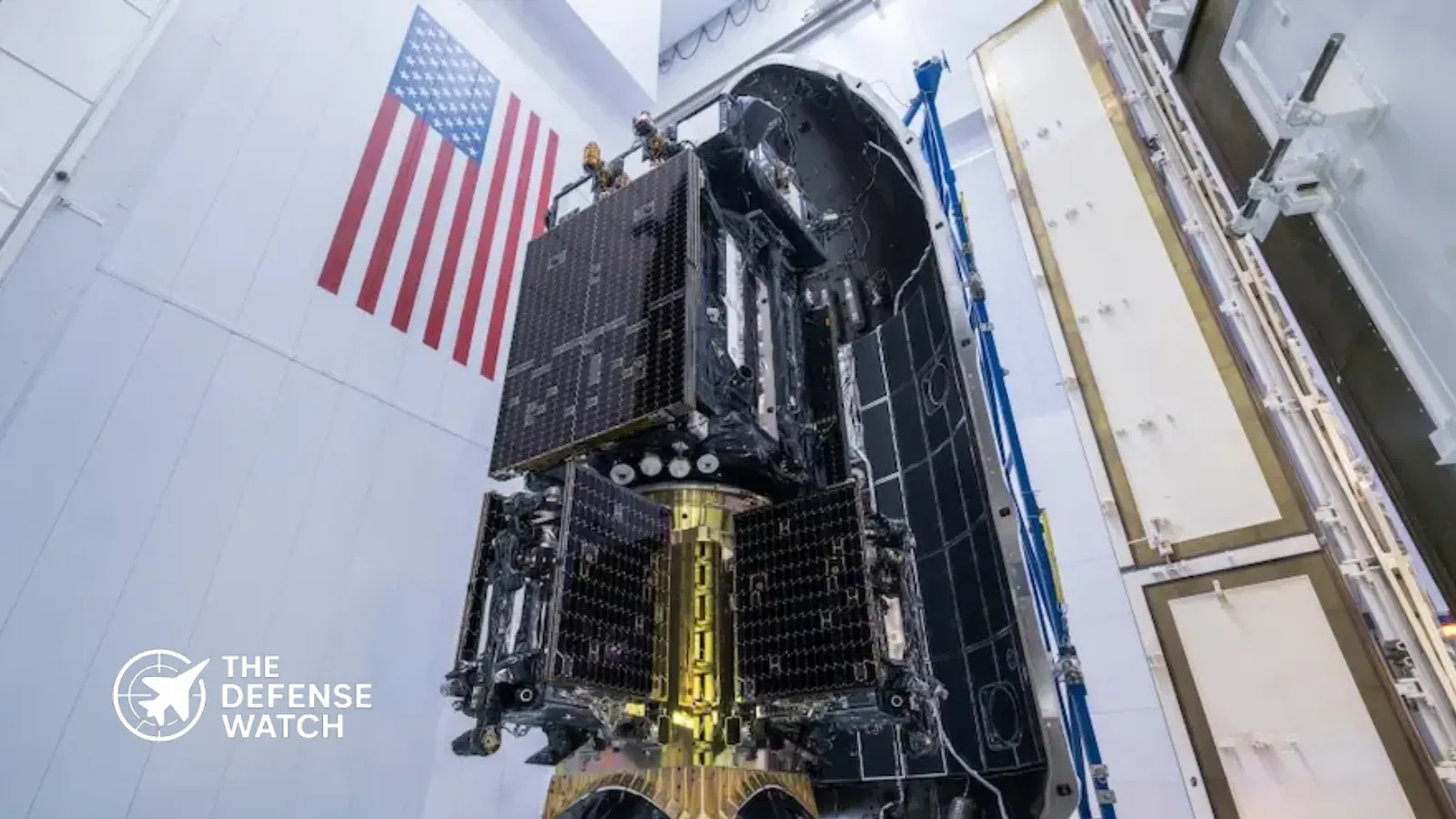
Northrop Grumman’s Mission Robotic Vehicle (MRV) has successfully launched aboard a SpaceX Falcon 9 from Cape Canaveral, marking a significant milestone in the evolution of commercial satellite servicing. Developed by SpaceLogistics, a wholly owned Northrop Grumman subsidiary, the spacecraft is designed to extend the operational life of satellites while introducing advanced robotic servicing capabilities previously unavailable in commercial geostationary orbit.
The mission builds on Northrop Grumman’s earlier Mission Extension Vehicle (MEV) program, which became the first commercial system to dock with operational satellites in geostationary orbit. Unlike those earlier spacecraft, MRV introduces robotic manipulation, modular servicing, and future refueling capabilities through a reusable servicing platform.
What Makes Mission Robotic Vehicle Different
MRV carries two highly dexterous robotic arms originally developed through DARPA’s Robotic Servicing of Geosynchronous Satellites (RSGS) program. These robotic systems allow the spacecraft to perform tasks that previously required launching entirely new satellites.
Its planned capabilities include:
- Installing Mission Extension Pods (MEPs)
- Satellite inspection
- Spacecraft relocation
- Mechanical repairs
- Future payload upgrades
- On orbit refueling using standardized interfaces
- Support for debris mitigation missions
Northrop Grumman describes MRV as the first privately owned robotic servicing spacecraft capable of performing multiple mission types from a single platform.
Mission Extension Pods Reduce Replacement Costs
Launching alongside MRV are three Mission Extension Pods (MEPs), compact propulsion modules designed to attach directly to customer satellites.
Rather than replacing an aging satellite nearing fuel depletion, MRV will install an MEP that effectively functions as a propulsion “jetpack.” Each pod provides station keeping capability that can extend satellite operations by approximately six years without requiring a replacement spacecraft.
The first commercial customers include communications satellites operated by SES and Optus.
Mission Hardware Overview
| Component | Purpose |
|---|---|
| Mission Robotic Vehicle | Robotic servicing spacecraft |
| Robotic Arms | Inspection, repair, pod installation |
| Mission Extension Pods | Satellite life extension through propulsion |
| Passive Refueling Module | Standardized future in space refueling interface |
| Electric Propulsion | Long duration orbital transfers and maneuvering |
Why The Mission Matters For National Security
Although the first customers are commercial satellite operators, the technologies demonstrated by MRV have substantial defense implications.
Military satellites supporting communications, missile warning, navigation, intelligence collection, and secure data links are expensive national assets that traditionally become unusable once fuel reserves are exhausted.
Routine robotic servicing could allow governments to:
- Extend operational satellite lifespans
- Reduce replacement costs
- Improve resilience against operational failures
- Upgrade spacecraft without replacement
- Increase flexibility during military operations
The U.S. Space Force has already selected Northrop Grumman’s Passive Refueling Module as its preferred standardized in space refueling interface, highlighting growing military interest in sustainable orbital logistics.
A Shift Toward Sustainable Space Operations
The launch reflects a broader transformation within the global space industry.
Historically, satellites were designed as disposable systems with fixed operational lifetimes largely determined by fuel availability. Once propellant was exhausted, operators often had little choice but to launch expensive replacements.
MRV introduces a different operational model by treating satellites as maintainable infrastructure rather than single use assets. This approach aligns with broader industry efforts to develop In Space Servicing, Assembly, and Manufacturing (ISAM), an emerging sector that seeks to create long term orbital logistics capabilities.
For military planners, resilient satellite constellations are becoming increasingly important as space grows more congested and strategically contested. Extending spacecraft availability through servicing could improve operational readiness while reducing acquisition costs over time.
Technical Challenges Remain
Despite its promise, robotic servicing in geostationary orbit remains among the most technically demanding activities in spaceflight.
MRV must perform precise rendezvous operations with satellites located approximately 36,000 kilometers above Earth while safely manipulating spacecraft that were never originally designed for robotic servicing.
Successful execution depends upon:
- Autonomous navigation
- High precision robotics
- Secure docking procedures
- Reliable communications
- Long duration spacecraft reliability
The mission will spend roughly a year reaching its operational orbit before beginning servicing operations in 2027.
Looking Ahead
Mission Robotic Vehicle represents the next phase of Northrop Grumman’s long term strategy to make satellite servicing routine rather than exceptional.
Beyond extending satellite lifespans, future missions could support spacecraft upgrades, component replacement, orbital relocation, debris removal, and refueling. Collectively, these capabilities have the potential to reshape both commercial and national security space operations by reducing lifecycle costs while improving resilience across critical orbital infrastructure.
If the inaugural servicing campaign proceeds as planned, MRV could establish a new operational model for sustaining high value satellites throughout the coming decade.