• Home
  • About
  • Defense Systems
  • Manufacturer
  • Comparisons
  • Compare 
  • Tools
TheDefenseWatch.com
  • Aerospace & Aviation
  • Military & Ordnance
  • Naval & Maritime
  • Cyber & Space Defense
  • Policy & Strategy
  • Global News
  • Tools Library
    • Smart Calculator
    • Drone Flight Time Calculator
    • Drone Range Calculator
    • Counter-Drone Jammer Effective Range Calculator
    • Counter-Battery Radar Detection Calculator
    • Artillery Fire Correction Calculator
    • Thermal Camera Detection Range Calculator
    • Missile Range & Time-of-Flight Calculator
    • Radar Detection Range Calculator
    • FPV Strike Drone Payload vs Range Calculator
    • Loitering Munition Endurance Calculator
    • Sniper Ballistic Drop & Windage Calculator
    • Bullet Drop Calculator
    • U.S. Army Combat Fitness Test (ACFT) Calculator
    • Military Pension Calculator
    • Military Retirement Calculator
    • Military Pension Calculator
    • Large Number Calculator
Font ResizerAa

TheDefenseWatch.com

The Defense Watch | U.S. & Global Defense News, Analysis & Military Updates

Search
  • Home
  • About
  • Defense Systems
  • Manufacturer
  • Comparisons
  • Compare 
  • Tools

Stay Updated

Get the latest update

Subscribe

Explore

  • Drone
  • Fighter Jets & Military Aircraft
  • Hypersonic Weapons
  • Aircraft Carriers
  • Strategic History & Missions
  • Tools Library
Home » Germany Moves To Deploy Kraken K3 Armed USV As Europe Expands Autonomous Naval Power
Naval & MaritimeNaval Strategy & Maritime Security

Germany Moves To Deploy Kraken K3 Armed USV As Europe Expands Autonomous Naval Power

TeamDefenseWatch
Last updated: April 20, 2026 6:13 am
TeamDefenseWatch
Share
5 Min Read
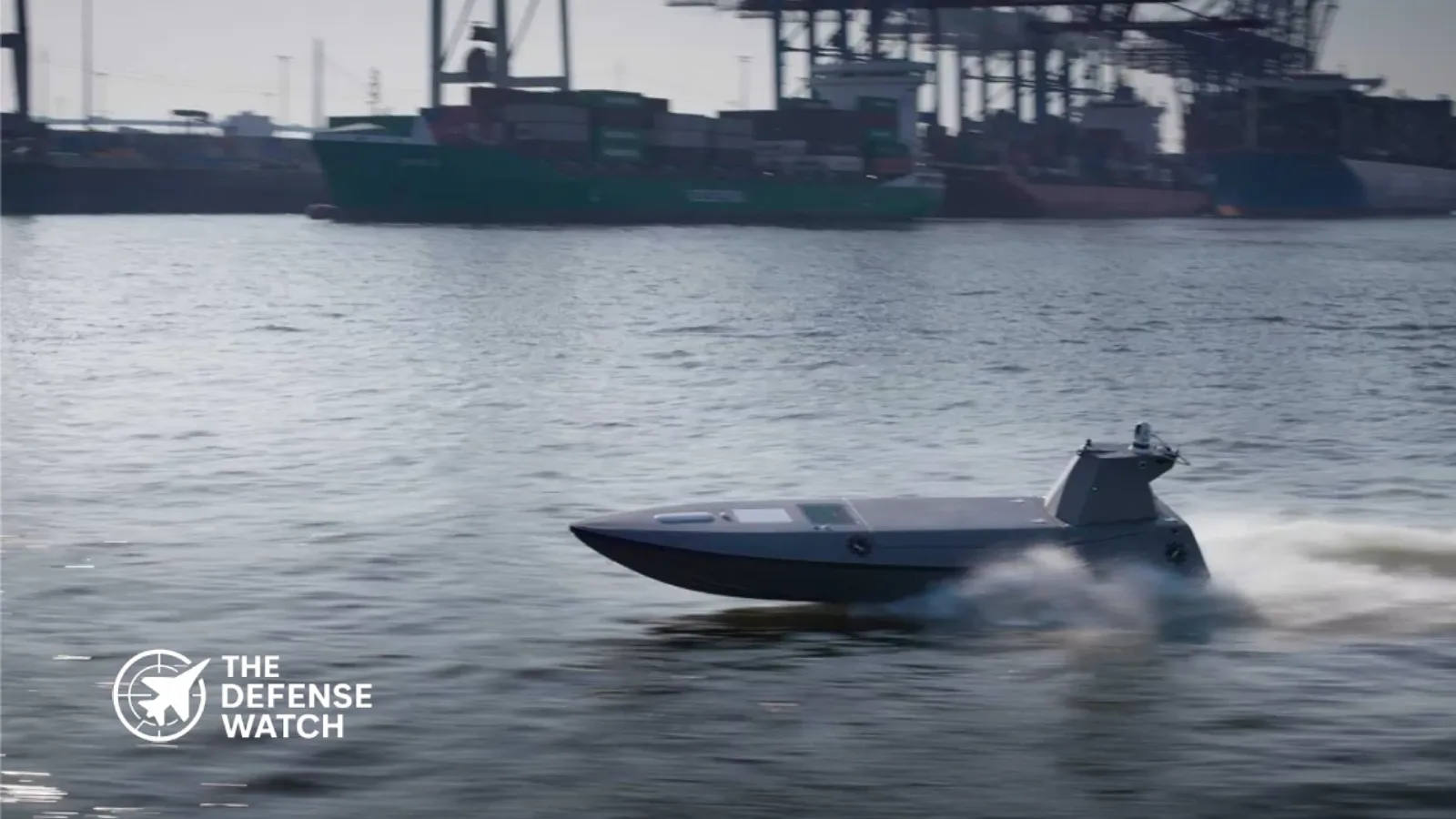
Kraken K3 armed USV
Image source: Rheinmetall
SHARE

Germany Launches Kraken K3 Armed USV Production

Kraken K3 armed USV production has begun in Germany, marking another step in Europe’s push toward autonomous maritime warfare and distributed naval operations. The new unmanned surface vessel is intended for armed strike, reconnaissance, and surveillance roles, offering naval forces a lower-risk platform for high-threat waters.

Contents
  • Germany Launches Kraken K3 Armed USV Production
  • What Is The Kraken K3 Armed USV
  • Why Germany Is Moving Now
  • Strategic Impact For NATO Navies
  • Industrial Significance
  • Outlook

The launch comes as European militaries accelerate investment in drones and autonomous systems after observing the operational impact of unmanned surface vessels in the Black Sea and other contested maritime zones.

¦ KEY FACTS AT A GLANCE
  • Germany has launched production of the Kraken K3 armed unmanned surface vessel.
  • The system is designed for autonomous strike, surveillance, and maritime security missions.
  • The Kraken K3 can support contested littoral operations with lower risk to crews.
  • Armed USVs are becoming a priority across Europe following lessons from the Black Sea.
  • The program signals Germany’s growing focus on naval autonomy and distributed warfare.

Germany’s move suggests Berlin now sees armed surface drones as more than experimental assets. They are increasingly becoming practical tools for deterrence, coastal defense, and fleet support.

What Is The Kraken K3 Armed USV

The Kraken K3 armed USV is described as a compact unmanned vessel built for autonomous or remotely controlled operations. Systems in this category typically support missions such as:

- Advertisement -
  • Maritime surveillance
  • Harbor and infrastructure protection
  • Intelligence collection
  • Precision strike operations
  • Swarm operations with multiple drones
  • Decoy or electronic disruption missions

While detailed official specifications remain limited, platforms like the Kraken K3 usually emphasize modular payload bays, secure communications links, sensor integration, and scalable weapons options.

That flexibility matters. Navies no longer want single-purpose vessels when threats evolve rapidly. Modular USVs can be adapted faster and at lower cost than many traditional manned platforms.

Why Germany Is Moving Now

Germany’s decision reflects broader security changes in Europe.

The war in Ukraine demonstrated that relatively low-cost maritime drones can threaten larger and more expensive warships. Ukraine’s use of sea drones against Russian naval assets forced navies worldwide to reassess fleet protection, coastal defense, and force structure.

For Germany, which depends heavily on secure sea lines of communication in the Baltic Sea, North Sea, and wider NATO maritime network, autonomous systems offer several advantages:

  • Persistent patrol capability
  • Lower operating costs than crewed patrol craft
  • Reduced personnel risk
  • Faster mass production potential
  • Better coverage of chokepoints and coastal zones

This is especially relevant as NATO members face pressure to expand readiness while controlling defense budgets.

Strategic Impact For NATO Navies

The Kraken K3 armed USV could become part of a wider layered force structure rather than a standalone replacement for warships.

Manned frigates and corvettes remain essential for air defense, anti-submarine warfare, and command missions. But unmanned vessels can screen approaches, scout ahead, monitor shipping lanes, or saturate enemy defenses.

- Advertisement -

That shift mirrors U.S., British, Turkish, and Ukrainian experimentation with autonomous naval systems.

If Germany fields the Kraken K3 at scale, it may encourage allied procurement programs and common standards for NATO unmanned maritime operations.

Industrial Significance

Launching production also highlights Germany’s defense industrial adaptation. European shipbuilders and technology firms are increasingly expanding into software-defined platforms, autonomous control systems, and smaller rapid-build naval assets.

Traditional shipbuilding cycles often take years. USVs can be developed faster, upgraded through software, and produced in larger numbers.

That industrial agility may prove just as important as raw platform performance.

Outlook

The Kraken K3 armed USV signals that Germany is joining the race to field practical autonomous naval combat systems. While large warships will remain central to maritime power, the future fleet is likely to include many smaller unmanned vessels working alongside them.

For NATO and European defense planners, the question is no longer whether armed USVs matter. It is how quickly they can be integrated into frontline operations.


TAGGED:Armed USVGermany NavyKraken K3Maritime SecurityNaval Drones
Share This Article
Facebook Copy Link Print
ByTeamDefenseWatch
TeamDefenseWatch is the official editorial byline of TheDefenseWatch.com. Working under one umbrella, TheDefenseWatch.com, the team delivers verified, factual reporting on global defense, military technology, aerospace systems, and security developments. Articles are sourced from official statements, defense industry releases, and trusted media, with editorial review to ensure accuracy and clarity.Contact: info@TheDefenseWtach.com
Leave a Comment

Leave a Reply Cancel reply

Your email address will not be published. Required fields are marked *

Latest Defense Systems

  • SU-57 Felon Stealth Fighter SU-57 Felon Stealth Fighter
  • Boeing F/A-XX Fighter Boeing F/A-XX Fighter
  • JF-17 Thunder Fighter Jet JF-17 Thunder Fighter Jet
  • Gaurav Glide Bomb Gaurav Glide Bomb
  • F-47 Fighter Jet F-47 Fighter Jet
  • Spirit UAS Spirit UAS
  • GBU-43/B MOAB Bomb GBU-43/B MOAB Bomb
  • John F. Kennedy Aircraft Carrier John F. Kennedy Aircraft Carrier
  • Voyager Tanker Voyager Tanker

Recent Compares

  • J-10C vs JF-17 Thunder: Which Fighter Is More Capable? J-10C vs JF-17 Thunder: Which Fighter Is More Capable? View Comparison →
  • Tejas vs Gripen: Key Differences and Capabilities Tejas vs Gripen: Key Differences and Capabilities View Comparison →
  • Tejas vs MiG-21 Bison: How India Replaced Its Iconic Supersonic Fighter Tejas vs MiG-21 Bison: How India Replaced Its Iconic Supersonic Fighter View Comparison →
  • F-35 vs F-16: Stealth, Sensors and Combat Roles F-35 vs F-16: Stealth, Sensors and Combat Roles View Comparison →
  • Tejas Fighter Jet vs F-16 Fighting Falcon: Capability Compared Tejas Fighter Jet vs F-16 Fighting Falcon: Capability Compared View Comparison →
  • Rafale Fighter Jet vs F-16 Fighting Falcon : Which Fighter Has the Edge? Rafale Fighter Jet vs F-16 Fighting Falcon : Which Fighter Has the Edge? View Comparison →
  • Su-57 Fighter Jet vs J-20 Fighter Jet: Stealth and Air Combat Compared Su-57 Fighter Jet vs J-20 Fighter Jet: Stealth and Air Combat Compared View Comparison →
  • Mirage 2000 vs Tejas Mk1A: Legacy Combat Power vs Indigenous Modernization Mirage 2000 vs Tejas Mk1A: Legacy Combat Power vs Indigenous Modernization View Comparison →
  • Rafale Fighter Jet vs F-22 Raptor: Which Air Dominance Fighter Has the Edge? Rafale Fighter Jet vs F-22 Raptor: Which Air Dominance Fighter Has the Edge? View Comparison →
  • Tejas Fighter Jet vs. Rafale Fighter Jet: India’s Indigenous Fighter Meets France’s Proven Multirole Combat Aircraft Tejas Fighter Jet vs. Rafale Fighter Jet: India’s Indigenous Fighter Meets France’s Proven Multirole Combat Aircraft View Comparison →

Recent Posts

  • Ukrainian F-16 vs. Russian Su-35: What Happened, How the Engagement Unfolded and Why It Matters
  • Canada’s Fighter Jet Fleet Faces a Critical Transition as F-35 Review Continues
  • New Zealand Signs Deal for Five MH-60R Seahawk Helicopters
  • U.S. Air Force Test Pilot School Adds Water Landings to Training
  • F-22 Takes Control of YFQ-44A as U.S. Air Force Advances Collaborative Combat Aircraft Testing

You Might Also Like

Qatar guided missile fast attack craft
Naval & MaritimeNaval Strategy & Maritime Security

Qatar’s Second Guided Missile Fast Attack Craft Q52 Al Ghariyah Launched By DEARSAN

February 14, 2026
USS Idaho submarine
Naval & MaritimeSubmarines

Navy Commissions USS Idaho To Expand US Undersea Combat Power

April 27, 2026
U.S. Iran blockade
Naval & MaritimeNaval Strategy & Maritime Security

U.S. Moves To Tighten Iran Blockade As 23 Ships Turn Back From Key Sea Lanes

April 19, 2026
U.S. Navy warship operating near the Strait of Hormuz during maritime security operations amid ongoing Iran ceasefire negotiations.
Naval & MaritimeNaval Strategy & Maritime Security

Hegseth Moves To Maintain Iran Naval Blockade As Trump Weighs 60-Day Ceasefire Extension

September 7, 2026

Logo

Copyright © 2026 TheDefenseWatch.com

Helpful Links

  • Home
  • About Us
  • Privacy Policy
  • Terms of Use / Disclaimer
  • U.S. Privacy Notice – CCPA Compliance

Defense Systems

  • Defense Systems
  • Comparisons 
  • Manufacturer
  • Tactical Calculators

Popuplar

Which 5 Air Forces Possess the Costliest Fighter Jet Fleets in the World
Evolving Strategic Value: Carrier Strike Groups in the Indo-Pacific’s Future Security Architecture
Autonomous Weapon Systems Spark U.S. Ethics Debate Amid Rapid Military AI Integration

We report on developments involving military forces, governments, defense companies, research organizations, and security institutions around the world. 

Welcome Back!

Sign in to your account

Username or Email Address
Password

Lost your password?