

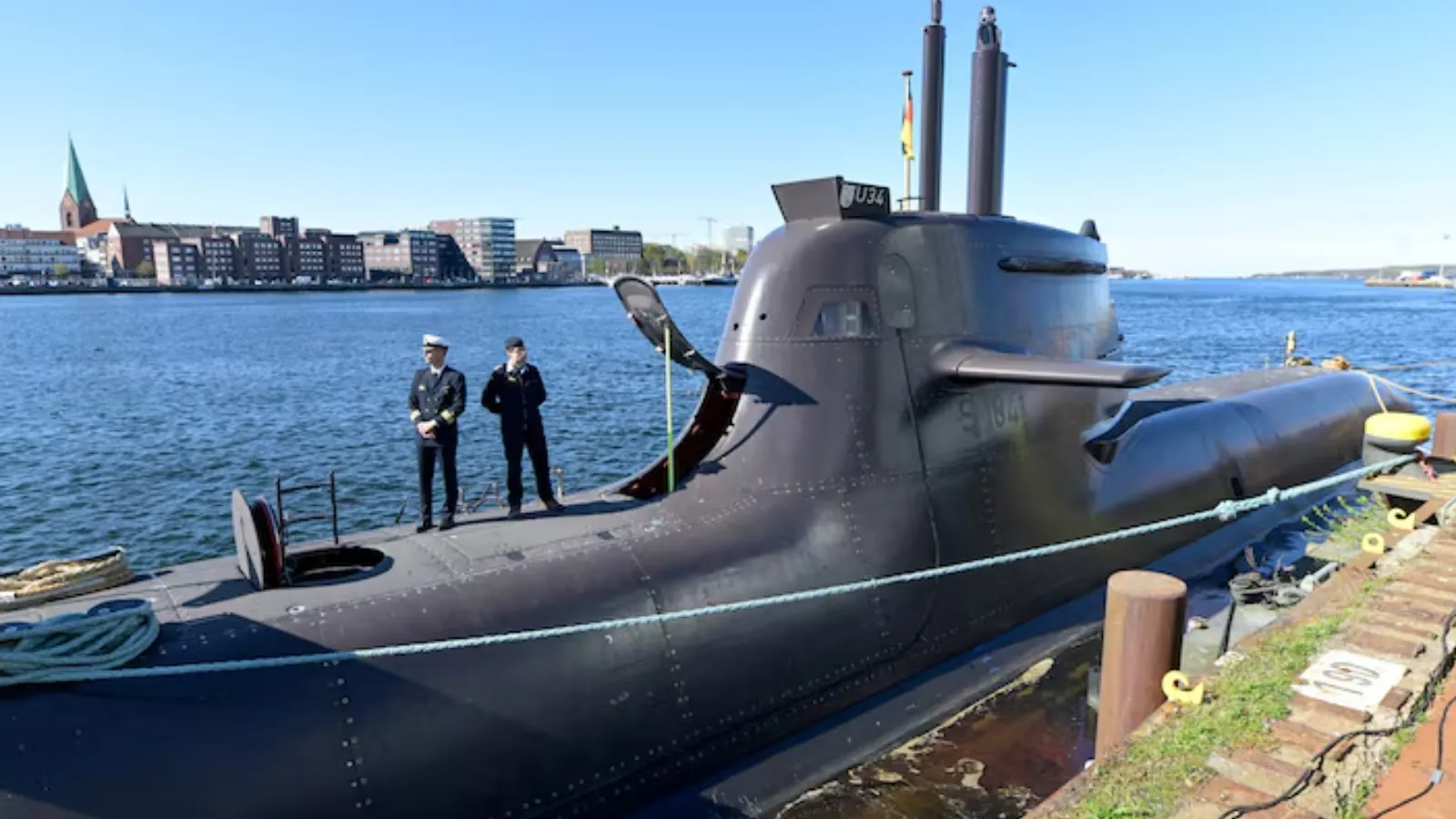
Executive Summary: German naval shipbuilder TKMS is seeing increased demand from Middle Eastern customers following the recent Iran war, with CEO Oliver Burkhard identifying mine countermeasure technology as a particular area of new interest. The company said it remains too early to quantify the commercial impact, but the development points to changing regional priorities for maritime security and naval protection.
TKMS Sees New Middle East Demand After Iran War
TKMS is seeing increased Middle East demand for naval defense capabilities following the Iran war, according to CEO Oliver Burkhard, who highlighted mine countermeasure technology as one area where the change is already becoming visible. Burkhard made the comments on August 12 while discussing the company’s nine-month results with journalists.
The comments are significant because mine warfare is closely linked to the security of ports, naval bases, commercial shipping routes and strategic maritime chokepoints. For Middle Eastern states that depend heavily on maritime trade and energy exports, the ability to detect and clear mines can be an important component of keeping waterways operational during a crisis.
Burkhard said the company had not previously seen this level of demand and described the regional security environment as having shifted. He also cautioned that it remains too early to determine how much the new interest will contribute to TKMS’s business.
Mine Countermeasures Move Into Greater Focus
Mine countermeasure, or MCM, operations are designed to locate, identify and neutralize naval mines and other underwater hazards.
Unlike conventional naval combat systems, MCM capabilities focus heavily on underwater sensing, classification, route surveying and the controlled disposal of mines. These missions can be particularly difficult in shallow coastal waters, ports and areas with complicated seabed conditions.
TKMS’s portfolio includes systems developed through its ATLAS ELEKTRONIK business. Its HMS-12M hull-mounted minehunting sonar is designed to provide long-range detection and high-resolution classification of mines, including operations in difficult seabed and environmental conditions.
The company’s Integrated Mine Counter Measures System, or IMCMS, provides command-and-control functions and integrates different MCM assets into a single operational framework. TKMS says the system can support MCM missions from preparation through mission execution and analysis.
TKMS also offers a modular MCM toolbox built around autonomous systems. The company’s system combines MCM payloads with an uncrewed surface vessel and can support functions including autonomous search, mine identification, mine disposal, minesweeping and sonar-based seabed surveys.
Why MCM Technology Matters
Modern mine warfare is not limited to protecting military ships.
A mined maritime route can affect commercial shipping, naval deployments, port access and the movement of military reinforcements. Clearing a suspected minefield can also be slow and hazardous when conventional crewed vessels must enter the affected area.
This makes autonomous and remotely operated MCM systems increasingly relevant. They can allow naval forces to conduct reconnaissance and minehunting while reducing the exposure of personnel and expensive crewed platforms.
For Middle Eastern navies, the potential requirement is especially relevant to coastal security and the protection of maritime infrastructure. However, TKMS has not identified specific customers, quantities or contracts associated with the newly reported regional demand.
TKMS Is Expanding Beyond Traditional Shipbuilding
The Middle East development comes as TKMS is positioning itself as more than a conventional submarine and warship manufacturer.
The company describes its portfolio as combining submarines, surface vessels and ATLAS ELEKTRONIK’s sensors, sonar, command systems, communications and other naval technologies. TKMS says its strategy increasingly connects crewed and uncrewed platforms with distributed sensors and effectors.
That approach is important for MCM missions because mine warfare depends on integrating multiple capabilities rather than relying on a single platform.
A modern MCM architecture can combine sonar, autonomous underwater vehicles, uncrewed surface vessels, command-and-control software and mine disposal systems. The objective is to build a detailed picture of the seabed and potential hazards before sending conventional vessels through a suspected danger area.
TKMS’s existing MCM portfolio therefore gives the company multiple entry points into a market that may extend beyond complete warships.
Stronger Demand Across TKMS’s Naval Portfolio
The reported Middle East interest is occurring alongside broader growth in TKMS’s naval business.
That TKMS raised its 2026 sales growth forecast to between 10% and 12%, compared with its previous forecast of 2% to 5%. The company also raised its expected operating profit margin to as much as 6.5%.
TKMS reported nine-month operating profit of €110 million, up 13% from the same period previously. Its order book stood at €20.1 billion at the end of June, slightly below the €20.6 billion recorded at the end of the previous quarter.
The company has also secured major naval programs in Europe and elsewhere.
Germany’s Bundestag Budget Committee approved procurement of four MEKO A-200 DEU frigates in July, with an option for additional vessels. TKMS said the first ship could be delivered as early as 2029 and described the program as the largest surface-vessel contract in its history.
The MEKO A-200 is designed for missions covering air, surface, subsurface and electronic warfare, demonstrating how TKMS’s surface-ship portfolio complements its underwater and sensor capabilities.
European Naval Demand Is Also Increasing
TKMS’s expansion comes during a broader increase in European demand for naval capabilities.
In April, TKMS and Spain’s Navantia signed an agreement exploring cooperation on naval projects, including potential production of TKMS vessels, particularly submarines, at Spanish shipyards. The companies cited increased short-term demand for modern naval products and continuing constraints on European shipyard capacity and technological resources.
This industrial constraint is an important factor when assessing TKMS’s position in the global naval market.
Building submarines and major surface combatants requires specialized facilities, skilled labor, complex supplier networks and long production schedules. MCM systems can provide a comparatively flexible route for customers seeking improved maritime security without immediately committing to a new major warship program.
For TKMS, increased interest in sensors, mine countermeasures and autonomous systems could therefore complement its established submarine and frigate businesses.
What The Middle East Demand Could Mean For Naval Modernization
The immediate significance of the development is not the announcement of a new TKMS contract. No such contract was disclosed.
Instead, the key development is the change in customer interest identified by the company’s leadership. Burkhard’s comments indicate that maritime security requirements emerging from the Iran conflict are influencing defense discussions in the region.
For regional navies, this could increase attention on capabilities that protect maritime access rather than only those designed for offensive combat.
Minehunting sonar, autonomous underwater vehicles, uncrewed surface vessels and integrated command systems can contribute to maritime security while supporting naval operations in contested waters. They can also help reduce the risks associated with sending crewed vessels into areas where underwater threats are suspected.
The broader lesson for naval planners is that maritime warfare increasingly depends on the ability to sense and control the underwater environment.
Implications For U.S. And Allied Maritime Strategy
The development also has relevance beyond the Middle East.
The United States and its allies rely on access to major maritime routes, ports and naval facilities. Mine warfare has historically represented a relatively low-cost way for an adversary to impose delays and risk on much larger naval forces.
The increasing use of autonomous MCM technology could therefore become an important element of allied naval planning.
For NATO countries, the technology has particular relevance in waters where mine warfare could threaten naval mobility. TKMS’s portfolio demonstrates the broader shift from traditional minehunting ships toward integrated systems combining crewed platforms, autonomous vehicles and advanced underwater sensors.
This is consistent with a wider naval trend toward keeping personnel and high-value platforms farther away from the immediate threat while using distributed and autonomous systems for dangerous reconnaissance missions.
TKMS’s current portfolio includes both conventional naval platforms and the sensors and autonomous technologies needed to connect them. That combination could strengthen its position as Middle Eastern and European customers reassess maritime security requirements after recent conflicts.
Demand Is Rising, But Contracts Remain To Be Seen
TKMS has not disclosed which Middle Eastern countries are showing increased interest, what systems they are considering or whether negotiations have advanced to formal procurement programs.
The company has also said it is too early to quantify the financial impact of the new demand.
For now, the clearest signal is the change in customer requirements rather than a specific order.
TKMS’s broader financial performance provides evidence that demand for naval platforms and maritime technologies is already strengthening. Whether the newly identified Middle East interest develops into contracts will depend on national procurement decisions, budgets, operational requirements and the ability of suppliers to deliver increasingly complex naval systems.
The immediate takeaway is that the Iran war has added another layer to the Middle East’s maritime security requirements, with mine countermeasures emerging as one capability area receiving greater attention.
Key TKMS Developments
| Area | Latest Development |
|---|---|
| Middle East | Increased customer demand reported after Iran war |
| Mine warfare | Mine countermeasure technology identified as a growth area |
| 2026 sales outlook | 10% to 12% growth forecast |
| Nine-month operating profit | €110 million |
| Operating margin outlook | Up to 6.5% |
| Order book at end of June | €20.1 billion |
| German Navy | Four MEKO A-200 DEU frigates approved |
| MCM technology | Sonar, command systems and autonomous MCM tools |
