HITT Contracting Navy contract
HITT Contracting of Charleston, South Carolina, has received a $264.03 million U.S. Navy construction contract to expand the P200 Nuclear Power Training Facility simulation complex at Joint Base Charleston, South Carolina. The award was issued by Naval Facilities Engineering Systems Command Southeast, or NAVFAC Southeast, in Jacksonville, Florida.
The contract, identified as N69450-26-C-0027, covers construction work for the P200 nuclear power training facility simulation expansion. According to the contract announcement, work will be performed in Berkeley County, South Carolina, with completion expected by April 2030.
Takeaways
Key facts from the defense contract or military technology development
1. $264 Million Navy Award
HITT Contracting received a $264.03 million fixed-price-award-fee construction contract for the P200 nuclear power training facility simulation expansion.
2. Joint Base Charleston Project
The project is located at Joint Base Charleston in South Carolina and is being managed by Naval Facilities Engineering Systems Command Southeast.
3. Work Extends Into 2030
The construction contract is expected to be completed by April 2030, with funding divided across fiscal years 2026, 2027 and 2028.
4. Additional Options Remain
The contract contains 12 unexercised options that could raise the cumulative contract value to $274.31 million if exercised.
The Navy is funding the project through its fiscal 2026, 2027 and 2028 Military Construction, Navy, or MILCON, program. The initial fiscal 2026 obligation is $55.07 million.
The project had previously been solicited by NAVFAC Southeast as a design-bid-build, firm-fixed-price award-fee construction requirement. The solicitation identified Joint Base Charleston as the location of the P200 Nuclear Power Training Facility Simulator expansion.
What The Contract Covers
The award is for the expansion of the P200 Nuclear Power Training Facility simulation infrastructure supporting Navy nuclear power training.
Earlier NAVFAC planning material described the project as a major military construction effort involving a new high-bay facility for large-scale naval propulsion plant simulators, a Training Support Building and supporting infrastructure. The planned project also includes classrooms and training areas, office and storage space, security and special-purpose areas, mechanical utilities, electrical infrastructure, access improvements and parking facilities.
The government planning material described the planned facility as approximately 157,000 square feet and identified space for two large-scale simulators. Those details come from earlier project planning documents rather than the contract award notice itself.
The project also involves significant supporting infrastructure. Government technical information released during the acquisition process identified network infrastructure, facility-related control systems, furniture and equipment, and a new electrical substation as elements of the overall P200 effort.
Technical And Operational Context
The P200 project is centered on simulation-based nuclear power training rather than construction of an operational nuclear propulsion plant.
For the Navy, high-fidelity simulator infrastructure allows personnel to train on nuclear propulsion plant operations in a controlled environment. The facility is therefore part of the shore-based infrastructure that supports the preparation of personnel for duties involving the Navy’s nuclear-powered fleet.
The earlier NAVFAC project brief specifically identified naval propulsion plant simulators, classrooms and training spaces as core functions of the expansion.
The acquisition was structured as a design-bid-build, firm-fixed-price, award-fee construction contract. The underlying solicitation was classified under NAICS 236220 for commercial and institutional building construction and was issued as a full-and-open competition.
Why The Award Matters
The contract represents a significant investment in the Navy’s shore-based nuclear training infrastructure.
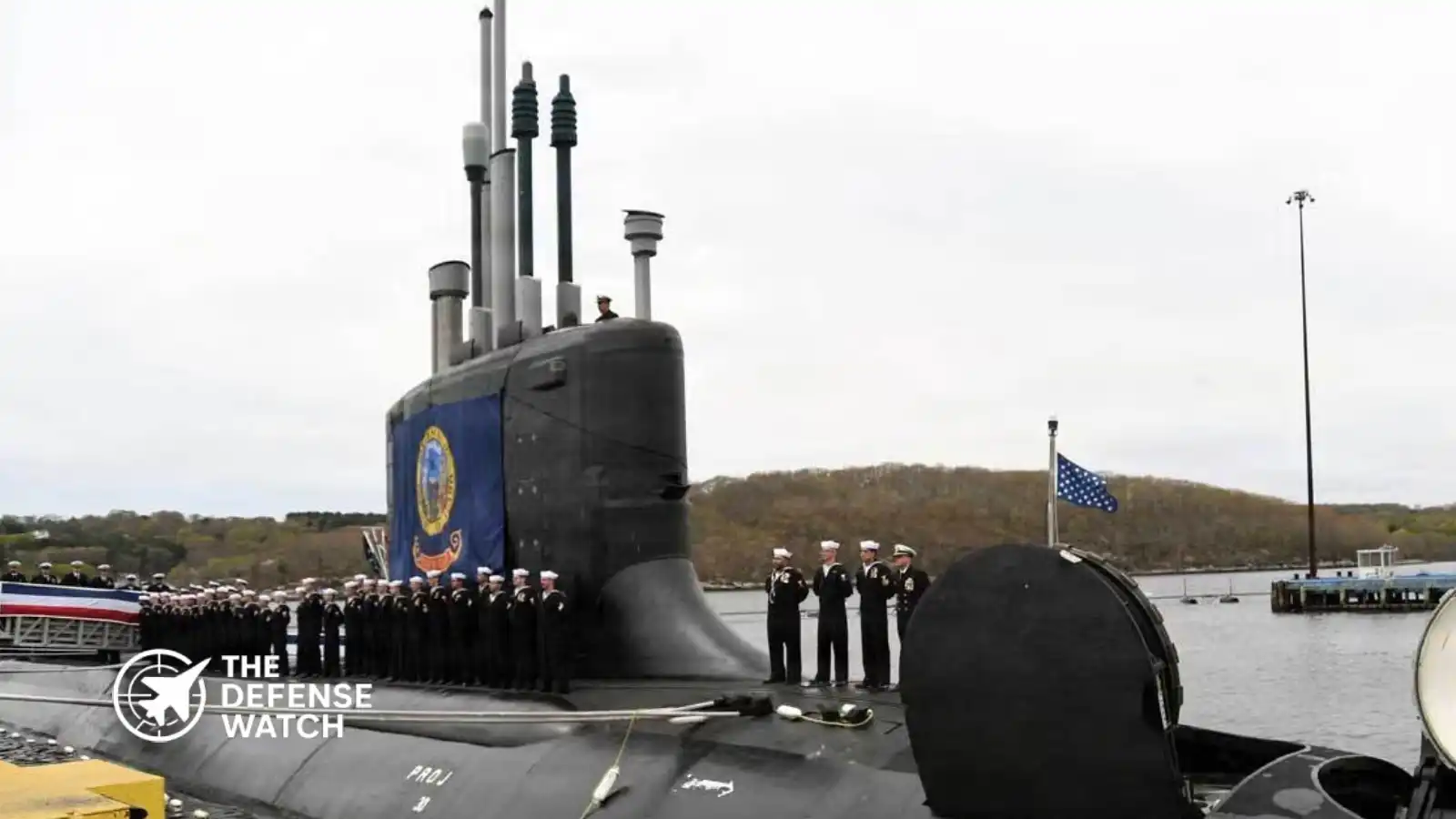
The operational importance of the project comes from its role in supporting nuclear propulsion training. The Navy operates nuclear-powered aircraft carriers and submarines, creating a continuing requirement for specialized personnel training and simulator capacity.
The P200 expansion also illustrates the infrastructure demands associated with advanced military training. The project is not limited to a simulator building. Government planning documents show that it requires supporting electrical, communications, utility, transportation and site infrastructure to make the expanded training complex operational.
From an acquisition perspective, the award also moves the project from solicitation into contract execution. NAVFAC had advertised the requirement in 2026 after earlier industry engagement and planning activities.
Contract Breakdown
Contract Value
The base contract awarded to HITT Contracting is valued at $264,031,732.
The contract also contains 12 unexercised options. If all of those options are exercised, the cumulative contract value could increase to $274,312,160.
The potential option value should not be treated as current spending. The announced award value is $264.03 million, while the additional amount represents potential future work subject to exercise of the options.
Contractor
HITT Contracting, based in Charleston, South Carolina, is the contractor receiving the award.
The contract was competitively procured through SAM.gov, with two offers received, according to the award announcement.
Contract Type
The Navy awarded the project as a fixed-price-award-fee construction contract.
The underlying solicitation described the requirement as design-bid-build and firm-fixed-price with an award-fee structure.
A firm-fixed-price arrangement generally establishes a set price for defined work and places more cost risk on the contractor than cost-reimbursement arrangements. The award-fee element provides a mechanism for recognizing contractor performance under the terms of the contract.
Work Locations
Construction will be performed in Berkeley County, South Carolina, at Joint Base Charleston.
The official solicitation identifies Joint Base Charleston as the place of performance.
The project is associated with the Navy’s nuclear power training infrastructure at the installation.
Performance Period
The contract is expected to be completed by April 2030.
The long construction period reflects the scale of the infrastructure project and its multiple facility and utility requirements.
Funding
The project is being funded incrementally through the Navy’s Military Construction program.
The funding breakdown is:
- Fiscal 2026 MILCON, Navy: $55,070,586
- Fiscal 2027 MILCON, Navy: $135,484,430
- Fiscal 2028 MILCON, Navy: $73,476,716
The fiscal 2026 amount will be obligated at the time of award and will not expire at the end of the current fiscal year.
The three funding increments total $264,031,732, matching the announced base contract value.
Options Or Follow-On Work
The contract contains 12 unexercised options.
If exercised, those options would increase the cumulative contract value to $274,312,160.
The announcement does not provide additional details on the individual options or identify which elements of the project they would cover.
Industry And Acquisition Implications
The award gives HITT Contracting responsibility for a major Navy military construction project at an installation supporting nuclear power training.
The contract also shows how a large training infrastructure program can involve considerably more than the primary training facility. Earlier government planning identified a high-bay simulator facility, training support spaces, mechanical infrastructure and substantial site and utility work. The project planning also included a new electrical substation intended to support the expanded facility.
The competitive award followed a government solicitation that received two offers. That provides a clear acquisition record for the award, although the contract announcement does not disclose the identities or prices of the unsuccessful offeror.
The project is also being funded over multiple fiscal years rather than entirely through the initial obligation. This allows the Navy to align construction funding with the project’s planned execution schedule.
What Happens Next
HITT Contracting will proceed with construction under the awarded contract, with the Navy planning completion by April 2030.
The contract announcement does not provide a detailed construction milestone schedule, simulator installation date or operational activation date.
Earlier NAVFAC planning material indicated that the facility would be constructed while the associated simulators were still in development and that the timing of the broader effort was linked to simulator delivery.
The Navy has not disclosed in the award announcement when the expanded simulator capacity will enter training service.
Enjoying our coverage?
Make The Defense Watch a preferred source on Google to see more of our geopolitical and defense insights when relevant to you.