• Home
  • About
  • Defense Systems
  • Manufacturer
  • Comparisons
  • Compare 
  • Tools
TheDefenseWatch.com
  • Aerospace & Aviation
  • Military & Ordnance
  • Naval & Maritime
  • Cyber & Space Defense
  • Policy & Strategy
  • Global News
  • Tools Library
    • Smart Calculator
    • Drone Flight Time Calculator
    • Drone Range Calculator
    • Counter-Drone Jammer Effective Range Calculator
    • Counter-Battery Radar Detection Calculator
    • Artillery Fire Correction Calculator
    • Thermal Camera Detection Range Calculator
    • Missile Range & Time-of-Flight Calculator
    • Radar Detection Range Calculator
    • FPV Strike Drone Payload vs Range Calculator
    • Loitering Munition Endurance Calculator
    • Sniper Ballistic Drop & Windage Calculator
    • Bullet Drop Calculator
    • U.S. Army Combat Fitness Test (ACFT) Calculator
    • Military Pension Calculator
    • Military Retirement Calculator
    • Military Pension Calculator
    • Large Number Calculator
Font ResizerAa

TheDefenseWatch.com

The Defense Watch | U.S. & Global Defense News, Analysis & Military Updates

Search
  • Home
  • About
  • Defense Systems
  • Manufacturer
  • Comparisons
  • Compare 
  • Tools

Stay Updated

Get the latest update

Subscribe

Explore

  • Drone
  • Fighter Jets & Military Aircraft
  • Hypersonic Weapons
  • Aircraft Carriers
  • Strategic History & Missions
  • Tools Library
Home » U.S. Forces Redirect 103 Commercial Vessels As Iran Blockade Operations Expand
Global News

U.S. Forces Redirect 103 Commercial Vessels As Iran Blockade Operations Expand

Kaleem Sheikh | Regional Defense Correspondent
Last updated: September 16, 2026 2:01 am
Kaleem Sheikh | Regional Defense Correspondent
Share
3 Min Read
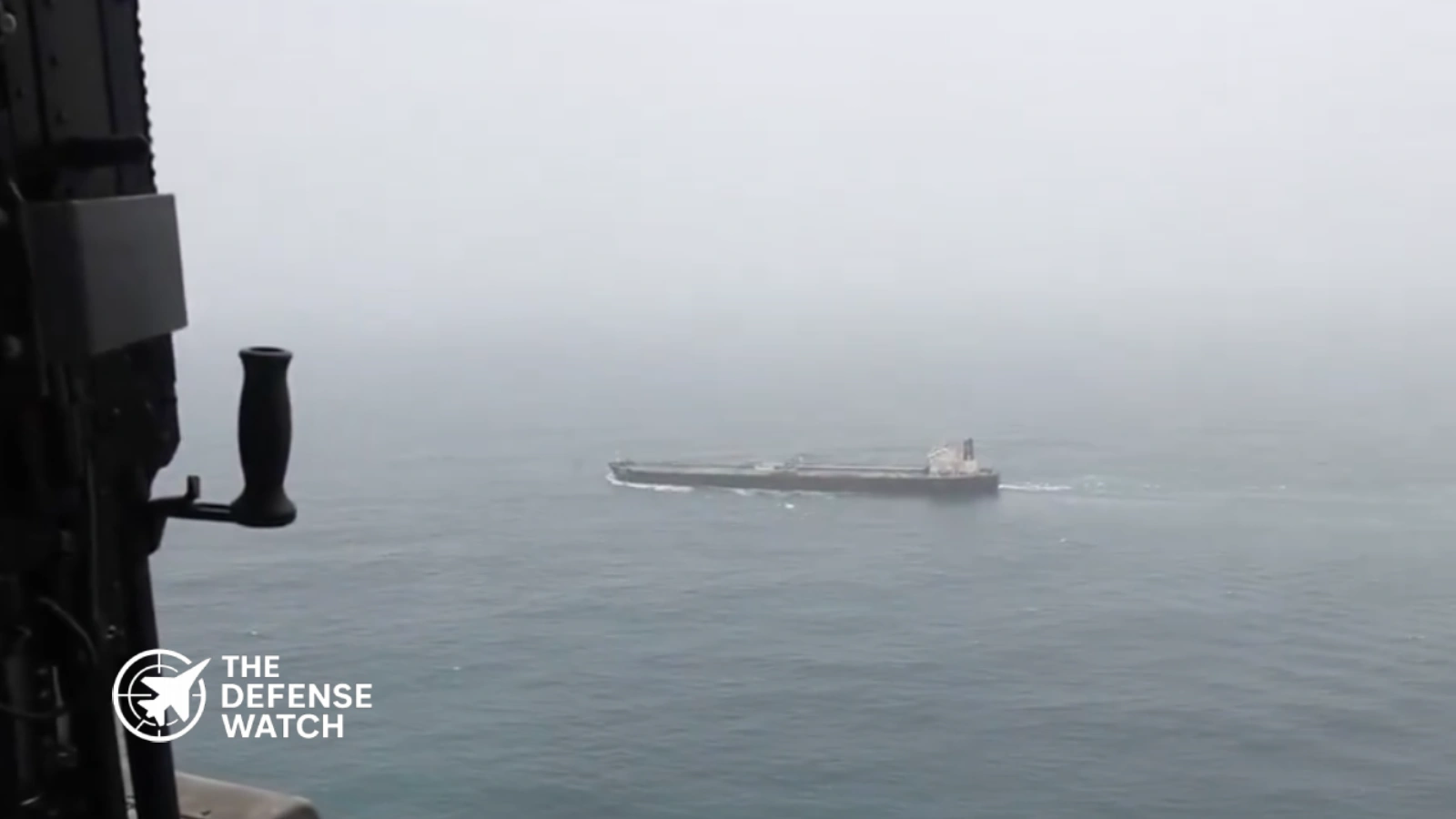
U.S. forces Iran blockade operations
SHARE

U.S. Forces Redirect 103 Vessels In Iran Blockade Operations

U.S. forces have redirected 103 commercial vessels as part of ongoing Iran blockade operations, according to U.S. Central Command, as American naval forces continue maritime enforcement activities in the Arabian Sea and surrounding waters.

Contents
U.S. Forces Redirect 103 Vessels In Iran Blockade OperationsTakeawaysUSS Rafael Peralta Supports Maritime OperationsWhat The 103-Vessel Figure MeansMaritime Enforcement Comes As Hormuz Traffic FallsMH-60R Adds Aviation Reach To Destroyer OperationsU.S. Naval Presence In The RegionOperational SignificanceBottom Line

Takeaways

U.S. Central Command says maritime forces have redirected 103 commercial vessels as part of ongoing blockade enforcement measures against Iran.

1. 103 Commercial Vessels Redirected

CENTCOM says U.S. forces had redirected 103 commercial vessels by Sept. 15 as part of measures to enforce the U.S. blockade against Iran.

2. USS Rafael Peralta Supports Operations

The Arleigh Burke-class guided-missile destroyer USS Rafael Peralta (DDG 115) is operating in the U.S. 5th Fleet area of operations.

3. MH-60R Provides Maritime Aviation Support

An MH-60R Sea Hawk assigned to Helicopter Maritime Strike Squadron 51 has been operating from Rafael Peralta during regional maritime security missions.

4. Redirection Figure Has Continued To Rise

CENTCOM reported 96 redirected vessels on Sept. 10, showing an increase to 103 by Sept. 15.

5. Hormuz Traffic Remains Severely Reduced

Reuters reported that only four vessels crossed the Strait of Hormuz on Sept. 15, well below recent averages, amid continuing regional conflict and maritime security concerns.

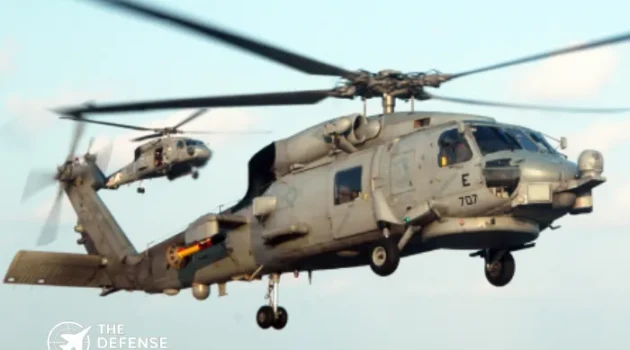
CENTCOM disclosed the latest figure on Sept. 15 while releasing imagery showing an MH-60R Sea Hawk launching from the flight deck of the Arleigh Burke-class guided-missile destroyer USS Rafael Peralta (DDG 115).

The disclosure provides a snapshot of the scale of the maritime enforcement campaign and the naval aviation assets supporting it.

USS Rafael Peralta Supports Maritime Operations

USS Rafael Peralta is a guided-missile destroyer deployed to the U.S. 5th Fleet area of operations. U.S. Naval Forces Central Command imagery released earlier in September showed an MH-60R assigned to Helicopter Maritime Strike Squadron 51 operating from the destroyer.

- Advertisement -

The MH-60R is the U.S. Navy’s maritime strike variant of the Seahawk family. It is designed for missions including surface warfare, anti-submarine warfare, surveillance and reconnaissance, and other maritime operations.

In the current operation, the presence of the helicopter gives the destroyer an organic aviation capability that can extend its surveillance and maritime response reach beyond the ship itself.

CENTCOM’s Sept. 10 update reported that U.S. forces had redirected 96 commercial vessels at that point. It also said more than 50 vessels supporting humanitarian aid had been allowed to pass.

Five days later, the reported total had risen to 103.

What The 103-Vessel Figure Means

The 103 figure refers to vessels that U.S. forces say they have redirected to ensure compliance with the blockade. It should not be interpreted as 103 ships being seized or detained.

CENTCOM’s terminology is important because the operation involves directing commercial traffic rather than necessarily taking control of every vessel involved.

Earlier reporting on the operation indicated that U.S. measures were focused on commercial vessels associated with Iranian ports, while ships transiting the Strait of Hormuz to or from non-Iranian ports were not intended to be impeded.

The distinction matters because the Strait of Hormuz remains an international maritime route connecting the Persian Gulf with the Gulf of Oman and Arabian Sea.

- Advertisement -

Maritime Enforcement Comes As Hormuz Traffic Falls

The latest U.S. blockade activity comes as commercial traffic through the Strait of Hormuz remains substantially below normal levels.

Reuters reported on Sept. 16 that only four vessels crossed the Strait of Hormuz on Sept. 15, compared with a recent 10-day average of 18 vessels per day. The data also showed that none of the four vessels were very large crude carriers or LNG tankers.

Reuters separately reported that traffic through the waterway had fallen sharply amid the broader regional conflict. Before the conflict, the strait handled roughly 125 vessel transits per day, according to Kpler data cited by Reuters.

The reduction has implications beyond military operations because the Strait of Hormuz is a major route for global energy shipments.

MH-60R Adds Aviation Reach To Destroyer Operations

The deployment of an MH-60R from USS Rafael Peralta illustrates how U.S. Navy surface combatants can combine shipborne sensors, aviation assets and communications networks during maritime security missions.

  • MH-60R Seahawk Helicopter

    MH-60R Seahawk Helicopter

    • Advanced Avionics: Integrated glass cockpit
    • High Maneuverability: Optimized rotor system
    • Multi-role Capability: ASW, ASuW, SAR
    • Superior Survivability: Radar warning receiver
    • View Details →
    8.0

    The helicopter can operate away from the destroyer while remaining linked to the ship’s broader operational picture. That can help extend observation and response capabilities over a wider area than the ship’s own sensors can cover.

    The aircraft’s role should not, however, be equated automatically with every vessel redirection reported by CENTCOM. The command has not publicly attributed each of the 103 individual vessel actions to a specific ship or helicopter.

    That distinction is important when assessing the operational picture from publicly released information.

    An MH-60 Sea Hawk helicopter lifts off from the flight deck of USS Rafael Peralta (DDG 115) as the ship enforces the U.S. blockade against Iran in the Arabian Sea. As of Sept. 15, U.S. forces have redirected 103 commercial vessels to ensure compliance. pic.twitter.com/1Ey58526Sa

    — U.S. Central Command (@CENTCOM) September 15, 2026

    U.S. Naval Presence In The Region

    USS Rafael Peralta is one of several U.S. Navy warships operating in the broader Middle East theater.

    The U.S. Naval Institute’s Sept. 14 fleet tracker listed Rafael Peralta among independently deployed U.S. Navy warships in the region. The tracker also identified other destroyers and major naval forces operating in the Arabian Sea and wider U.S. 5th Fleet area of operations.

    The destroyer’s deployment therefore forms part of a larger U.S. naval presence rather than an isolated ship operation.

    For maritime enforcement, that broader force structure provides additional surveillance, air defense, surface warfare and command-and-control capacity.

    Operational Significance

    The increase from 96 redirected vessels on Sept. 10 to 103 by Sept. 15 indicates that U.S. maritime enforcement activity remains active.

    The operational challenge is different from conventional naval combat. Commercial traffic involves numerous civilian vessels, different flag states, cargoes and destinations. U.S. forces therefore have to identify vessels, establish their relationship to the restrictions and communicate directions while operating in a heavily trafficked and strategically important maritime environment.

    The presence of an MH-60R aboard Rafael Peralta provides an aviation component to that mission. The helicopter can support maritime surveillance and other shipboard tasks while the destroyer remains capable of conducting its wider naval missions.

    At the same time, the declining volume of shipping through Hormuz shows that the wider security environment is already affecting commercial maritime movement. Reuters’ latest traffic data indicates that the waterway is operating far below normal levels.

    For now, CENTCOM’s latest public figure is 103 redirected commercial vessels as of Sept. 15. The command has not publicly provided a vessel-by-vessel breakdown of the figure, including the individual ships involved, their cargoes or the precise locations where each redirection occurred.

    That limitation is significant when evaluating the scope of the operation from public information.

    Bottom Line

    U.S. forces have redirected 103 commercial vessels under the Iran blockade measures, according to CENTCOM. The latest announcement coincides with continued operations by USS Rafael Peralta and its embarked MH-60R Sea Hawk in the Arabian Sea and the wider U.S. 5th Fleet area.

    The operation is taking place as commercial traffic through the Strait of Hormuz remains sharply reduced, adding a significant maritime-security dimension to the broader regional conflict.
TAGGED:IranU.S. Navy
Share This Article
Facebook Copy Link Print
ByKaleem Sheikh | Regional Defense Correspondent
Follow:
Kaleem Sheikh is a regional defense correspondent at TheDefenseWatch.com covering defense and security developments across Asia and the Middle East, including military operations, procurement, and regional security issues.
Leave a Comment

Leave a Reply Cancel reply

Your email address will not be published. Required fields are marked *

Search Defense Systems

Latest Defense Systems

  • B61 Nuclear Bomb B61 Nuclear Bomb
  • Japan E-767 Airborne Japan E-767 Airborne
  • Remington 870 Shotgun Remington 870 Shotgun
  • RUTA B1 Cruise Missile RUTA B1 Cruise Missile
  • XQ-67A Drone XQ-67A Drone
  • B-25 Mitchell Bomber B-25 Mitchell Bomber
  • F-100 Super Sabre F-100 Super Sabre
  • North American F-86 Sabre North American F-86 Sabre
  • North American XB-70 Valkyrie North American XB-70 Valkyrie

Recent Compares

  • J-10C vs JF-17 Thunder: Which Fighter Is More Capable? J-10C vs JF-17 Thunder: Which Fighter Is More Capable? View Comparison →
  • Tejas vs Gripen: Key Differences and Capabilities Tejas vs Gripen: Key Differences and Capabilities View Comparison →
  • Tejas vs MiG-21 Bison: How India Replaced Its Iconic Supersonic Fighter Tejas vs MiG-21 Bison: How India Replaced Its Iconic Supersonic Fighter View Comparison →
  • F-35 vs F-16: Stealth, Sensors and Combat Roles F-35 vs F-16: Stealth, Sensors and Combat Roles View Comparison →
  • Tejas Fighter Jet vs F-16 Fighting Falcon: Capability Compared Tejas Fighter Jet vs F-16 Fighting Falcon: Capability Compared View Comparison →
  • Rafale Fighter Jet vs F-16 Fighting Falcon : Which Fighter Has the Edge? Rafale Fighter Jet vs F-16 Fighting Falcon : Which Fighter Has the Edge? View Comparison →
  • Su-57 Fighter Jet vs J-20 Fighter Jet: Stealth and Air Combat Compared Su-57 Fighter Jet vs J-20 Fighter Jet: Stealth and Air Combat Compared View Comparison →
  • Mirage 2000 vs Tejas Mk1A: Legacy Combat Power vs Indigenous Modernization Mirage 2000 vs Tejas Mk1A: Legacy Combat Power vs Indigenous Modernization View Comparison →
  • Rafale Fighter Jet vs F-22 Raptor: Which Air Dominance Fighter Has the Edge? Rafale Fighter Jet vs F-22 Raptor: Which Air Dominance Fighter Has the Edge? View Comparison →
  • Tejas Fighter Jet vs. Rafale Fighter Jet: India’s Indigenous Fighter Meets France’s Proven Multirole Combat Aircraft Tejas Fighter Jet vs. Rafale Fighter Jet: India’s Indigenous Fighter Meets France’s Proven Multirole Combat Aircraft View Comparison →

Recent Posts

  • General Atomics to Supply Components for U.S. Army and Navy Hypersonic Weapons
  • Lockheed Martin Tests Mk21A Reentry Vehicle for Sentinel ICBM
  • Lockheed Martin Wins $122.4 Million Trident II Navigation Contract
  • Pentagon Prepares Review of Military Legal System and JAG Corps
  • U.S. and Colombia Launch Southern Vanguard 2027 Exercise

You Might Also Like

Tridon Mk2 air defense system
Global News

Sweden and Denmark Fund Tridon Mk2 Air Defense Guns for Ukraine

September 12, 2026
U.S. Nuclear Weapons Testing
Global News

Trump Orders Resumption of U.S. Nuclear Weapons Testing After 33-Year Hiatus

November 3, 2025
French Air and Space Force recruitment
Global News

French Air And Space Force Technical School Opens Recruitment For 159th Class

February 9, 2026
F-35 deliveries 2025
Aerospace & AviationDefense Contracts

Lockheed Martin Wins $43.7 Million F-35 Reprogramming Lab Upgrade Contract

October 29, 2026

Logo

Copyright © 2026 TheDefenseWatch.com

Helpful Links

  • Home
  • About Us
  • Privacy Policy
  • Terms of Use / Disclaimer
  • U.S. Privacy Notice – CCPA Compliance

Defense Systems

  • Defense Systems
  • Comparisons 
  • Manufacturer
  • Tactical Calculators

Popuplar

Which 5 Air Forces Possess the Costliest Fighter Jet Fleets in the World
Evolving Strategic Value: Carrier Strike Groups in the Indo-Pacific’s Future Security Architecture
Autonomous Weapon Systems Spark U.S. Ethics Debate Amid Rapid Military AI Integration

We report on developments involving military forces, governments, defense companies, research organizations, and security institutions around the world. 

Welcome Back!

Sign in to your account

Username or Email Address
Password

Lost your password?