
- Home
- Defense Systems
- Attack & Multirole Drones (UAVs)
- TRV-150 Armed Drone
TRV-150 Armed Drone
Defense Systems Full Specifications
1. General Information
| Name | TRV-150 Armed Drone |
| Manufacturer | SURVICE Engineering |
| Country of Origin | United States |
| Type / Role | Tactical Resupply and Armed UAV |
| First Flight / Introduced | Mid-2020s |
| Status | In Testing / Limited Operational Use |
| Unit Cost | Not Publicly Disclosed |
2. Performance
| Maximum Speed | Approx. 60 km/h |
| Cruise Speed | Approx. 45 km/h |
| Operational Range | Approx. 70 km |
| Endurance | Up to 40 minutes |
| Service Ceiling | Approx. 10,000 ft |
| Rate of Climb | Not Disclosed |
3. Dimensions
| Length | Approx. 3 m |
| Wingspan | N/A (Multirotor Design) |
| Height | Approx. 1.2 m |
| Maximum Takeoff Weight (MTOW) | Approx. 136 kg |
4. Payload & Armament
| Payload Capacity | 68 kg (150 lb) |
| Hardpoints | Modular Payload Mounts |
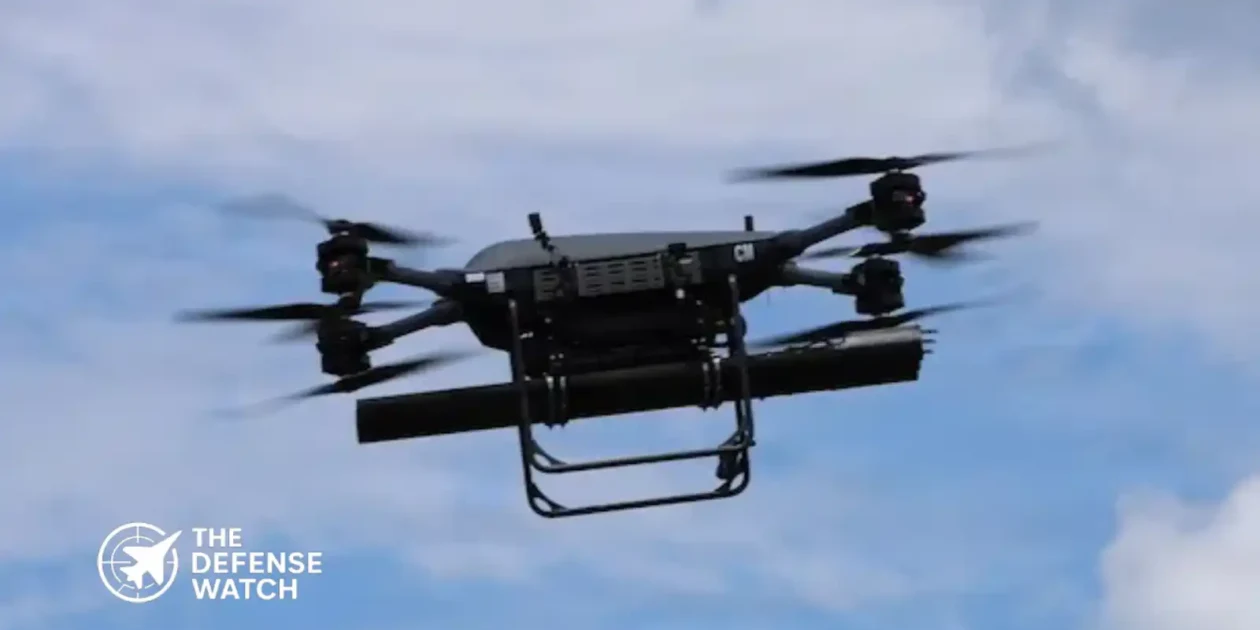
| Weapons | 3x APKWS 70 mm Guided Rockets |
| Sensors | EO/IR Payload Options |
| Avionics | Autonomous Flight Control, GPS Navigation |
5. Propulsion
| Engine Type | Electric Multirotor System |
| Engine Power | Not Publicly Disclosed |
| Propeller Type | Multi-Rotor VTOL Propellers |
6. Communication & Control
| Control Type | Remote and Autonomous |
| Data Link Range | Tactical LOS Communications |
| Navigation | GPS / INS |
| Ground Control Station | Portable Tactical Control Station |
7. Operational Use
| Primary Users | U.S. Army, U.S. Marine Corps |
| Combat Proven | Logistics Operations |
| Notable Operations | Fort Rucker Armed UAV Trials |
PROS
- Combines logistics and strike roles in one platform
- Vertical takeoff and landing capability
- Lower operational risk than manned aircraft
- Supports precision-guided APKWS rockets
- Modular payload architecture enables mission flexibility
CONS
- Limited payload compared to larger UAVs
- Shorter range than fixed-wing drones
- Vulnerable to electronic warfare systems
- Operational endurance depends on payload weight
- Still undergoing armed capability evaluation
TRV-150 Armed Drone: Precision Strike UAV
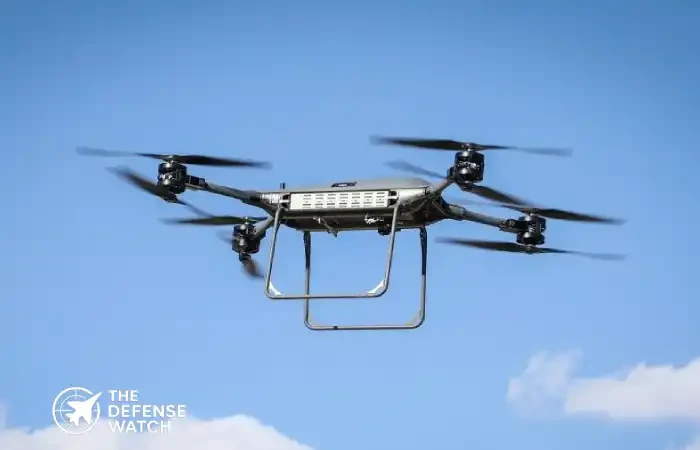
The TRV-150 Armed Drone is a tactical unmanned aerial vehicle designed to combine battlefield logistics and precision strike capabilities within a single platform. Originally developed as a heavy-lift resupply drone, the system has gained attention following successful U.S. Army and industry-led tests integrating a three-shot Advanced Precision Kill Weapon System (APKWS) launcher. The platform offers battalion-level units an organic precision attack capability without relying on manned aircraft or higher-echelon fire support.
Manufacturer and Origin
The TRV-150 is manufactured by SURVICE Engineering in the United States. The platform is derived from the Malloy T-150 heavy-lift drone architecture and has been adapted for U.S. military logistics and expeditionary operations. The drone is currently used by elements of the U.S. Army and U.S. Marine Corps for cargo transport, medical resupply, and battlefield support missions. Recent testing with BAE Systems APKWS-guided rockets has expanded its operational potential into the armed UAV category.
Speed, Range and Performance
The TRV-150 is a multi-rotor VTOL drone capable of carrying payloads up to approximately 68 kg (150 lb). While official performance figures vary depending on mission configuration, the platform is designed for short-to-medium range tactical operations. Its autonomous flight software supports route planning, obstacle avoidance, payload management, and precision targeting functions. The drone can operate in day and night conditions and can rapidly transition between logistics and strike missions.
Armament and Technology
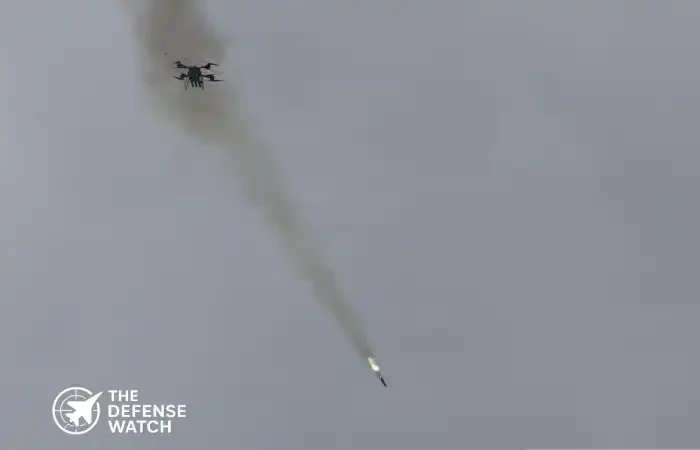
The armed configuration carries a three-round APKWS launcher firing laser-guided 70 mm rockets. These munitions provide accurate engagement of ground targets and limited counter-drone capability at lower cost than larger guided missiles. Integrated mission systems include autonomous navigation, GPS-assisted targeting, payload management interfaces, and modular mission equipment ports. Recent trials demonstrated successful engagements against both ground and aerial targets.
Cost and Operational Value
Official procurement pricing has not been publicly disclosed. Industry analysts estimate the base logistics drone costs significantly less than larger combat UAVs, while APKWS rockets are generally reported to cost around $30,000 per round. This combination offers a comparatively affordable precision-strike option for frontline units. The TRV-150 represents a growing trend toward multi-role unmanned systems capable of both resupply and combat support missions in modern warfare.
Disclaimer Note
The information provided on TheDefenseWatch.com is for general informational purposes only. While we strive to ensure the accuracy, completeness, and timeliness of our content regarding defense and aerospace products, technologies, and specifications, we cannot guarantee that all information is 100% accurate or up-to-date due to the evolving nature of military technology and classified data.TheDefenseWatch.com does not warrant the reliability, suitability, or availability of the information for any specific purpose. Users are advised to consult official sources, such as manufacturers, government publications, or defense agencies, for precise and verified data before making decisions based on our content.We are not affiliated with any defense manufacturers, governments, or military organizations mentioned. Opinions, reviews, and ratings reflect expert analysis but are subjective and should not be considered endorsements. TheDefenseWatch.com is not responsible for any errors, omissions, or consequences arising from the use of this website’s content.External links are provided for convenience and do not imply endorsement. TheDefenseWatch.com reserves the right to update or modify content without prior notice. By using this website, you agree to our Privacy & Cookies Policy.
New Arrivals


Popular Comparisons
-
 J-10C vs JF-17 Thunder: Which Fighter Is More Capable?
View Comparison →
J-10C vs JF-17 Thunder: Which Fighter Is More Capable?
View Comparison → -
Tejas vs Gripen: Key Differences and Capabilities
View Comparison →
-
Tejas vs MiG-21 Bison: How India Replaced Its Iconic Supersonic Fighter
View Comparison →
-
F-35 vs F-16: Stealth, Sensors and Combat Roles
View Comparison →
-
Tejas Fighter Jet vs F-16 Fighting Falcon: Capability Compared
View Comparison →
-
Rafale Fighter Jet vs F-16 Fighting Falcon : Which Fighter Has the Edge?
View Comparison →
-
Su-57 Fighter Jet vs J-20 Fighter Jet: Stealth and Air Combat Compared
View Comparison →
-
Mirage 2000 vs Tejas Mk1A: Legacy Combat Power vs Indigenous Modernization
View Comparison →
-
Rafale Fighter Jet vs F-22 Raptor: Which Air Dominance Fighter Has the Edge?
View Comparison →
-
Tejas Fighter Jet vs. Rafale Fighter Jet: India’s Indigenous Fighter Meets France’s Proven Multirole Combat Aircraft
View Comparison →


- Department of War and Lockheed Martin Sign 10-Year F-35 Agreement With $7 Billion Investment Commitment

- Pentagon Approves Active Denial System for Potential U.S. Southern Border Use
- U.S. Air Force Plans Larger F-35 Role in 1,509-Aircraft Fighter Fleet
- Raytheon Wins Two-Year Extension for AN/TPY-2 Radar Support
- Space Force Selects Northrop Grumman, True Anomaly for New Orbital Reconnaissance Satellites
- Hegseth and Guyana’s President Establish Enhanced Military Partnership
- Ukrainian F-16 vs. Russian Su-35: What Happened, How the Engagement Unfolded and Why It Matters
- Canada’s Fighter Jet Fleet Faces a Critical Transition as F-35 Review Continues
- New Zealand Signs Deal for Five MH-60R Seahawk Helicopters
- U.S. Air Force Test Pilot School Adds Water Landings to Training



Fighter Jets
-
 SU-57 Felon Stealth Fighter
-
Boeing F/A-XX Fighter
-
JF-17 Thunder Fighter Jet
-
F-47 Fighter Jet
-
MIG-31 Fighter Jet
-
J-10CE Fighter Jet
-
Chengdu J-10 Fighter Jet
-
Chengdu J-10C Fighter Jet
-
Gripen E Fighter Jet
-
Tejas Mk1A Fighter Jet
-
Tejas Mk‑2 Fighter Jet
-
F-16V Viper Block 70 Fighter Jet
-
F-15EX Eagle II Fighter
-
F-15E Strike Eagle Fighter
-
F/A-18E/F Super Hornet Fighter Jet
-
Saab Gripen F Fighter Jet
-
JAS 39E/F Gripen Fighter Jet
-
JAS 39 Gripen Fighter Jet
-
F-35A Lightning II Fighter Jet
-
F/A-18F Super Hornet
-
J-50 Fighter Jet
-
Spanish EF-18 Hornet Fighter
-
F-35i Adir Fighter Jet
-
F-16 Fighting Falcon






Recent Compares
-
J-10C vs JF-17 Thunder: Which Fighter Is More Capable?
View Comparison →
-
Tejas vs Gripen: Key Differences and Capabilities
View Comparison →
-
Tejas vs MiG-21 Bison: How India Replaced Its Iconic Supersonic Fighter
View Comparison →
-
F-35 vs F-16: Stealth, Sensors and Combat Roles
View Comparison →
-
Tejas Fighter Jet vs F-16 Fighting Falcon: Capability Compared
View Comparison →
Latest Defense Systems
10 Compares Defense Systems
-
J-10C vs JF-17 Thunder: Which Fighter Is More Capable?
View Comparison →
-
Tejas vs Gripen: Key Differences and Capabilities
View Comparison →
-
Tejas vs MiG-21 Bison: How India Replaced Its Iconic Supersonic Fighter
View Comparison →
-
F-35 vs F-16: Stealth, Sensors and Combat Roles
View Comparison →
-
Tejas Fighter Jet vs F-16 Fighting Falcon: Capability Compared
View Comparison →
-
Rafale Fighter Jet vs F-16 Fighting Falcon : Which Fighter Has the Edge?
View Comparison →
-
Su-57 Fighter Jet vs J-20 Fighter Jet: Stealth and Air Combat Compared
View Comparison →
-
Mirage 2000 vs Tejas Mk1A: Legacy Combat Power vs Indigenous Modernization
View Comparison →
-
Rafale Fighter Jet vs F-22 Raptor: Which Air Dominance Fighter Has the Edge?
View Comparison →
-
Tejas Fighter Jet vs. Rafale Fighter Jet: India’s Indigenous Fighter Meets France’s Proven Multirole Combat Aircraft
View Comparison →
- Department of War and Lockheed Martin Sign 10-Year F-35 Agreement With $7 Billion Investment Commitment
- Pentagon Approves Active Denial System for Potential U.S. Southern Border Use
- U.S. Air Force Plans Larger F-35 Role in 1,509-Aircraft Fighter Fleet
- Raytheon Wins Two-Year Extension for AN/TPY-2 Radar Support
- Space Force Selects Northrop Grumman, True Anomaly for New Orbital Reconnaissance Satellites