











@2026 – All Right Reserved. TheDefenseWatch.com
- Home
- Defense Systems
- Radar and Jamming Systems
- AN/APG-81 AESA Radar
AN/APG-81 AESA Radar

Defense Systems Full Specifications
1. General Information
| Name / Designation | AN/APG-81 |
| Manufacturer | Northrop Grumman |
| Country of Origin | United States |
| Type / Role | Airborne AESA multifunction fire-control radar |
| Operational Domain | Air, surface, maritime, electronic warfare |
| Status | Operational and in production |
2. Technical Specifications
| Frequency Band | X-band |
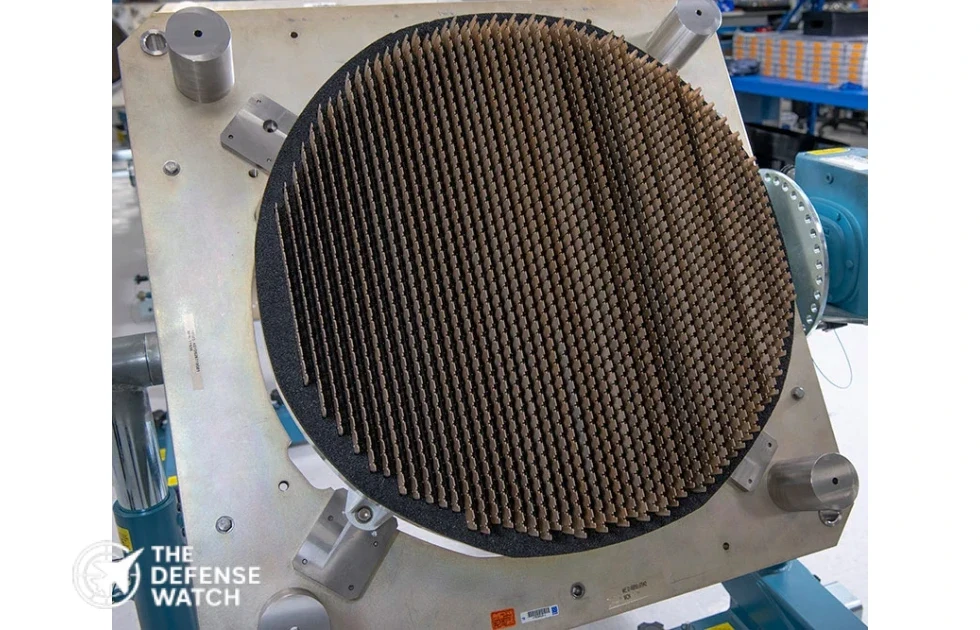
| Antenna Type | Active electronically scanned array |
| Antenna Aperture / Size | Approximately 700 mm, publicly reported |
| Power Output | Not publicly disclosed |
| Detection Range | Approximately 150 km or more publicly cited; configuration and target dependent |
| Tracking Range | Not publicly disclosed |
| Target Tracking Capacity | Multiple simultaneous targets; exact capacity classified |
| Elevation Coverage | Exact operational coverage not publicly disclosed |
| Azimuth Coverage | Exact operational coverage not publicly disclosed |
| Beam Steering | Electronic, solid-state beam steering |
| Pulse Repetition Frequency (PRF) | Classified / not publicly disclosed |
| Resolution | High-resolution SAR capability; exact figures classified |
| Update Rate | Not publicly disclosed |
| Clutter Rejection / ECCM | Advanced electronic protection and clutter-management capabilities |
3. Functional Capabilities
| Primary Functions | Air-to-air search and track, air-to-ground targeting, SAR mapping, maritime search, navigation, weather sensing, electronic warfare |
| Target Types | Aircraft, surface targets, maritime targets, ground targets, selected missile and rocket threats |
| Integration / Networking | Integrated with F-35 mission systems and sensor-fusion architecture |
| IFF Capability | Integrated identification functions through the F-35 avionics architecture |
| Data Link / Networking | Integrated with F-35 communications and data-link systems |
| Weather & Terrain Resistance | Designed for all-weather airborne operations |
| Mobility / Mounting | Fixed internal installation in the F-35 nose |
4. Physical & Operational Characteristics
| Dimensions | Approx. 700 mm antenna diameter publicly reported; complete radar dimensions classified |
| Weight | Not publicly disclosed |
| Power Requirement | Not publicly disclosed |
| Cooling System | Aircraft-integrated cooling system; detailed specifications classified |
| Operating Temperature Range | Not publicly disclosed |
| Deployment Platform | F-35A, F-35B, F-35C |
| Crew Requirement | No dedicated radar operator; operated through the F-35 pilot and mission systems |
5. Software & Processing
| Signal Processor Type | Digital, software-controlled radar processing architecture |
| Processing Speed | Not publicly disclosed |
| AI / Automation Features | Automated detection, tracking, sensor management, and mission-system integration; specific AI capabilities not publicly disclosed |
| Data Output / Interface | Integrated F-35 tactical and sensor-fusion architecture |
| Software Upgradeability | Software-enabled architecture supports capability updates |
6. Operational History
| Year Introduced | Developed for the Joint Strike Fighter program; operational with F-35 fleet |
| Users / Operators | United States and F-35 international operators |
| Notable Deployments | F-35 operational and training fleets worldwide |
| Successor / Predecessor | Successor to earlier Northrop Grumman fighter AESA technology; AN/APG-85 is being developed as a future F-35 radar |
7. Export / Compliance Data
| Export Availability | Exported as part of approved F-35 international programs |
| ITAR / MTCR Status | U.S.-controlled defense technology; specific export-control classification is not publicly detailed here |
| Cost Estimate | Standalone APG-81 unit price not publicly established |
PROS
- AESA technology provides rapid electronic beam steering
- Supports air-to-air and air-to-ground missions
- Includes high-resolution SAR mapping
- Provides integrated electronic warfare functions
- Designed for high reliability and modular maintenance
CONS
- Detailed performance data remain classified
- Radar-only pricing is not publicly available
- Detection range varies substantially by target conditions
- Performance depends on integration with the F-35 mission system
- Designed specifically around the F-35 rather than general aircraft integration
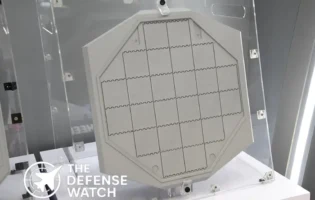
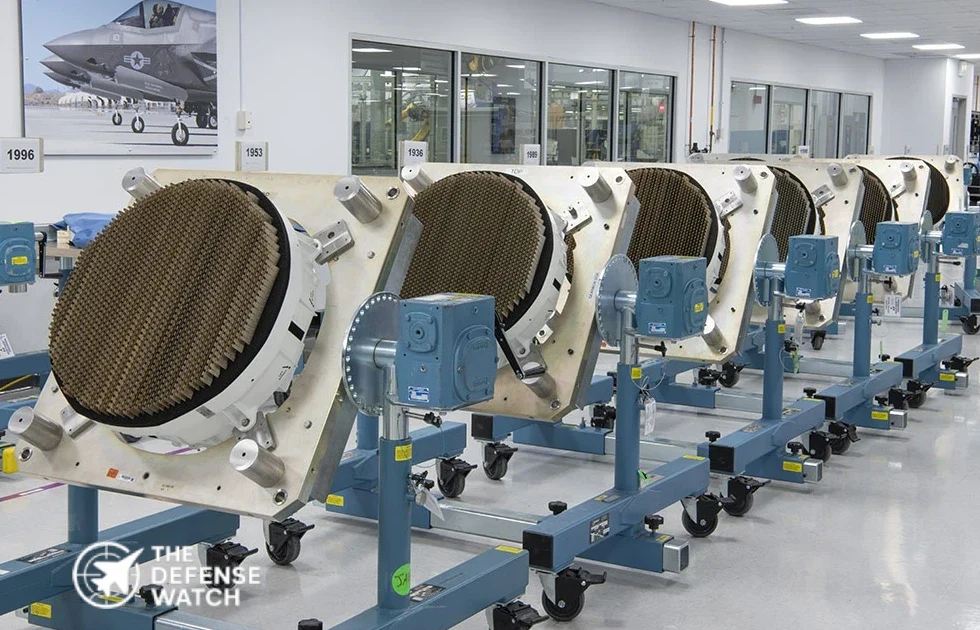
The AN/APG-81 is the active electronically scanned array (AESA) fire-control radar developed for the F-35 Lightning II family. Designed by Northrop Grumman, it serves as a central sensor within the F-35’s integrated avionics architecture, supporting air-to-air combat, air-to-ground targeting, maritime surveillance, navigation, and electronic warfare missions.
Unlike mechanically scanned radars, the APG-81 uses electronically steered beams with no conventional moving antenna. Its multifunction array can perform radar sensing while also supporting electronic protection, electronic attack, and electronic support functions. The radar includes high-resolution Synthetic Aperture Radar (SAR) mapping and all-weather ground and maritime modes.
The system is integrated with the F-35’s other sensors and mission systems to support sensor fusion. Northrop Grumman reported that more than 1,000 APG-81 radars had been produced and delivered by December 2022, while production costs had fallen by more than 70 percent from early production levels.
Manufacturer
The AN/APG-81 was developed and is produced by Northrop Grumman in the United States. It was selected for the Joint Strike Fighter program in 2001 and is installed across the F-35A, F-35B, and F-35C variants.
Speed and Range
The APG-81 is a radar rather than an aircraft or missile, so speed and physical weapon range do not apply. Public sources commonly cite a detection range of about 150 km or more, but actual performance varies with target size, altitude, aspect, environmental conditions, radar mode, and electronic warfare conditions. Exact performance figures remain classified.
Cost / Price
A standalone unit price for the AN/APG-81 is not publicly established. F-35 procurement contracts normally combine radar, aircraft, mission systems, support, and other equipment, making a direct radar-only price difficult to determine.
FAQs
What is the AN/APG-81 radar?
The AN/APG-81 is a Northrop Grumman AESA multifunction fire-control radar installed on all three F-35 variants.
What aircraft uses the AN/APG-81?
The radar is used by the F-35A conventional takeoff and landing variant, F-35B short takeoff and vertical landing variant, and F-35C carrier variant.
Is the AN/APG-81 an AESA radar?
Yes. It uses active electronically scanned array technology with solid-state transmit and receive elements.
What can the AN/APG-81 detect?
It supports detection and tracking of airborne, ground, and maritime targets. Its SAR mode provides high-resolution ground mapping, while its broader multifunction architecture supports electronic warfare and other missions.
How much does the AN/APG-81 radar cost?
There is no reliable public standalone price for the complete radar. F-35 procurement costs generally include multiple aircraft systems and support elements, so contract totals should not be treated as the radar’s unit price.
Disclaimer Note
The information provided on TheDefenseWatch.com is for general informational purposes only. While we strive to ensure the accuracy, completeness, and timeliness of our content regarding defense and aerospace products, technologies, and specifications, we cannot guarantee that all information is 100% accurate or up-to-date due to the evolving nature of military technology and classified data.TheDefenseWatch.com does not warrant the reliability, suitability, or availability of the information for any specific purpose. Users are advised to consult official sources, such as manufacturers, government publications, or defense agencies, for precise and verified data before making decisions based on our content.We are not affiliated with any defense manufacturers, governments, or military organizations mentioned. Opinions, reviews, and ratings reflect expert analysis but are subjective and should not be considered endorsements. TheDefenseWatch.com is not responsible for any errors, omissions, or consequences arising from the use of this website’s content.External links are provided for convenience and do not imply endorsement. TheDefenseWatch.com reserves the right to update or modify content without prior notice. By using this website, you agree to our Privacy & Cookies Policy.
New Arrivals
Popular Comparisons
-
 F-35 vs F-16: Stealth, Sensors and Combat Roles
View Comparison →
F-35 vs F-16: Stealth, Sensors and Combat Roles
View Comparison → -
Tejas Fighter Jet vs F-16 Fighting Falcon: Capability Compared
View Comparison →
-
Rafale Fighter Jet vs F-16 Fighting Falcon : Which Fighter Has the Edge?
View Comparison →
-
Su-57 Fighter Jet vs J-20 Fighter Jet: Stealth and Air Combat Compared
View Comparison →
-
Mirage 2000 vs Tejas Mk1A: Legacy Combat Power vs Indigenous Modernization
View Comparison →
-
Rafale Fighter Jet vs F-22 Raptor: Which Air Dominance Fighter Has the Edge?
View Comparison →
-
Tejas Fighter Jet vs. Rafale Fighter Jet: India’s Indigenous Fighter Meets France’s Proven Multirole Combat Aircraft
View Comparison →
-
F-22 Raptor vs. F-35 Joint Strike Fighter: Which Fifth Generation Fighter Has the Edge?
View Comparison →
-
F-35A vs. F-22 Raptor: Which U.S. Stealth Fighter Dominates Modern Air Combat?
View Comparison →
-
AGM-114 Hellfire vs. AGM-179 JAGM: Which U.S. Precision Missile Is Better?
View Comparison →
- F-15E Shot Down Over Iran: How the Dude 44 Crew Was Brought Home

- Operation Mount Hope III: How Two Night Stalker Chinooks Carried a Libyan Hind Out of Chad
- North Korea Fires Ballistic Missile From Wonsan Toward East Sea
- BAE Systems Wins $70.5 Million Trident II D5 Support Contract
- Saudi Arabia Weighs Yemen Offensive to Retake Bab el-Mandeb
- L3Harris Expands WESCAM Manufacturing Focus for Mission-Ready EO/IR Systems
- Northrop Grumman Unveils FORTITUDE RF Chip for Faster Defense Systems
- Northrop Grumman YFQ-48A Talon Blue Completes Autonomous Flight Test
- U.S. Warns Defense Industry Lacks Capacity for Rapid Weapons Surge
- NATO Uses B-1B Bomber in Baltic Air Defense Training