U.S. Army Moves K9MH Into Mobile Tactical Cannon Testing
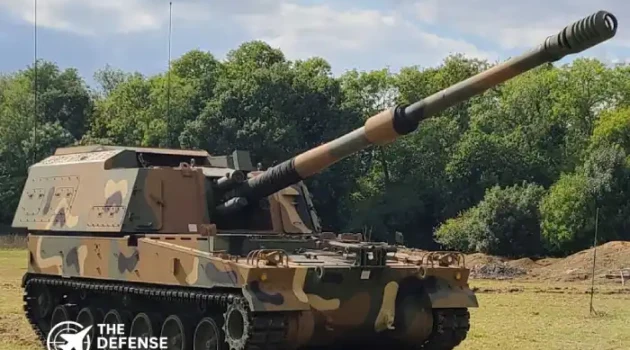
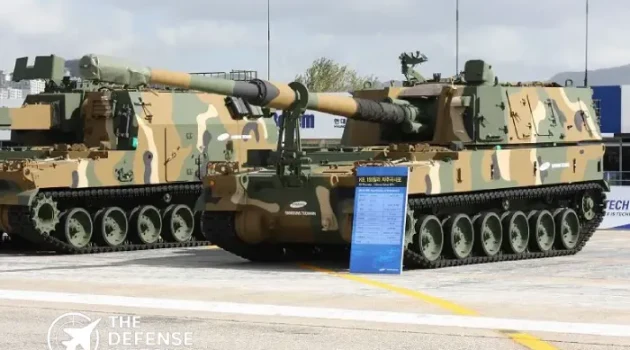
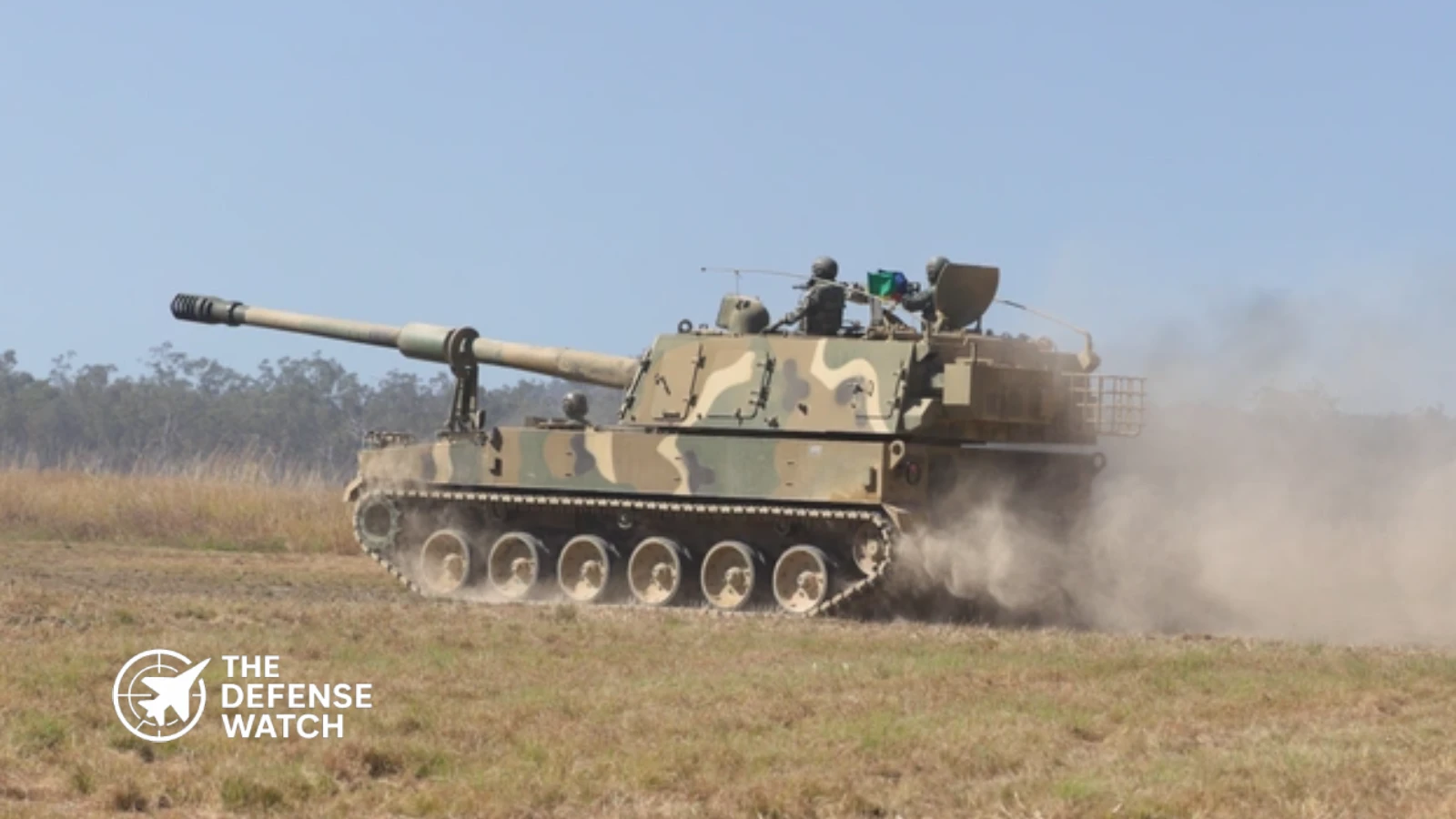
Hanwha’s K9 Mobile Howitzer has entered the U.S. Army’s Mobile Tactical Cannon evaluation after Hanwha Defense USA secured an agreement to provide prototype systems for testing and Soldier experimentation. The Army effort is focused on finding a more mobile 155mm cannon system for formations currently equipped with M777 towed howitzers.
Takeaways
Hanwha’s K9MH moves into U.S. Army prototype testing under the Mobile Tactical Cannon program.
1. $100.3 Million Initial Award
Hanwha Defense USA received an initial firm-fixed-price agreement valued at $100.3 million, with a reported cumulative face value of $262.9 million if options are exercised.
2. Six K9MH Prototypes
The Army is initially set to receive six K9 Mobile Howitzer systems, with options that could increase the prototype fleet to as many as 18 systems.
3. Potential M777 Replacement
If selected after testing, the Mobile Tactical Cannon is intended to replace M777 towed howitzers in selected Army formations with a more mobile self-propelled artillery capability.
4. Four-Year Prototype Effort
The agreement covers prototyping, testing and Soldier experimentation over an estimated four-year period before a decision on future fielding.
5. U.S. Industrial Base Is Part of the Bid
Hanwha is establishing an integration and test facility in Opelika, Alabama, as part of a broader plan to localize K9 production and sustainment in the United States.
The initial agreement is valued at $100.3 million, with a reported cumulative face value of $262.9 million if available options are exercised. The arrangement covers up to 18 systems for prototyping, testing and experimentation over an estimated four years.
The award does not represent a production decision for the Army. Instead, it puts the K9MH into the hands of the service for a structured evaluation intended to determine whether the system can meet operational, technical and sustainment requirements.
Mobile Tactical Cannon Targets a Mobility Gap
The Army’s Mobile Tactical Cannon program reflects a broader reassessment of cannon artillery after years of relying heavily on towed systems for light and medium formations.
The M777A2 remains a highly mobile 155mm system by traditional artillery standards. The Army lists its weight at less than 10,000 pounds, and its digital fire control system supports faster emplacement and displacement while enabling precision munitions such as Excalibur. Two M777 systems can also be transported inside a C-130 aircraft.
The limitation is that the M777 requires a separate prime mover and crew to tow, position and relocate the weapon. A self-propelled cannon integrates the gun, mobility platform, fire-control equipment and protected crew compartment into one vehicle.
That difference becomes important when artillery units operate under persistent surveillance and counterbattery threats. The Army has highlighted the need for cannon artillery that can move rapidly between firing positions while maintaining command and control during dispersed operations.
The Mobile Tactical Cannon concept therefore is not simply about replacing one artillery piece with another. It is about changing how selected Army formations generate and sustain cannon fires.
K9MH Brings a Wheeled Approach to the K9 Family
The K9MH is a wheeled member of Hanwha’s K9 artillery family. Hanwha has positioned the system as a 155mm self-propelled artillery platform intended to combine the established K9 weapon system with the road mobility and operational flexibility of an 8×8 vehicle.
The K9 family has extensive international operating experience, with more than 2,500 systems fielded globally according to Hanwha. The platform is already operated or ordered by numerous countries, including several NATO members.
That existing user base matters for the U.S. Army because the Mobile Tactical Cannon program is explicitly focused on mature systems rather than requiring the service to begin with a completely new artillery design.
The Army’s fiscal 2026 research and development budget identifies competitive evaluation of Mobile Tactical Cannon systems during 2026, Soldier experimentation and integration testing during 2027, and a planned senior leader downselect in the fourth quarter of 2027.
Key Program Details
Item Current information Program Mobile Tactical Cannon System Hanwha K9 Mobile Howitzer Initial prototypes 6 systems Potential prototype total Up to 18 systems Initial award value $100.3 million Cumulative face value $262.9 million Evaluation period Estimated four years Main caliber 155mm Intended role Mobile self-propelled cannon artillery Potential replacement M777 in selected Army formations U.S. integration site Opelika, Alabama Why the K9MH Matters for U.S. Army Artillery
The central operational question is survivability.
Modern artillery units increasingly operate in environments where drones, electronic surveillance, counterbattery radars and long-range fires can rapidly expose firing positions. The ability to complete a fire mission and relocate before an enemy can respond has therefore become an increasingly important part of artillery effectiveness.
A self-propelled system can reduce the number of steps required to transition between movement and firing. The vehicle carries its own gun, fire-control equipment and ammunition, while its automotive mobility allows the crew to relocate without waiting for a separate towing vehicle to reposition the weapon.
The Army’s own 2026 discussion of cannon artillery development emphasizes continuous movement and the need to improve survivability during distributed operations.
For M777-equipped units, a transition to a self-propelled system could therefore affect more than tactical mobility. It could change battery organization, logistics requirements, ammunition handling, maintenance, crew procedures and the way artillery integrates with maneuver formations.
Automation and Fire-Control Integration Will Be Critical
The K9 family has evolved around automation and digital fire control, but the U.S. Army will still have to validate the specific K9MH configuration against its own network, ammunition, maintenance and operational requirements.
Compatibility with U.S. 155mm ammunition is particularly important. The Army operates a large ecosystem of 155mm projectiles and propelling charges, and any future Mobile Tactical Cannon must function within that broader fires architecture rather than operate as an isolated weapon.
The Army is also developing improvements to cannon artillery ammunition and propulsion systems alongside the Mobile Tactical Cannon effort. Its fiscal 2026 budget documents show component engineering, propelling charge development and integration testing extending into 2028.
This means the K9MH evaluation will ultimately involve more than measuring range and rate of fire. Reliability, ammunition compatibility, digital integration, crew workload, maintenance burden and the ability to operate with Army formations will all influence the final assessment.
Hanwha Is Building a U.S. Production Footprint
Hanwha’s approach to the program also includes an industrial component.
Hanwha Defense USA announced in April that it would establish an integration and test facility in Opelika, Alabama. The company signed a three-year lease and said it planned to invest more than $2 million in the U.S. artillery system supply chain during the initial phase.
The Alabama facility is intended to support integration and testing of the K9 family while Hanwha develops a broader U.S. production and sustainment network.
That matters because any eventual Army procurement would require a reliable domestic industrial base capable of producing vehicles, supporting spare parts, maintaining systems and sustaining the fleet over decades.
Hanwha has already used localized production models for K9 programs in other countries, including Australia, Poland and Romania. The company says it intends to apply similar industrial experience to its U.S. expansion.
The Award Is a Test of More Than the Gun
The K9MH now faces the part of the competition that cannot be resolved through specifications alone.
The Army will need to establish whether the system can maintain performance during realistic field conditions, including repeated movement, firing, resupply and maintenance cycles. Soldier experimentation will provide direct evidence on whether the platform is practical for the units expected to operate it.
That distinction is important. A technically capable artillery system can still struggle if its maintenance footprint is excessive, its logistics chain is complicated, or its integration with Army command and control systems requires major changes.
The prototype phase gives the Army an opportunity to identify those issues before committing to large-scale production.
M777 Replacement Would Represent a Major Organizational Change
If the Mobile Tactical Cannon ultimately replaces M777 systems in selected formations, the effect would extend beyond artillery battalions.
The M777’s low weight has made it attractive for light formations and air transport. A self-propelled 8×8 system offers greater onboard mobility and protection but introduces a substantially different vehicle and logistics profile.
The Army will therefore have to balance tactical mobility against strategic mobility, road and off-road performance, transport requirements, fuel consumption, maintenance and sustainment capacity.
That tradeoff is central to the program. The objective is not simply to find a heavier version of the M777. It is to determine whether a self-propelled cannon provides enough additional survivability, responsiveness and operational flexibility to justify the change.
A Wider Shift Toward Mobile Fires
The K9MH award comes as the Army is reassessing how it develops and fields cannon artillery.
The service’s current approach places greater emphasis on mature technology, faster experimentation and systems that can be adapted as operational requirements change. The Mobile Tactical Cannon program fits that model by testing commercially available or mature artillery designs before making a final fielding decision.
For Hanwha, the prototype award is also strategically significant. It gives the company an opportunity to demonstrate its K9 family directly to the U.S. Army while developing a domestic manufacturing and support base.
For the Army, the value of the program will ultimately be measured by whether the tested systems can provide dependable cannon fires while surviving in a battlefield where detection and counterfire happen faster than in previous conflicts.
The K9MH is now entering that evaluation process. The eventual decision will depend on Soldier feedback, technical testing, operational performance and the Army’s assessment of long-term cost and sustainment.
At this stage, the award should therefore be viewed as the beginning of a competitive evaluation, not the selection of a final M777 replacement.