RTX Tomahawk Deal Marks Major U.S. Production Push
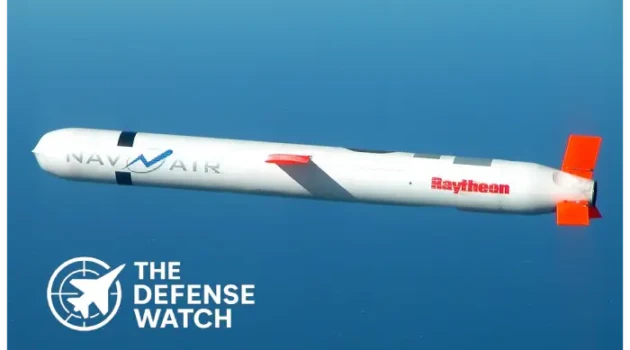
RTX has secured a $22.9 billion, seven-year agreement with the U.S. Navy to accelerate production of Tomahawk cruise missiles, according to the Navy and reporting by Reuters. The agreement is intended to increase annual Tomahawk production to more than 1,000 missiles, a major expansion from the current production rate of about 60 missiles per year.
Takeaways
The U.S. is committing major resources to expand Tomahawk production and strengthen its long range strike inventory.
1. $22.9 Billion, Seven-Year Agreement
The U.S. Navy awarded Raytheon, an RTX business, a $22.9 billion contract covering accelerated production of Tomahawk missiles.
2. Production To Exceed 1,000 Missiles Annually
The agreement is designed to increase Tomahawk output from roughly 60 missiles per year to more than 1,000 annually.
3. Long-Range Strike Capacity Is The Focus
Tomahawk provides the Navy with a ship and submarine launched long range precision strike capability and remains a major part of the U.S. conventional strike inventory.
4. Industrial Capacity Is Central To The Deal
The production expansion builds on investments by RTX in manufacturing facilities, workforce capacity and the wider supply chain supporting critical missile programs.
5. Part Of A Wider Munitions Expansion
The Tomahawk agreement follows broader U.S. efforts to accelerate production of critical munitions, including Patriot, THAAD, AMRAAM, SM-3 and SM-6 systems.
The contract formalizes a production expansion framework established between Raytheon and the Department of War in February 2026. That earlier agreement called for annual Tomahawk production to rise above 1,000 missiles as part of a broader effort to increase output of critical U.S. precision weapons.
The scale of the new agreement reflects a shift in U.S. defense acquisition priorities. Rather than focusing only on individual missile purchases, Washington is committing to longer production horizons intended to give industry greater certainty to expand factories, hire workers and strengthen suppliers.
What The $22.9 Billion Contract Covers
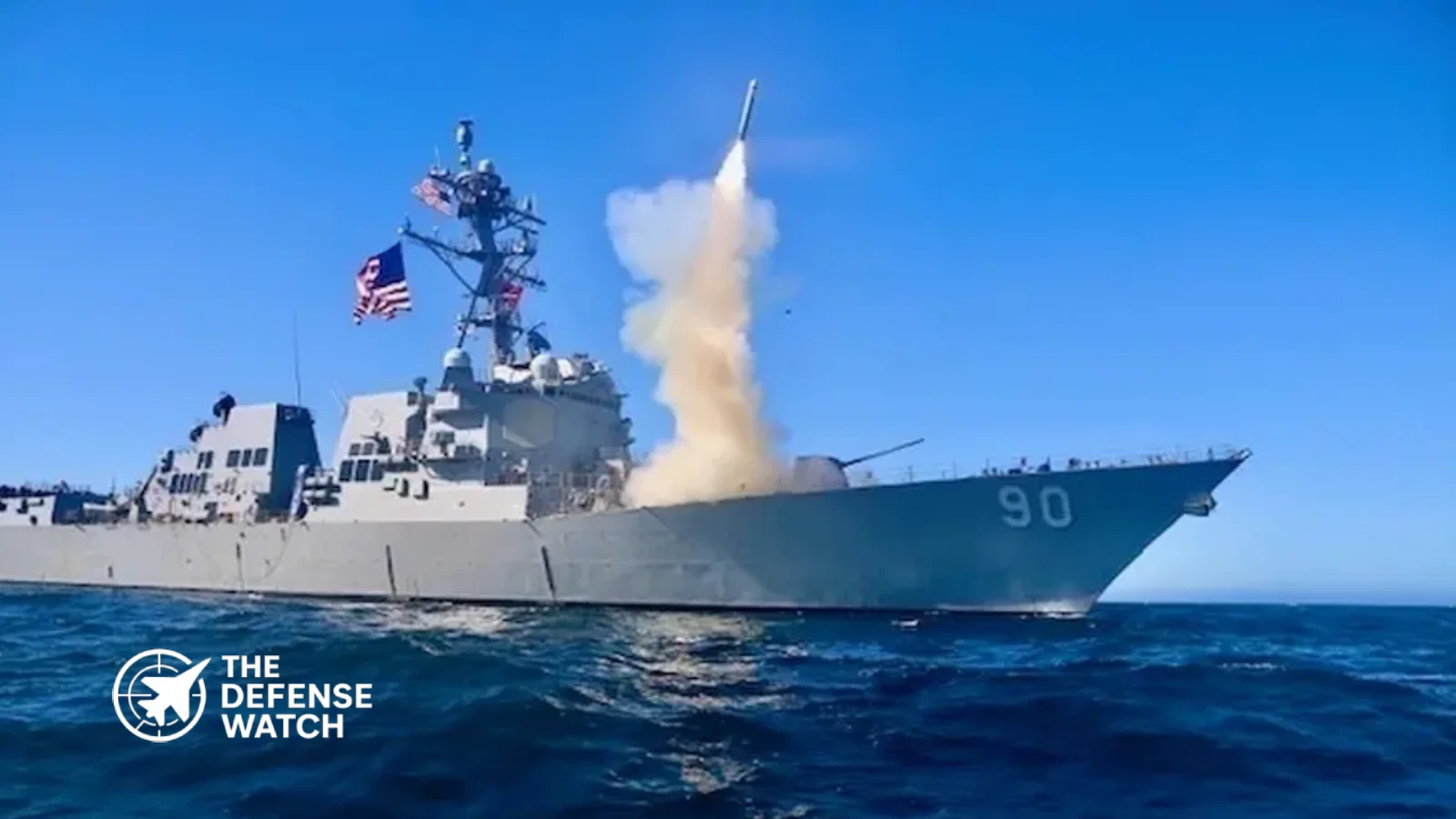
The Navy identifies Tomahawk as a critical long-range strike capability. The weapon can be launched from surface ships and submarines and has been used extensively by U.S. forces in operational environments.
RTX said earlier in 2026 that the company was investing in Tomahawk manufacturing capacity in Tucson, Arizona. The expansion is part of a broader $2.6 billion capital investment announced by RTX in 2025 to increase production capacity across several missile programs.
Metric Current or Announced Position Contractor Raytheon, an RTX business Customer U.S. Navy Contract value $22.9 billion Contract duration Seven years Current annual Tomahawk production About 60 missiles Target annual production More than 1,000 missiles Launch platforms U.S. Navy surface ships and submarines Production expansion Tucson, Arizona and supporting industrial base Earlier production framework Announced February 2026 The contract value should not be interpreted simply as the price of a fixed number of missiles. The seven-year arrangement is tied to a broader effort to expand production capacity and accelerate deliveries, making the industrial base itself a central part of the investment.
Why The Navy Wants More Tomahawks
Tomahawk gives the U.S. Navy a long-range strike option that can be carried by surface combatants and submarines. This allows the Navy to generate strike effects without relying exclusively on tactical aircraft operating close to defended airspace.
That distinction matters in a conflict involving sophisticated air defenses. A submarine or surface ship equipped with Tomahawks can launch weapons from considerable standoff distances, allowing the attacking force to distribute strike capacity across multiple platforms.
RTX says the Tomahawk can strike targets more than 1,000 miles away and has been used operationally more than 2,300 times.
The missile therefore occupies a different role from shorter-range weapons carried by aircraft and ships. Its value is tied not only to the performance of an individual missile but also to the number of weapons available when a campaign requires repeated strikes.
Production Capacity Has Become A Strategic Issue
The most important aspect of the agreement may be the change in production scale.
Moving from roughly 60 Tomahawks annually to more than 1,000 represents an increase of more than 16 times the previous production rate. Achieving that level requires considerably more than expanding a final assembly line.
Missile production depends on a network of specialized suppliers producing propulsion components, electronics, guidance equipment, structures, warheads and other controlled components. Bottlenecks in any one of these areas can limit total output.
The U.S. Navy has responded to this wider challenge by establishing a Portfolio Acquisition Executive for Munitions in May 2026. The organization was created to develop enterprise-level acquisition strategies and accelerate the delivery of munitions while expanding production capacity.
That approach is significant because modern missile inventories can be consumed much faster than they can be replaced. A production line designed around peacetime demand may not provide enough capacity during a sustained high-intensity conflict.
Tomahawk Expansion Fits A Broader Missile Surge
The RTX agreement is not an isolated procurement effort.
In February, Raytheon announced five framework agreements covering Tomahawk, AMRAAM, SM-3 Block IB, SM-3 Block IIA and SM-6. The company said those agreements would increase annual production of Tomahawk to more than 1,000 missiles, AMRAAM to at least 1,900 and SM-6 to more than 500.
The Pentagon has also pursued separate efforts to expand production of Patriot and THAAD missile components. Reuters reported in August that a deal involving Lockheed Martin and Northrop Grumman was designed to substantially increase production capacity for those air and missile defense systems.
Taken together, these programs show that U.S. munitions policy is increasingly focused on production depth. The objective is not simply to maintain enough weapons for existing requirements, but to create industrial capacity capable of replenishing inventories while continuing to support ongoing operations.
The Industrial Base Is Now Part Of Combat Power
For the U.S. Navy, the ability to launch Tomahawks is only one part of the equation. The Navy also needs sufficient stocks, trained personnel, mission planning infrastructure, launch systems and maintenance support to sustain the capability.
This creates a direct relationship between industrial capacity and operational endurance.
A ship may have the launch system and the crew required to fire a missile, but those capabilities provide limited value if available missile stocks cannot be replenished at an adequate rate. Increasing production therefore strengthens the Navy’s ability to sustain long-range strike operations over extended periods.
The issue is particularly important for the U.S. because the Navy operates a large global fleet and must preserve credible strike capacity across multiple theaters.
Tomahawk And The Indo-Pacific Requirement
The production expansion also has implications for long-term U.S. planning in the Indo-Pacific.
The geography of the region places a premium on long-range weapons. U.S. forces may have to operate across large distances while facing increasingly capable surveillance, missile and air defense networks.
Tomahawk does not solve every operational problem associated with a highly contested maritime environment. However, a larger inventory gives commanders more options for distributing strike capacity among ships and submarines.
The Navy’s ability to generate long-range fires from dispersed platforms is particularly relevant to concepts that seek to complicate an adversary’s targeting process. More available missiles can support a larger number of firing opportunities without requiring every strike to originate from aircraft operating close to hostile defenses.
The Production Challenge Is Bigger Than The Missile Factory
Reaching more than 1,000 Tomahawks annually will require sustained industrial performance.
The first challenge is supply chain capacity. Specialized components may require long lead times, limited production sources or highly qualified suppliers. Increasing final assembly without expanding those upstream sources could create bottlenecks elsewhere in the production process.
The second challenge is workforce expansion. High-end missile manufacturing depends on skilled engineers, technicians, machinists, quality personnel and other specialized workers. Building that workforce takes time, particularly where security requirements and specialized training are involved.
The third challenge is quality control. Higher production rates cannot come at the expense of reliability. Missile programs require extensive testing and inspection because failures in operational weapons carry significant consequences.
The fourth challenge is sustaining production over several years. A short production surge can be achieved through overtime and existing capacity. Maintaining output above 1,000 missiles annually requires a more durable manufacturing model.
RTX Had Already Increased Missile Output
RTX entered the new agreement after increasing production across its missile portfolio.
The company said in February that its investments included facility expansions and manufacturing improvements intended to support faster deliveries. A $115 million expansion in Alabama had been completed for missile production, while Tomahawk manufacturing investment was focused on facilities in Tucson.
The company also reported increased deliveries across its broader Raytheon portfolio during 2026. That matters because the same industrial base is supporting multiple high-demand weapons programs at the same time.
This creates a balancing problem for the defense industry. Expanding one missile production line may compete for labor, electronics, machine tools and supplier capacity with other programs that are also being accelerated.
A Seven-Year Commitment Changes The Acquisition Model
The seven-year structure gives Raytheon a longer planning horizon than a sequence of short-term production orders.
For industry, longer commitments can support capital investment because factories and suppliers have greater visibility into future demand. That can make it easier to justify equipment purchases, facility expansion and workforce increases.
For the government, the benefit is potentially faster and more predictable replenishment. The tradeoff is that long-term contracts require careful management to ensure production targets, costs and performance remain aligned with military requirements.
The February framework agreements already represented a move in this direction. The August contract turns that policy into a much larger financial commitment centered on Tomahawk production.
What The Deal Means For U.S. Long-Range Strike
The immediate effect of the contract is straightforward: the United States intends to build substantially more Tomahawk missiles and deliver them faster.
The broader significance is industrial.
Recent U.S. weapons procurement has demonstrated that stockpile size alone is not enough. The ability to replace weapons after they are expended is equally important, particularly when several conflicts or security commitments place simultaneous demands on the same production base.
For the Navy, the Tomahawk expansion strengthens one of its established long-range strike capabilities. For the wider U.S. defense establishment, it is another major step toward rebuilding the manufacturing capacity required to sustain precision munitions at wartime consumption rates.
The $22.9 billion agreement therefore represents more than an increase in missile orders. It is a long-term commitment to expand the industrial base behind one of the U.S. military’s most established conventional strike weapons.