The U.S. military is accelerating efforts to field mobile nuclear reactors that can keep critical bases operating even when the power grid fails.
Executive Summary:
The U.S. Department of Defense is expanding efforts to deploy mobile nuclear reactors capable of powering military bases during prolonged grid outages. The initiative aims to improve installation resilience, reduce reliance on fuel convoys, and ensure critical missions continue during attacks, disasters, or infrastructure failures.
Mobile Nuclear Reactors Could Reshape Military Base Energy Security
The Pentagon’s push toward mobile nuclear reactors marks a significant shift in how the U.S. military plans to secure energy for critical installations in an increasingly contested operating environment.
Defense Department officials are examining how transportable nuclear microreactors could sustain military installations for extended periods when commercial power grids become unavailable. The effort aligns with broader Pentagon initiatives focused on energy resilience and mission assurance.
Military leaders have long identified dependence on civilian power infrastructure as a strategic vulnerability. Modern installations support increasingly energy-intensive systems, including command-and-control networks, missile defense assets, intelligence operations, communications infrastructure, and emerging technologies such as directed energy systems.
Why The Pentagon Wants Mobile Nuclear Reactors
Unlike traditional nuclear power plants, mobile nuclear reactors are designed to be compact, transportable, and rapidly deployable.
Most proposed military microreactors generate between 1 and 20 megawatts of electricity, enough to support critical facilities without relying on external power sources. Recent Pentagon-backed programs have focused on reactors that can be moved by truck, rail, or military aircraft and quickly activated at operational locations.
The strategic logic is straightforward.
Military installations face growing risks from:
- Cyberattacks against civilian power grids
- Natural disasters
- Physical sabotage
- Long-range missile strikes
- Drone attacks on critical infrastructure
A self-contained nuclear power source could allow essential operations to continue even if regional electrical networks fail.
According to Defense Department officials, advanced reactors could provide secure, reliable, around-the-clock power while reducing dependence on fuel deliveries that can become vulnerable during crises.
Recent Progress In Military Nuclear Power Programs
Momentum behind military microreactors has accelerated significantly over the past two years.
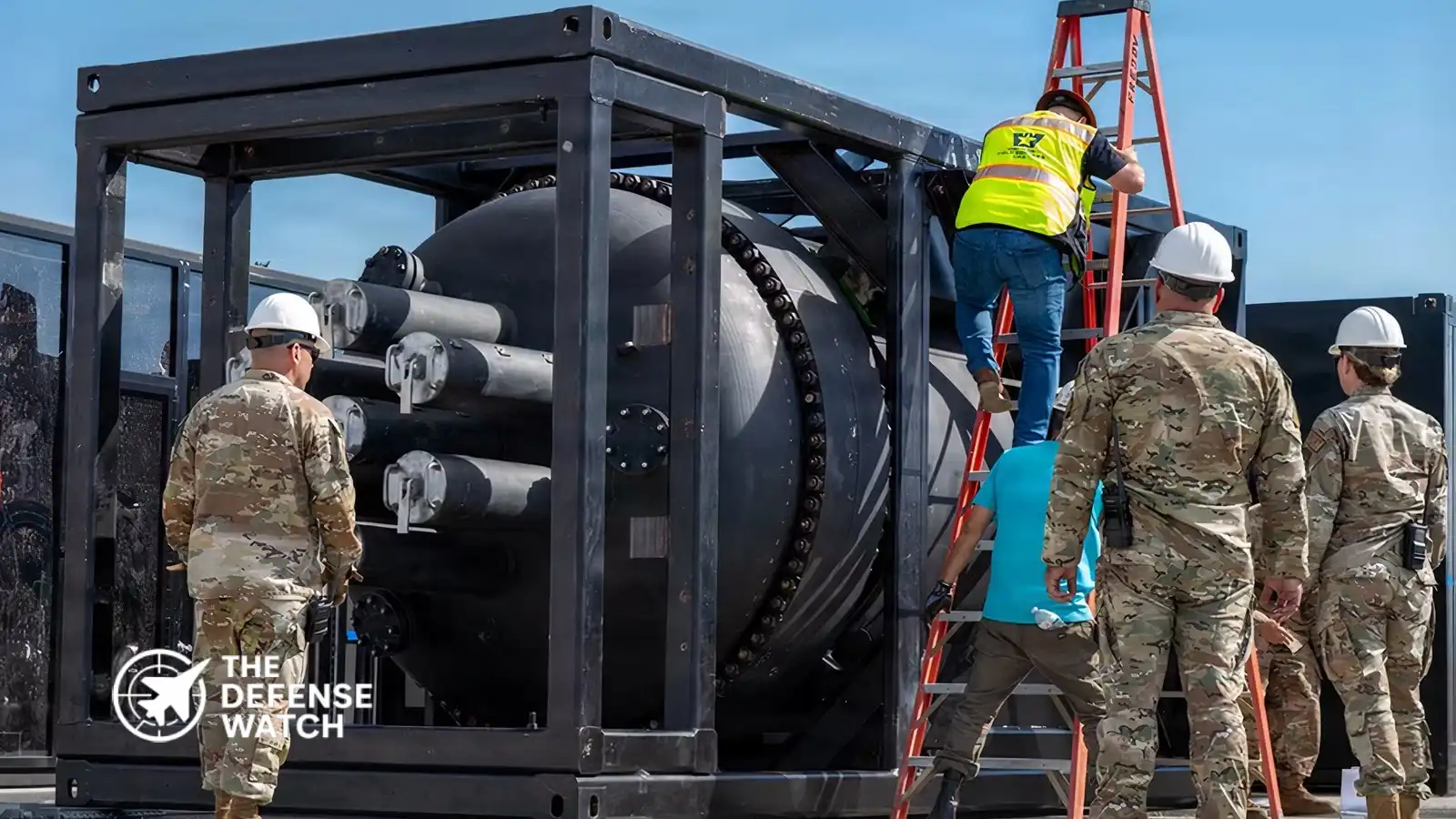
In February 2026, the Pentagon and Department of Energy successfully airlifted a 5-megawatt microreactor from California to Utah aboard a C-17 transport aircraft. Officials described the demonstration as a milestone in proving that nuclear power systems can be rapidly moved to locations where energy is urgently required.
The reactor, developed by Valar Atomics, was transported without nuclear fuel and is intended for testing and evaluation. Officials stated that the system could eventually generate enough electricity to power approximately 5,000 homes or support critical military facilities.
Separately, a May 2025 executive order directed the Army to establish programs supporting advanced nuclear reactors for both military installations and operational energy requirements. The order called for deployment of a reactor at a domestic military installation by September 2028.
Strategic Benefits Beyond Backup Power
The value of mobile nuclear reactors extends beyond emergency backup power.
For decades, deployed forces have relied heavily on diesel generators. While effective, diesel-based power generation creates major logistical burdens. Fuel convoys require transportation assets, personnel, security measures, and sustained supply chains.
Reducing fuel consumption offers operational advantages.
A microreactor capable of operating for years between refueling cycles could dramatically decrease the need for fuel deliveries to remote installations. That reduction could lower logistical risks while improving force endurance during prolonged operations.
The technology may also support future military capabilities.
Advanced sensors, missile defense systems, electronic warfare platforms, and directed-energy weapons are expected to place greater demands on military power generation. Reliable, high-capacity energy sources will become increasingly important as armed forces modernize.
Challenges Remain Before Deployment
Despite growing interest, several hurdles remain before widespread military adoption becomes reality.
Safety remains a central concern. Critics argue that transportable reactors could become attractive targets and raise questions about operational security, reactor protection, and emergency response procedures. Some nuclear experts have also highlighted unresolved issues related to fuel transportation and long-term waste management.
Commercial challenges also persist.
Industry developers continue working through licensing requirements, fuel supply constraints, and manufacturing costs. High-Assay Low-Enriched Uranium (HALEU), a fuel used by many advanced reactor designs, remains in limited supply, potentially affecting deployment timelines.
Nevertheless, recent regulatory changes and Pentagon investment are helping accelerate development across the emerging microreactor sector.
Analysis: A Strategic Energy Shift For Future Operations
The Pentagon’s interest in mobile nuclear reactors reflects a broader recognition that energy resilience has become a national security issue.
Military planners increasingly view power generation as a core component of operational readiness rather than simply a support function. As adversaries develop capabilities to target infrastructure through cyber operations, long-range strikes, and electronic attacks, maintaining independent power sources becomes strategically valuable.
The initiative also aligns with wider defense trends emphasizing distributed operations, resilient logistics, and hardened infrastructure.
While significant technical and regulatory challenges remain, the military’s continued investment suggests nuclear microreactors are evolving from experimental concepts into potential operational assets. If successfully fielded, they could become a critical component of future military installations and expeditionary operations.