
Subsea Attack Warning Highlights New Strategic Vulnerability
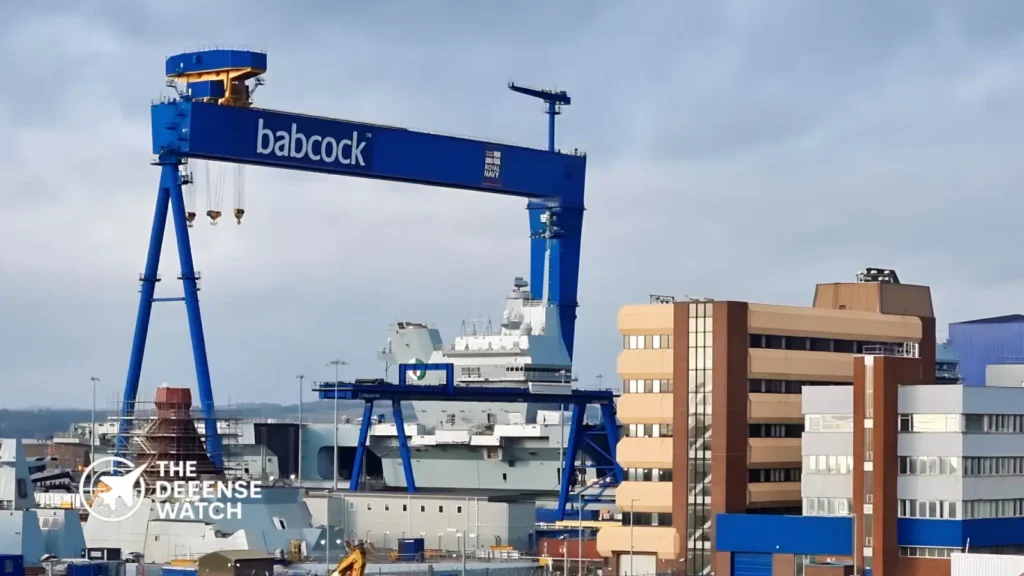
Subsea attack risks could inflict damage comparable to the Covid pandemic, according to warnings from defense contractor Babcock, underscoring growing concern over the vulnerability of undersea cables, pipelines, and offshore energy networks. The warning reflects a broader shift in Western defense planning, where seabed infrastructure is increasingly viewed as a frontline security challenge.
- Babcock says a major subsea attack could cause economic disruption comparable to the Covid pandemic.
- Undersea cables carry most global internet traffic and support finance, defense, and communications systems.
- NATO states are increasing patrols and surveillance around critical seabed infrastructure.
- Recent cable damage incidents in Europe have intensified calls for faster protection measures.
- Maritime resilience is becoming as important as traditional naval power.
The Big Picture
Critical underwater networks form the hidden backbone of the global economy. Submarine fiber optic cables reportedly carry the vast majority of international data traffic, while seabed pipelines and offshore power links support industrial output and household energy demand.
For decades, these systems were treated mainly as commercial assets. That is changing rapidly. Governments now recognize that sabotage, espionage, or disruption below the surface can create strategic effects without direct military confrontation.
The war in Ukraine, incidents in the Baltic Sea, and rising competition between NATO and Russia have accelerated this reassessment.
What’s Happening
According to the UK Defence Journal report, Babcock executives warned that a coordinated subsea attack could trigger widespread economic shock similar in scale to the disruption caused by Covid.
The company, a major British defense and engineering firm active in naval support, submarine sustainment, and maritime systems, has argued for stronger investment in monitoring and protecting underwater infrastructure.
The remarks come as European governments investigate multiple recent cable and pipeline incidents, some accidental and others considered suspicious.
Why It Matters
A successful subsea attack does not need to destroy many targets to have outsized effects.
Cutting a handful of high capacity communications cables can slow internet connectivity, disrupt banking transactions, degrade military command links, and delay cloud services. Damaging gas pipelines or electricity interconnectors can drive price spikes and stress national grids.
That makes undersea infrastructure an attractive target for states seeking leverage below the threshold of open conflict.
Unlike missile strikes, attribution can be slow and politically complex. Repair operations may also take days or weeks depending on location, weather, and spare vessel availability.
Strategic Implications
NATO members increasingly see maritime domain awareness as extending from the ocean surface to the seabed.
That means more patrol aircraft, unmanned underwater vehicles, seabed sensors, satellite tracking of suspicious vessels, and specialized repair capacity. Navies that once focused on carrier groups and submarines must now protect commercial networks spread across thousands of miles.
For the United States, this trend reinforces the importance of transatlantic cable resilience and North Atlantic sea lane security. Any disruption affecting Europe can also affect U.S. finance, military communications, and industrial supply chains.
Competitor View
Russia has long drawn scrutiny for specialized vessels and undersea capabilities that analysts say could be used for intelligence gathering or seabed operations. Moscow denies hostile intent, but NATO planners monitor such activity closely.
China is also expanding maritime reach, deep sea technology, and dual use oceanographic capabilities. Western officials increasingly assess undersea competition as a long term strategic arena rather than a temporary concern.
What To Watch Next
Several developments will shape the response:
- More NATO naval patrols near critical cable routes
- Faster multinational information sharing on suspicious vessel movements
- Growth in autonomous underwater surveillance systems
- Investment in cable redundancy and rapid repair fleets
- New legal frameworks for protecting seabed infrastructure
The UK and allies are also likely to deepen cooperation with private operators that own much of this infrastructure.
Capability Gap
Current defenses remain uneven. Many cable routes are remote, difficult to monitor continuously, and managed by commercial firms rather than militaries.
Even advanced navies cannot guard every mile of seabed infrastructure at all times. Detection, attribution, and repair timelines remain key weaknesses.
That gap explains why Babcock’s warning matters. It points to resilience, not just deterrence, as the next phase of maritime security planning.
The Bottom Line
Protecting underwater cables and pipelines is quickly becoming a core national defense mission because a major subsea attack could disrupt economies without a single missile being fired.
Get real time update about this post category directly on your device, subscribe now.