• Home
  • About
  • Defense Systems
  • Manufacturer
  • Comparisons
  • Compare 
  • Tools
TheDefenseWatch.com
  • Aerospace & Aviation
  • Military & Ordnance
  • Naval & Maritime
  • Cyber & Space Defense
  • Policy & Strategy
  • Global News
  • Tools Library
    • Smart Calculator
    • Drone Flight Time Calculator
    • Drone Range Calculator
    • Counter-Drone Jammer Effective Range Calculator
    • Counter-Battery Radar Detection Calculator
    • Artillery Fire Correction Calculator
    • Thermal Camera Detection Range Calculator
    • Missile Range & Time-of-Flight Calculator
    • Radar Detection Range Calculator
    • FPV Strike Drone Payload vs Range Calculator
    • Loitering Munition Endurance Calculator
    • Sniper Ballistic Drop & Windage Calculator
    • Bullet Drop Calculator
    • U.S. Army Combat Fitness Test (ACFT) Calculator
    • Military Pension Calculator
    • Military Retirement Calculator
    • Military Pension Calculator
    • Large Number Calculator
Font ResizerAa

TheDefenseWatch.com

The Defense Watch | U.S. & Global Defense News, Analysis & Military Updates

Search
  • Home
  • About
  • Defense Systems
  • Manufacturer
  • Comparisons
  • Compare 
  • Tools

Stay Updated

Get the latest update

Subscribe

Explore

  • Drone
  • Fighter Jets & Military Aircraft
  • Hypersonic Weapons
  • Aircraft Carriers
  • Strategic History & Missions
  • Tools Library
Home » Iran Moves To Target Big Tech Data Centers In Gulf As AI Infrastructure Race Intensifies
AI & Electronic WarfareCyber & Space Defense

Iran Moves To Target Big Tech Data Centers In Gulf As AI Infrastructure Race Intensifies

Kaleem Sheikh | Regional Defense Correspondent
Last updated: April 2, 2026 5:28 am
Kaleem Sheikh | Regional Defense Correspondent
Share
6 Min Read
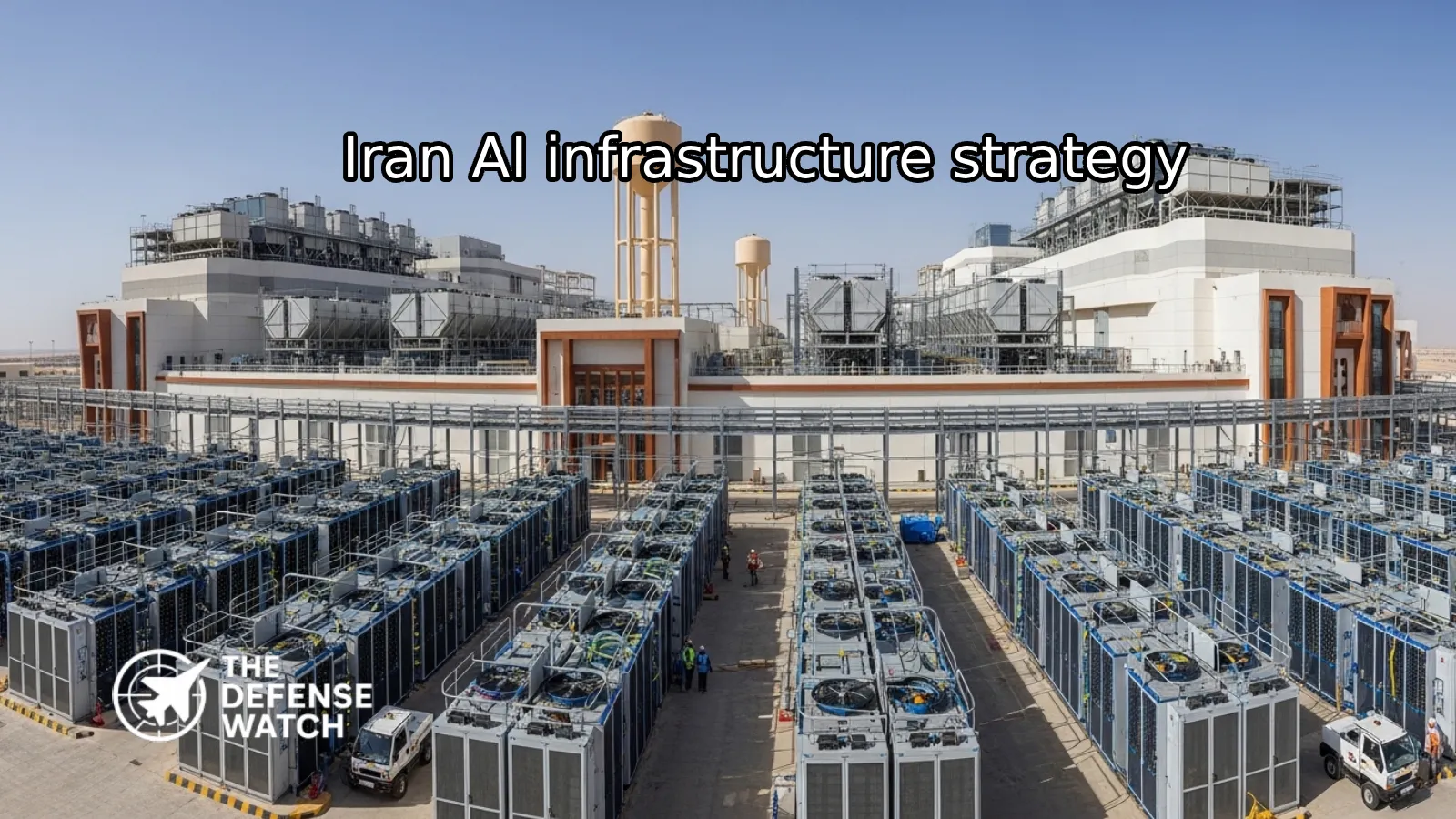
Iran AI infrastructure strategy
concept illustration
SHARE

Iran AI Infrastructure Strategy Raises Stakes In Gulf Cyber Domain

Iran AI infrastructure strategy is increasingly focused on Gulf-based data centers linked to major U.S. technology firms, signaling a shift toward targeting critical digital assets as part of broader geopolitical competition.

Contents
  • Iran AI Infrastructure Strategy Raises Stakes In Gulf Cyber Domain
  • The Big Picture
  • What’s Happening
  • Why It Matters
  • Strategic Implications
  • Competitor View
  • What To Watch Next
  • Capability Gap
  • The Bottom Line

Recent reporting indicates that Tehran is assessing or prioritizing infrastructure tied to companies such as Apple, Google, and Microsoft, particularly facilities located in Gulf states that host cloud computing and artificial intelligence workloads.

The development reflects a widening definition of strategic infrastructure, where data centers and AI ecosystems now sit alongside traditional military and energy targets.

¦ KEY FACTS AT A GLANCE
  • Iran is reportedly focusing on Gulf-based data centers linked to major U.S. tech firms.
  • Targets include AI infrastructure and cloud systems operated by global companies.
  • The move reflects growing cyber and strategic competition over digital infrastructure in the Middle East.
  • Gulf states have rapidly expanded data center capacity to support AI and cloud services.
  • The development highlights the militarization of data infrastructure as a national security priority.

The Big Picture

Digital infrastructure has become a core pillar of national power. Governments increasingly treat cloud platforms, AI systems, and hyperscale data centers as critical assets that underpin economic resilience, military operations, and intelligence capabilities.

- Advertisement -

The Middle East has emerged as a key battleground in this domain. Gulf states, including Saudi Arabia and the United Arab Emirates, have invested heavily in becoming regional hubs for cloud computing and AI development. These efforts align with broader diversification strategies and partnerships with U.S. and Western technology firms.

Iran’s focus on this infrastructure highlights a broader trend. Cyber operations and digital targeting now play a central role in deterrence and asymmetric warfare, particularly for states seeking to offset conventional military disadvantages.

What’s Happening

Iranian strategic messaging and reporting suggest a growing interest in targeting Gulf-based data centers that support global technology firms and AI platforms.

These facilities host cloud services, data storage, and AI processing capabilities that serve both commercial and government users across the region.

The infrastructure is largely concentrated in Gulf countries, where companies such as Apple, Google, and Microsoft have expanded their presence through partnerships, cloud regions, and data center deployments.

The timeline reflects a recent shift in emphasis rather than a single event. Analysts point to a steady evolution in Iran’s cyber posture, with increasing attention on high-value digital targets.

Why It Matters

Targeting AI infrastructure represents a significant escalation in the scope of cyber competition.

Data centers are not just commercial assets. They support financial systems, government services, defense communications, and emerging AI-driven applications. Disrupting these systems could have cascading effects across multiple sectors.

- Advertisement -

The Iran AI infrastructure strategy underscores how cyber operations can deliver strategic impact without direct military confrontation. This aligns with Tehran’s established doctrine of asymmetric warfare, which emphasizes cyber capabilities, proxy networks, and indirect pressure.

The focus on Gulf infrastructure also reflects the region’s growing importance as a digital hub. Any disruption could affect not only local economies but also global data flows and enterprise operations.

Strategic Implications

The development raises concerns about the resilience and security of critical digital infrastructure in the Middle East.

Gulf states have positioned themselves as trusted partners for global technology firms. Increased targeting risk may drive additional investment in cybersecurity, redundancy, and data sovereignty measures.

The shift also complicates regional security dynamics. Digital infrastructure is often interconnected across borders, meaning an attack on one facility could have broader regional implications.

For the United States and its partners, protecting allied digital ecosystems becomes part of a wider security commitment. This includes securing cloud infrastructure used by defense and government agencies.

Competitor View

China and Russia are likely to view this development through the lens of ongoing cyber competition with the United States.

Both countries have invested heavily in cyber capabilities and may see similar infrastructure as potential leverage points in future conflicts.

Regional rivals of Iran may interpret the move as part of a broader strategy to expand influence and apply pressure in non-kinetic domains.

At the same time, Gulf states are likely to deepen cooperation with Western partners to counter potential threats and strengthen cyber defenses.

What To Watch Next

Future developments will likely center on increased cybersecurity investments across Gulf data centers and cloud infrastructure.

Key indicators include:

Expansion of regional cloud security frameworks
Deployment of advanced threat detection systems
Closer coordination between governments and private sector operators
Potential public attribution of cyber incidents linked to state actors

Analysts will also monitor whether Iran’s focus translates into observable cyber activity targeting these facilities.

Capability Gap

Iran’s emphasis on digital targeting highlights a capability gap in conventional power projection.

Cyber operations provide a means to influence adversaries without engaging in direct military confrontation. However, these operations face limitations, including attribution risks, defensive countermeasures, and the challenge of achieving sustained disruption.

Data centers are designed with redundancy and resilience in mind. Large-scale impact would require sophisticated and coordinated efforts.

The Bottom Line

Iran’s focus on Gulf-based AI infrastructure signals that data centers have become strategic targets in modern geopolitical competition.


TAGGED:AI infrastructureBig Techcyber warfareIranMiddle East security
Share This Article
Facebook Copy Link Print
ByKaleem Sheikh | Regional Defense Correspondent
Follow:
Kaleem Sheikh is a regional defense correspondent at TheDefenseWatch.com covering defense and security developments across Asia and the Middle East, including military operations, procurement, and regional security issues.
Leave a Comment

Leave a Reply Cancel reply

Your email address will not be published. Required fields are marked *

New Arrivals

  • Boeing VC-25B Presidential Aircraft Boeing VC-25B Presidential Aircraft
  • SM-3 Block IB Missile SM-3 Block IB Missile
  • USS Abraham Lincoln Aircraft Carrier USS Abraham Lincoln Aircraft Carrier
  • M142 HIMARS M142 HIMARS
  • Terrex S5 Infantry Vehicle Terrex S5 Infantry Vehicle
  • A-29 Super Tucano Aircraft A-29 Super Tucano Aircraft
  • DSAR 15 Rifle DSAR 15 Rifle

Recent Compares

  • Tejas vs Gripen: Key Differences and Capabilities Tejas vs Gripen: Key Differences and Capabilities View Comparison →
  • Tejas vs MiG-21 Bison: How India Replaced Its Iconic Supersonic Fighter Tejas vs MiG-21 Bison: How India Replaced Its Iconic Supersonic Fighter View Comparison →
  • F-35 vs F-16: Stealth, Sensors and Combat Roles F-35 vs F-16: Stealth, Sensors and Combat Roles View Comparison →
  • Tejas Fighter Jet vs F-16 Fighting Falcon: Capability Compared Tejas Fighter Jet vs F-16 Fighting Falcon: Capability Compared View Comparison →
  • Rafale Fighter Jet vs F-16 Fighting Falcon : Which Fighter Has the Edge? Rafale Fighter Jet vs F-16 Fighting Falcon : Which Fighter Has the Edge? View Comparison →
  • Su-57 Fighter Jet vs J-20 Fighter Jet: Stealth and Air Combat Compared Su-57 Fighter Jet vs J-20 Fighter Jet: Stealth and Air Combat Compared View Comparison →
  • Mirage 2000 vs Tejas Mk1A: Legacy Combat Power vs Indigenous Modernization Mirage 2000 vs Tejas Mk1A: Legacy Combat Power vs Indigenous Modernization View Comparison →
  • Rafale Fighter Jet vs F-22 Raptor: Which Air Dominance Fighter Has the Edge? Rafale Fighter Jet vs F-22 Raptor: Which Air Dominance Fighter Has the Edge? View Comparison →
  • Tejas Fighter Jet vs. Rafale Fighter Jet: India’s Indigenous Fighter Meets France’s Proven Multirole Combat Aircraft Tejas Fighter Jet vs. Rafale Fighter Jet: India’s Indigenous Fighter Meets France’s Proven Multirole Combat Aircraft View Comparison →
  • F-22 Raptor vs. F-35 Joint Strike Fighter: Which Fifth Generation Fighter Has the Edge? F-22 Raptor vs. F-35 Joint Strike Fighter: Which Fifth Generation Fighter Has the Edge? View Comparison →

Recent Posts

  • USS Oregon Visits Norway as U.S. Navy Maintains High North Presence
  • Lockheed Martin Unveils PAC-3 Edge Interceptor for U.S. Army
  • Northrop Grumman Completes B-2 Spirit of Kitty Hawk Overhaul
  • Army Report Finds Systemic Failures Behind Fatal 2025 Midair Collision
  • Lockheed Martin to Supply Black Hawk Training Systems to Philippine Air Force

You Might Also Like

RAF F-35B combat kill
Aerospace & AviationFighter Jets & Military Aircraft

British RAF F-35B Shoots Down Two Hostile Drones In Historic First Combat Kill

September 7, 2026
Lockheed Martin MK 41 contract
Global News

Iran Claims US Destroyers Struck, But CENTCOM Says All Iranian Attacks Failed

September 9, 2026
US F-15 pilot rescue
Global News

US Rescues Downed F-15 Pilot After Aircraft Shot Down Over Iran

September 7, 2026
NASA Artemis II Moon mission launch
Aerospace & AviationSpace Assets & Satellites

NASA Launches Artemis II Crew On First Crewed Lunar Flyby In Over 50 Years

April 2, 2026

Logo

Copyright © 2026 TheDefenseWatch.com

Helpful Links

  • Home
  • About Us
  • Privacy Policy
  • Terms of Use / Disclaimer
  • U.S. Privacy Notice – CCPA Compliance

Defense Systems

  • Defense Systems
  • Comparisons 
  • Manufacturer
  • Tactical Calculators

Popuplar

Which 5 Air Forces Possess the Costliest Fighter Jet Fleets in the World
Evolving Strategic Value: Carrier Strike Groups in the Indo-Pacific’s Future Security Architecture
Autonomous Weapon Systems Spark U.S. Ethics Debate Amid Rapid Military AI Integration

We report on developments involving military forces, governments, defense companies, research organizations, and security institutions around the world. 

Welcome Back!

Sign in to your account

Username or Email Address
Password

Lost your password?