

(adsbygoogle = window.adsbygoogle || []).push({});Executive Summary:
The Pentagon’s Drone Dominance Program has entered its second competitive phase after completing qualification trials involving 49 companies and 79 unmanned aerial systems. The initiative aims to rapidly field more than 200,000 AI-enabled attack drones by 2027 while expanding domestic production and reducing procurement costs.
Pentagon Expands Drone Dominance Program To Accelerate AI Attack Drone Fielding
The Drone Dominance Program is rapidly becoming one of the U.S. Department of Defense’s most ambitious efforts to transform battlefield drone warfare. Following the completion of Gauntlet Phase II qualification events at Camp Grayling, Michigan, defense officials confirmed the first operational orders have been placed and thousands of additional systems are moving into military inventories.
The program is a $1.1 billion, two-year initiative designed to accelerate the procurement, integration, and operational deployment of low-cost, high-performance unmanned aerial systems manufactured in the United States. The effort aligns with President Donald Trump’s Executive Order 14307, which directed the department to rapidly expand access to affordable and expendable drone capabilities.
Officials say the initiative seeks to provide combat units with large numbers of one-way attack drones capable of operating in increasingly contested environments while strengthening the U.S. defense industrial base.
Gauntlet Phase II Tests 79 Drone Systems
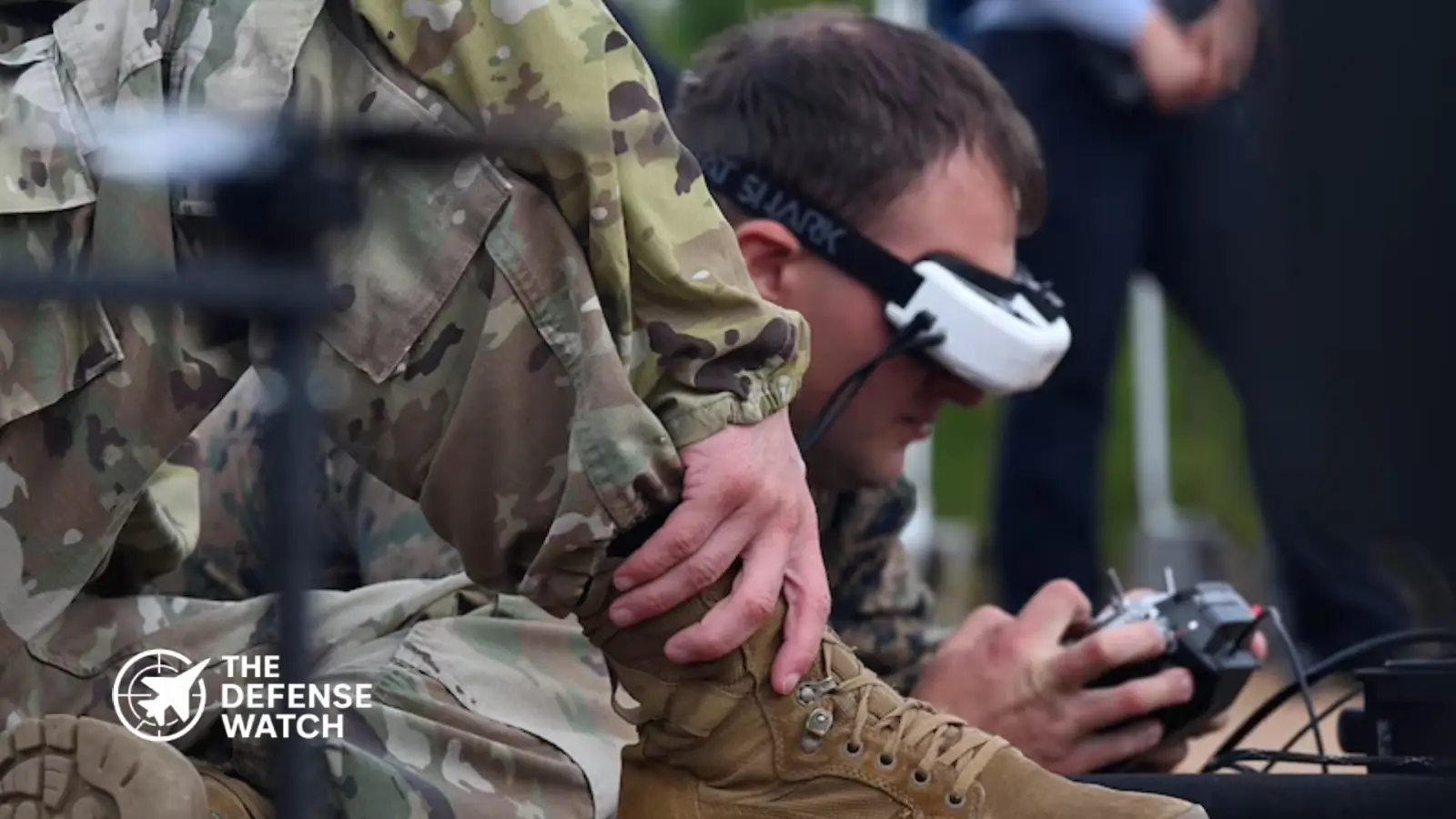
The latest qualification event brought together 49 companies and 79 unique drone platforms. Each participant fielded 20 drones to complete a series of demanding operational scenarios.
Testing focused on mission profiles increasingly relevant to modern conflicts, including:
- Long-range strike operations
- Close-quarters tactical engagements
- Precision attack missions
- Battlefield survivability assessments
- Rapid deployment scenarios
The event reflects a broader shift within the Pentagon toward challenge-based acquisition models. Rather than relying on traditional procurement cycles that can take years, the Drone Dominance Program is structured around recurring six-month competitive evaluations designed to identify the most effective technologies and move them rapidly into production.
According to the Defense Innovation Unit (DIU), selected systems emerging from each phase are fast-tracked for large-scale procurement and fielding.
First Orders Underway As Production Scales
Defense officials reported that the first batch of approved drones has already been accepted for service use. Nearly 2,000 additional systems have been shipped to military branches, with thousands more currently being produced to meet upcoming delivery requirements.
The procurement pace is expected to accelerate significantly.
Following a successful first phase that resulted in the acquisition of 30,000 drones, officials announced plans to order another 60,000 systems in September.
According to DIU Deputy Director Travis Metz, future purchases will continue to be driven by competitive testing events while encouraging supply chain relocation and manufacturing growth within the United States.
The long-term objective is even more ambitious. Program managers intend to scale production from 30,000 units per phase to as many as 150,000 units while reducing average costs from roughly $5,000 per drone to approximately $3,000.
Why The Program Matters
The Drone Dominance Program highlights how lessons from recent conflicts are reshaping military procurement priorities.
Modern battlefields have demonstrated the effectiveness of low-cost unmanned systems against significantly more expensive platforms and defenses. Attritable drones can conduct reconnaissance, strike missions, electronic warfare support, and target acquisition at a fraction of the cost of traditional weapons systems.
For U.S. planners, quantity has become nearly as important as capability.
The Pentagon’s approach reflects growing concern that adversaries are rapidly increasing both drone production capacity and operational sophistication. Officials argue that maintaining technological superiority requires faster procurement timelines, greater manufacturing capacity, and continuous competition among commercial innovators.
Unlike many legacy acquisition programs, the Drone Dominance Program emphasizes commercial technology adaptation, rapid testing, and production scalability rather than lengthy development cycles.
This approach mirrors broader defense modernization efforts aimed at shortening the gap between technological innovation and battlefield deployment.
Gauntlet II To Expand Operational Challenges
The next major milestone, known as Gauntlet II, is scheduled to begin later this summer.
Requirements will become substantially more demanding.
Participating companies will be required to field 120 drones instead of 20, testing both production capacity and operational reliability. Evaluations will also expand into:
- Night operations
- Urban combat environments
- Confined operational spaces
- More complex tactical scenarios
These additions are intended to better replicate conditions likely to be encountered in future conflicts and provide military planners with a clearer understanding of which systems can perform effectively at scale.
Path Toward 200,000 AI-Enabled Drones
By 2027, the Drone Dominance Program aims to field more than 200,000 lethal, AI-enabled drones across the U.S. military.
The program’s scale makes it one of the largest efforts currently underway to integrate autonomous and semi-autonomous unmanned systems into frontline military operations. Combined with domestic manufacturing incentives and recurring competitive evaluations, the initiative represents a significant shift in how the Pentagon acquires emerging technologies.
If production targets are achieved, the effort could substantially increase the availability of low-cost precision strike capabilities while providing a stronger industrial foundation for future drone development.
Analysis: A New Acquisition Model For Drone Warfare
Beyond the procurement numbers, the Drone Dominance Program may prove most significant for its acquisition strategy.
Traditional defense programs often require years of development, testing, and contracting before reaching operational units. The Pentagon is increasingly experimenting with faster, competition-driven models that leverage commercial innovation cycles measured in months rather than decades.
The public leaderboard concept, recurring gauntlet competitions, and rapid production decisions create strong incentives for manufacturers to continuously improve performance while reducing costs.
For defense planners, this model addresses two critical challenges simultaneously: keeping pace with rapidly evolving drone technologies and ensuring sufficient production capacity during periods of heightened geopolitical competition.
As drone warfare continues to evolve, the success or failure of the Drone Dominance Program could influence how future autonomous systems, loitering munitions, and AI-enabled military technologies are acquired across the U.S. armed forces.
