(adsbygoogle = window.adsbygoogle || []).push({});Executive Summary:
Saronic and Castelion have announced plans to integrate the Blackbeard hypersonic weapon with the Marauder medium unmanned surface vessel for a live maritime demonstration in 2027. The effort could provide the U.S. military with a new distributed strike option that combines autonomous naval platforms with long range hypersonic capabilities.
Saronic And Castelion Plan 2027 Blackbeard Hypersonic Demonstration
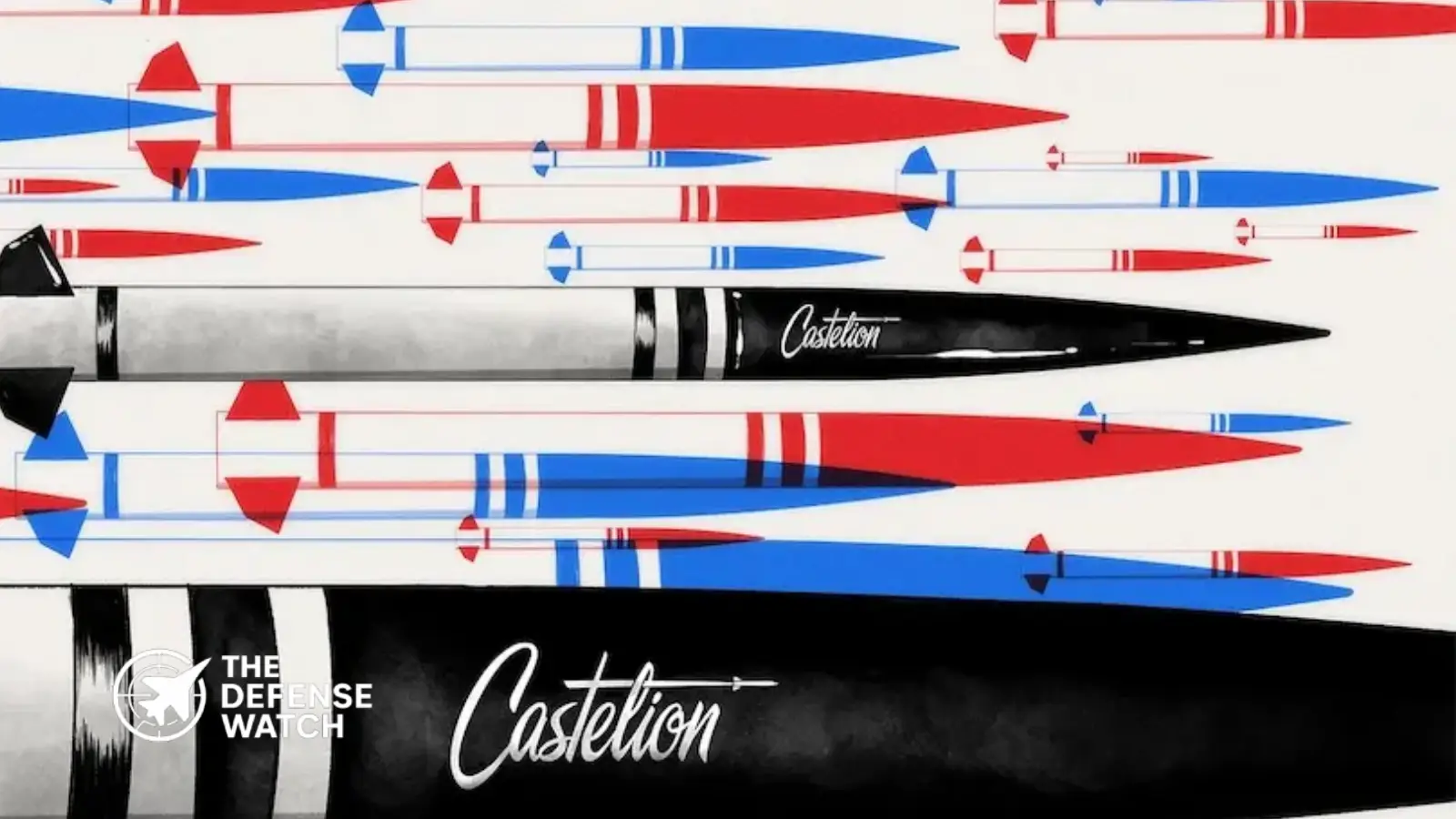
The Blackbeard hypersonic missile is set to become part of a new maritime capability following a partnership between U.S. defense technology firms Saronic and Castelion.
The companies announced plans to integrate Castelion’s Blackbeard hypersonic vehicle with Saronic’s Marauder Medium Unmanned Surface Vessel (MUSV), with a maritime launch demonstration targeted for 2027. According to both companies, the effort represents the first planned integration of a hypersonic weapon with an autonomous surface vessel.
The announcement comes as the U.S. Department of Defense continues pursuing distributed maritime operations and seeks additional long range strike options capable of operating across contested environments.
What Is The Marauder Unmanned Surface Vessel?
Saronic unveiled its first Marauder MUSV earlier this year. The autonomous vessel is designed for long endurance missions and can operate either independently or under remote human supervision. The platform has a reported range of up to 5,400 nautical miles, speeds exceeding 25 knots, and the ability to carry payloads of up to 150 metric tons.
Its modular architecture allows the vessel to support multiple mission sets, including intelligence gathering, logistics, surveillance, maritime security operations, and future weapons integration.
By pairing Marauder with the Blackbeard hypersonic missile, Saronic and Castelion aim to transform the vessel from a support platform into a potential strike asset capable of operating far from traditional naval formations.
Blackbeard’s Growing Role In U.S. Hypersonic Programs
The Blackbeard weapon has become one of the most closely watched hypersonic development programs in the United States.
In February 2026, the U.S. Navy awarded Castelion a nearly $50 million contract to advance Blackbeard toward an early operational capability, with work scheduled through November 2027.
Two months later, the Navy awarded an additional $105 million contract to support integration of Blackbeard onto the F/A-18E/F Super Hornet fleet and continue testing and certification efforts ahead of a planned early operational capability in 2027.
Castelion describes Blackbeard as a lower cost, scalable hypersonic strike weapon designed from the outset for mass production. The company has also invested heavily in manufacturing infrastructure, including its Project Ranger production facility in New Mexico.
Why The Maritime Launch Matters
The significance of the Saronic and Castelion partnership extends beyond the technology demonstration itself.
For decades, most hypersonic weapons programs have focused on land based launchers, strategic bombers, fighter aircraft, or large naval combatants. Integrating a hypersonic capability onto an autonomous surface vessel introduces a different operational model.
A network of unmanned vessels carrying strike weapons could complicate adversary targeting efforts while reducing reliance on a limited number of high value crewed platforms. The concept aligns with broader Pentagon initiatives emphasizing distributed lethality, operational resilience, and the use of autonomous systems across the Indo-Pacific and other contested theaters.
(adsbygoogle = window.adsbygoogle || []).push({});The approach could also expand launch options available to commanders during maritime operations, particularly in scenarios where traditional surface combatants may face heightened risk from anti ship missile threats.
Strategic Implications For U.S. Naval Modernization
The planned demonstration highlights two major trends shaping U.S. defense modernization.
First, autonomous vessels are rapidly evolving from surveillance and logistics platforms into potential combat systems capable of carrying significant payloads.
Second, hypersonic weapons are moving beyond experimental programs and toward operational deployment across multiple military services. Recent Navy investments in the Blackbeard hypersonic missile indicate growing confidence in the program’s maturity and affordability.
If the 2027 demonstration succeeds, it could provide valuable data on how autonomous maritime platforms can support future long range strike missions. It may also influence how the Navy and other services structure future distributed force architectures.
While the capability remains in the testing phase, the combination of autonomous vessels and hypersonic weapons reflects a broader shift toward more flexible, survivable, and scalable strike networks.
Looking Ahead
Saronic and Castelion are expected to continue integration work over the next year before conducting the planned 2027 maritime launch demonstration. The effort will be closely watched by defense planners as the United States seeks to expand its portfolio of distributed maritime strike capabilities.
For now, the project represents another step in the convergence of autonomous naval systems and next generation hypersonic weapons, two technologies increasingly viewed as central to future military operations.