Executive Summary:
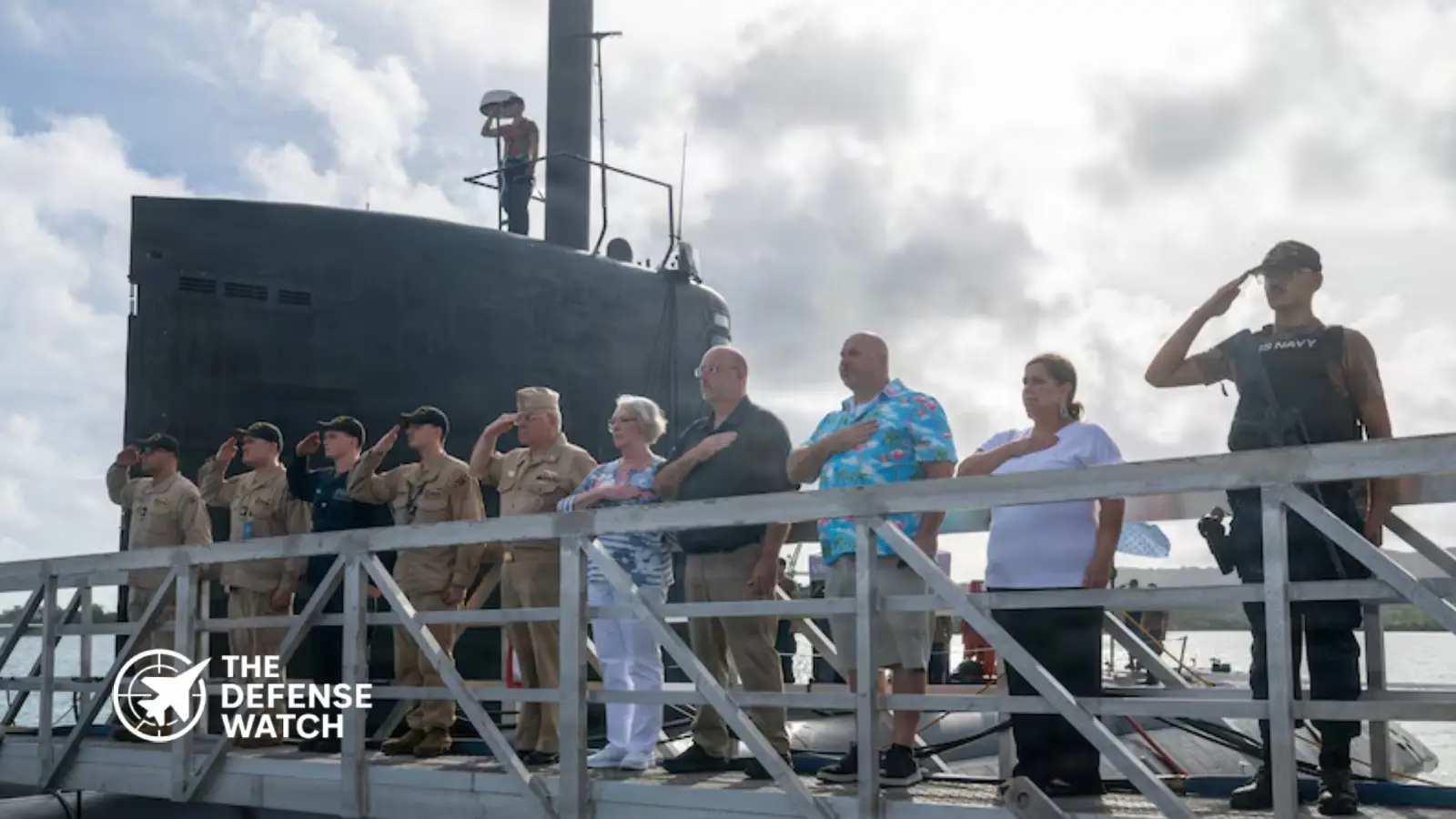
Retired U.S. Navy Cmdr. Allan Riggs returned to Guam on July 4, 2026, exactly 50 years after leading the morning colors ceremony during America’s Bicentennial. Aboard the Los Angeles class fast attack submarine USS Annapolis, Riggs joined today’s submariners in commemorating the nation’s 250th anniversary while highlighting the enduring role of Guam in U.S. Indo-Pacific naval operations.
USS Annapolis Hosts Historic America 250 Ceremony In Guam
The USS Annapolis America 250 ceremony brought together generations of U.S. submariners as retired Navy Cmdr. Allan Riggs returned to Guam to participate in the July 4 morning colors ceremony exactly five decades after performing the same duty during the nation’s Bicentennial in 1976.
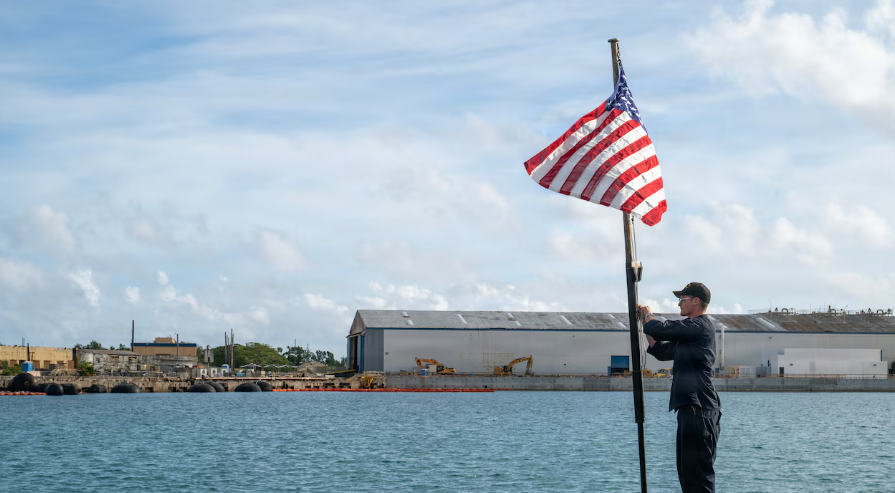
According to Commander, Submarine Squadron 15, Riggs joined sailors aboard the Los Angeles class fast attack submarine USS Annapolis (SSN 760) at Naval Base Guam, where he once again stood beneath the American flag during a milestone Independence Day celebration.
Now 77 years old, Riggs served 27 years in the U.S. Navy and became one of the few service members to participate in official Independence Day morning colors ceremonies marking both America’s 200th and 250th birthdays.
A 50 Year Connection To America’s Bicentennial
On July 4, 1976, then Lt. j.g. Allan Riggs served aboard the ballistic missile submarine USS Theodore Roosevelt (SSBN 600), stationed in Guam.
Because Guam is the westernmost U.S. territory where “America’s Day Begins,” the submarine became the first U.S. Navy vessel to raise the national colors during the Bicentennial celebration that year. Riggs described the experience as one of the defining moments of his naval career.
Half a century later, he returned to the same island to commemorate the nation’s Semiquincentennial alongside today’s forward deployed submarine force.
Following the ceremony aboard USS Annapolis, sailors presented Riggs with the American flag flown during the event and a commemorative certificate recognizing his decades of service and his unique place in submarine history.
Guam Remains Central To U.S. Submarine Operations
The ceremony also underscored Guam’s strategic importance to U.S. naval operations in the Indo-Pacific.
Commander, Submarine Squadron 15 oversees four forward deployed fast attack submarines based at Polaris Point, Naval Base Guam. These submarines provide persistent undersea surveillance, intelligence collection, anti-submarine warfare, strike capabilities, and rapid response throughout the Western Pacific.
Submarine Squadron 15 at a Glance
| Capability | Details |
|---|---|
| Homeport | Polaris Point, Naval Base Guam |
| Command | Commander, Submarine Squadron 15 |
| Forward-deployed submarines | Four fast attack submarines |
| Primary mission | Indo-Pacific deterrence and maritime security |
| Flagship in ceremony | USS Annapolis (SSN 760) |
Why The Event Matters Beyond Ceremony
Although the event centered on military tradition rather than new operational capability, it reflects an important aspect of naval readiness: preserving institutional continuity across generations.
Military ceremonies such as morning colors reinforce customs that connect today’s sailors with decades of service history. For submarine crews operating on demanding deployments, those traditions help maintain professional identity and reinforce the Navy’s long standing emphasis on discipline, accountability, and service.
The ceremony also highlighted Guam’s expanding role within U.S. defense strategy.
As the Indo-Pacific remains the Pentagon’s highest priority theater, Guam has become one of America’s most important forward operating locations. The island supports submarines, bombers, logistics, missile defense, and joint force operations, making it a cornerstone of U.S. power projection across the Western Pacific. Continued investments in Guam’s military infrastructure reflect its growing strategic value amid increasing regional competition.
For the submarine force specifically, forward deployment from Guam reduces transit times into key operational areas compared with U.S. West Coast homeports, allowing attack submarines to sustain a more persistent presence across the Indo-Pacific.
Navy Leaders Highlight Continuity Of Service
Commander, Submarine Squadron 15 leadership described Riggs’ participation as an opportunity to connect the submarine force’s past with its future.
According to Capt. Neil Steinhagen, bringing Riggs aboard USS Annapolis linked generations of sailors who have served under the same traditions while emphasizing the enduring mission of defending U.S. interests in the Pacific.
Riggs, meanwhile, credited his family and today’s submariners for making the return possible, calling the experience a meaningful tribute to the traditions of the Silent Service and to those who continue serving aboard America’s forward deployed submarines.
Strategic Takeaway
The July 4 ceremony aboard USS Annapolis was more than a commemorative event. It illustrated how military heritage and operational readiness intersect within today’s U.S. Navy.
As Washington continues strengthening its Indo-Pacific posture, Guam remains both a symbolic gateway to America’s national celebrations and one of its most strategically significant military locations. By connecting the Bicentennial generation with today’s submarine crews, the Navy reinforced the continuity of service that underpins long term readiness in one of the world’s most consequential maritime theaters.