Executive Summary:
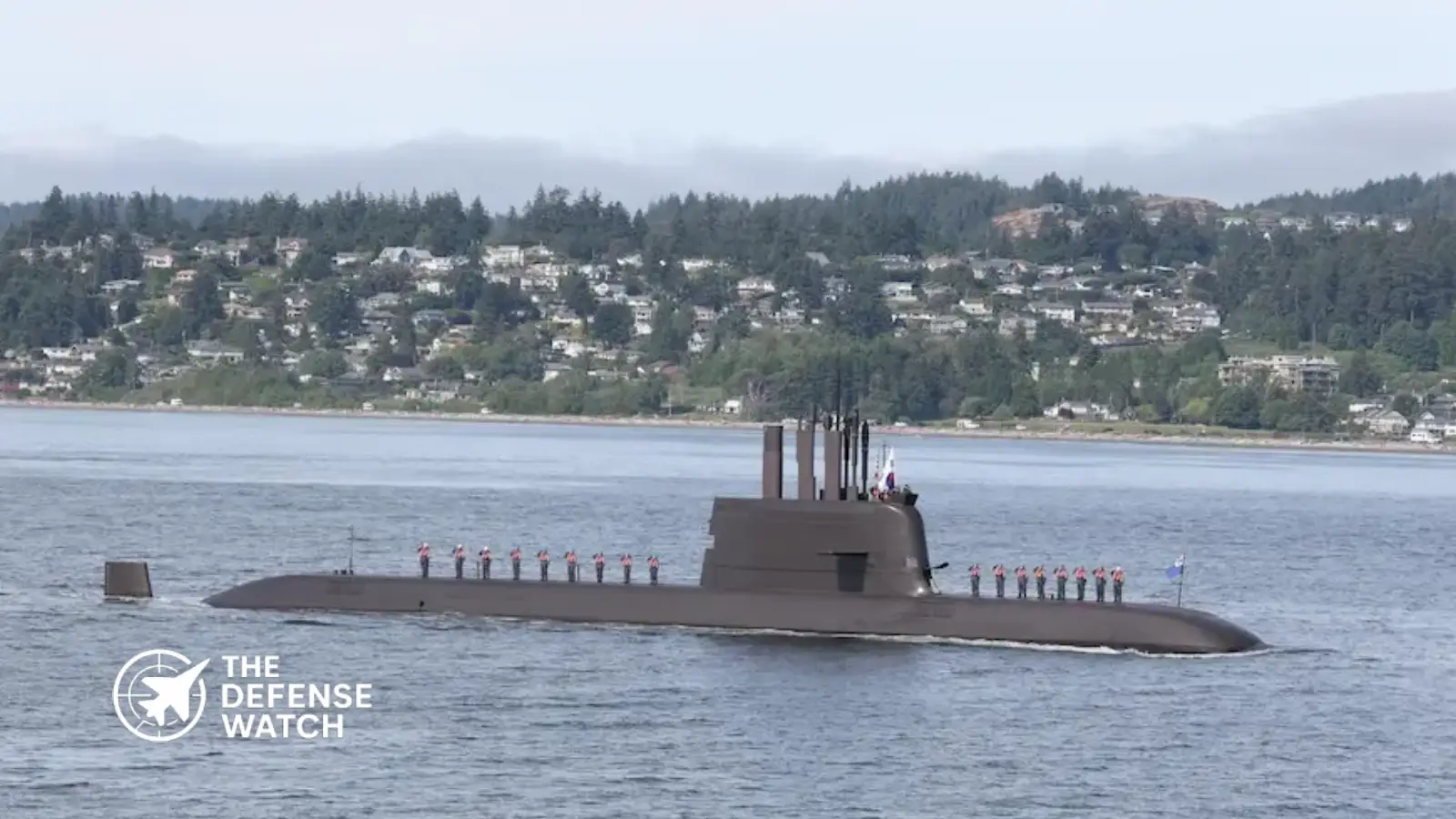
South Korean shipbuilder Hanwha Ocean has deployed its KSS-III submarine to Canada in support of Ottawa’s future patrol submarine program. The visit highlights growing competition in Canada’s naval modernization effort as allied shipbuilders position themselves for one of the world’s most closely watched submarine procurements.
Hanwha Ocean KSS-III Submarine Arrives In Canada
The Hanwha Ocean KSS-III submarine has reached Canada following a long range deployment intended to support South Korea’s bid for the Canadian Patrol Submarine Project (CPSP). The voyage marks a significant step in Seoul’s push to expand its defense exports into North America and deepen naval cooperation with Western allies.
The submarine’s arrival is designed to demonstrate the platform’s endurance, operational range, and suitability for Arctic and long distance missions that are central to Canada’s future submarine requirements.
Canada is seeking to replace its aging Victoria-class submarines with a new fleet capable of operating across the Atlantic, Pacific, and Arctic regions. Ottawa’s planned acquisition is expected to become one of the largest naval modernization efforts in Canadian history.
The KSS-III deployment comes as several international shipbuilders compete for influence in the Canadian program, including companies from Europe and Asia.
KSS-III Designed For Long Range Operations
The KSS-III submarine, developed for the Republic of Korea Navy, represents South Korea’s most advanced indigenous submarine program. The platform features air independent propulsion technology, advanced combat systems, vertical launch capability, and extended endurance for blue water operations.
Defense analysts note that the deployment to Canada carries both operational and political significance. Demonstrating the submarine’s ability to conduct a trans-Pacific voyage helps validate claims regarding range and reliability, particularly as Canada evaluates vessels capable of sustained operations in remote maritime environments.
The Canadian Patrol Submarine Project is expected to prioritize under ice capability, endurance, stealth, interoperability with NATO forces, and long term industrial partnerships.
While the KSS-III was originally designed for regional deterrence missions in the Indo-Pacific, Hanwha Ocean appears to be positioning the platform as a flexible export solution for allied navies facing growing maritime security demands.
Canada Expands Focus On Arctic Security
Canada’s submarine replacement effort has gained urgency amid increased geopolitical competition in the Arctic and rising naval activity by Russia and China in northern waters.
Ottawa has repeatedly emphasized the need for persistent underwater surveillance and sovereign maritime presence across the Arctic region. Existing Victoria-class submarines have faced operational limitations tied to age, maintenance demands, and limited under ice capability.
The Hanwha Ocean KSS-III submarine bid reflects a broader trend in which Asian defense manufacturers are increasingly competing in Western procurement programs once dominated by European and American suppliers.
South Korea’s defense industry has expanded rapidly over the past decade, securing major export contracts in Europe, the Middle East, and Asia. Companies including Hanwha Ocean and Hanwha Aerospace have benefited from rising global demand for faster production timelines and competitively priced military systems.
Strategic Implications For NATO And Indo-Pacific Cooperation
The KSS-III deployment also reflects expanding defense ties between Canada and South Korea as both countries strengthen cooperation with U.S.-led alliance structures in the Indo-Pacific region.
Naval experts say Canada’s future submarine selection could influence interoperability with NATO partners and allied Indo-Pacific operations for decades. Long range submarines are increasingly viewed as critical assets for intelligence gathering, deterrence patrols, anti-submarine warfare, and strategic surveillance missions.
For South Korea, success in Canada would represent a major breakthrough in the Western submarine export market and reinforce Seoul’s growing role as a global defense supplier.
At the same time, competition remains intense. European shipbuilders continue promoting mature submarine designs with proven NATO operational records, while Canada’s final requirements are still evolving.
No final procurement decision has been announced by the Canadian government.
Original Analysis
The arrival of the Hanwha Ocean KSS-III submarine in Canada is more than a promotional deployment. It reflects how global submarine competition is shifting beyond traditional European suppliers.
South Korean defense firms are increasingly leveraging rapid manufacturing capacity, modern digital shipbuilding methods, and flexible industrial cooperation packages to compete internationally. Canada’s submarine program offers Seoul an opportunity to prove that Asian defense manufacturers can support long term Western naval requirements at scale.
The deployment also highlights a broader strategic reality. Arctic security is becoming central to NATO planning, and future submarines must balance stealth, endurance, and multi theater operational flexibility. Any winning design will likely need to support not only national defense missions, but also integrated allied operations across the Atlantic and Indo-Pacific.
For Canada, the choice will shape naval capabilities for decades. For South Korea, it could redefine its position in the global submarine export market.