

(adsbygoogle = window.adsbygoogle || []).push({});Executive Summary:
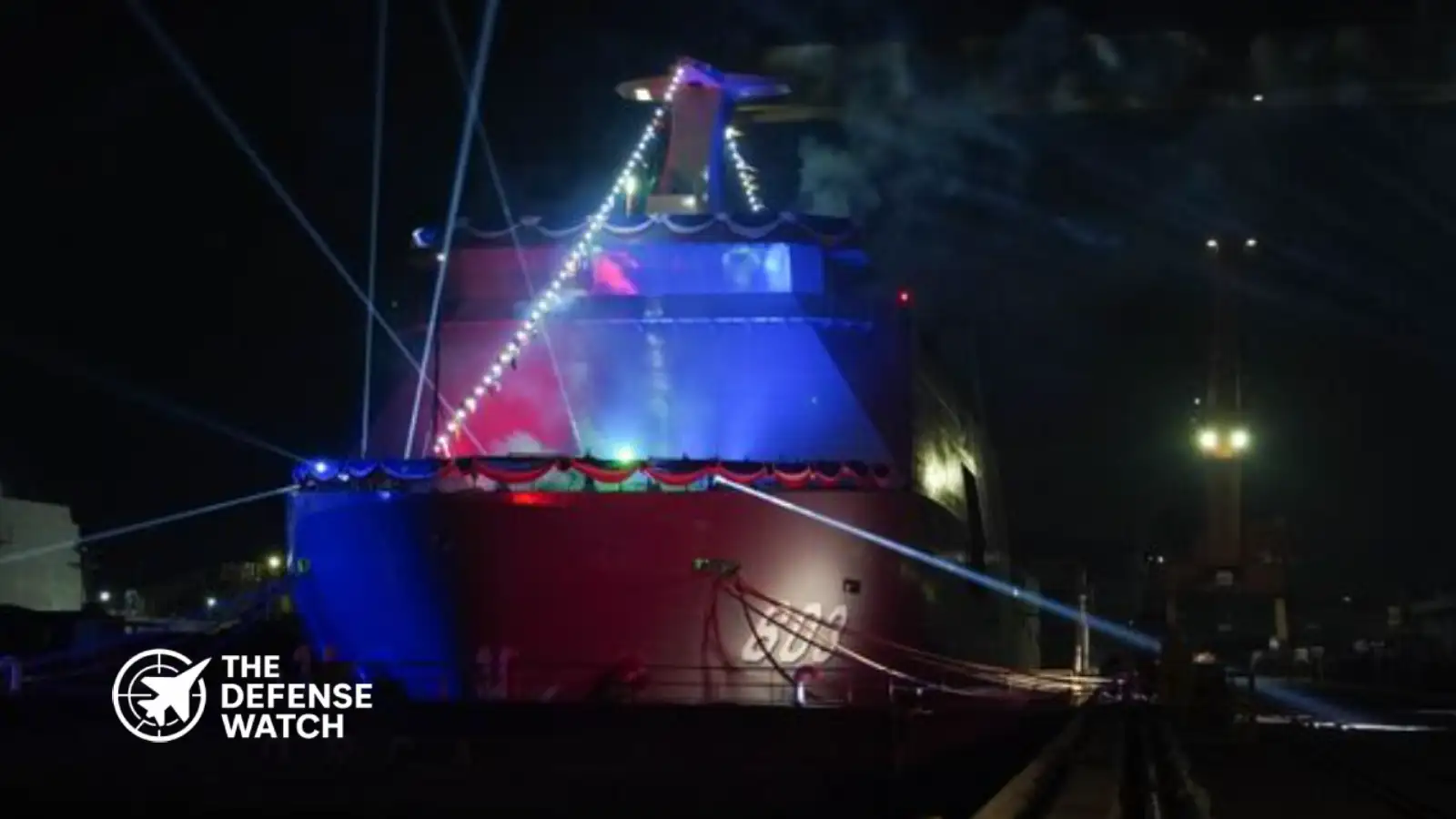
Indonesia’s PT PAL launched the Philippine Navy’s third Tarlac-class landing platform dock (LPD), designated LD-603 and to be named BRP Ilocos Norte, on June 30, 2026, at its Surabaya shipyard. This is the first of two vessels ordered under a 2022 follow-on contract. The launch advances the Philippine Navy’s modernization efforts to strengthen amphibious operations, troop and vehicle transport, and humanitarian assistance and disaster relief (HA/DR) missions in a strategically vital region.
Launch Marks Milestone in Philippine Amphibious Modernization
Indonesia’s state-owned shipbuilder PT PAL launched the Philippine Navy’s third strategic sealift vessel (SSV) on June 30, 2026. The vessel, the first follow-on unit under a 2022 contract, will commission as BRP Ilocos Norte.
The event occurred at PT PAL’s facilities in Surabaya. Philippine Navy officials, including Flag Officer in Command Vice Admiral Jose Ma Ambrosio Q. Ezpeleta (also referred to as Vice Admiral Jose Maria Ambrosio Quiatchon), attended alongside Indonesian counterparts.
Program Background and Contract Details
The Philippine Navy initially acquired two Tarlac-class LPDs from PT PAL under a 2014 contract valued at approximately $92 million. BRP Tarlac (LD-601) commissioned in 2016, followed by BRP Davao del Sur (LD-602) in 2017. These vessels, derived from the Indonesian Makassar-class design, provided the navy with its first modern amphibious sealift capability.
In June 2022, the Philippines signed a follow-on contract for two additional improved vessels valued at $100.9 million. The program faced delays due to global supply chain disruptions and geopolitical factors, but PT PAL accelerated hull construction using its Industrial Maritime 4.0 digital framework, completing the hull in six months.
Technical Specifications and Improvements
The follow-on vessels maintain the baseline Tarlac-class configuration while incorporating enhancements requested by the Philippine Navy.
Key Specifications (LD-603 and follow-on units):
- Length: 124 meters
- Beam: 21.8 meters
- Standard Displacement: 7,200 tons
- Maximum Speed: 16 knots
- Range: 9,360 nautical miles at 13 knots
- Endurance: 30 days
- Troop Capacity: Up to 680 personnel
- Propulsion: CODAD with two MAN-STX diesel engines
Improvements over the first two ships include greater vehicle deck clearance, a larger side ramp door, and enhanced ability to embark and deploy the Philippine Navy’s multi-purpose attack craft (MPAC). The vessels feature a well deck for landing craft utility (LCU) operations—two per ship—and a large flight deck for helicopter operations.
These changes allow carriage of larger vehicles and improve logistical efficiency during amphibious assaults or relief operations.
Operational Impact and Regional Context
The addition of two more LPDs will effectively double the Philippine Navy’s dedicated amphibious sealift fleet. This expansion is critical for operations across the archipelago’s vast maritime domain and the West Philippine Sea, where Manila faces territorial challenges.
BRP Ilocos Norte and its sister ship will support troop transport, equipment movement, maritime security, and HA/DR missions. Philippine officials highlighted their utility for power projection beyond national waters and rapid response to natural disasters, a frequent occurrence in the Philippines.
Analysis: For the U.S. and allied defense posture in the Indo-Pacific, a more capable Philippine Navy strengthens collective maritime security efforts. Enhanced sealift reduces reliance on ad-hoc commercial or allied shipping during crises and complements U.S. Marine Corps and Navy amphibious forces in regional exercises. However, the ships currently lack advanced defensive sensors and weapons; final decisions on outfitting remain pending. Integrating modern combat systems will be essential to maximize survivability in contested environments.
Technical hurdles in the program, including supply chain issues, underscore broader challenges in defense industrial cooperation. PT PAL’s use of digital production tools demonstrates a maturing approach that could benefit future ASEAN naval programs. Delivery of LD-603 is expected later in 2026 or 2027, with the fourth vessel following.
Broader Philippine Navy Modernization
The SSV program forms part of the Philippine Armed Forces’ broader modernization drive. It addresses longstanding capability gaps in amphibious warfare, dating back to reliance on older U.S. and Australian surplus vessels. The Tarlac-class has proven effective in joint exercises and disaster response, validating the platform choice.
Future integration of additional sensors, communications, and potentially defensive armaments will determine the class’s effectiveness against evolving threats, including anti-access/area-denial (A2/AD) capabilities in the region.
