Executive Summary:
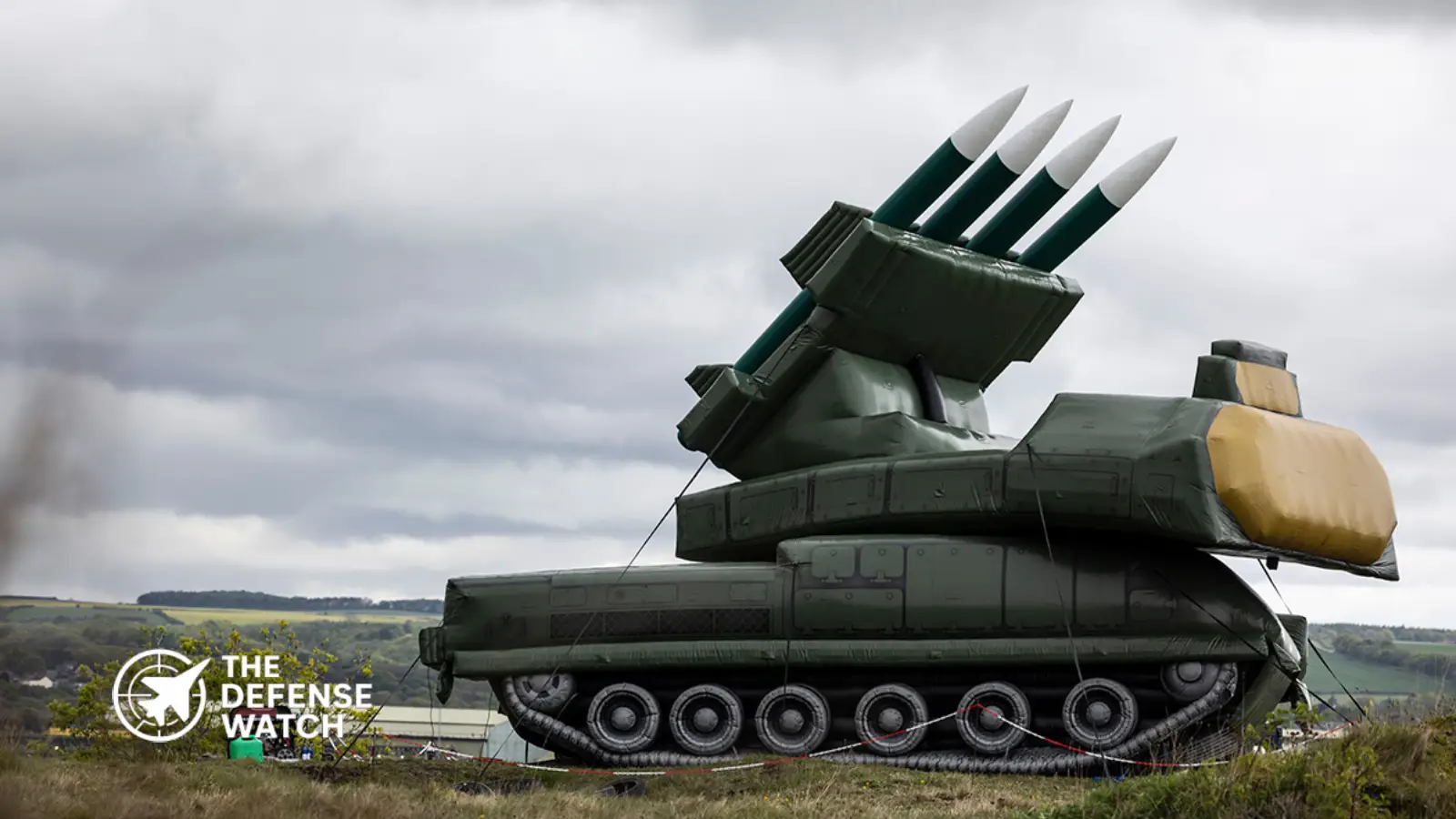
The Royal Air Force is using inflatable surface-to-air missile (SAM) systems during training exercises to expose pilots to realistic battlefield threats. The move reflects growing emphasis on survivability training as modern integrated air defense systems become more capable and widespread.
RAF Inflatable SAM Sites Added To Modern Pilot Training
The use of RAF inflatable SAM sites is becoming an increasingly visible part of British military training as the Royal Air Force adapts to evolving battlefield conditions.
The RAF is employing inflatable replicas of surface-to-air missile systems during exercises to create more realistic threat environments for combat aircrews. The decoys are designed to simulate enemy air defense networks that pilots could encounter in real-world operations.
Modern conflicts have demonstrated the growing effectiveness of layered air defense systems, particularly in contested airspace environments. As a result, Western air forces are placing greater emphasis on suppression and avoidance of enemy air defenses during training cycles.
The inflatable systems reportedly mimic radar-guided missile batteries and other ground-based threats. Their lightweight construction allows rapid deployment across training ranges while reducing costs associated with operating real missile equipment.
Training For Modern Air Defense Threats
The RAF inflatable SAM sites are intended to improve pilot decision-making under combat conditions. Aircrews can practice identifying threats, adjusting flight routes, and employing countermeasures in scenarios that more closely resemble operational missions.
The approach aligns with broader NATO efforts to strengthen readiness against advanced integrated air defense systems. Russia’s use of layered SAM networks in Ukraine has reinforced concerns among Western militaries about the risks posed by modern radar-guided missiles.
Military analysts have noted that survivability in contested airspace increasingly depends on pilot familiarity with electronic warfare environments, deceptive targets, and rapidly changing threat conditions.
Inflatable military decoys are not new. Armed forces worldwide have long used mock tanks, missile launchers, and aircraft to mislead adversaries or support training. However, the RAF’s integration of inflatable missile systems into pilot exercises highlights a growing recognition that realistic threat replication is essential for combat preparation.
Low-Cost Systems With High Training Value
One of the primary advantages of inflatable systems is cost efficiency. Real air defense systems are expensive to operate, maintain, and transport. Inflatable replicas can be deployed quickly and repositioned as exercise scenarios evolve.
The systems also provide visual realism from the air, helping pilots practice target identification and threat assessment. Combined with electronic warfare simulations and radar emitters, inflatable decoys can contribute to complex training environments without requiring large-scale deployment of operational missile batteries.
This reflects a broader trend across NATO air forces toward synthetic and hybrid training methods. Militaries are increasingly combining physical decoys, virtual simulations, and live exercises to prepare pilots for high-intensity warfare.
The RAF has been modernizing multiple aspects of its operational training framework in recent years, including fifth-generation combat aircraft integration, electronic warfare readiness, and joint exercises with allied nations.
Lessons From Contemporary Conflicts
The renewed focus on air defense evasion training comes as military planners study lessons from ongoing conflicts. The war in Ukraine has demonstrated that even advanced aircraft face significant risks when operating near sophisticated missile systems.
Portable air defense missiles and long-range radar-guided systems have both proven effective against aircraft and drones. This has increased demand for improved pilot awareness, electronic attack capabilities, and tactical flexibility.
The RAF inflatable SAM sites may appear simple compared to advanced combat systems, but their operational value lies in creating stress, uncertainty, and realism during training missions. Defense experts frequently argue that realistic training environments are critical to reducing combat losses and improving mission success rates.
The United Kingdom continues to invest in broader defense modernization initiatives as NATO members increase attention on deterrence and readiness across Europe.
Wider Implications For NATO Air Forces
The RAF’s use of inflatable missile systems could influence how allied air forces structure future exercises. Training against realistic, dispersed threats is becoming increasingly important as potential adversaries improve missile coverage and sensor networks.
Air forces are also adapting to the growing overlap between drones, electronic warfare systems, and traditional air defense assets. Future battlefields are expected to feature highly contested electromagnetic environments where pilots must process large amounts of threat data rapidly.
The adoption of inflatable SAM replicas demonstrates how relatively low-cost tools can support high-value operational readiness objectives. As defense budgets face competing priorities, militaries are likely to continue seeking affordable ways to improve combat realism.