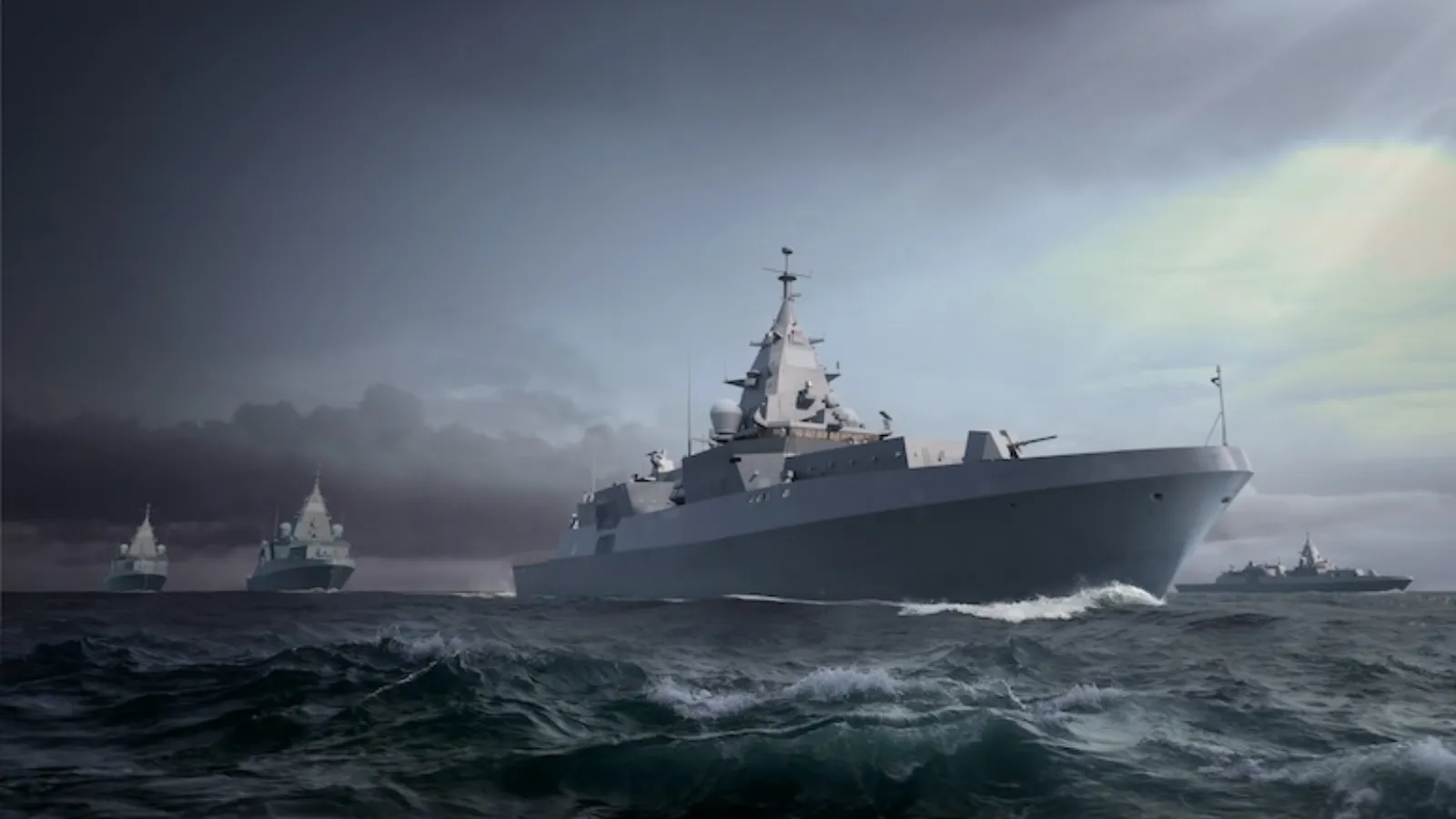
Executive Summary:
Germany’s Bundestag Budget Committee has approved funding for the procurement of four MEKO A 200 DEU frigates for the German Navy, marking one of the country’s most significant naval modernization decisions in recent years. The program is intended to replace aging surface combatants, strengthen NATO maritime capabilities, and expand Germany’s ability to conduct high intensity naval operations across European waters.
Germany Approves MEKO A 200 DEU Frigates For Naval Modernization
Germany has approved the procurement of four MEKO A 200 DEU frigates, advancing one of the country’s largest naval modernization initiatives as Berlin continues expanding defense spending following Russia’s invasion of Ukraine. The decision was approved by the Bundestag Budget Committee, clearing funding for the acquisition and enabling contract implementation with German industry.
The approval represents another major investment under Germany’s long term effort to strengthen the Bundeswehr while improving NATO’s collective maritime deterrence in the Baltic Sea, North Sea, and wider European theater.
According to official announcements, the new frigates will become an important component of Germany’s future surface fleet, providing enhanced multi mission capabilities across anti air warfare, anti submarine warfare, anti surface warfare, and maritime security operations.
Bundestag Clears Major Naval Procurement
The Bundestag Budget Committee approved financing for four new frigates after reviewing the procurement package presented by the German Ministry of Defence.
The vessels will be based on the proven MEKO A 200 design developed by thyssenkrupp Marine Systems (TKMS) and adapted into the German specific MEKO A 200 DEU configuration.
The approval follows Germany’s broader defense modernization strategy, which has accelerated procurement of naval vessels, aircraft, missile defense systems, and armored vehicles since the establishment of the country’s special defense modernization fund.
Government officials have emphasized that expanding naval readiness is essential as NATO faces increased security challenges across Northern Europe and the Baltic region.
What The MEKO A 200 DEU Brings To The German Navy
The MEKO A 200 family has already been exported to several international operators and is recognized for its modular architecture, survivability, and flexible mission capability.
The German variant is expected to incorporate mission specific modifications tailored to Bundeswehr operational requirements while maintaining the modular design philosophy that allows future upgrades throughout the vessel’s service life.
Expected Core Capabilities
| Capability | Purpose |
|---|---|
| Multi mission combat system | Air, surface, and submarine warfare |
| Modular MEKO architecture | Easier modernization and lifecycle upgrades |
| Advanced radar suite | Long range surveillance and target tracking |
| Modern combat management system | Integrated command and weapons control |
| Helicopter facilities | Maritime patrol and anti submarine operations |
| NATO interoperability | Joint allied maritime operations |
Although detailed technical specifications for the German configuration have not yet been publicly released, the platform is expected to feature significant improvements in sensors, electronic warfare systems, and network enabled operations.
Why The Procurement Matters
The approval extends beyond replacing aging ships.
Germany has increasingly assumed greater responsibility within NATO’s maritime posture. The Baltic Sea has become one of Europe’s most strategically important operating environments following Finland’s and Sweden’s NATO accession, requiring improved naval presence and maritime surveillance.
New surface combatants provide greater flexibility for:
- Maritime deterrence
- Sea lane protection
- Escort missions
- Air defense operations
- Anti submarine warfare
- NATO task group deployments
- Crisis response missions
The new frigates are expected to remain operational for several decades, making them one of Germany’s most important long term naval investments.
Industrial Significance For Germany
The procurement also supports Germany’s domestic naval industrial base.
thyssenkrupp Marine Systems remains one of Europe’s leading naval shipbuilders, producing submarines and surface combatants for multiple international customers.
The MEKO program has become one of Germany’s most successful naval export families, with variants serving in several allied and partner navies. Building the German Navy’s latest frigates domestically also preserves critical shipbuilding expertise and supports thousands of highly skilled industrial jobs.
For Berlin, maintaining sovereign shipbuilding capability has become increasingly important as European governments seek greater defense industrial resilience.
Strategic Analysis: A Broader Shift In European Naval Planning
The approval of the MEKO A 200 DEU frigates reflects a wider transformation occurring across European navies.
Russia’s continued military activity has prompted NATO members to invest heavily in maritime capabilities that can operate in contested environments while supporting alliance operations. Germany has responded by expanding procurement programs across multiple military domains, with naval modernization becoming a central pillar of its defense strategy.
Unlike Cold War era frigates that often specialized in a single mission area, modern warships increasingly combine anti air, anti submarine, surface warfare, and command functions into a single platform. This multi role approach improves operational flexibility while reducing long term fleet management costs.
The MEKO concept also offers another strategic advantage through its modular architecture. Instead of designing an entirely new warship whenever technology changes, operators can integrate updated sensors, combat systems, communications equipment, or electronic warfare suites during scheduled modernization periods. That significantly extends operational relevance throughout the vessel’s service life.
For NATO, Germany’s investment strengthens allied naval capacity at a time when maritime security has become increasingly important. Critical undersea infrastructure, commercial shipping routes, and regional deterrence all depend on capable surface combatants that can operate seamlessly with allied fleets.
From a broader defense industrial perspective, the procurement demonstrates Europe’s growing emphasis on sustaining domestic manufacturing capacity while reducing dependence on external suppliers for major military platforms.
Outlook
With parliamentary approval secured, attention will now shift toward contract execution, detailed design work, construction schedules, and eventual delivery to the German Navy.
Once commissioned, the four MEKO A 200 DEU frigates are expected to enhance Germany’s ability to conduct high intensity naval operations while supporting NATO missions across the Baltic Sea, North Atlantic, and other strategic maritime regions.
The program also reinforces Germany’s commitment to long term defense modernization as European security conditions continue to drive sustained investment in advanced naval capabilities.