(adsbygoogle = window.adsbygoogle || []).push({});Executive Summary:
The Brazilian Navy launched the third Tamandaré-class frigate, Cunha Moreira (F202), on June 26, 2026, at the TKMS Estaleiro Brasil Sul shipyard in Itajaí. This milestone advances the PROSUPER program’s goal of replacing aging surface combatants with modern multi-mission warships. The class strengthens Brazil’s ability to secure its vast “Blue Amazon” maritime domain amid growing regional interests.
The Brazilian Navy continues its most significant surface fleet renewal in decades with the launch of the third Tamandaré-class frigate. On June 26, the Cunha Moreira (F202) entered the water, marking steady progress in the Tamandaré Frigate Program (PFCT) under the broader PROSUPER initiative.
This event underscores Brazil’s commitment to modernizing its navy with domestically built, technology-transfer-enhanced vessels capable of multi-domain operations in the South Atlantic.
Program Background and Progress
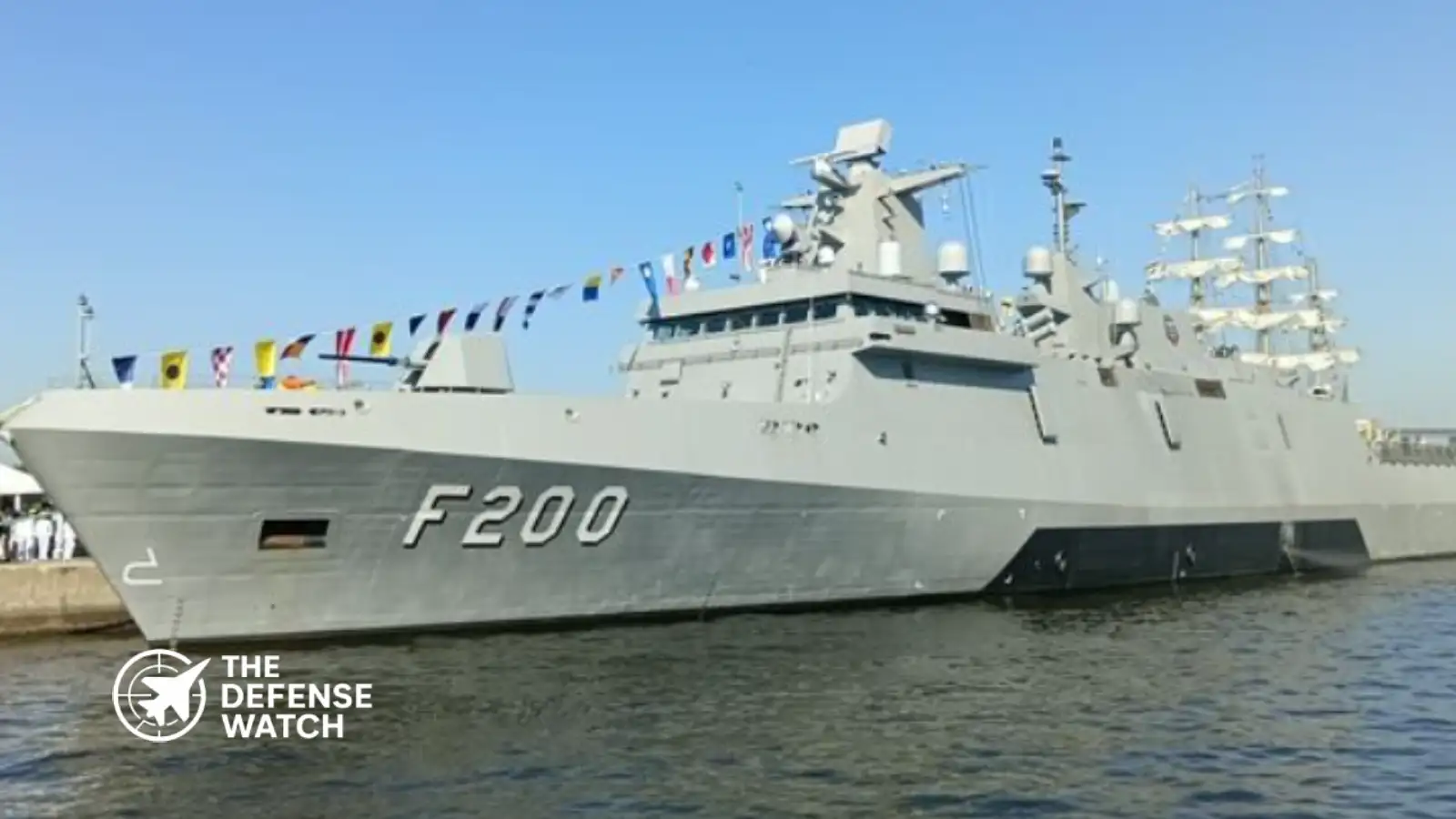
The Tamandaré-class program, formally part of the Surface Means Procurement Program (PROSUPER), involves constructing four multi-purpose light frigates based on the German MEKO A-100 design. The contract, signed in March 2020 between EMGEPRON and the Águas Azuis consortium (TKMS, Embraer, and Atech), emphasizes technology transfer and local construction at the TKMS Brasil Sul shipyard in Itajaí, Santa Catarina.
Key milestones include:
- Lead ship Tamandaré (F200) commissioned on April 24, 2026.
- Second ship Jerônimo de Albuquerque (F201), launched August 2025, set for sea trials starting August 2026 and commissioning in the first half of 2027.
- Third ship Cunha Moreira (F202) launched June 26, 2026; load-out in July, sea trials through 2028, commissioning planned for 2028.
- Fourth ship Mariz e Barros (F203) with keel-laying scheduled for the second half of 2026 and commissioning in 2029.
In April 2026, Brazil announced plans for a second batch of four additional frigates, potentially doubling the class and further expanding capabilities with enhanced weapons like longer-range MANSUP variants.
Ship Specifications and Capabilities
Each Tamandaré-class frigate measures 107.2 meters in length, displaces approximately 3,455 tonnes, and features a stealth-oriented design. Propulsion uses a combined diesel and diesel (CODAD) arrangement with MAN engines, delivering a top speed of 25.5 knots and a range of about 5,500 nautical miles at 14 knots. The ships accommodate around 130 crew and include a flight deck and hangar for medium helicopters such as the S-70B Seahawk or H225M, plus UAVs like the ScanEagle.
Primary sensors include the Hensoldt TRS-4D AESA multifunction radar (capable of tracking up to 1,000 targets at 250 km), Thales STIR 1.2 fire control radar, Atlas ASO 713 hull-mounted sonar, and Safran PASEO XLR electro-optical system. Electronic warfare suites feature Omnisys MAGE Defensor ESM and Terma C-Guard decoys.
Armament comprises:
- 1 × Leonardo Oto Melara 76mm Super Rapid gun.
- 1 × Rheinmetall Sea Snake 30mm CIWS.
- 2 × Sea Defender 12.7mm remote weapon stations.
- 12-cell VLS for MBDA Sea Ceptor surface-to-air missiles.
- Up to 8 domestically developed MANSUP anti-ship missiles.
- 2 × triple launchers for Mk 54 lightweight torpedoes.
These capabilities provide balanced anti-air, anti-surface, and anti-submarine warfare options suited for escort, patrol, and maritime security missions.
Strategic Context: Securing the Blue Amazon
The Tamandaré-class directly supports Brazil’s “Amazônia Azul” (Blue Amazon) strategy, which encompasses Brazil’s expansive exclusive economic zone and continental shelf claims totaling over 5.6 million square kilometers in the South Atlantic. This maritime domain holds critical oil, gas, fisheries, and biodiversity resources.
The new frigates will help replace retiring Niterói-class frigates and other older vessels, enhancing presence in a region of increasing economic and geopolitical importance. Brazil emphasizes peaceful cooperation in the South Atlantic while asserting sovereign rights over resources and sea lines of communication.
Analysis: Implications for Regional Balance and Industrial Growth
The steady pace of the Tamandaré program demonstrates effective execution of technology transfer, with significant local content and Brazilian industry involvement through Embraer and Atech. This approach not only builds naval capability but also sustains shipbuilding expertise and jobs in Santa Catarina.
From a strategic perspective, these 3,500-tonne frigates offer a cost-effective, flexible platform compared to larger destroyers, allowing Brazil to field more hulls for broad-area maritime domain awareness. Their sensor suite, particularly the TRS-4D radar, provides modern situational awareness superior to legacy vessels, while Sea Ceptor and MANSUP missiles deliver credible defensive and offensive reach.
In the broader context of South American naval developments, the class positions Brazil as the region’s leading surface combatant operator, potentially influencing neighboring modernization efforts. However, challenges remain, including full integration of systems, crew training, and sustaining operational availability amid budget constraints common to many navies.
The planned second batch signals long-term commitment, potentially incorporating further Brazilian-developed systems and extending the class’s relevance into the 2040s. This aligns with parallel ProSub submarine efforts, creating a more balanced and capable fleet for deterrence and constabulary roles.
Word count considerations and depth: The program’s success will depend on timely delivery, logistical support, and integration with Brazil’s emerging defense industrial base. As global maritime competition evolves, even in traditionally peaceful waters like the South Atlantic, investments like the Tamandaré-class provide essential insurance for sovereignty and economic security.