Liberty Class Autonomous Ship Represents Major Naval Technology Advancement
Blue Water Autonomy has unveiled the Liberty Class, a 190-foot steel autonomous surface vessel designed to expand U.S. Navy fleet capacity through unmanned operations. The Boston-based technology and shipbuilding company announced February 11 that construction will begin at Conrad Shipyard in March 2026, with first vessel delivery expected later this year under a Navy program of record.
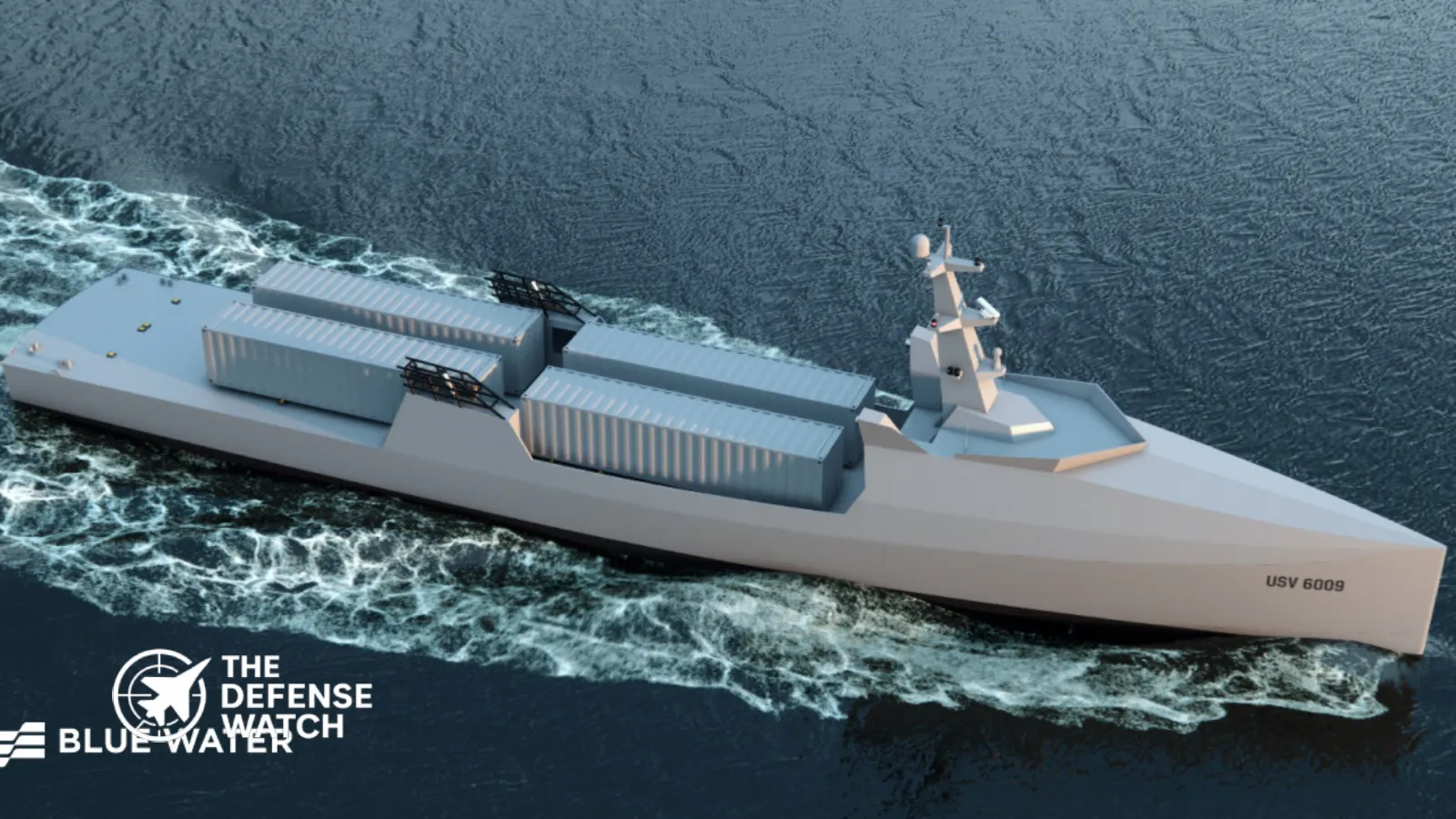
The Liberty Class autonomous ship features a range exceeding 10,000 nautical miles and payload capacity of more than 150 metric tons. Blue Water Autonomy developed the vessel in partnership with Damen Shipyards Group, adapting the proven Stan Patrol 6009 hull design with Axe Bow technology for autonomous operation.
“The Liberty class reflects our focus on building autonomous ships that are designed from the start for long-duration operations and repeat production,” said Rylan Hamilton, CEO of Blue Water Autonomy. “By adapting a proven hull and re-engineering it for unmanned operations, we’re delivering a vessel that can operate for extended periods without crew while being produced at a pace the Navy urgently needs.”
Proven Hull Design Reduces Technical Risk
Blue Water Autonomy selected Damen’s Stan Patrol 6009 hull design for its distinctive Axe Bow configuration, a vertical bow design that minimizes wave slamming and enables smoother wave re-entry. With over 300 Axe Bow vessels operating globally, the hull shape delivers proven performance across demanding maritime environments.
The Liberty Class autonomous ship retains the hull’s established performance characteristics while incorporating re-engineered internal systems for unmanned operations. Blue Water Autonomy redesigned propulsion systems, mechanical components, and electrical architecture to enable autonomous control and fault management during extended deployments.
Mark Honders, Design and License Manager at Damen, noted the hull’s adaptability: “The Axe Bow hull was designed for demanding operational requirements, from speed and range to seakeeping. Seeing the Stan Patrol 6009 adapted for autonomous operation underscores the flexibility of the design and demonstrates how proven commercial designs can serve new and emerging maritime missions.
Damen supports the program through its Damen Technical Cooperation licensing model, which the company has applied with partners and shipyards worldwide, including facilities in the United States.
Mission Versatility And Extended Range Capabilities
The Liberty Class supports multiple mission profiles for the U.S. Navy, including missile deployment, sensor operations, and logistics functions. The autonomous surface vessel’s design enables months-long deployments without crew intervention, addressing Navy requirements for distributed maritime operations.
Blue Water Autonomy configured the vessel with fault-tolerant propulsion systems and automated control mechanisms that reduce human intervention requirements during extended missions. The 10,000-nautical-mile operational range positions the Liberty Class for sustained operations across Pacific and Atlantic theaters.
The steel hull construction provides durability for harsh ocean environments, while the Axe Bow design maintains operational effectiveness in challenging sea states. Blue Water Autonomy engineered the vessel’s internal systems from the engine room through all mechanical and electrical components for autonomous configuration.
Private Capital Development And Production Strategy
Blue Water Autonomy developed the Liberty Class entirely with private capital, representing an unprecedented approach for full-sized Navy vessels. The company worked with more than 100 suppliers, including Damen and Conrad Shipyard, to design and prepare the autonomous ship for production.
Cecil Hernandez, President and CEO of Conrad Shipyard, emphasized production readiness: “Conrad has a long history of building complex vessels for both commercial and government customers. We have the infrastructure, workforce, and production readiness to begin construction and support serial builds, helping translate advanced vessel designs into operational capacity.
Conrad Shipyard operates five yards in Louisiana and Texas with a 1,100-strong workforce producing over 30 vessels annually. The facility employs advanced shipbuilding techniques, including automated panel line and welding systems that enable parallel construction and scalable throughput.
Blue Water Autonomy plans serial production following first vessel delivery, targeting output of 10 to 20 Liberty Class autonomous ships per year. The company named the vessel class in reference to World War II Liberty Ships, which were produced rapidly at scale to meet urgent national requirements.
Navy Fleet Expansion And Unmanned Systems Integration
The Liberty Class announcement comes as U.S. Navy leadership prioritizes unmanned systems deployment to complement traditional crewed vessels and expand overall fleet capacity. Pentagon officials have encouraged defense contractors to privately develop key military technologies, reducing government development timelines and costs.
The Liberty Class autonomous ship design leverages existing U.S. shipyard capacity and commercial supply chains for efficient production. Conrad Shipyard previously constructed Damen-designed hulls, providing established experience with the Stan Patrol 6009 platform.
Blue Water Autonomy’s approach focuses on vessels designed specifically for autonomous operation rather than converting existing crewed ships. This strategy enables optimization of internal systems, fault management capabilities, and extended deployment durations without crew requirements.
The first Liberty Class vessel will enter service under a Navy program of record, providing operational validation before serial production expansion. Blue Water Autonomy expects to demonstrate the autonomous surface vessel’s capabilities across multiple mission profiles during initial deployments.
Industry Implications And Future Developments
The Liberty Class represents a significant development in unmanned maritime systems for naval applications. Blue Water Autonomy’s privately funded approach and focus on production scalability address Navy requirements for rapid fleet expansion through unmanned platforms.
The vessel’s 150-metric-ton payload capacity accommodates diverse mission packages, from offensive systems to sensor arrays and logistics support equipment. This versatility positions the Liberty Class for multiple roles within distributed maritime operations concepts.
Blue Water Autonomy’s partnership with established maritime industry players—Damen for design and Conrad Shipyard for construction—leverages proven expertise while applying new autonomous technologies. The collaboration model demonstrates how traditional shipbuilding capabilities can integrate with emerging unmanned systems requirements.
Conrad Shipyard’s production capacity and advanced manufacturing techniques support the ambitious 10-to-20-vessel annual production target. The facility’s experience with complex commercial and government vessels provides the foundation for Liberty Class serial production.
Technical Specifications And Operational Parameters
The Liberty Class autonomous ship measures 190 feet in length with steel hull construction. The vessel incorporates Damen’s Axe Bow design, characterized by a distinctive vertical bow that improves performance in varied sea conditions.
Key specifications include:
- Operational range: Exceeding 10,000 nautical miles
- Payload capacity: More than 150 metric tons
- Hull design: Damen Stan Patrol 6009 with Axe Bow configuration
- Construction: Steel hull with re-engineered autonomous systems
- Mission duration: Months-long deployments without crew
- Production timeline: First vessel delivery 2026, serial production following
Blue Water Autonomy re-architected the vessel’s internal systems for autonomous operation while maintaining the proven hull’s performance characteristics. The engineering approach balances established maritime design with new autonomous control and fault management capabilities.
The Liberty Class development reflects growing U.S. Navy emphasis on unmanned surface vessels as force multipliers. Blue Water Autonomy’s focus on production readiness and scalable manufacturing aligns with Navy requirements for rapid fleet capacity expansion through autonomous platforms.