Boeing Secures $16.9 Million Extension to Support Japan’s E-767 AWACS Fleet
The U.S. Air Force has awarded Boeing a $16.91 million contract modification to continue supporting Japan’s E-767 Airborne Warning and Control System (AWACS), extending technical sustainment and software maintenance services through November 14, 2027.
The modification, designated P00009, exercises an option under an existing contract, FA2363-25-C-B002. Awarded on November 2, 2026, the work covers engineering assistance, technical sustainment, on-site field service representatives and continued maintenance of the aircraft’s software systems.
The contract involves a Foreign Military Sales (FMS) arrangement with Japan. The Air Force is obligating the full $16,910,812 in FMS funds for this modification.
Importantly, the additional award does not increase the contract’s cumulative face value, which remains $35,530,249.
Boeing’s Support Responsibilities Extend Across Three Locations
The work will be distributed across three locations:
- Oklahoma City, Oklahoma: Boeing’s principal work location identified in the award.
- San Antonio, Texas: Additional engineering and technical support activities.
- Hamamatsu Air Base, Japan: On-site field service and support for the Japanese-operated aircraft.
The Air Force Life Cycle Management Center (AFLCMC), headquartered at Hanscom Air Force Base, Massachusetts, is managing the contract.
The arrangement maintains Boeing’s role in supporting the E-767 fleet’s mission and ground systems. Its scope extends beyond conventional aircraft maintenance, encompassing engineering and software-related services needed to sustain the airborne warning and control capability.
The announcement does not disclose individual service costs, software changes, aircraft availability targets or specific engineering upgrades covered by this option.
Why the E-767 Remains Important to Japan’s Air Defense

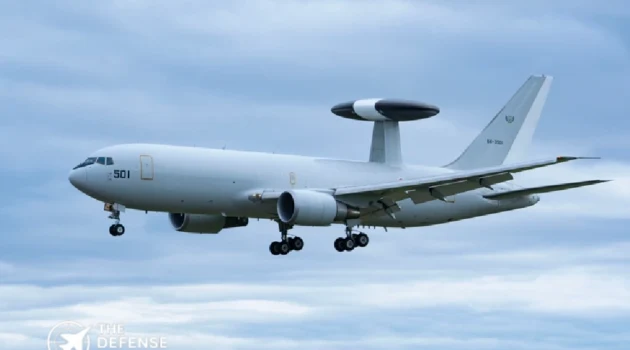
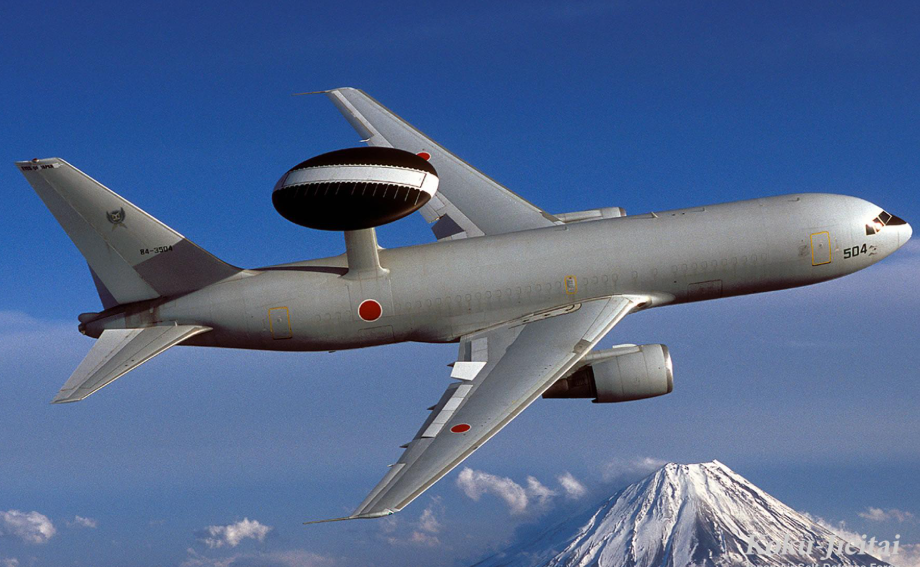
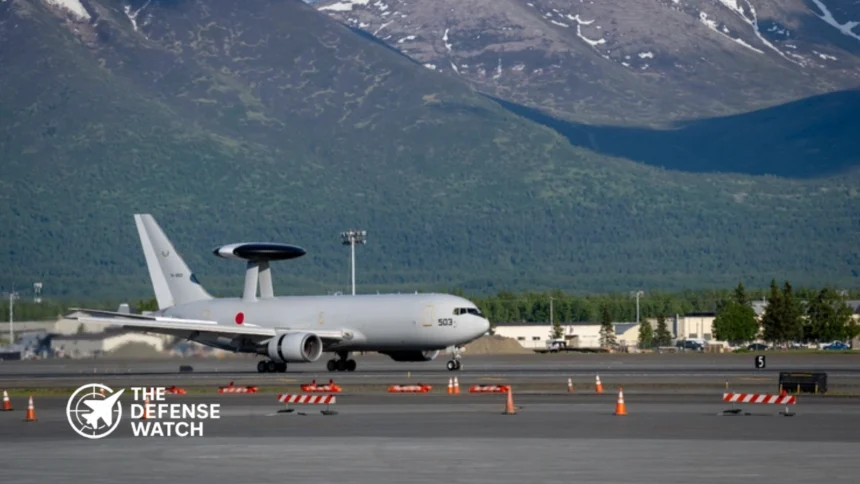
Japan operates the E-767 as part of its airborne surveillance and air defense network. Based on Boeing’s 767 commercial aircraft platform, the system carries airborne radar and mission equipment that allow operators to monitor airspace and coordinate fighter operations.
According to the Japan Air Self-Defense Force (JASDF), the E-767 provides airborne warning and control capabilities, particularly over areas beyond the effective coverage of ground-based radar installations.
The aircraft can operate over distant maritime areas, giving Japanese air defense commanders an airborne surveillance and control platform that complements fixed radar sites. Its role includes monitoring potential airspace intrusions and supporting the direction of fighter aircraft.
The JASDF’s official description also identifies the E-767’s radar, identification friend-or-foe equipment, communications systems, navigation equipment and onboard computers as key elements of its mission configuration.
Japan’s fleet consists of four E-767 aircraft, originally delivered by Boeing between 1998 and 1999. The aircraft entered operational service in 2000 and are based at Hamamatsu.
Sustainment Supports a Wider Modernization Effort
The Boeing contract is particularly relevant because Japan has been pursuing improvements to the E-767’s mission systems.
Japan’s Ministry of Defense has previously outlined plans to upgrade the aircraft’s central computing equipment and install electronic warfare support measures equipment.
These improvements are intended to strengthen warning, surveillance and control capabilities while improving the aircraft’s ability to identify potential threats.
The Japanese government’s published defense planning documents identify these modifications as part of its effort to improve the existing E-767 fleet.
However, the November 2026 Boeing contract announcement does not explicitly identify the central computer conversion or electronic warfare equipment installation as deliverables under modification P00009.
Its confirmed scope is continued technical sustainment, engineering, field service and software maintenance. The two activities should therefore be treated as related elements of Japan’s wider E-767 support and modernization requirements, rather than assumed to be the same contract work.
U.S.-Japan Defense Cooperation
The Foreign Military Sales structure places the contract within the broader U.S.-Japan defense equipment support relationship.
Boeing’s continued involvement provides Japan with access to engineering expertise and manufacturer support for an aircraft whose mission systems require specialized technical knowledge.
For Japan, maintaining the E-767 fleet is important because airborne surveillance contributes to the country’s ability to monitor its surrounding airspace and coordinate responses to potential threats.
The aircraft also operates alongside other Japanese airborne early warning platforms, including the E-2D Hawkeye. Together with ground-based radar installations and fighter aircraft, these systems form part of Japan’s wider air surveillance and defense network.
The contract’s value should be viewed in this context. The $16.91 million modification is not a purchase of additional aircraft or a new radar system. It funds another period of support for an existing operational capability.
With performance scheduled to continue through November 14, 2027, the award maintains Boeing’s support responsibilities for Japan’s E-767 program while the country continues to improve its wider air defense infrastructure.