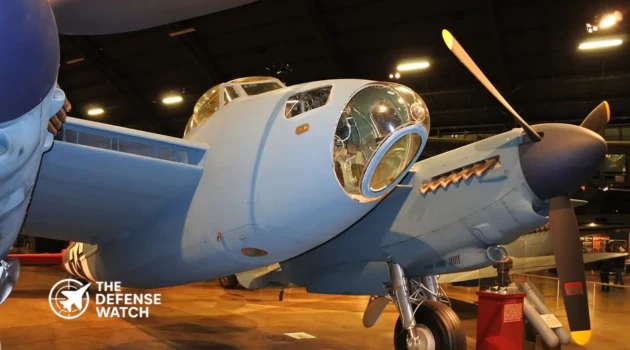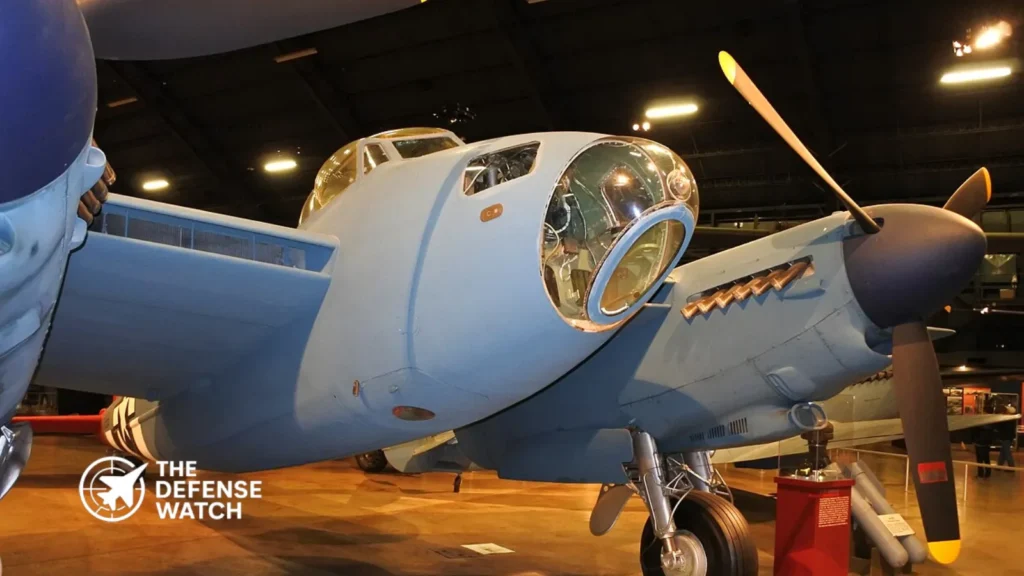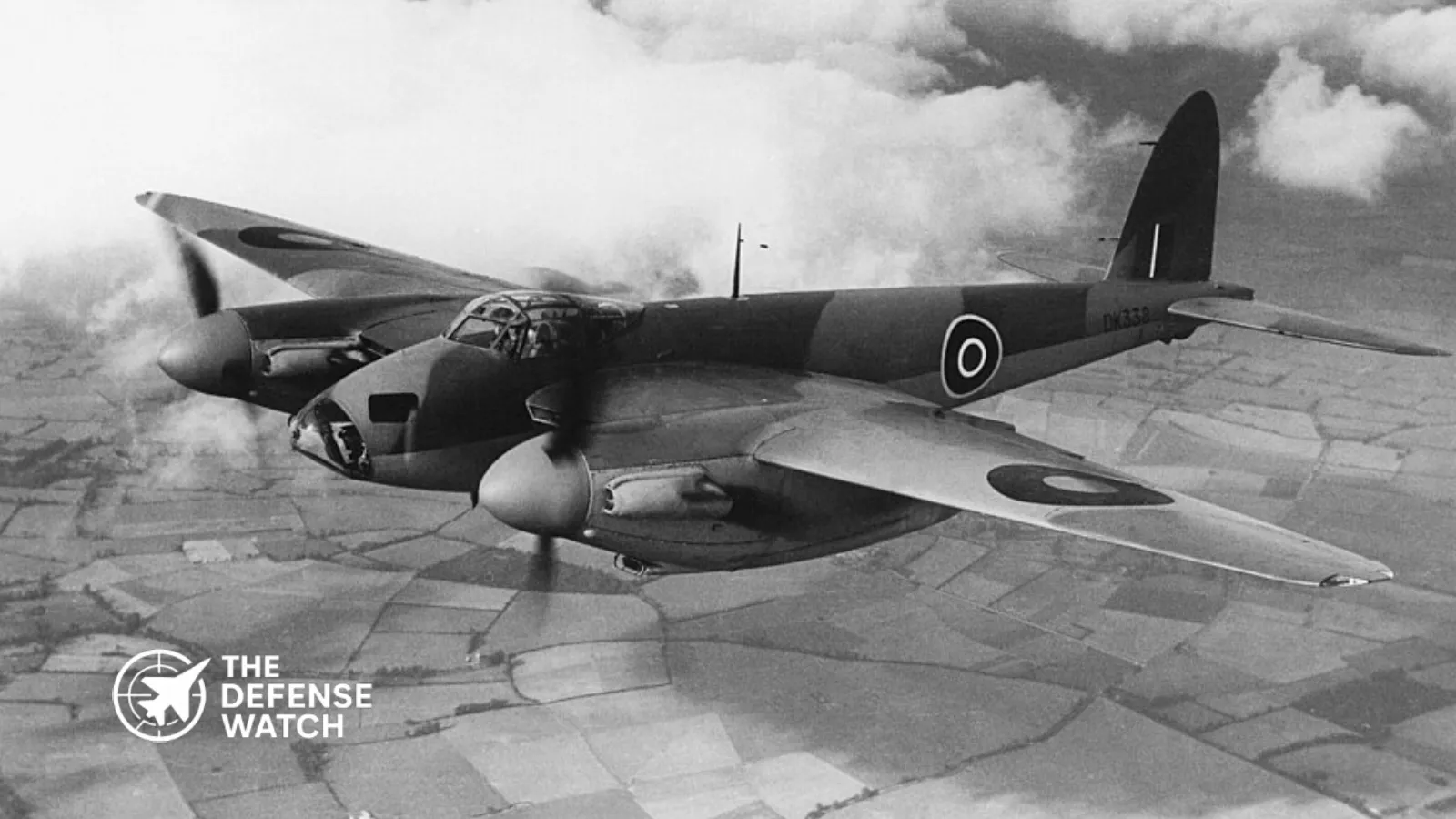
On 18 February 1944, the Royal Air Force launched one of the most daring tactical air operations of the Second World War. Known as Operation Jericho, the mission tasked de Havilland Mosquito fighter bombers with breaching the walls of Amiens Prison in German occupied France, where hundreds of French Resistance members and political prisoners awaited execution.
Unlike conventional strategic bombing campaigns aimed at cities or industrial centers, Operation Jericho demanded extraordinary accuracy. RAF crews had to fly at extremely low altitude through poor winter weather, identify individual prison walls, and deliver bombs within seconds of crossing the target. Long before laser guidance, GPS navigation, or precision guided weapons, success depended entirely on pilot skill, careful planning, and the remarkable capabilities of the Mosquito aircraft.
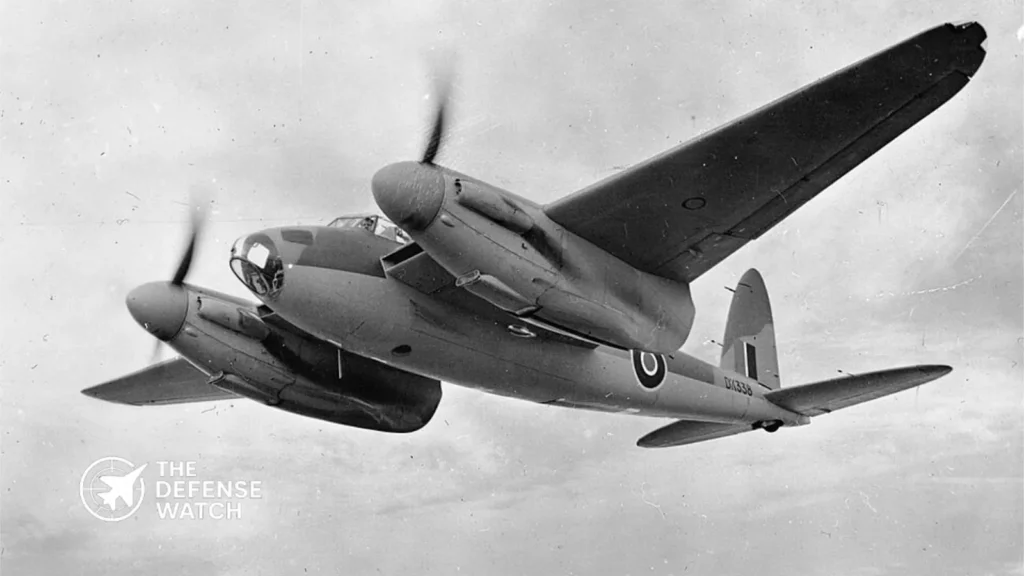
The raid remains one of history’s earliest demonstrations that precision air power could be used against a highly specific objective while limiting wider destruction, making it an important predecessor to today’s low level precision strike doctrine.
At a Glance Executive Summary
| Strategic Brief | Details |
|---|---|
| Codename / Mission | Operation Jericho |
| Date / Theater | 18 February 1944, Amiens, Occupied France |
| Executing Force(s) | RAF No. 140 Wing, including No. 464 Squadron RAAF, No. 487 Squadron RNZAF, and No. 21 Squadron RAF under Group Captain Percy Charles Pickard |
| Primary Target | Amiens Prison walls and guard facilities |
| Key Platforms & Tech | de Havilland Mosquito FB Mk VI, 500 lb GP bombs with delayed action fuzes, low altitude visual navigation |
| Mission Outcome | Prison walls breached, numerous prisoners escaped, several aircraft lost, mission remains one of the RAF’s most famous precision strikes |
Strategic Background & Operational Context
By early 1944, German occupation authorities had intensified efforts to suppress the French Resistance. Amiens Prison had become overcrowded with resistance fighters, intelligence agents, and political prisoners. Intelligence reports indicated that many inmates faced imminent execution before the planned Allied invasion of Normandy.
Conventional bombing was not an option. High altitude bombers lacked the accuracy needed to destroy prison walls without killing the prisoners inside. The RAF therefore considered an unconventional solution, an extremely low altitude strike conducted by fast twin engine fighter bombers.
The operation carried significant political and military implications. If successful, experienced Resistance personnel could return to underground operations, supporting future Allied offensives across northern France. If it failed, Allied aircraft would be responsible for the deaths of those they intended to rescue.
The mission represented one of the highest risk tactical operations approved by RAF Bomber Command during the war.
Engineering & Technological Innovation
The de Havilland Mosquito
The de Havilland Mosquito was among the most versatile aircraft of World War II. Constructed primarily from laminated wood rather than aluminum, it combined exceptional speed with long range and outstanding handling.
Key characteristics included:
- Maximum speed exceeding 400 mph
- Two Rolls Royce Merlin engines
- Excellent low altitude stability
- Small radar signature by wartime standards
- Capacity for bombs while retaining fighter performance
These qualities made the Mosquito uniquely suited for precision attacks against heavily defended targets.
Bombing Technique
Unlike modern precision weapons, Operation Jericho relied entirely on visual bombing.
Pilots approached the prison at rooftop height, often less than 50 feet above ground level. Bombs were fitted with delayed action fuzes to allow attacking aircraft to clear the blast area before detonation.

Image Source : Wikipedia The first wave aimed at the outer walls to create escape routes.
The second wave attacked guard buildings and German administrative facilities to disrupt any organized response.
Timing between attack formations was calculated to within seconds.
Navigation Without Electronics
Navigation depended on:
- Detailed reconnaissance photography
- Stopwatch timing
- Terrain recognition
- Experienced navigators
- Strict formation discipline
This method required near perfect coordination under combat conditions.
Mission Execution & Key Sorties
Poor weather delayed the operation but did not cancel it. Flying beneath cloud cover, Mosquito formations crossed the English Channel at very low altitude to avoid German radar detection.
The first attack wave successfully struck the prison’s outer walls, creating several large breaches. Additional bombs damaged the main administrative buildings and guard facilities.
The raid unfolded within minutes.
German anti aircraft guns quickly responded, and several Mosquitoes were hit during the attack.
Group Captain Percy Charles Pickard, one of Britain’s most respected Mosquito commanders and leader of the operation, remained over the target to assess damage before departing. His aircraft was intercepted by a German Focke Wulf Fw 190 fighter and shot down shortly after completing the mission. Pickard and his navigator, Flight Lieutenant John Broadley, were killed.
Despite these losses, the operation achieved its primary tactical objective.
Approximately 255 prisoners escaped through the damaged walls, although many were later recaptured. Historical records indicate that around 100 ultimately avoided recapture and rejoined resistance activities.
The raid also caused civilian and prisoner casualties, highlighting the inherent risks of precision bombing before modern guidance technologies.
Tactical Outcome & Operational Assessment
Operation Jericho remains debated among historians.
Supporters argue the raid successfully freed experienced Resistance personnel at a critical moment before the Allied invasion of Europe. It also demonstrated extraordinary RAF precision under combat conditions.
Critics question whether intelligence regarding the planned executions justified the risks involved. Some historians continue to debate whether the rescue itself or broader strategic deception before D Day was the operation’s primary objective.
From a military perspective, several operational lessons emerged.
Successes
- Demonstrated highly accurate low altitude bombing.
- Validated the Mosquito as a precision strike platform.
- Showed disciplined formation flying could substitute for advanced guidance systems.
- Reinforced confidence in tactical air support missions.
Limitations
- Significant risk to aircrews.
- Dependence on weather and visibility.
- Limited ability to avoid collateral damage.
- Heavy reliance on pilot experience rather than technology.
The Modern Connection: Lineage to 21st Century Warfare
Operation Jericho represents an important milestone in the evolution of precision strike doctrine.
Although modern aircraft rarely conduct unguided attacks at rooftop height, many of the mission’s tactical principles remain relevant.
Precision Before Precision Guided Weapons
Today’s JDAMs, Paveway laser guided bombs, and Small Diameter Bombs achieve meter level accuracy using satellite navigation and laser designation.
In 1944, RAF crews achieved comparable tactical precision through training, planning, and exceptional flying skill.
Low Observable Penetration
Flying beneath German radar coverage anticipated concepts later employed by:
- F 111 Aardvark
- Panavia Tornado
- F 117 Nighthawk
- Modern terrain following cruise missiles
Specialized Strike Packages
Operation Jericho used multiple attack waves with different objectives, a concept mirrored today in coordinated strike packages involving:
- Stealth aircraft
- Electronic warfare platforms
- ISR aircraft
- Stand off precision weapons
- Armed UAVs
Human Precision Versus Digital Precision
Modern militaries increasingly rely on:
- GPS guidance
- Artificial intelligence assisted targeting
- Network centric warfare
- Real time ISR
- Loitering munitions
Operation Jericho reminds military planners that technology enhances precision but cannot replace disciplined planning, intelligence, and well trained aircrews.
Key Takeaways
- Operation Jericho demonstrated that highly trained aircrews could achieve precision effects decades before guided weapons.
- The de Havilland Mosquito proved uniquely capable of fast, low altitude penetration and accurate tactical bombing.
- The mission influenced later NATO concepts for low level strike operations and precision target engagement.
- Its legacy continues in modern precision strike doctrine, combining intelligence, timing, and specialized attack planning.
Frequently Asked Questions
What was Operation Jericho?Operation Jericho was a Royal Air Force precision bombing raid carried out on 18 February 1944 against Amiens Prison in German occupied France to breach the prison walls and enable the escape of Resistance prisoners.
Why was the Mosquito selected?Its exceptional speed, maneuverability, and ability to fly accurately at very low altitude made the Mosquito the ideal aircraft for a mission requiring extreme bombing precision.
Was the mission successful?The operation successfully breached the prison walls and enabled approximately 255 prisoners to escape, although many were later recaptured. It also demonstrated remarkable tactical precision despite aircraft losses.
Why is Operation Jericho still studied today?Military planners view the raid as an early example of precision strike doctrine. Many concepts demonstrated during the mission, including low altitude penetration, coordinated attack timing, and target specific bombing, remain relevant to modern air warfare.
How does Operation Jericho compare to modern precision strikes?Modern aircraft use GPS guided bombs, laser designation, and advanced sensors to achieve precision from long range. Operation Jericho achieved similar tactical objectives using visual navigation, disciplined flying, and carefully planned low altitude attack profiles, making it a significant historical predecessor to today’s precision guided standoff strike operations.