Ask three reference sources how many Remington 870 shotguns the U.S. Marine Corps ordered in May 1969 and you get three answers: 3,230, 3,231 and 3,200. Gun-history author Bruce Canfield and an American Rifleman chronology differ by one gun, while a review published by Athlon Outdoors rounds to 3,200. The discrepancy is small, but it is a useful reminder that much of what is written about the Remington 870 shotgun’s military record rests on secondary accounts and no single official ledger.
What the sources do agree on is the broad arc. The 870 was a commercial and police success first and a military shotgun second, and its armed-forces career has been built on niche roles rather than frontline dominance.
A civilian gun that the military ignored for years
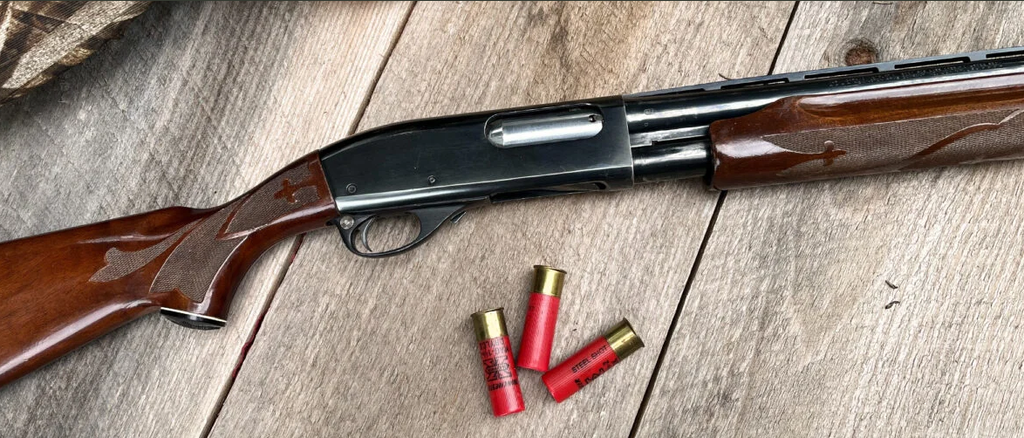
Remington introduced the Model 870 in 1950 with 15 versions in 12, 16 and 20 gauge, according to American Rifleman’s chronology. The company announced its one-millionth Model 870 in 1966, and by 1983 the 870 held the record as the best-selling shotgun in history at three million units, per the commonly cited figure on its reference entry.
Military interest lagged. Athlon Outdoors notes that from Korea through the early Vietnam years U.S. troops kept using World War II-era Winchester Models 12 and 97 and Stevens trench and riot guns. When the Pentagon did buy shotguns for Vietnam, it mostly bought Ithaca Model 37 and Stevens 77E riot guns. The same review suggests price may have influenced those choices, though it presents that as a possibility rather than established fact.
Large 870 purchases in the region went elsewhere. Athlon reports roughly 38,500 870s were bought in the early 1960s to equip South Vietnamese forces. That figure comes from a single source and should be treated as approximate.
The Marine Mark 1
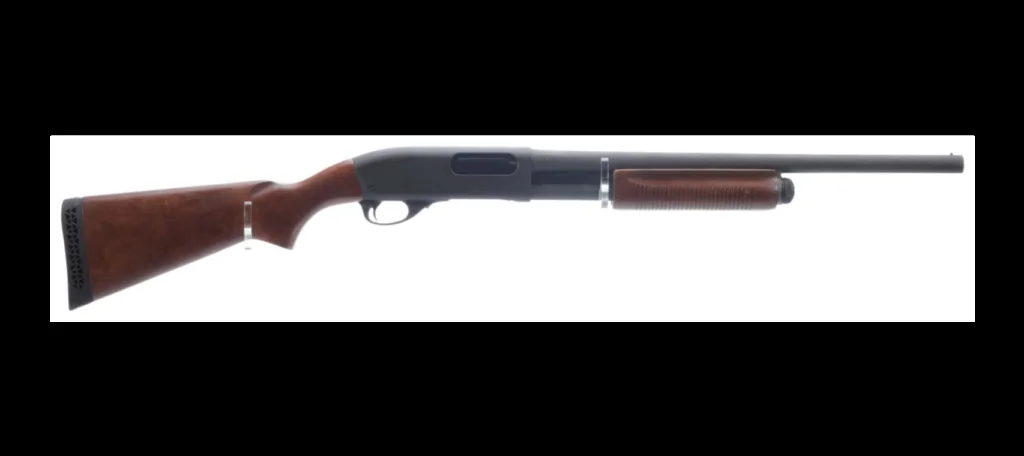
The first major U.S. military order came from the Marine Corps. The Corps wanted a purpose-built fighting shotgun, and a special version was standardized in spring 1969 as the Model 870, Mark 1. Remington received a production contract on May 13, 1969, for the roughly 3,200 guns noted above.
Two design choices stand out. The Mark 1 carried rifle-type sights, an unusual feature on a military shotgun that Canfield says allowed better accuracy with slugs. It also took the M7 bayonet, the first time a bayonet other than the M1917 had been standardized for a U.S. military shotgun, and one Athlon describes as shorter and less unwieldy.
The Mark 1’s first significant reported combat use came during the May 1975 Mayaguez crisis, according to Canfield. It stayed in Marine inventory into the 21st century, though Athlon says the Benelli M1014 has largely superseded it.
Navy, Air Force and the quieter users
Beyond the Marines, the 870 spread as a utilitarian riot gun. Canfield says most 870s bought by the services, especially the Navy, were standard plain-barrel riot guns with 18- to 20-inch barrels. Athlon adds that the Navy bought substantial numbers during the Vietnam era, that some SEALs used 870s alongside the better-known Ithaca 37, and that some shipboard guns had cut-down barrels to fit submarine arms racks. It also reports, using the word “reportedly,” that Marine embassy guards had short-barreled 870s with folding stocks.
The Air Force used standard police-type 870s with wooden stocks as its shotgun in the Vietnam era and after. A trade-press history also notes that some 870s were used by the Air Force to keep runways clear of birds, a reminder that not every military shotgun is a combat weapon.

The most recent 870 adopted by a U.S. service is the Modular Combat System (MCS), which Athlon says the Air Force chose and some other units bought in limited numbers. The MCS is built so barrels, magazine tubes and stocks can be swapped to suit roles such as urban combat or door breaching.
Where the 870 sits today
Newer designs have taken the lead in the shotgun roles that remain. The semi-automatic M1014 Joint Service Combat Shotgun entered service, and the Army adopted the M26 Modular Accessory Shotgun System, which mounts under the barrel of an M4 carbine and can also run standalone with a stock and pistol grip. One trade-press survey says the 870 and the Mossberg M590A1 remain in service “in small numbers.” No public source I found gives current service-wide 870 inventory, so that number is unknown.
The shotgun has never been a primary weapon of the U.S. armed forces, as Athlon puts it. Its value has been in jungle fighting, counterinsurgency, installation security, ship boarding and breaching, close-range tasks where a rifle is less suited.
Wingmaster, Express, Police, Tactical: what the names mean
Most readers searching for a Remington 870 are looking at civilian or police models, so the naming matters.
Model line Positioning Commonly reported traits 870 Wingmaster The original, premium line; Remington itself uses the name for the 870 Walnut furniture and polished finish; owner accounts report hard-chromed bolts and a machined extractor 870 Express Added later as a lower-cost option Bead-blast blue finish; owner accounts report metal-injection-molded parts such as the extractor 870 Police Law-enforcement version resembling the Wingmaster Duller finish aimed at duty use 870 Tactical / Express Tactical Defensive configurations, often with shorter barrels and extended magazine tubes Furniture and tube length vary by catalog year; check the current Remington listing Two cautions apply. The finish and parts details in the table come mainly from owner-forum discussions and enthusiast writing, not from Remington documents, so treat them as commonly reported rather than verified. And “Tactical” describes a configuration, not a single design. Forum members describe current Express Tactical guns with long magazine tubes, but model lineups change, so check Remington’s current catalog before quoting specifics. Multiple sources, including a Remington statement quoted on an enthusiast forum, say the parts across 870 lines are largely interchangeable, though that claim also deserves verification before publication.
None of these civilian lines is the military Mark 1 or the MCS, which are separate configurations.
The maker changed, the gun did not
Remington Outdoor went through bankruptcy in 2020. Roundhill Group bought the firm’s non-Marlin firearms business for $13 million, including the Ilion, New York plant. The new company, RemArms, obtained its federal firearms license in early 2021, and Guns.com reported in May 2021 that about 230 employees had been recalled as 870 production resumed. Production-location and ownership details have since developed further, and the specifics are not covered by the sources reviewed here.
What remains unclear
The Marine order count is still reported three ways. The current number of 870s in U.S. service has not been published in anything reviewed. And the finish and parts comparisons between Wingmaster and Express rest on enthusiast sources. A manufacturer parts diagram or a Remington technical document would settle the last point.