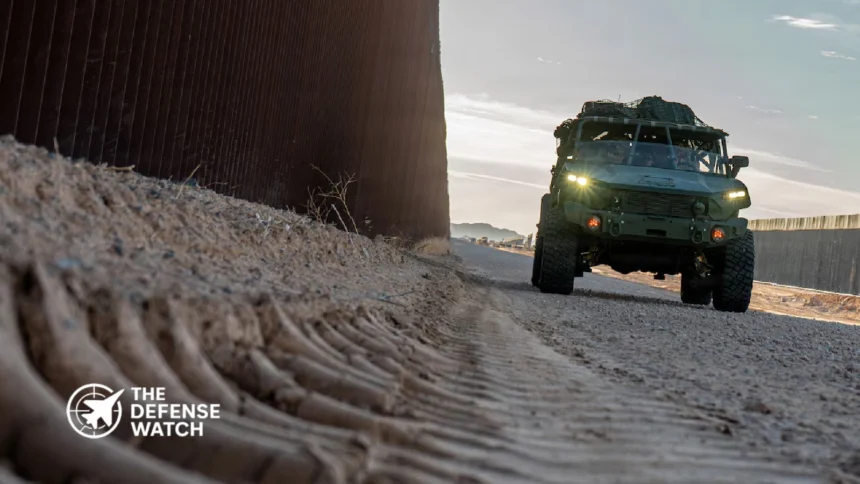
The U.S. military says illegal border crossings and suspicious activity in Texas’ Rio Grande Valley declined by approximately 70% during the first 30 days of Operation Unified Resolve, a deployment that brought hundreds of additional service members and equipment into the region.
The results were announced November 3, 2026, by the U.S. Department of War. The operation is being conducted by Joint Task Force-Southern Border (JTF-SB) in support of the Department of Homeland Security (DHS) and U.S. Customs and Border Protection (CBP).
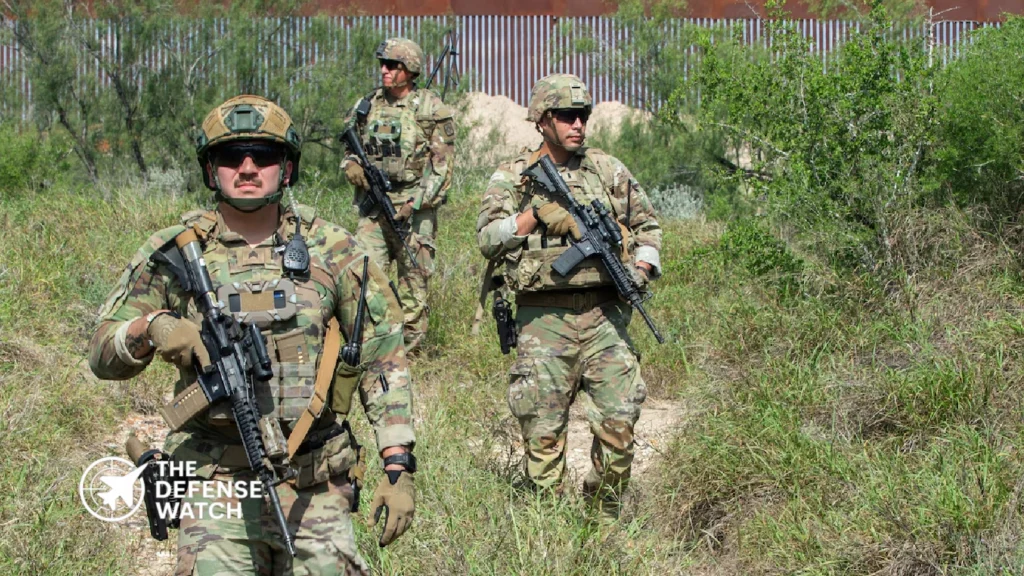
According to military officials, the deployment has increased patrol activity, expanded surveillance and detection capabilities, and strengthened security at selected locations along the Rio Grande.
The reported reduction is an official military assessment. The announcement does not, by itself, establish how much of the decline resulted directly from the additional military presence rather than other border enforcement measures or changes in migration patterns.
What the First 30 Days of Operation Unified Resolve Showed
The military’s reported results cover several areas of activity, extending beyond the number of people attempting to cross the border.
During the first month, JTF-SB reported:
- Approximately 70% fewer detected illegal crossings.
- 1,186 mounted and riverine patrols.
- 48 multinational patrols conducted with Mexican military partners.
- 17 unmanned aircraft system (UAS) detections.
These figures indicate that the operation combines ground mobility, river patrols, surveillance and cooperation with Mexican security forces.
The 17 UAS detections are particularly relevant to the military’s wider concern about unauthorized drone activity near the southern border. However, the announcement does not establish how many drones were intercepted, who operated them or whether they were connected to organized criminal networks.
The distinction matters because detecting an unmanned aircraft is not the same as identifying its operator, establishing hostile intent or disrupting an associated criminal operation.
Military Support Is Built Around Surveillance and Mobility
Operation Unified Resolve is not a standalone border enforcement agency. It is a military support mission operating under the wider Operation Ardent Vanguard framework.
JTF-SB was established on March 14, 2025, under U.S. Northern Command (USNORTHCOM). Its mission includes providing surveillance, monitoring, mobility and other military capabilities to support civilian agencies responsible for border security.
The task force’s role is particularly important in areas where difficult terrain, river crossings and remote locations complicate routine monitoring.
Military personnel can provide capabilities that complement Border Patrol operations, including:
- Ground-based surveillance and observation.
- Mobile and riverine patrol support.
- Intelligence analysis and information sharing.
- Transportation and logistical assistance.
- Counter-unmanned aircraft capabilities.
- Physical security and barrier support.
The distinction between military and civilian responsibilities remains important. CBP retains the lead role in civilian border enforcement, while military personnel provide support under the task force’s assigned authorities.
Counter-drone Operations Add Another Dimension
Unmanned aircraft have become an additional security concern along sections of the U.S.-Mexico border.
U.S. Northern Command has previously reported using the Army Multipurpose High Energy Laser (AMP-HEL) system against unauthorized drones assessed as threats to military personnel and CBP partners.
In August 2026, JTF-SB announced that the system had been used to defeat three hostile unmanned aircraft during operations on August 25 and 26. USNORTHCOM subsequently reported additional counter-drone activity.
These activities provide context for the 17 UAS detections reported during the first month of Operation Unified Resolve.
However, the military has not established that all 17 detections involved cartel-operated aircraft or that every detection resulted in an engagement.
Why the 70% Figure Needs Context
The reported reduction is notable, but it should not be interpreted as proof that the military deployment alone caused border crossings to decline.
The Rio Grande Valley has experienced changes in crossing activity over a longer period, influenced by immigration policies, enforcement measures and changing migration routes.
An Associated Press report published in October 2026 documented the expanded military presence around Roma, Texas, and described how crossing activity had already fallen following asylum restrictions introduced in 2024 and subsequent changes to U.S. border policy.
The report also noted that experts questioned whether the additional troop deployment was proportionate to the security challenges in the region.
There is another important distinction in the available data.
USAFacts, using Customs and Border Protection statistics, reported approximately 2,100 detected crossing attempts in the Rio Grande Valley sector during August 2026, compared with approximately 1,400 in August 2025.
That represented an increase of roughly 54% over the same month in the previous year.
These figures do not directly contradict the military’s 70% claim because they cover different reporting periods and measurement windows. The August comparison is year over year, while the military’s figure concerns the first 30 days of a specific operation.
Nevertheless, the difference illustrates why the baseline, measurement methodology and absolute number of crossings matter.
The Department of War has not provided enough publicly available information in its announcement to independently calculate the reported 70% reduction or determine how much resulted from Operation Unified Resolve.
A Wider Military Role Along the Southern Border
Operation Unified Resolve also fits into a broader expansion of military support along the U.S.-Mexico border.
In March 2026, USNORTHCOM reported that more than 20,000 military personnel had served under JTF-SB since its establishment. The task force also reported approximately 22,000 enhanced detection and monitoring missions and nearly 1,600 aerial observation flights during its first year.
The scale of this activity shows that the southern border mission has become a sustained joint military support effort rather than a temporary deployment focused on one geographic area.
For the Army, the mission also provides an operational environment for testing equipment, coordinating with civilian agencies and conducting joint activities with international partners.
For CBP, the intended benefit is improved situational awareness and faster responses to detected activity, allowing agents to concentrate on enforcement responsibilities.
The longer-term effectiveness of these deployments will depend on more than patrol totals or short-term reductions in detected crossings. Sustained results will require reliable surveillance, intelligence sharing, coordination with Mexican authorities and clear evidence that criminal networks are being disrupted.
The reported 70% reduction provides an initial operational indicator, but further data will be needed to establish whether the improvement can be maintained and attributed to the operation.