Executive Summary
- NASA’s SpaceX Crew-12 mission is approaching its return to Earth after supporting research aboard the International Space Station since its February 2026 launch.
- The four-person crew conducted investigations involving pharmaceuticals, quantum science, bone and cartilage biology, antibiotic-resistant bacteria, stem cells, metal additive manufacturing and in-space production of intravenous fluids.
- NASA and SpaceX are currently targeting Oct. 7, 2026, for Crew-12 to undock from the station, with splashdown planned for Oct. 8 subject to weather, sea conditions, spacecraft readiness and recovery operations.
NASA’s SpaceX Crew-12 is entering the final phase of its International Space Station mission as a replacement crew prepares to take over Expedition 75 operations. NASA and SpaceX are targeting no earlier than 1:05 a.m. EDT on Oct. 7 for Dragon’s undocking, followed by a planned splashdown off the California coast on Oct. 8. The return remains dependent on weather, sea conditions, spacecraft readiness and recovery-team availability.
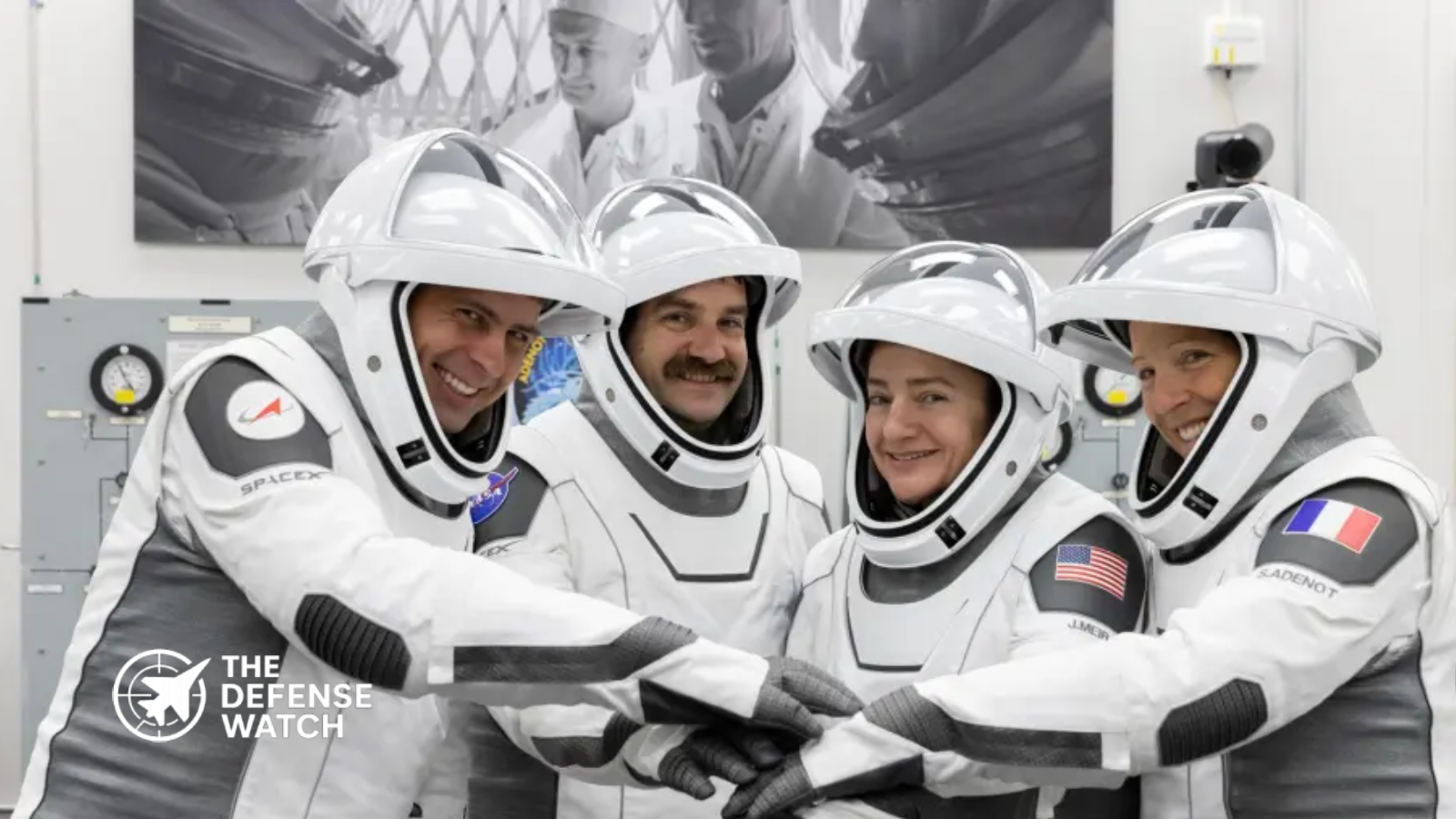
The mission began with the launch of a SpaceX Falcon 9 carrying a Dragon spacecraft from Space Launch Complex 40 at Cape Canaveral Space Force Station, Florida, on Feb. 13. NASA astronauts Jessica Meir and Jack Hathaway, European Space Agency astronaut Sophie Adenot and Roscosmos cosmonaut Andrey Fedyaev made up the four-person crew.
The significance of Crew-12 is broader than the return of four astronauts. Its work illustrates how the ISS is increasingly being used as a test environment for technologies and biological research that could become important when crews operate farther from Earth, where resupply is slower, medical support is limited and spare parts cannot always be delivered on demand.
Crew-12 Hands Over to the Next ISS Expedition
Crew-12’s departure follows the arrival of NASA’s SpaceX Crew-13 on Oct. 1. NASA says Crew-13 docked with the station and joined Expedition 75, creating a temporary overlap between the incoming and outgoing crews.
The handover is operationally important because long-duration spaceflight depends on continuity rather than simply moving one crew out and another in. Equipment status, experiment schedules, maintenance activities and station procedures have to be transferred without interrupting research.
NASA planned a formal transfer of mission responsibilities on Oct. 4, with Meir scheduled to hand over command of the station to Roscosmos cosmonaut Pyotr Dubrov before the Crew-12 departure sequence.
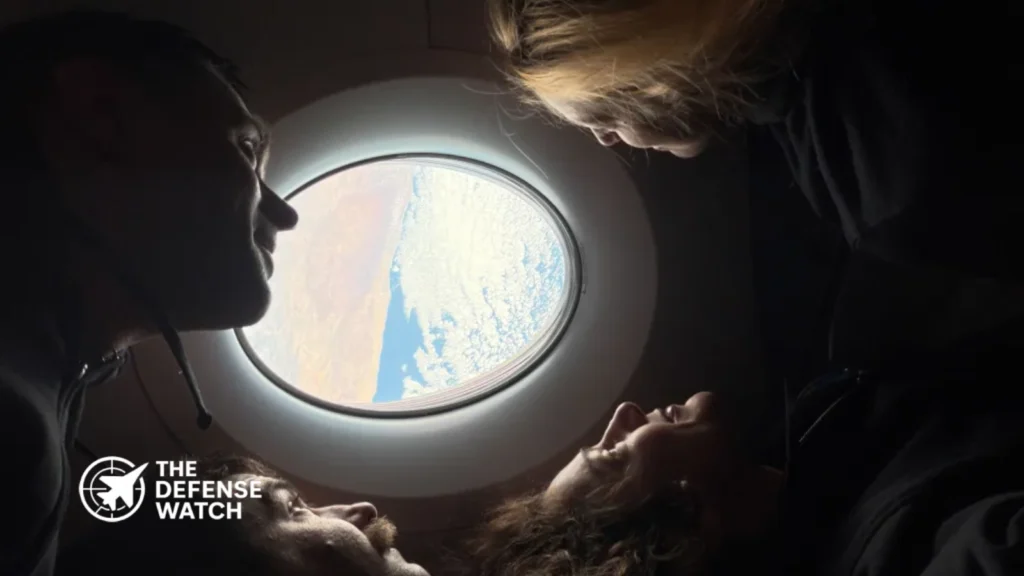
Crew-13’s arrival also demonstrates the role of NASA’s Commercial Crew Program in maintaining a regular U.S. human transportation capability to low Earth orbit. NASA describes Crew-12 as the 12th crew rotation mission and the 13th human spaceflight to the station supported by SpaceX’s Dragon spacecraft under the Commercial Crew Program, including the Demo-2 test flight.
The Science Portfolio Goes Beyond Conventional ISS Research
NASA’s assessment of Crew-12 highlights a diverse collection of investigations rather than a single technology demonstration.
Among the research areas was pharmaceutical crystallization. Crew members supported work examining how cancer-targeting treatments form crystals in microgravity. NASA says the objective is to better understand pharmaceutical properties and potentially improve cancer therapies.
Another investigation used the station’s Cold Atom Lab to study ultracold atoms. NASA says an upgrade increased the number of atoms the facility can produce, allowing researchers to collect additional data relevant to quantum technologies.
The mission also examined how microgravity affects biological systems. Research included bone scaffolds, engineered cartilage, bone marrow models and stem-cell expansion. These investigations address a fundamental problem for future exploration missions: humans must remain healthy during extended periods away from Earth’s medical infrastructure.
Selected Crew-12 Research Areas
| Research area | Operational relevance |
|---|---|
| Pharmaceutical crystallization | Improved understanding of drug structures and properties |
| Cold Atom Lab | Research supporting quantum science and sensing technologies |
| Bone and cartilage research | Understanding biological degradation and regeneration |
| Antibiotic resistance | Studying microbial adaptation in closed spacecraft environments |
| Stem-cell expansion | Potential applications in regenerative medicine |
| Metal 3D printing | Reducing dependence on Earth-based spare parts |
| IV fluid generation | Potentially reducing reliance on stored medical supplies |
| Bone marrow models | Studying human health risks during long-duration missions |
The important point is that these projects address different elements of the same strategic problem: how to make human spaceflight more self-sufficient.
In-Space Manufacturing Could Reduce Logistics Dependence
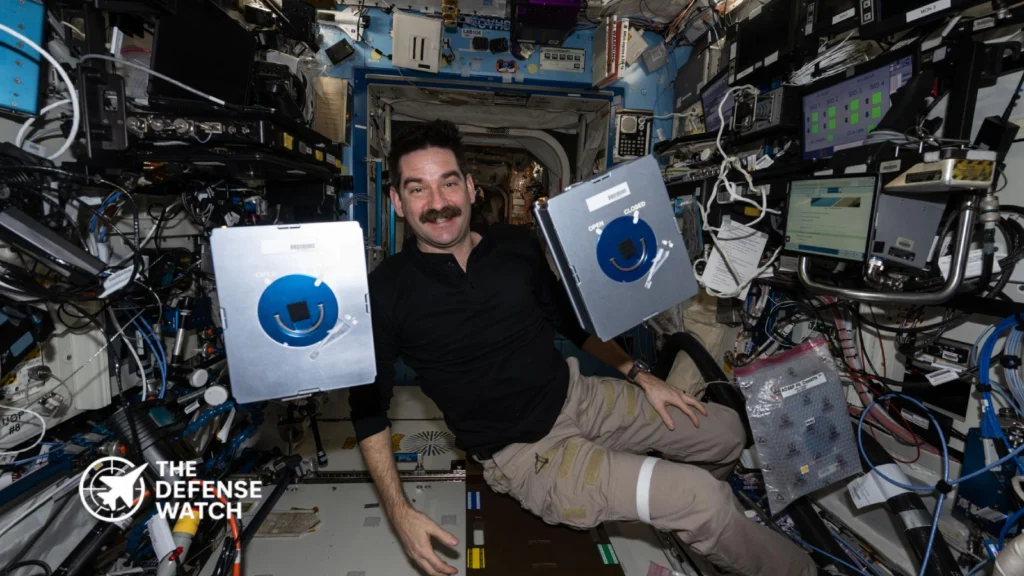
One of the more operationally significant Crew-12 activities involved metal additive manufacturing aboard the station.
NASA reports that small metal components produced in microgravity have already been returned to Earth for evaluation against parts manufactured on the ground. The longer-term objective is to determine whether crews could manufacture replacement components in space rather than waiting for a resupply spacecraft.
That capability matters because logistics become progressively more difficult as spacecraft operate farther from Earth.
On the ISS, a failed component can potentially be replaced through scheduled cargo missions. A lunar or Mars mission cannot assume the same frequency of resupply. Manufacturing capabilities therefore have potential value as part of a broader approach to spacecraft autonomy.
The technology is not yet equivalent to a fully independent orbital manufacturing capability. NASA’s description specifically identifies evaluation of printed components, meaning questions about reliability, material properties, certification and the range of parts that can be produced remain important.
That distinction matters. In-space manufacturing should be viewed as a developing logistics technology, not yet as a substitute for terrestrial industrial supply chains.
Medical Self-Sufficiency Is Another Critical Test
Crew-12 also worked with the Intravenous Fluid Generation Mini investigation, which explores production of IV fluid in microgravity.
NASA notes that commercial IV fluids have limited shelf lives and that transporting medical supplies for long-duration missions adds mass and consumes storage capacity. Producing such supplies when required could therefore become valuable on missions where resupply opportunities are limited.
For future crewed missions, this is a logistics problem as much as a medical one.
A spacecraft traveling beyond low Earth orbit needs to carry enough medical supplies for foreseeable contingencies while keeping mass and volume under control. Systems that can manufacture or regenerate critical consumables could reduce some of that burden.
The operational threshold, however, is considerably higher than simply demonstrating production. Future systems would need to demonstrate repeatability, quality control, contamination management and reliable operation under extended mission conditions.
Human Health Remains a Core Constraint on Deep-Space Operations
Crew-12’s biological research also reinforces a major limitation facing human exploration.
NASA used the station’s microgravity environment to investigate bone loss, bone marrow behavior, cartilage development and stem-cell expansion. The agency says the results could contribute to countermeasures for astronauts while also supporting medical research on Earth.
This research has particular relevance to missions beyond low Earth orbit because the ISS provides a relatively accessible environment for studying long-duration exposure to microgravity.
A future lunar or Mars crew would face a different operational environment, including greater communications delays, fewer immediate evacuation options and less access to terrestrial medical infrastructure. Technologies that improve diagnosis, treatment and biological resilience therefore have value beyond the space station itself.
Crew-12’s work should not be interpreted as solving those challenges. Instead, it contributes another set of experimental results to a much larger body of research needed before sustained human operations farther from Earth become routine.
Antibiotic Resistance Highlights the Closed-Environment Problem
Crew-12 also supported research into antibiotic-resistant bacteria through NASA’s GEARS investigation.
NASA says DNA sequencing in microgravity can help researchers examine how resilient microbes adapt to spaceflight. That information could help develop countermeasures for future spacecraft while also contributing to efforts against antibiotic resistance on Earth.
The issue has operational significance because spacecraft are closed environments. Microorganisms cannot simply be managed in the same way as they are in an open terrestrial setting, and crew health depends on maintaining controlled living conditions.
For long-duration missions, microbial monitoring therefore becomes part of the spacecraft’s life-support and medical architecture rather than simply a laboratory research activity.
What Crew-12 Says About the Commercial Crew Model
Crew-12 also provides another data point for NASA’s broader transition toward commercially operated transportation to low Earth orbit.
The mission used a SpaceX Falcon 9 and Dragon spacecraft under NASA’s Commercial Crew Program. NASA’s stated objective for the program is to provide reliable transportation to and from the space station while expanding access to low Earth orbit and supporting research and commercial activity.
The rapid transition from Crew-12 to Crew-13 illustrates the operational model NASA is pursuing. Rather than treating each crewed launch as an isolated national mission, the agency is maintaining a continuing transportation and research cycle.
That model has implications for future commercial low Earth orbit destinations. A mature transportation system needs regular launch opportunities, trained crews, recovery infrastructure, spacecraft availability and a steady pipeline of research users.
Crew-12 therefore matters not only because of what the astronauts studied, but because the mission forms part of an operating rhythm for sustained human activity in low Earth orbit.
The Defense and National Security Dimension
Crew-12 was a civil spaceflight mission, and NASA’s published material does not identify the mission as a military operation. Its direct defense contribution should therefore not be overstated.
There is nevertheless a national-security dimension to the technologies being developed.
In-space manufacturing, autonomous medical support, biological monitoring, advanced sensing and resilient spacecraft logistics are all relevant to the broader challenge of sustaining people and systems away from terrestrial infrastructure. Similar principles could eventually influence government and commercial space architectures.
The key distinction is between technology relevance and demonstrated military capability. Crew-12 provides evidence of technology development and operational experience, not proof that these systems are ready for military deployment.
That distinction is particularly important as the United States expands its reliance on commercial space capabilities. Civil research programs can generate technologies with potential dual-use applications, but the transition from laboratory demonstration to operational defense capability requires separate testing, qualification and acquisition decisions.
Crew-13 Continues the Research Pipeline
The arrival of Crew-13 means the ISS research program continues without a long interruption.
NASA says the new crew will conduct research involving human stem-cell-derived tissues, disease modeling, pharmaceutical testing, plant production and human-health studies. The mission also includes testing of an inflight diagnostic device for monitoring astronaut health.
That continuity is one of the station’s most important advantages.
Individual experiments may have limited value when considered alone. Over time, however, repeated investigations allow researchers to compare results across different crews, hardware configurations and mission conditions.
For NASA’s longer-term exploration plans, that accumulated experience may be as important as any single breakthrough.
What Happens Next
As of Oct. 5, NASA and SpaceX are targeting Crew-12’s Dragon spacecraft to undock from the ISS no earlier than 1:05 a.m. EDT on Oct. 7. A splashdown off the California coast is planned for approximately 11:25 a.m. EDT on Oct. 8, although NASA says the exact return timing and location can change as mission teams evaluate weather, sea states, spacecraft readiness and recovery conditions.
The departure will close the Crew-12 phase of Expedition 75 while leaving the ISS research program in the hands of the expanded crew.
The broader lesson from Crew-12 is less about a single experiment than about infrastructure. NASA is using low Earth orbit to test the biological, manufacturing, medical and operational systems required for humans to spend longer periods away from Earth.
For the United States and its international partners, that experience is increasingly important as human spaceflight moves from short-duration exploration toward sustained operations in lunar orbit, on the lunar surface and eventually farther into the solar system.
Crew-12’s return is therefore not simply the end of another ISS rotation. It is another transition point in the development of a more continuous and commercially supported human spaceflight system.