China Says PLA Air Defense Unit Intercepted Two New Missile Types in Drill
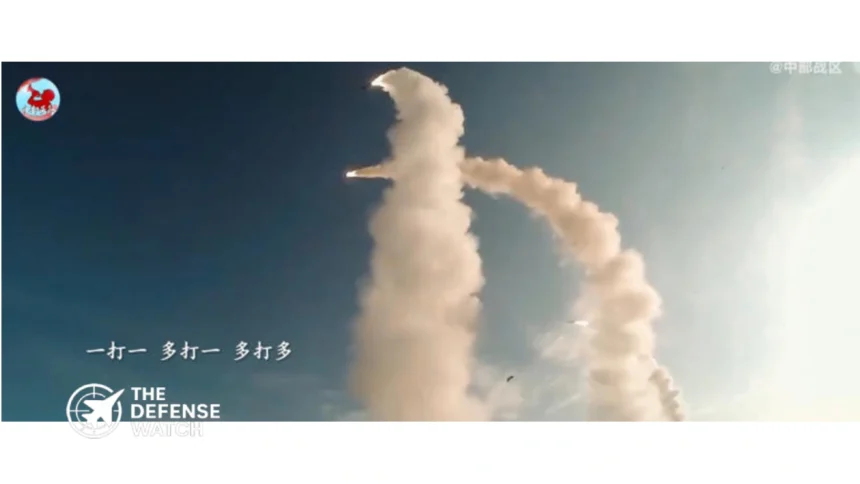
China says a People’s Liberation Army (PLA) air defense battalion intercepted two different types of incoming missiles simultaneously during a recent exercise, including one target that reportedly changed direction sharply during its approach.
- A multi-target engagement involving different missile threats
- HQ-29 adds an exo-atmospheric layer to China’s missile defense network
- HQ-9 and HQ-19 cover different interception requirements
- Mobility and logistics are part of the exercise
- China is expanding its focus beyond traditional ballistic missile defense
- What the exercise reveals, and what remains unknown
The exercise, reported by Chinese state broadcaster CCTV on November 2, involved the Shenwei Missile Battalion under the PLA Central Theatre Command Air Force. The unit operates Hongqing surface-to-air missile systems, although the report did not identify the specific interceptors used during the engagement.
CCTV described the activity as a test of a new weapon platform but did not clarify whether the new equipment involved the incoming targets or the air defense system itself.
The broadcaster also withheld the exercise location, exact date, missile types and interception results beyond its account of the engagement.
The report is notable because it comes alongside renewed Chinese publicity surrounding the country’s HQ-series air and missile defense architecture, including the relatively new HQ-29 exo-atmospheric interceptor.
A multi-target engagement involving different missile threats
According to CCTV, the Shenwei battalion received an alert indicating that multiple missiles were approaching its position.
One target reportedly made an unexpected and significant change in direction before rapidly descending toward the unit.
Shi Shidong, a member of the battalion, said personnel had been informed that the exercise would involve multiple target types, including ballistic missiles.
The reported engagement suggests that the exercise was designed to test the unit’s ability to respond to different missile trajectories and threat profiles during a compressed operational timeline.
However, the available reporting does not establish whether the targets were representative of operational ballistic missiles, maneuvering reentry vehicles, cruise missiles or other simulated threats.
Nor does it provide enough information to assess the interception probability or performance of the systems involved.
That distinction matters because successfully tracking or engaging a simulated target during a controlled exercise does not necessarily demonstrate equivalent performance against an operational missile under combat conditions.
HQ-29 adds an exo-atmospheric layer to China’s missile defense network
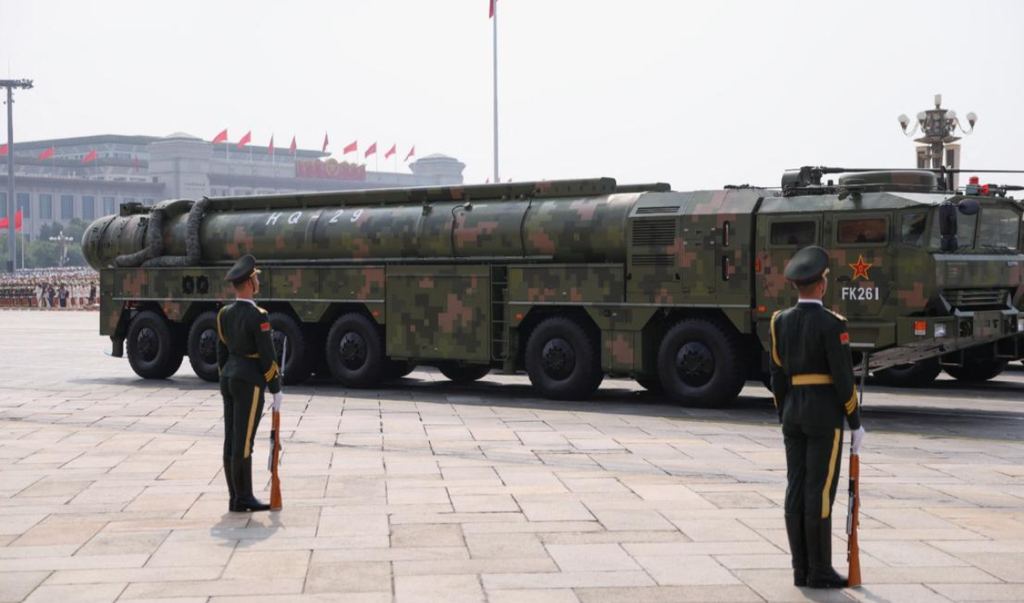
Separate CCTV videos highlighted three systems associated with the Shenwei battalion: the HQ-9, HQ-19 and HQ-29.
Their reported roles cover different portions of the air and missile defense mission.
The HQ-29 is particularly significant because it is described as an exo-atmospheric interceptor designed to engage longer-range ballistic missiles during the midcourse portion of their flight, outside Earth’s atmosphere.
The system appeared publicly during China’s 2025 military parade in Beijing, following years of reported development and testing.
Chinese military magazine Ordnance Industry Science and Technology has published estimates placing its interception altitude at up to 2,000 kilometers and its range at approximately 4,000 kilometers.
These figures should be treated as published estimates rather than independently verified operational specifications. Beijing has not released a comprehensive technical description of the interceptor’s performance.
The HQ-29’s reported role places it within China’s developing upper-tier ballistic missile defense architecture, where interception attempts can take place before an incoming missile reaches its terminal flight phase.
HQ-9 and HQ-19 cover different interception requirements
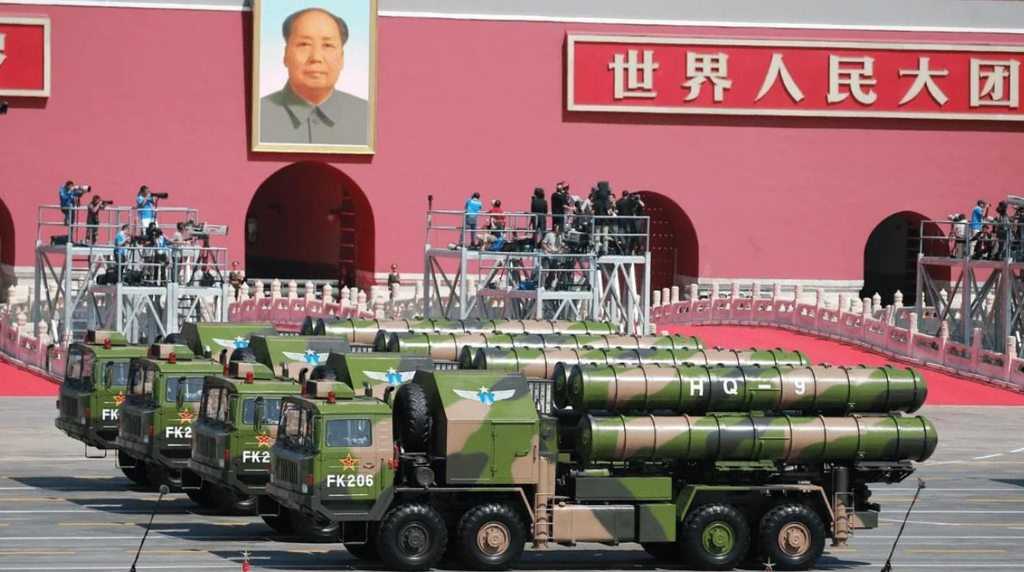
The HQ-9 is a long-range surface-to-air missile system intended to engage conventional airborne threats, including fighter aircraft, bombers and cruise missiles.
Unlike the HQ-29, its principal role is air defense rather than exo-atmospheric interception of long-range ballistic missiles.
The HQ-19 provides another layer, focusing on ballistic missile interception at high altitudes.
It is described as a system designed to engage short- and medium-range ballistic missiles during their terminal flight phase, with reported interception altitudes below 100 kilometers.
Together, the three systems illustrate China’s approach to dividing air and missile defense responsibilities across different engagement altitudes and stages of flight.
| System | Reported primary role |
|---|---|
| HQ-9 | Long-range air defense against aircraft and cruise missiles |
| HQ-19 | High-altitude interception of short- and medium-range ballistic missiles |
| HQ-29 | Exo-atmospheric interception of longer-range ballistic missiles |
The combination is intended to provide overlapping defensive coverage rather than relying on a single interceptor to address every type of threat.
However, CCTV’s reporting does not establish that all three systems participated directly in the latest interception exercise.
Mobility and logistics are part of the exercise
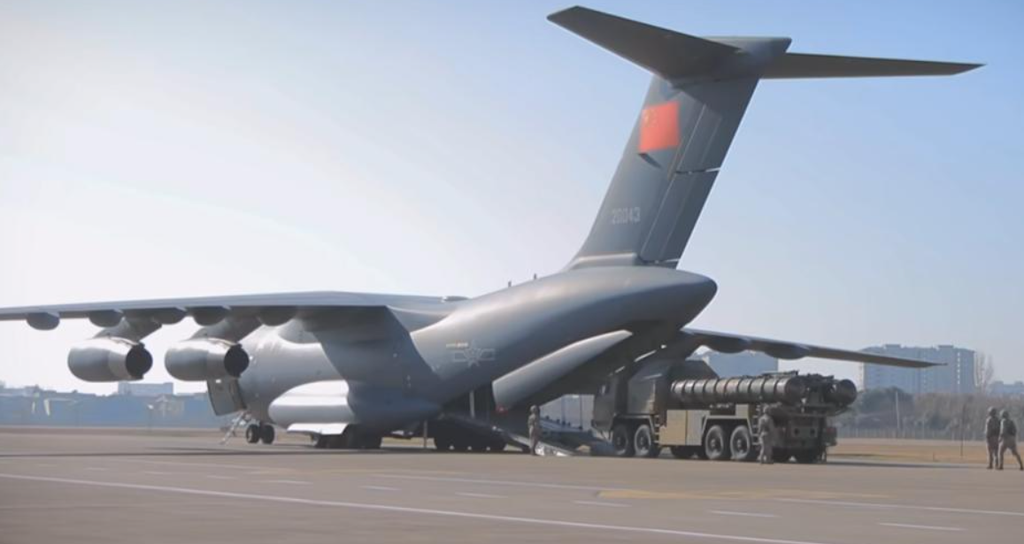
Another notable aspect of the CCTV report concerned the battalion’s ability to move its equipment over long distances.
The unit reportedly travelled thousands of kilometers before entering position during an overnight deployment operation.
Footage showed missile equipment being transported through several methods, including road-mobile launch vehicles, railway networks, Y-20 military transport aircraft and roll-on/roll-off commercial shipping vessels.
This emphasis on transportation reflects an important requirement for China’s air defense forces: the ability to relocate missile units while maintaining the equipment, personnel and support infrastructure needed for operations.
Mobile launchers can complicate an adversary’s targeting process by allowing units to change positions. However, operational mobility depends on more than launcher transport. Radar equipment, command networks, communications, reload vehicles and logistical support must also move with the force.
The reference to commercial roll-on/roll-off ships is particularly relevant to China’s broader military transportation capabilities.
The PLA has previously used civilian cargo vessels to support military transportation exercises. China’s extensive commercial shipping fleet is also viewed as a potential logistical resource in a contingency involving Taiwan.
CCTV’s presentation of the battalion’s transportation methods suggests that deployment flexibility was an important part of the exercise narrative.
It does not, however, establish that the exercise was specifically connected to a Taiwan contingency.
China is expanding its focus beyond traditional ballistic missile defense
Chinese military analyst Zhang Xuefeng told CCTV that the HQ-series systems provide multilayered air and missile defense.
He also discussed the potential integration of laser and microwave technologies to improve the PLA’s ability to counter drone threats.
The reference is significant because modern air defense forces face a wider range of targets than conventional fighter aircraft and ballistic missiles.
Low-cost unmanned aerial vehicles, coordinated drone formations, cruise missiles and maneuvering weapons can place different demands on detection, tracking and interception systems.
Using expensive interceptor missiles against inexpensive drones can also create unfavorable cost exchanges, particularly when attacks involve large numbers of relatively inexpensive targets.
Directed-energy systems, including high-energy lasers and high-power microwave weapons, are being explored by several militaries as potential options for addressing parts of this problem.
However, CCTV did not provide technical details about the laser or microwave systems mentioned by Zhang. Their deployment status, integration with the HQ missile network and operational effectiveness remain unclear.
The distinction between discussing future integration and demonstrating an operational capability is important.
What the exercise reveals, and what remains unknown
The reported interception provides another indication that the PLA is placing emphasis on multi-target engagement, mobile deployment and layered air and missile defense.
The HQ-9, HQ-19 and HQ-29 represent different components of that architecture, covering conventional air defense and different stages of ballistic missile interception.
For military planners, the ability to coordinate these capabilities could become increasingly important as potential adversaries field more diverse missile and unmanned aerial threats.
Nevertheless, several important questions remain unanswered.
China has not disclosed the identities of the two missile targets, the interceptors used, the engagement distances or the technical conditions under which the interceptions took place.
There is also no independently available evidence establishing the success rate or combat effectiveness of the reported engagement.
The exercise therefore offers insight into the PLA’s stated air and missile defense priorities, but it is not sufficient to independently assess the performance of China’s newest interceptor systems.