US Army Tests Autonomous Mine Breaching System To Protect Troops
The US Army mine breaching system under testing, known as SLICE, represents a shift toward autonomous combat engineering designed to keep soldiers out of direct danger during minefield clearance operations.
The system is being evaluated as part of ongoing efforts to modernize battlefield engineering capabilities and reduce exposure to explosive threats. Minefields remain one of the most persistent and lethal hazards in modern warfare, especially in high intensity conflicts.
- The US Army is testing the autonomous SLICE mine breaching system designed to clear explosive hazards without exposing soldiers.
- The system uses robotic platforms and remote or autonomous control to detect and neutralize mines.
- SLICE aims to reduce casualties during high risk combat engineering missions in contested environments.
- The capability supports multi domain operations where speed and survivability are critical.
- Testing reflects a broader US military push toward autonomy in frontline engineering and logistics roles.
A Safer Approach To Minefield Clearance
Traditional mine breaching operations require combat engineers to operate close to or within hazardous zones. Even with armored vehicles and specialized equipment, these missions carry significant risk.
The US Army mine breaching system changes that equation by introducing robotic and semi autonomous platforms capable of detecting, marking, and neutralizing explosive devices from a distance.
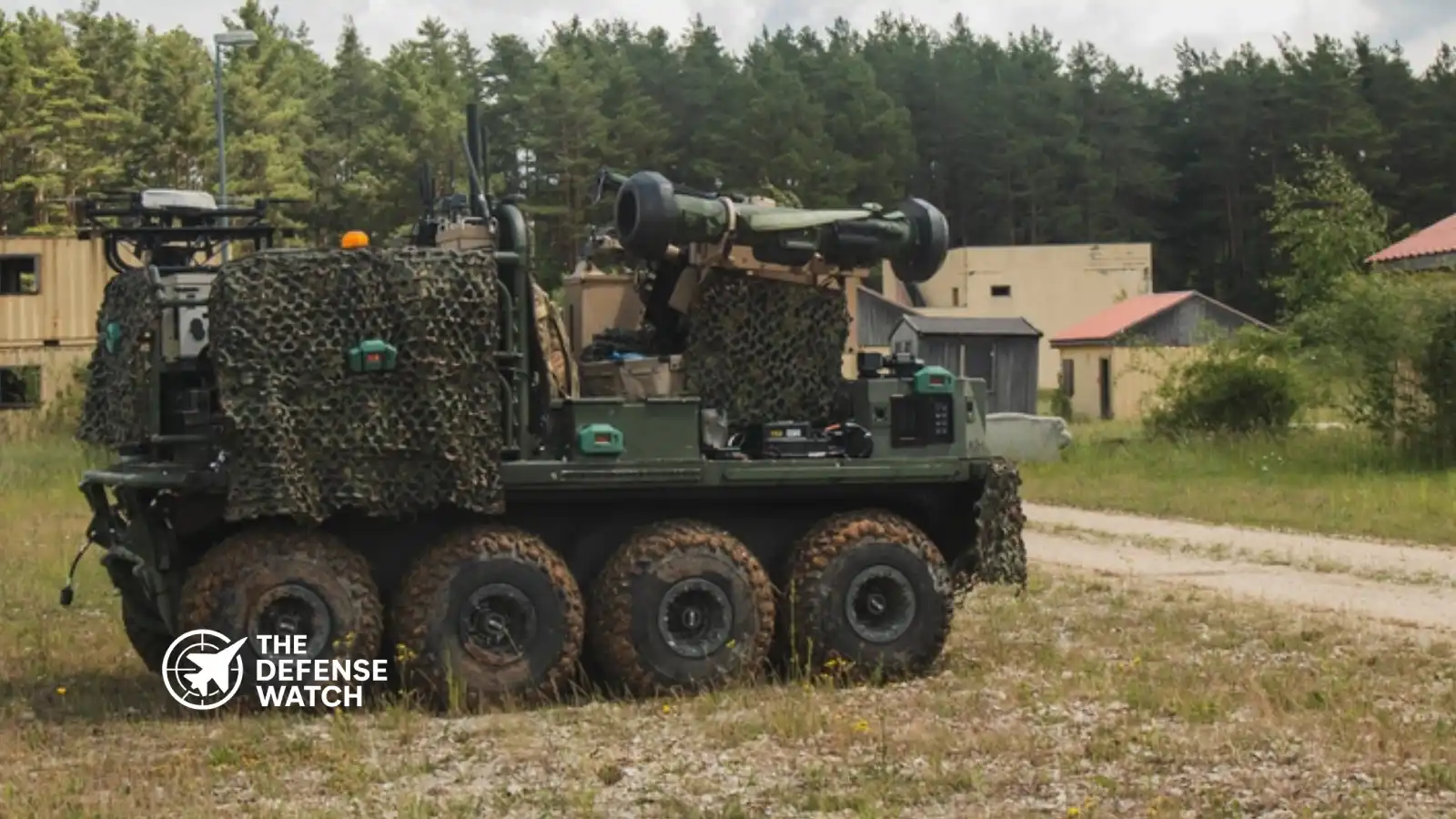
The SLICE system integrates sensors, mobility platforms, and control systems that allow operators to manage breaching tasks remotely. In some configurations, it can operate with increasing levels of autonomy, reducing the need for constant human input.
This approach aligns with broader US Army modernization priorities, particularly the push toward unmanned systems that can perform high risk tasks without putting personnel in harm’s way.
Operational Relevance In Modern Warfare
The importance of autonomous breaching systems has grown in recent years, driven by lessons from conflicts where extensive minefields and improvised explosive devices have slowed advances and caused heavy casualties.
In contested environments, especially against near peer adversaries, rapid breaching of obstacles is essential to maintain maneuver momentum. Delays in clearing minefields can expose units to artillery, drone surveillance, and counterattacks.
The US Army mine breaching system is designed to address this challenge by improving both speed and survivability. By removing soldiers from the immediate danger zone, commanders gain more flexibility in planning and executing operations.
This is particularly relevant in multi domain operations, where ground forces must coordinate with air, cyber, and space assets under constant threat.
Technology Behind The SLICE System
While specific technical details remain limited, the SLICE system is understood to combine several key components:
- Robotic ground platforms capable of operating in rough terrain
- Advanced sensors for mine detection and classification
- Remote control interfaces and autonomous navigation features
- Payloads designed to neutralize or clear explosive hazards
Such systems may also integrate with broader battlefield networks, allowing data sharing between units and improving situational awareness.
The use of autonomy in engineering roles mirrors similar trends in logistics and reconnaissance, where unmanned systems are increasingly taking on frontline responsibilities.
Strategic Implications For Future Combat
The testing of the US Army mine breaching system highlights a wider transformation in how militaries approach risk on the battlefield.
Autonomous systems are not just force multipliers, they are becoming risk reducers. By shifting dangerous tasks to machines, militaries can preserve manpower while maintaining operational effectiveness.
This trend is likely to accelerate as artificial intelligence, sensor technology, and robotics continue to mature. Future breaching operations could involve fully autonomous teams working ahead of human units, clearing paths in real time.
However, integration challenges remain. Reliability, electronic warfare resilience, and command control frameworks will all play a role in determining how quickly such systems are fielded at scale.
Balancing Innovation With Battlefield Reality
While the promise of the US Army mine breaching system is clear, its success will depend on performance in realistic combat conditions.
Minefields are often complex, with layered threats that include anti tank mines, anti personnel devices, and booby traps. Adversaries may also employ countermeasures to disrupt autonomous systems.
As a result, testing and validation will be critical. The Army’s approach appears focused on incremental development, ensuring that systems like SLICE can operate effectively alongside human engineers.