

Ukrainian Innovation Against Hypersonic Threats
Ukraine has reportedly developed a novel countermeasure against one of Russia’s most advanced weapons: the Kh-47M2 Kinzhal hypersonic missile. Ukrainian military sources reveal that the Lima electronic warfare (EW) system is capable of jamming the missile’s satellite navigation guidance by transmitting a patriotic Ukrainian anthem, “Our Father Is Bandera.” This approach disrupts the missile’s trajectory, forcing it off course and reducing the risk to civilian and military targets.
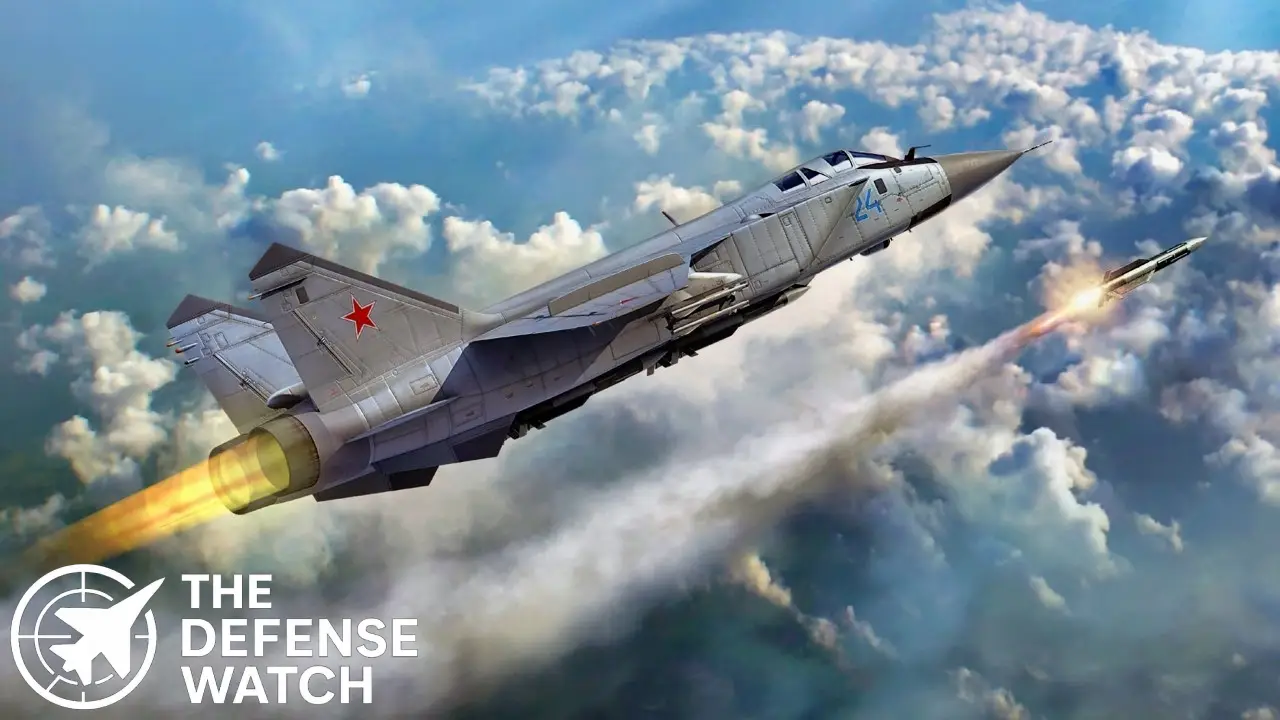
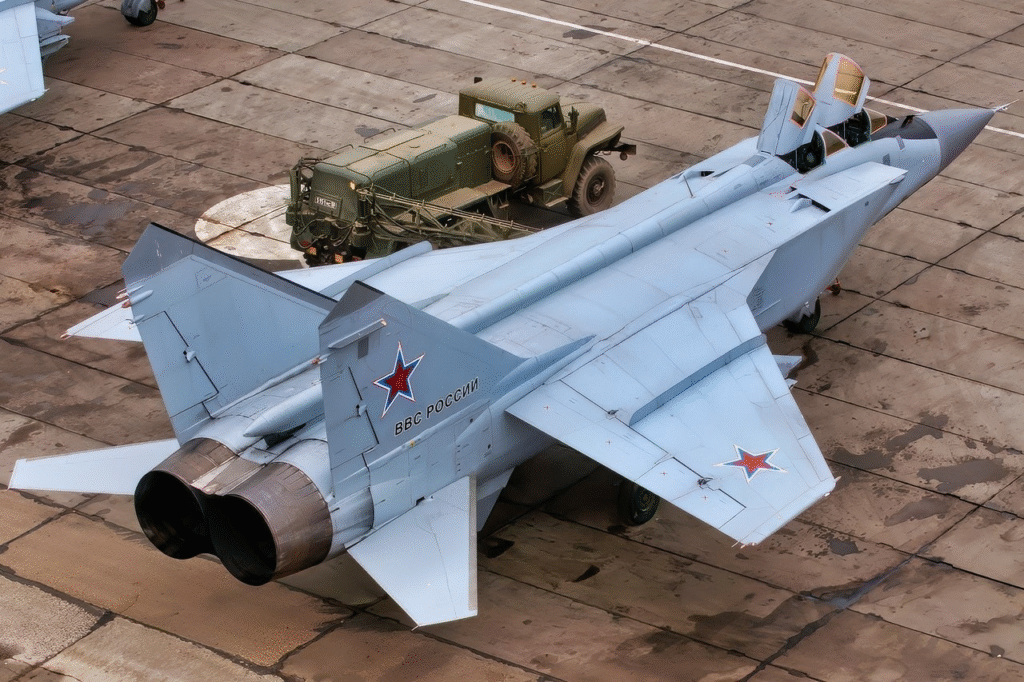
The Kinzhal, a Mach 10 air-launched derivative of the Iskander-M ballistic missile, is known for its extreme speed and maneuverability. Launched from modified MiG-31K or Tu-22M3 aircraft, the missile carries a 1,000-pound warhead and can strike targets up to 300 miles away. Its high velocity and terminal-phase evasive maneuvers—dives and lateral shifts—have significantly challenged Ukraine’s air defense, particularly Patriot missile batteries.
Russian Tactics to Evade Interception
Recent modifications to the Kinzhal’s flight profile have lowered its interception rate around Kyiv from approximately 37% in August to just 6% in September. Russian forces have employed complex maneuvers, including abrupt pull-downs and lateral jinks, often embedded in mixed missile salvos. Slower missiles in these salvos mask the hypersonic Kinzhal, making radar tracking and target prioritization more difficult for Ukrainian defenders.
Lima EW: A Creative Electronic Defense
Ukraine’s Lima EW system, initially designed to counter Russian guided bombs, has proven adaptable against the hypersonic threat. By injecting nonstandard navigational data in the form of music, the system corrupts satellite guidance signals, effectively “spoofing” the missile. Operators report that Lima’s performance surpasses that of comparable foreign systems, reflecting Ukraine’s ability to leverage asymmetric tactics against technologically superior adversaries.
Strategic and Technological Implications
The use of musical payloads in electronic warfare highlights a broader trend in modern conflict: combining digital deception with traditional defense measures. For U.S. and NATO planners, Ukraine’s success illustrates the growing importance of EW capabilities in countering high-speed hypersonic threats, which conventional missile defense systems struggle to intercept. Lima’s effectiveness may inform future research into low-cost, agile electronic countermeasures capable of disrupting advanced missile guidance.
Moreover, the incident underscores the vulnerability of even sophisticated missile systems to adaptive countermeasures. As hypersonic technology proliferates globally, the development of complementary electronic and cyber defenses will be crucial to maintaining strategic stability.
Conclusion: Forward-Looking Defense Considerations
Ukraine’s innovative approach to neutralizing Kinzhal missiles demonstrates that creative electronic warfare can alter the balance against cutting-edge threats. For U.S. defense planners, investing in agile EW solutions alongside kinetic interceptors will be essential in preparing for the next generation of hypersonic weapons. Lima’s performance may signal a shift toward integrating asymmetric countermeasures as standard practice in modern air defense.

28 comments
[…] forces have begun equipping drones with controlled reception pattern antenna systems that resist electronic warfare countermeasures, and some units reportedly carry Starlink terminals enabling real-time remote […]
[…] 2, and Arrow 3 systems—was designed primarily to counter conventional ballistic threats. Yet hypersonic missiles like Iran’s Fattah-1 pose a new and serious challenge due to their extreme speed combined with […]
[…] How NATO and U.S. defense planners adapt to the S-500 threat, possibly via tactics, electronic warfare, or new […]
[…] command-and-control architecture that links ground-based radars, airborne early-warning aircraft, electronic warfare units, and air-defense […]
[…] Tejas variants, like the Mk-1A, include upgrades such as AESA radar, advanced electronic warfare suites, and aerial refueling […]
[…] Poland’s naval forces have relied on a single, aging Soviet-designed Kilo-class submarine, the ORP Orzel. The selection of the A26 aligns with Warsaw’s broader naval modernization program, driven in part by regional tensions following Russia’s invasion of Ukraine. […]
[…] keep pace with an evolving battlefield where small drones have emerged as a serious threat. In the war in Ukraine, unmanned aerial systems — including first-person-view (FPV) attack drones — have reportedly […]
[…] steady progress toward developing unmanned systems that can conduct sensing, strike support, electronic warfare, and distributed […]
[…] unmanned aerial vehicles (UAVs) on Russian territory have become more frequent as the war between Russia and Ukraine continues. Both sides have developed and deployed a range of drones, with Ukraine increasingly […]
[…] S6 platform is built to accept a range of mission payloads including kinetic warheads, electronic warfare modules, or cyber and sensor packages without extensive integration into host platforms. At an […]
[…] attack missions, and state-linked observers have suggested it may also be equipped or adaptable for electronic warfare or decoy functions, broadening its utility across mission […]
[…] Air Battle Managers• Maritime Patrol and Response Officers• Weapon Systems Officers• Electronic Warfare […]
[…] with electronic warfare and reconnaissance […]
[…] also repeated Russias long standing warning that any Western military personnel deployed to Ukraine would be considered legitimate military […]
[…] incident follows a pattern of Russia targeting critical infrastructure to strain Ukraine’s logistical and social resilience. Grid operators and engineers continue to prioritize restoration […]
[…] a geopolitical perspective, the opening of US Ukraine Russia trilateral talks reflects growing concern among global powers about the long term stability of the conflict. Military aid flows, sanctions pressure, and […]
[…] NATO officials also praised Azerbaijan’s role as an energy partner whose gas exports support energy independence of several NATO Allied states, particularly in light of Russia’s full scale invasion of Ukraine. […]
[…] is widely known within Ukraine for his work analyzing Russian drone communications, radio-frequency threats, and countermeasures. His appointment signals a […]
[…] command and control with its operator. This hard-wired link makes the system resistant to electronic warfare and radio jamming, a growing concern on the modern […]
[…] footage suggests Kyiv is seeking to demonstrate capability and resolve. The campaign underscores Ukraines focus on asymmetric methods to offset Russias numerical advantages in aircraft and […]
[…] The strike highlights two parallel trends shaping the air war over Ukraine. […]
[…] flights over the Black Sea, with some charging that American surveillance operations have aided Ukraine in targeting Russian military […]
[…] labelled a hostile operation. Analysts note that such incidents have sparked debate within Russian military and security communities over the effectiveness of protective measures for senior […]
[…] confirmation fits into a broader pattern of Ukrainian strikes aimed at Russian military assets far from the front lines. Over recent months, Ukraine has increasingly focused on airbases, […]
[…] February 8 shootdown demonstrates Ukraine’s ability to identify and neutralize new Russian adaptations quickly, limiting their operational […]
[…] to support ground-launched interceptors or hybrid systems that accommodate these round types.Ukraine has already demonstrated an ability to adapt diverse missile stocks to fill gaps in its defense network, working with partners to combine foreign components […]
[…] deployment expansion represents Britain’s direct response to escalating Russian military activity in the Arctic, where Moscow has steadily increased its military infrastructure and […]
[…] for Arctic defense. The alliance framed this approach as addressing legitimate concerns about Russian military activity and Chinese strategic interests while maintaining respect for Danish […]