• Home
  • About
  • Defense Systems
  • Manufacturer
  • Comparisons
  • Compare 
  • Tools
TheDefenseWatch.com
  • Aerospace & Aviation
  • Military & Ordnance
  • Naval & Maritime
  • Cyber & Space Defense
  • Policy & Strategy
  • Global News
  • Tools Library
    • Smart Calculator
    • Drone Flight Time Calculator
    • Drone Range Calculator
    • Counter-Drone Jammer Effective Range Calculator
    • Counter-Battery Radar Detection Calculator
    • Artillery Fire Correction Calculator
    • Thermal Camera Detection Range Calculator
    • Missile Range & Time-of-Flight Calculator
    • Radar Detection Range Calculator
    • FPV Strike Drone Payload vs Range Calculator
    • Loitering Munition Endurance Calculator
    • Sniper Ballistic Drop & Windage Calculator
    • Bullet Drop Calculator
    • U.S. Army Combat Fitness Test (ACFT) Calculator
    • Military Pension Calculator
    • Military Retirement Calculator
    • Military Pension Calculator
    • Large Number Calculator
Font ResizerAa

TheDefenseWatch.com

The Defense Watch | U.S. & Global Defense News, Analysis & Military Updates

Search
  • Home
  • About
  • Defense Systems
  • Manufacturer
  • Comparisons
  • Compare 
  • Tools

Stay Updated

Get the latest update

Subscribe

Explore

  • Drone
  • Fighter Jets & Military Aircraft
  • Hypersonic Weapons
  • Aircraft Carriers
  • Strategic History & Missions
  • Tools Library
Home » France Unveils STRATUS Supersonic Missile To Counter Advanced Air Defenses
Aerospace & AviationFighter Jets & Military Aircraft

France Unveils STRATUS Supersonic Missile To Counter Advanced Air Defenses

Daniel Mercer / Defense & Aerospace Analyst
Last updated: September 12, 2026 6:50 pm
Daniel Mercer / Defense & Aerospace Analyst
Share
6 Min Read
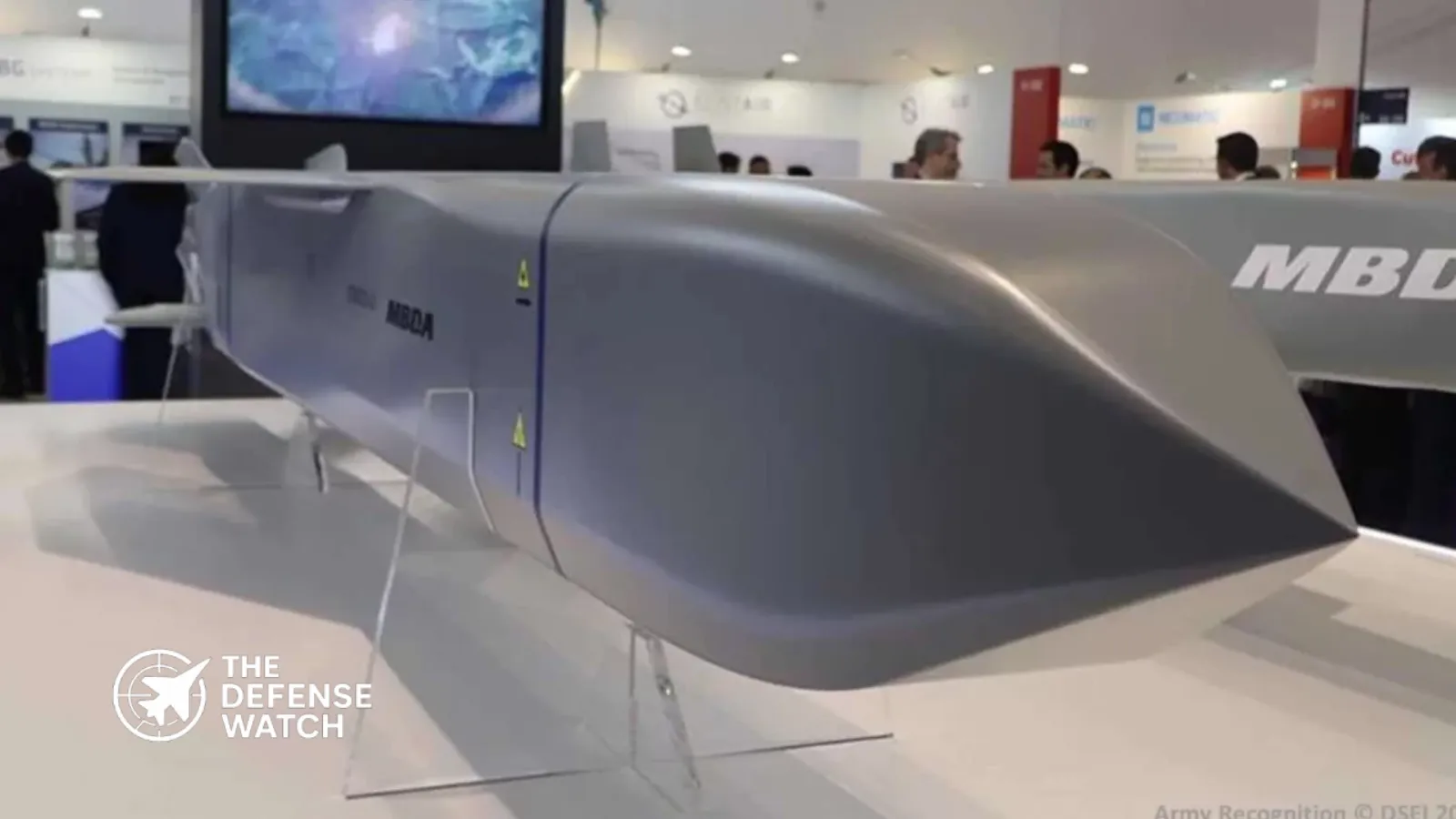
France STRATUS supersonic missile
SHARE

France STRATUS Supersonic Missile Signals Shift In Deep Strike Doctrine

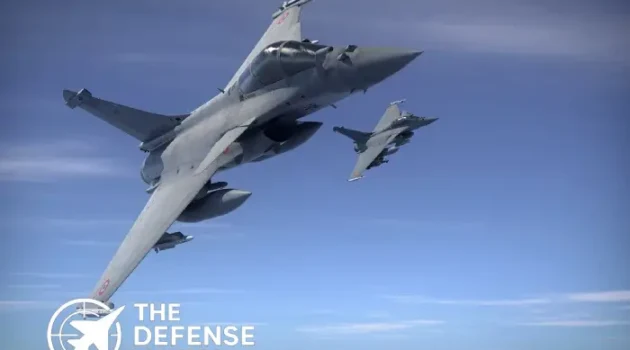
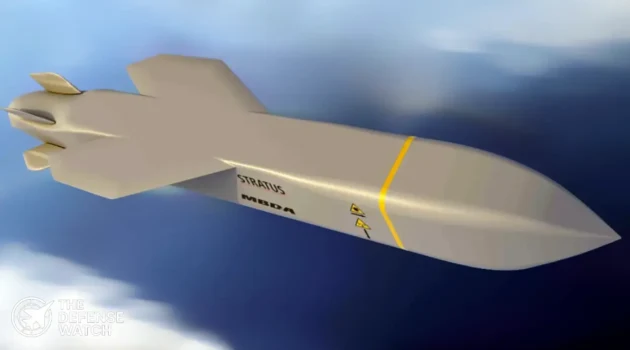
France STRATUS supersonic missile development marks a significant step in enhancing the country’s ability to penetrate advanced air defense networks. The program, tied to the Rafale F5 upgrade and future combat aviation concepts, reflects a broader push to ensure survivable strike capabilities against increasingly sophisticated threats.

Contents
  • France STRATUS Supersonic Missile Signals Shift In Deep Strike Doctrine
  • The Big Picture
  • What’s Happening
  • Why It Matters
  • Strategic Implications
  • Competitor View
  • What To Watch Next
  • Capability Gap
¦ KEY FACTS AT A GLANCE
  • France is developing the STRATUS supersonic missile for penetration of advanced air defense systems.
  • The missile is expected to integrate with Rafale F5 and future next generation combat aircraft.
  • STRATUS targets suppression and destruction of enemy air defenses in high threat environments.
  • Development aligns with France’s broader future combat air system and long term strike roadmap.
  • The program reflects growing European focus on survivable deep strike capabilities against peer adversaries.

The Big Picture

European air forces face a rapidly evolving threat environment shaped by layered and integrated air defense systems. Systems deployed by near peer competitors now combine long range surface to air missiles, advanced radar networks, and electronic warfare capabilities.

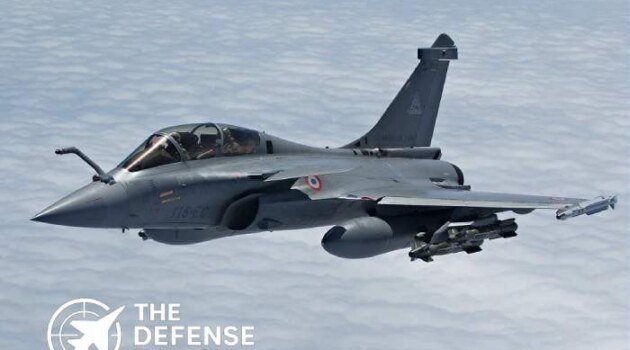
France is responding by investing in next generation strike systems that can operate inside contested airspace. The STRATUS supersonic missile fits within a wider modernization effort that includes the Rafale F5 standard and the Future Combat Air System (FCAS).

  • STRATUS Cruise Missile

    STRATUS Cruise Missile

    • Guidance System: Advanced INS/GPS with terrain-following / sea-skimming navigation; ECM-resistant architecture
    • Maximum Speed: Subsonic (STRATUS LO) / Supersonic (STRATUS RS)
    • Launch Compatibility: Ships (Mk 41 VLS), Aircraft, Naval Platforms, Future Land-Launch Systems
    • Warhead Technology: Modular conventional HE, penetration, or fragmentation warheads
    • View Details →
    7.8

    This shift mirrors similar efforts by the United States and NATO allies to prioritize suppression of enemy air defenses and long range precision strike in high intensity conflict scenarios.

    What’s Happening

    France is developing the STRATUS supersonic missile as a new air launched weapon designed to defeat modern air defense systems. The missile is being tailored for integration with the Rafale F5 standard and potentially future combat aircraft.

    • Rafale Fighter Jet

      Rafale Fighter Jet

      • Generation: 4.5th
      • Maximum Speed: Mach 1.8
      • No. of Engines: 2
      • Radar Range: 200+ km
      • View Details →
      8.0

      The missile is expected to operate at supersonic speeds, allowing it to reduce engagement windows for enemy defenses while maintaining a high probability of penetration. Its primary role will focus on suppression and destruction of enemy air defenses, often referred to as SEAD and DEAD missions.

      French defense planners aim to field the system as part of a broader package that includes upgraded sensors, electronic warfare systems, and networked targeting capabilities.

      Why It Matters

      Modern air defense systems have extended engagement ranges and improved interception capabilities, making traditional strike profiles increasingly risky. Aircraft operating without stand off or high speed penetration weapons face higher survivability challenges.

      The STRATUS supersonic missile directly addresses this problem by combining speed, precision, and survivability. Supersonic flight reduces reaction time for interceptors, while advanced guidance likely improves targeting accuracy against high value air defense nodes.

      • Dassault Rafale F3R/F4 Fighter Jet

        Dassault Rafale F3R/F4 Fighter Jet

        • Generation: 4.5 Generation
        • Maximum Speed: Mach 1.8+
        • No. of Engines: 2
        • Radar Range: 200+ km (AESA)
        • View Details →
        8.6

        This capability strengthens France’s ability to conduct independent operations and contribute to NATO missions in contested environments. It also aligns with ongoing efforts to maintain technological parity with global competitors.

        Strategic Implications

        France’s investment in the STRATUS supersonic missile enhances its deterrence posture by reinforcing its ability to neutralize enemy air defenses early in a conflict.

        • STRATUS Cruise Missile

          STRATUS Cruise Missile

          • Guidance System: Advanced INS/GPS with terrain-following / sea-skimming navigation; ECM-resistant architecture
          • Maximum Speed: Subsonic (STRATUS LO) / Supersonic (STRATUS RS)
          • Launch Compatibility: Ships (Mk 41 VLS), Aircraft, Naval Platforms, Future Land-Launch Systems
          • Warhead Technology: Modular conventional HE, penetration, or fragmentation warheads
          • View Details →
          7.8

          A credible SEAD capability enables follow on air operations, including strike, reconnaissance, and air superiority missions. This expands operational flexibility and reduces reliance on allied support.

          The program also underscores Europe’s growing emphasis on sovereign defense capabilities. By developing indigenous strike systems, France reduces dependency on external suppliers and strengthens its defense industrial base.

          Competitor View

          Russia and China have both invested heavily in layered air defense systems designed to deny access to contested airspace. These include long range missile systems, integrated command networks, and advanced radar technologies.

          From their perspective, systems like the STRATUS supersonic missile represent a direct challenge to air defense survivability. High speed penetration weapons complicate interception timelines and increase the burden on defensive networks.

          Regional actors with advanced air defense systems may interpret the development as part of a broader Western push to restore air dominance in contested environments.

          What To Watch Next

          Testing and validation will determine the operational effectiveness of the STRATUS supersonic missile. Key milestones include flight testing, integration with Rafale F5 platforms, and evaluation against realistic air defense scenarios.

          Procurement timelines will likely align with Rafale F5 development schedules, with initial operational capability expected later in the decade.

          Further details on range, guidance systems, and payload configuration will provide clearer insight into the missile’s role within France’s strike doctrine.

          Capability Gap

          France developed the STRATUS supersonic missile to address a clear operational gap in penetrating modern integrated air defense systems.

          Traditional subsonic cruise missiles and legacy strike profiles face increasing interception risks. STRATUS aims to close this gap by offering higher speed and improved survivability.

          • STRATUS Cruise Missile

            STRATUS Cruise Missile

            • Guidance System: Advanced INS/GPS with terrain-following / sea-skimming navigation; ECM-resistant architecture
            • Maximum Speed: Subsonic (STRATUS LO) / Supersonic (STRATUS RS)
            • Launch Compatibility: Ships (Mk 41 VLS), Aircraft, Naval Platforms, Future Land-Launch Systems
            • Warhead Technology: Modular conventional HE, penetration, or fragmentation warheads
            • View Details →
            7.8

            However, supersonic systems may still face challenges against advanced layered defenses, especially those equipped with high speed interceptors and electronic warfare capabilities. Integration with broader networked warfare systems will remain critical to mission success.
TAGGED:air defense suppressionEuropean militaryFrance defenseRafale F5supersonic missile
Share This Article
Facebook Copy Link Print
ByDaniel Mercer / Defense & Aerospace Analyst
Follow:
Daniel Mercer is a defense and aerospace analyst at TheDefenseWatch.com covering military aviation, aerospace technology, unmanned systems, air warfare, and defense procurement. His reporting uses official documents, government and military statements, company announcements, and other public sources.
Leave a Comment

Leave a Reply Cancel reply

Your email address will not be published. Required fields are marked *

New Arrivals

  • Boeing VC-25B Presidential Aircraft Boeing VC-25B Presidential Aircraft
  • SM-3 Block IB Missile SM-3 Block IB Missile
  • USS Abraham Lincoln Aircraft Carrier USS Abraham Lincoln Aircraft Carrier
  • M142 HIMARS M142 HIMARS
  • Terrex S5 Infantry Vehicle Terrex S5 Infantry Vehicle
  • A-29 Super Tucano Aircraft A-29 Super Tucano Aircraft
  • DSAR 15 Rifle DSAR 15 Rifle

Recent Compares

  • Tejas vs Gripen: Key Differences and Capabilities Tejas vs Gripen: Key Differences and Capabilities View Comparison →
  • Tejas vs MiG-21 Bison: How India Replaced Its Iconic Supersonic Fighter Tejas vs MiG-21 Bison: How India Replaced Its Iconic Supersonic Fighter View Comparison →
  • F-35 vs F-16: Stealth, Sensors and Combat Roles F-35 vs F-16: Stealth, Sensors and Combat Roles View Comparison →
  • Tejas Fighter Jet vs F-16 Fighting Falcon: Capability Compared Tejas Fighter Jet vs F-16 Fighting Falcon: Capability Compared View Comparison →
  • Rafale Fighter Jet vs F-16 Fighting Falcon : Which Fighter Has the Edge? Rafale Fighter Jet vs F-16 Fighting Falcon : Which Fighter Has the Edge? View Comparison →
  • Su-57 Fighter Jet vs J-20 Fighter Jet: Stealth and Air Combat Compared Su-57 Fighter Jet vs J-20 Fighter Jet: Stealth and Air Combat Compared View Comparison →
  • Mirage 2000 vs Tejas Mk1A: Legacy Combat Power vs Indigenous Modernization Mirage 2000 vs Tejas Mk1A: Legacy Combat Power vs Indigenous Modernization View Comparison →
  • Rafale Fighter Jet vs F-22 Raptor: Which Air Dominance Fighter Has the Edge? Rafale Fighter Jet vs F-22 Raptor: Which Air Dominance Fighter Has the Edge? View Comparison →
  • Tejas Fighter Jet vs. Rafale Fighter Jet: India’s Indigenous Fighter Meets France’s Proven Multirole Combat Aircraft Tejas Fighter Jet vs. Rafale Fighter Jet: India’s Indigenous Fighter Meets France’s Proven Multirole Combat Aircraft View Comparison →
  • F-22 Raptor vs. F-35 Joint Strike Fighter: Which Fifth Generation Fighter Has the Edge? F-22 Raptor vs. F-35 Joint Strike Fighter: Which Fifth Generation Fighter Has the Edge? View Comparison →

Recent Posts

  • USS Oregon Visits Norway as U.S. Navy Maintains High North Presence
  • Lockheed Martin Unveils PAC-3 Edge Interceptor for U.S. Army
  • Northrop Grumman Completes B-2 Spirit of Kitty Hawk Overhaul
  • Army Report Finds Systemic Failures Behind Fatal 2025 Midair Collision
  • Lockheed Martin to Supply Black Hawk Training Systems to Philippine Air Force

You Might Also Like

VXE30 Stalker drone
Aerospace & AviationDrones & UAVs

U.S. Army Begins VXE30 Stalker Drone Training to Enhance Reconnaissance Capabilities

November 26, 2025
Flight School Next Phase III
Aerospace & AviationFighter Jets & Military Aircraft

Lockheed Martin Advances to Phase III in Army Flight School Next, Selects Robinson R66 NxG as IERW Trainer

February 5, 2026
Renault drone production
Aerospace & AviationDrones & UAVs

Renault to Build Long-Range Military Drones for French Forces

January 20, 2026
Russian Su-57D twin-seat stealth fighter concept designed for drone control and manned-unmanned teaming missions.
Aerospace & AviationStealth Technology

Russia Unveils Su-57D Twin-Seat Stealth Fighter To Expand Drone Command Capability

September 12, 2026

Logo

Copyright © 2026 TheDefenseWatch.com

Helpful Links

  • Home
  • About Us
  • Privacy Policy
  • Terms of Use / Disclaimer
  • U.S. Privacy Notice – CCPA Compliance

Defense Systems

  • Defense Systems
  • Comparisons 
  • Manufacturer
  • Tactical Calculators

Popuplar

Which 5 Air Forces Possess the Costliest Fighter Jet Fleets in the World
Evolving Strategic Value: Carrier Strike Groups in the Indo-Pacific’s Future Security Architecture
Autonomous Weapon Systems Spark U.S. Ethics Debate Amid Rapid Military AI Integration

We report on developments involving military forces, governments, defense companies, research organizations, and security institutions around the world. 

Welcome Back!

Sign in to your account

Username or Email Address
Password

Lost your password?