(adsbygoogle = window.adsbygoogle || []).push({});Executive Summary:
Russia has appointed Lieutenant General Alexander Chaiko, a senior officer with extensive experience in Syria and Ukraine, as the new commander of the Russian Aerospace Forces (VKS).
The leadership change places an army officer with operational combat experience at the head of one of Russia’s most important military branches, responsible for air, missile defense, and space operations.
Russia Appoints New Aerospace Forces Commander
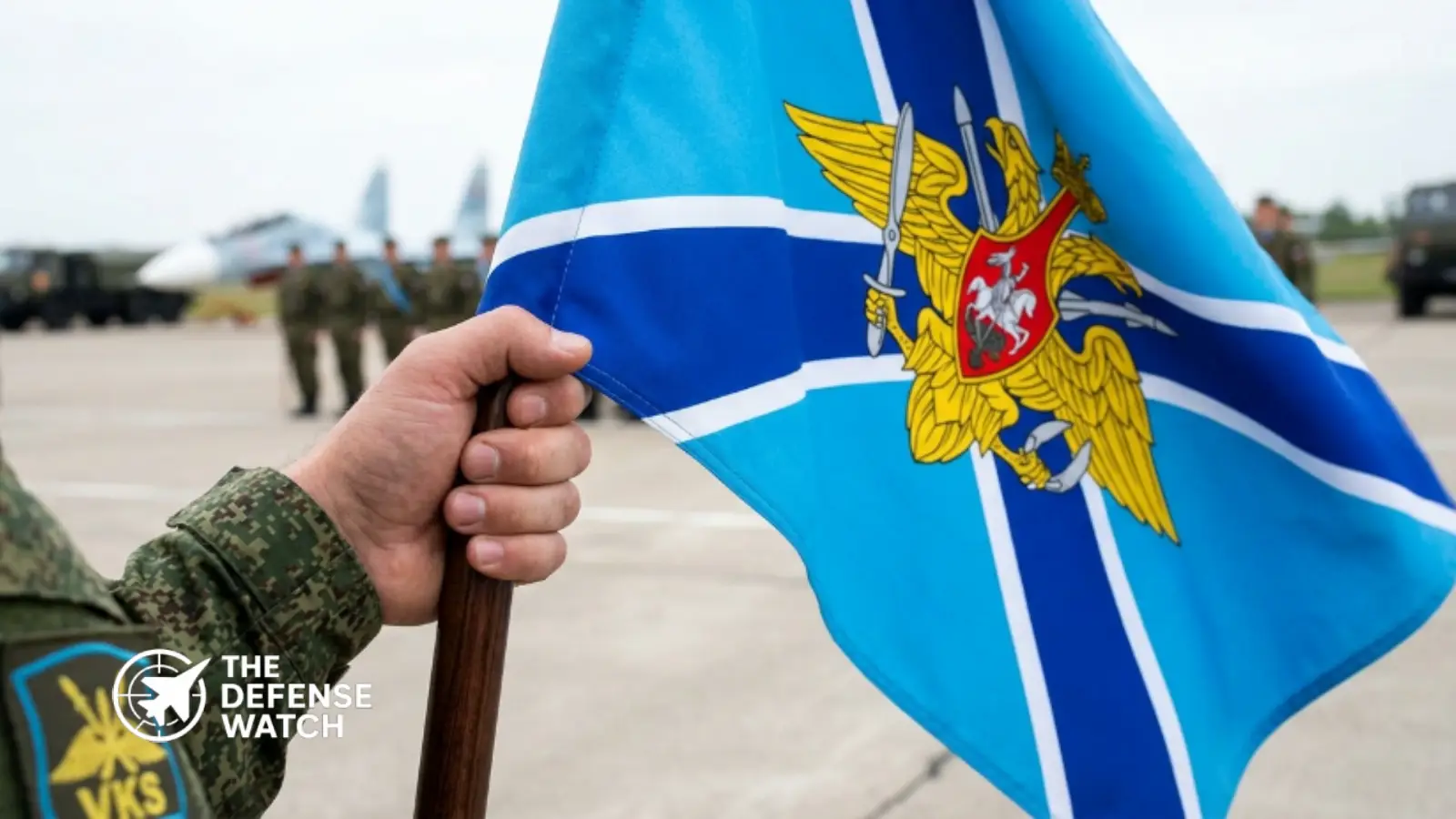
Russia has appointed Lieutenant General Alexander Chaiko as the new commander of the country’s Aerospace Forces (VKS), according to the Russian Ministry of Defense. The appointment was made through a presidential decree signed by Russian President Vladimir Putin and was formally announced on June 10.
The Russian Aerospace Forces represent one of Moscow’s most strategically important military organizations, integrating the Russian Air Force, air and missile defense units, and space forces into a unified command structure.
Chaiko previously served as deputy chief within Russia’s General Staff structure and has held several senior operational commands throughout his military career. The Russian Defense Ministry said he also spent nearly a year commanding Russian expeditionary forces deployed in Syria.
(adsbygoogle = window.adsbygoogle || []).push({});Why The Appointment Matters
The appointment is notable because Chaiko comes primarily from a ground forces background rather than an aviation career path.
Traditionally, commanders of the Russian Aerospace Forces have risen through air force, air defense, or aerospace command structures. Installing an officer with extensive operational experience in Syria and Ukraine suggests Moscow may be placing increased emphasis on combat coordination across multiple military domains rather than purely aviation expertise.
The Russian Aerospace Forces have played a central role in Russia’s military operations over the past decade. Beyond air combat missions, the service oversees strategic missile warning systems, national air defense networks, military satellites, and long-range strike capabilities.
As a result, leadership decisions within the VKS carry significance well beyond the aviation sector.
(adsbygoogle = window.adsbygoogle || []).push({});Chaiko’s Operational Experience
Alexander Chaiko is one of Russia’s most experienced senior commanders.
According to the Russian Defense Ministry, he commanded Russian forces in Syria during Moscow’s military intervention supporting former Syrian President Bashar al-Assad. Russia’s Syrian deployment, which began in 2015, became a major testing ground for Russian aircraft, precision weapons, air defense systems, and expeditionary operations.
Chaiko also held command responsibilities within Russia’s Eastern Military District and served in senior positions within the General Staff.
His experience spans conventional military operations, multinational force coordination, and long-duration expeditionary deployments, areas that have become increasingly important as Russia seeks to integrate air, ground, and space capabilities.
(adsbygoogle = window.adsbygoogle || []).push({});Impact On Russia’s Military Strategy
The Russian Aerospace Forces remain heavily engaged in supporting military operations while simultaneously overseeing strategic deterrence missions.
Military analysts have long viewed the VKS as a cornerstone of Russia’s modern military doctrine because it combines airpower, missile defense, and space-based capabilities under a single command structure.
Chaiko’s appointment may indicate a continued emphasis on joint operations, where airpower is closely integrated with ground force requirements. His background suggests a commander familiar with coordinating large-scale military campaigns rather than focusing solely on aviation operations.
This leadership transition also comes as Russia continues to assess lessons learned from recent conflicts and adapts its military structures for future operational demands.
(adsbygoogle = window.adsbygoogle || []).push({});Russia’s Aerospace Forces At The Center Of Modern Warfare
The Russian Aerospace Forces have undergone significant transformation since their creation in 2015 through the merger of the Air Force and Aerospace Defense Forces.
Today, the service oversees:
- Combat aviation operations
- Strategic bomber forces
- Integrated air and missile defense networks
- Military space assets
- Early warning systems
- Satellite operations
The organization has become central to Russia’s ability to project power, defend its territory, and maintain strategic deterrence capabilities.
By appointing Alexander Chaiko, Moscow is placing an experienced operational commander at the helm of a force that sits at the intersection of airpower, missile defense, and space operations.
Analysis
The selection of Chaiko reflects a broader trend within modern militaries, where operational experience across multiple domains is increasingly valued alongside technical specialization.
Russia’s decision to elevate a commander with extensive battlefield and expeditionary experience suggests the Kremlin views future military challenges through a joint-force lens. Rather than treating air, ground, and space operations as separate functions, modern conflicts increasingly require synchronized command structures capable of integrating all three.
For the Russian Aerospace Forces, that may prove to be the most significant aspect of Chaiko’s appointment.