

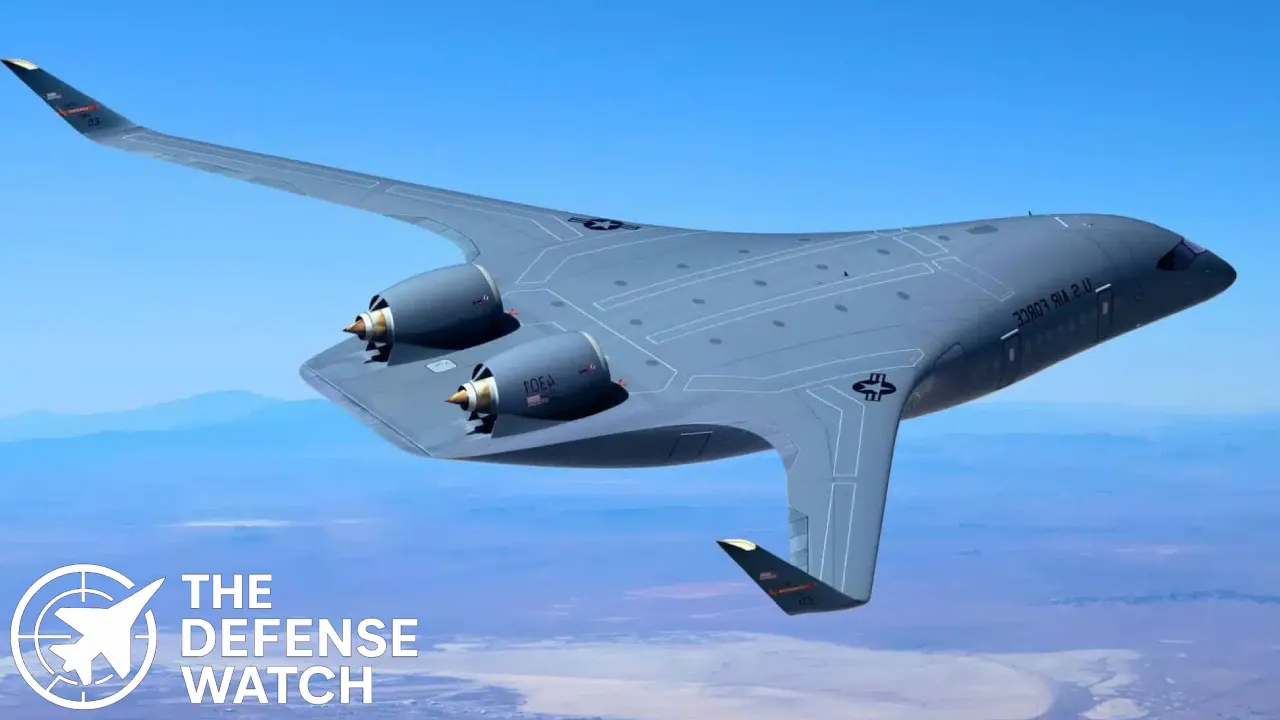
On 10 November 2025, new reporting revealed that People’s Republic of China is pushing ahead with development of a proposed heavy-lift transport aircraft capable of carrying 120 metric tons of cargo over approximately 6,500 kilometres without refuelling. The initiative, still at the conceptual stage, is described as having the potential to exceed the capabilities of the U.S. Air Force’s C-5M Super Galaxy and give Beijing independent access to global air mobility.
Background: Strategic Airlift and the Chinese Context
Strategic airlift — the ability to move large payloads of personnel, equipment and supplies over long distances — remains a cornerstone of expeditionary military logistics. Western heavy-lift platforms such as the U.S. Air Force’s C-5M (with a payload around 127 tons but a more limited range) or the Ukrainian-origin An‑124 Ruslan have long dominated this domain. For China, which currently fields the Y‑20 heavy transport aircraft (approximate payload ~66 tons, range ~4,500 km), the jump to 120 tons and 6,500 km would represent a marked enhancement.
The proposed aircraft reportedly employs a blended wing body (BWB) configuration — a design integrating wing and fuselage into a unified lifting surface, offering potential aerodynamic and volume efficiencies. Western aerospace research (notably by NASA) has studied BWB designs for years, but China appears poised to field this concept at full military scale.
Details of the Concept and Design Features
According to the reporting:
- The aircraft is projected to carry 120 metric tons of cargo over ~6,500 km without refuelling.
- Maximum take-off weight (MTOW) is estimated at about 470 tons.
- Design features include a blended wing body structure, V-tail stabilizers, wingtip extensions, and top-mounted or wing-mounted engines optimized for reduced turbulence and improved aerodynamics.
- The capability to operate from semi-prepared runways of about 2,600 meters is cited, which would allow operations from austere or contested locations.
In terms of strategic mobility, the article holds that such an aircraft would “nearly double” China’s current Y-20 payload, and expand reach by around 40%. One analysis states that while the Y-20 carries ~66 tons over ~4,500 km, this new concept approaches 120 tons and 6,500 km.
No prototype has been publicly shown to date, and official confirmation from Chinese authorities appears absent. The development appears to be in a modelling, research and early design phase, although aerospace institutes tied to China’s defense industrial base (such as Aviation Industry Corporation of China – AVIC) are assumed to be involved.
Strategic and Geopolitical Implications
From a strategic perspective, the development of a 120-tonne strategic airlifter would support China’s ambition to reduce reliance on overseas bases or forward staging infrastructure. The article posits that Beijing could begin global deployments of heavy equipment, armored vehicles or mobile command systems directly, including to regions such as East Africa, Central Asia or Pacific island chains — without the necessity of foreign basing rights.
Yet, analysts caution that despite the mobility capability, China’s limitations in forward basing and allied logistics networks may still constrain effective global operations in the near term.
Another dimension: beyond military logistics, the platform could serve dual-use roles — such as strategic airlift for humanitarian relief, disaster response, or mobile infrastructure deployment. The article notes that China’s Y-20 flew aid during the COVID-19 pandemic; a 120-tonne heavy airlifter could expand that capability.
Variant potential is also raised: such a heavy-lift platform might evolve into tanker, AWACS or command-and-control variants, akin to how the Y-20 is developing tanker (YY-20) and airborne warning (KJ-3000) versions.
Expert / Policy Perspective
While specific quotes from named experts are not present in the available reporting, general expert commentary suggests that China’s move into ultra-heavy strategic airlift signals a broader shift in logistics and force-projection planning. The shift from regional to global reach aligns with China’s expanding interest in expeditionary operations and infrastructure investment (e.g., the Belt and Road Initiative). The fact that such an aircraft remains conceptual does not diminish its potential implications — design lead time for heavy military transport platforms is long, and early modelling gives a window into China’s future priorities.
Policy-wise, Western air forces, used to decades of dominance in strategic airlift, may view this development as part of the evolving global balance in mobility and logistics — particularly in contested environments or where access is denied. From a procurement-planning viewpoint, heavy airlift remains a key enabler of force-projection and allied logistics support; an emerging Chinese capability would merit close monitoring.
Closing / What’s Next
In sum, China’s announcement of a proposed 120-tonne heavy transport aircraft with intercontinental range marks a significant shift in the landscape of strategic air mobility. If the project progresses from concept to prototype and eventually into fielding, it would substantially increase Beijing’s ability to project heavy forces over long distances and operate more autonomously from foreign basing constraints.
For now, the aircraft remains at the design and modelling phase, and many technical, financial and operational hurdles lie ahead. Key next steps will include whether China publicly demonstrates a prototype, confirms production plans, reveals variant roles (tanker, AWACS, etc.), and how soon the airframe could become operational — perhaps in the late 2020s or beyond.

15 comments
[…] standards and enhanced interoperability. The C-390 is positioned between smaller turboprop transports and larger heavy airlifters, delivering speed and medium-lift capacity in one […]
[…] Turkey, the grounding of the C-130 fleet has immediate implications for logistical readiness, strategic airlift capability and participation in allied missions. The delay or suspension of transport operations […]
[…] Roads Organisation (BRO) began constructing the 2.7-km paved runway in 2023, designed to support transport aircraft, logistics missions, unmanned systems, and potentially even fighter operations under favorable […]
[…] also serves as a strategic message to China, demonstrating that Washington is investing in systems that complicate any potential military […]
[…] increased participation of the US Army Secretary signals an alignment of defense policy, military logistics, alliance structures, and negotiation mechanisms. It also reflects Ukraine’s continued reliance […]
[…] infrastructure, and key locations such as the port of Rotterdam, Europe’s largest port and a strategic node for military logistics. […]
[…] The destroyer vs frigate debate comes up often when modern navies announce new ship programs or deployments. Both vessels look similar at first glance. Both carry missiles, radars, helicopters, and advanced sensors. Yet their roles, size, and combat focus differ in important ways. Understanding the difference between a destroyer and a frigate helps explain how navies balance firepower, cost, and global reach. […]
[…] Chengdu Aircraft Corporation. Two prototypes have been seen flying together, a notable step in any advanced aircraft program and a sign that China is pushing ahead publicly with its next-generation jet […]
[…] During that earlier period, the United States surged aerial refueling tankers, C seventeen strategic airlift aircraft, and multiple fighter squadrons into the region to sustain long range strike and air dominance […]
[…] firm fixed price task order was awarded to Advanced Concepts Enterprises Inc., based in Fort Walton Beach, Florida, and covers a broad range of mission […]
[…] aircraft. Over time, the new Super Hercules is expected to become the backbone of Mexico’s heavy airlift […]
[…] 1994 by CEO Christopher Beskar while he was a university student, the company has promoted numerous advanced aircraft concepts over three decades without producing a flyable prototype of any original […]
[…] mission was conducted using RAF transport aircraft optimized for long range and austere environment operations. While specific aircraft details were […]
[…] and strengthens international maritime law enforcement capabilities. Partner nations gain access to advanced technologies and operational concepts that improve their ability to secure territorial waters and exclusive economic […]
[…] maintenance crews, spare parts, and base infrastructure must scale accordingly. The presence of strategic airlift aircraft suggests ongoing sustainment rather than a short term […]