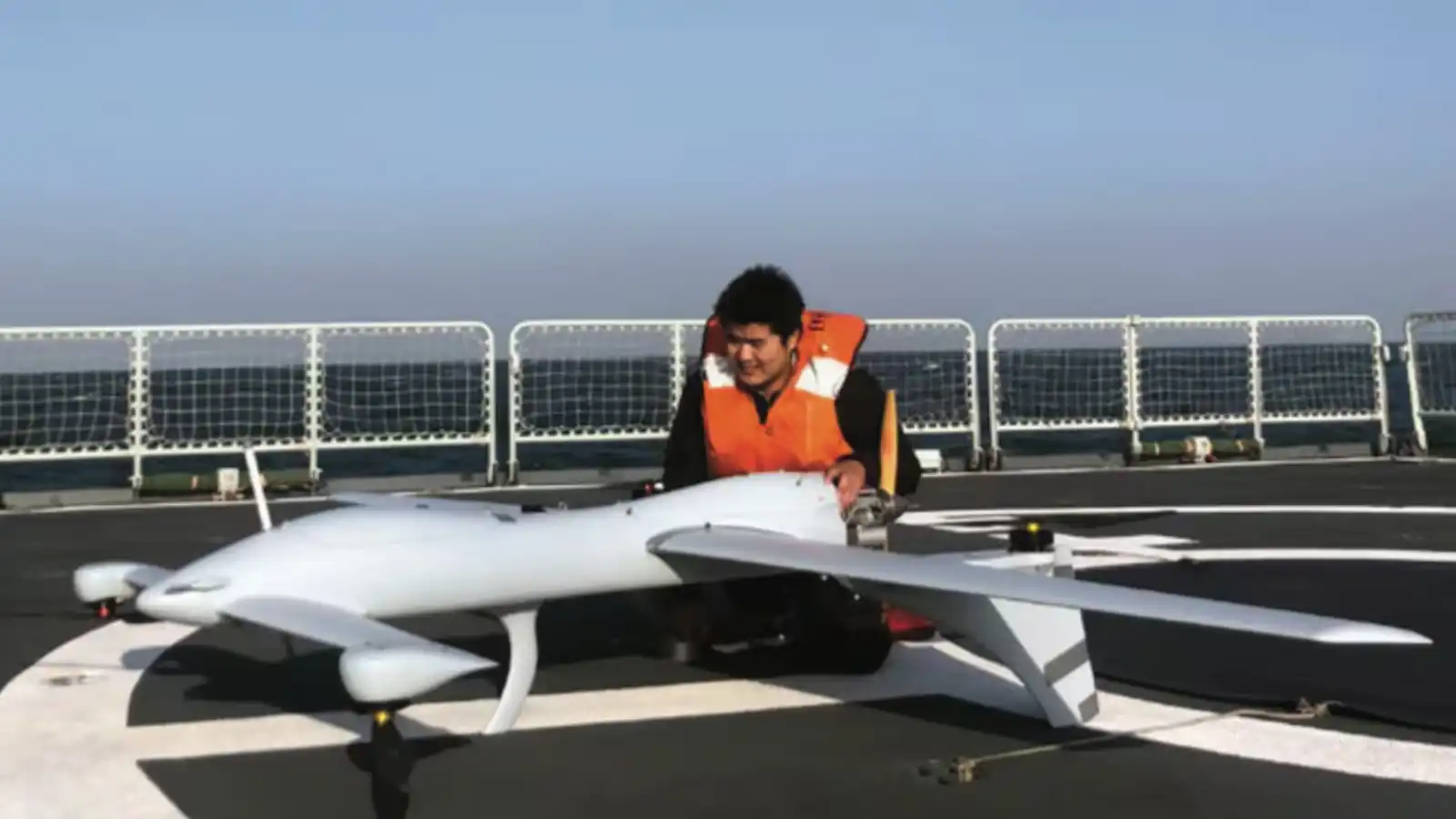
The case adds to growing U.S. scrutiny of academic research ties connected to China’s military drone sector.
Executive Summary:
U.S. federal investigators have accused a former University of Michigan research scholar of concealing ties to a Chinese drone company allegedly linked to the People’s Liberation Army. The case reflects growing American concern over research security, academic partnerships, and the transfer of dual-use aerospace technologies tied to China’s military modernization.
Former University Of Michigan Researcher Accused Of Concealing Chinese Military Drone Links
A former University of Michigan researcher is facing federal accusations after U.S. authorities alleged he concealed involvement with a Chinese military drone company while working and traveling in the United States.
According to a criminal complaint, Chinese national Chuan Wang allegedly misrepresented his employment history and denied involvement in military drone development connected to the People’s Republic of China.
Federal investigators claim Wang co-founded Tianxun Chuangxin Technology, a company described in court filings as a manufacturer of unmanned aerial vehicles and drones supporting the Chinese military. Authorities allege Wang falsely denied participation in military-related aerospace projects during questioning by U.S. Customs and Border Protection officers in 2023.
The case is the latest example of heightened U.S. scrutiny surrounding Chinese-linked academic researchers, aerospace technology transfers, and dual-use drone innovation.
Federal Investigation Focused On Drone Development
Investigators say Wang initially entered the United States in 2012 under a J-1 research visa to conduct aerospace research at the University of Michigan. Court documents indicate his stated research involved aeroelastic wing design and radio-controlled aircraft development.
Authorities later alleged that Wang’s professional background and company affiliations changed repeatedly in visa-related filings over several years. According to investigators, those records included references to engineering and technology firms connected to UAV development in China.
The FBI investigation reportedly intensified after Wang was interviewed at Detroit Metropolitan Airport while preparing to board a flight to China in July 2023. During the interview, investigators said Wang provided inconsistent answers regarding Tianxun and his engineering work. Federal agents later seized and reviewed his mobile phone.
According to the complaint, investigators discovered thousands of files allegedly related to drone design, manufacturing, and sales. Authorities also cited online promotional materials and Chinese-language articles describing Wang as a co-founder of a drone manufacturer serving Chinese military customers.
One message referenced in the complaint allegedly showed confirmation of a payment tied to a bureau associated with the Chinese military.
As of publication, Wang had reportedly not yet been arraigned on charges related to making false statements to federal investigators.
Growing U.S. Concern Over Academic Research Security
The investigation comes amid broader concerns in Washington about the transfer of sensitive aerospace, AI, and drone-related research through academic channels.
In recent years, U.S. lawmakers, intelligence officials, and defense agencies have increasingly warned about China’s military-civil fusion strategy, which seeks to integrate civilian technological innovation into military modernization programs.
The Pentagon and Congress have expanded oversight of federally funded university research, particularly involving artificial intelligence, aerospace engineering, unmanned systems, and advanced materials.
The University of Michigan has faced multiple federal investigations and criminal cases involving Chinese nationals since 2023. Several previous cases involved allegations ranging from unauthorized photography of military facilities to biological material smuggling investigations.
While many U.S. officials argue stronger research security measures are necessary, critics have also warned against broad profiling of Chinese researchers and academics.
The debate reflects a wider policy challenge facing American universities and defense agencies: balancing open scientific collaboration with national security concerns tied to emerging technologies.
Why Drone Technology Remains A Strategic Concern
The allegations surrounding Chinese military drone ties arrive as unmanned systems continue to reshape modern warfare and intelligence operations.
China has rapidly expanded its domestic drone industry over the past decade, producing both commercial and military UAV platforms for surveillance, reconnaissance, electronic warfare, and strike missions. Chinese drone manufacturers have also become major exporters across Asia, Africa, and the Middle East.
U.S. defense officials increasingly view advanced drone technologies, including autonomous navigation, AI-assisted targeting, anti-jamming systems, and long-endurance UAV designs, as strategically sensitive areas vulnerable to technology transfer.
Academic aerospace research involving lightweight airframes, flight controls, propulsion systems, and autonomous operations often carries dual-use implications, meaning technologies developed for civilian applications can also support military systems.
That overlap has placed universities under greater pressure to strengthen disclosure requirements, foreign funding transparency, and vetting procedures for international research partnerships.
Broader Implications For U.S.-China Competition
The Wang investigation highlights the increasingly confrontational environment surrounding U.S.-China technological competition.
Washington has expanded export controls, tightened investment restrictions, and increased scrutiny of Chinese-linked research activity tied to advanced aerospace, semiconductors, artificial intelligence, and defense technologies.
At the same time, U.S. defense officials remain concerned that China’s military modernization strategy relies heavily on acquiring foreign expertise and dual-use innovation through commercial, academic, and civilian channels.
The case may further intensify calls for tighter oversight of university research programs connected to sensitive aerospace and drone technologies.
For defense planners, the issue extends beyond one individual investigation. It reflects a broader struggle over who controls the next generation of autonomous systems, military AI, and advanced unmanned aerial capabilities.