

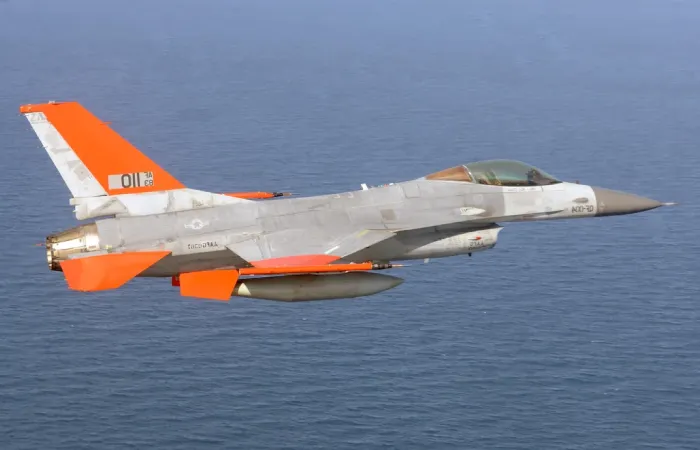
The U.S. Air Force has officially received the final QF-16 target drone, cementing its capability to conduct realistic live-fire training operations for the next decade. The milestone delivery ensures continuous access to a sophisticated aerial target system, critical for preparing pilots and units for modern combat scenarios.
Background
The QF-16 is a conversion of retired F-16s into remotely piloted target drones. Operated by the Air Force’s 82nd Aerial Targets Squadron, the drone allows for safe, realistic, and flexible live-fire training. With increasing reliance on precision-guided munitions and advanced air defense systems, the QF-16 provides a platform for testing weapons systems and improving pilot readiness in a controlled, yet realistic, environment.
Drone Specifications and Capabilities
Each QF-16 drone retains the aerodynamic profile and flight capabilities of the original F-16, including supersonic speeds and advanced maneuverability. The drones are equipped with telemetry and guidance systems to simulate enemy aircraft during exercises. Their use allows pilots to engage high-speed, maneuverable targets, mirroring real-world aerial combat scenarios without risking human lives.
Operational Impact
The delivery of the final QF-16 means the Air Force can sustain a decade of training continuity. “These drones give our pilots the most realistic target experience possible, enhancing combat readiness and operational confidence,” said an Air Force spokesperson. The QF-16’s advanced capabilities also support testing and evaluation of air-to-air and surface-to-air weapons systems.
Training and Readiness Enhancements
Beyond standard training, the QF-16 fleet supports advanced mission rehearsals, tactics development, and integration of new weapons systems. Pilots gain experience against high-performance targets in a range of scenarios, from simple interception exercises to complex multi-domain engagements. This ensures that the U.S. Air Force maintains a competitive edge against evolving aerial threats.
Looking Ahead
With the final delivery, the Air Force secures long-term training capacity, ensuring that both legacy and next-generation aircraft can be tested against realistic targets. The QF-16 program reinforces the importance of investment in live-fire training infrastructure and unmanned systems for sustained operational excellence.


4 comments
[…] air bases, prompting security reviews and investigations. In early October, as many as fifteen drones were observed over the Elsenborn military training area, though the origin and operators of these UAVs remain […]
[…] control in remote areas. While the new government has pledged to counter extremist groups, its security forces remain unevenly trained and […]
[…] peer competitors and non-state actors who have demonstrated increasing sophistication in employing drone technology against U.S. interests domestically and […]
[…] award also reflects changes in how the Defense Department organizes and fields counter-drone technology, with JIATF-401 acting as a central hub to streamline procurement and deployment of urgent […]