











@2026 – All Right Reserved. TheDefenseWatch.com
- Home
- Catalog
- Missiles & Precision Weapons
- Ghadr Missile
Ghadr Missile
Full Specifications
1. General Information
| Name / Designation | Ghadr 1 / Qadr 1 |
| Type / Role | Medium Range Ballistic Missile, strategic strike |
| Country of Origin | Iran |
| Manufacturer | Iran’s Aerospace Industries Organization, associated with Hemmat Missile Industries |
| Service Entry / Year Introduced | 2007 |
| Operational Status | Deployed, although open source assessments differ on status |
2. Performance & Range
| Range | Approximately 1,600 to 1,950 km |
| Speed | Not reliably published |
| Ceiling / Altitude Limit | Not publicly established |
| Accuracy (CEP) | Approximately 300 m, according to reported assessments |
| Warhead Type | Conventional high explosive; other payload configurations have been reported |
3. Guidance & Targeting
| Guidance System | Inertial / strap down guidance |
| Targeting Mode | Preplanned ballistic trajectory |
| Launch Platform Compatibility | Road mobile TEL |
| Seeker Type | No conventional terminal seeker publicly confirmed |
4. Physical Characteristics
| Length | Approximately 15.86 to 16.6 m |
| Diameter | Approximately 1.25 to 1.38 m |
| Wingspan | Not reliably published |
| Launch Weight | Approximately 19,000 kg |
| Propulsion | Single stage liquid propellant |
5. Warhead & Payload
| Warhead Weight | Approximately 750 kg |
| Explosive Type | Conventional high explosive and other reported payload configurations |
| Detonation Mechanism | Not publicly confirmed |
| Payload Options | Conventional; reports have raised the possibility of other payloads, but operational nuclear deployment is not confirmed |
6. Operational Use & Capabilities
| Operational Range Type | Medium |
| Deployment Platform | Ground |
| Target Types | Fixed strategic and military targets |
| Combat Proven | Combat use is not reliably established in open sources |
| Users / Operators | Iran |
PROS
- Medium range capability
- Road mobile deployment
- Improved guidance compared with earlier Shahab 3 versions
- Approximately 750 kg payload
- Extended reach for regional strike missions
CONS
- iquid propulsion increases launch preparation requirements
- Exact performance figures remain uncertain
- Large missile signature
- Vulnerable to advanced missile defense systems
- Limited publicly verified information on accuracy and operational availability
Ghadr Missile: Iran’s Medium Range Ballistic Missile
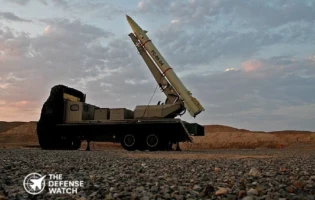
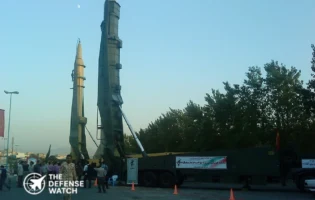
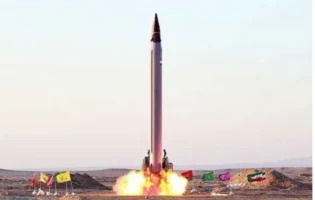
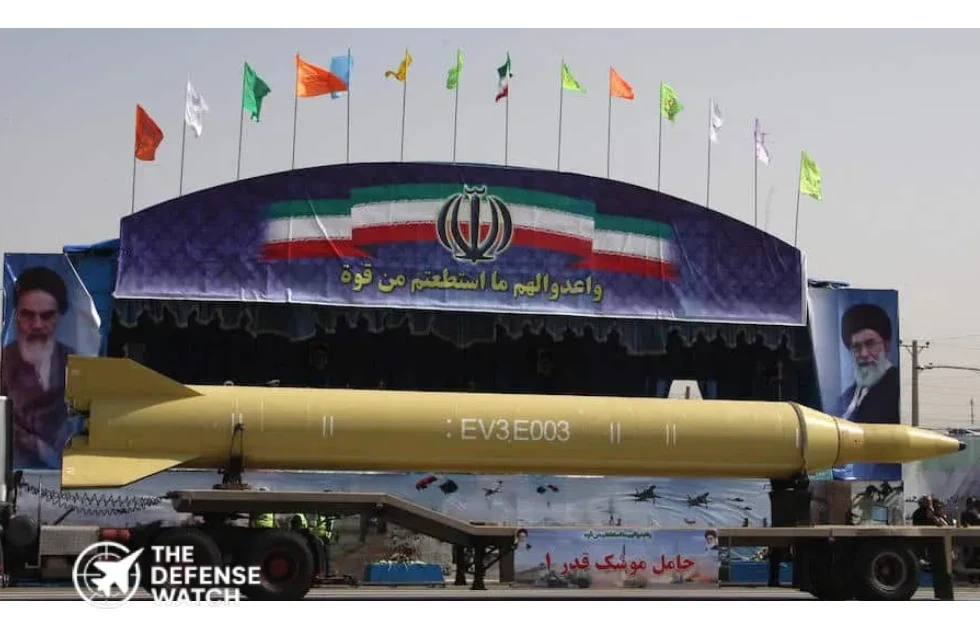
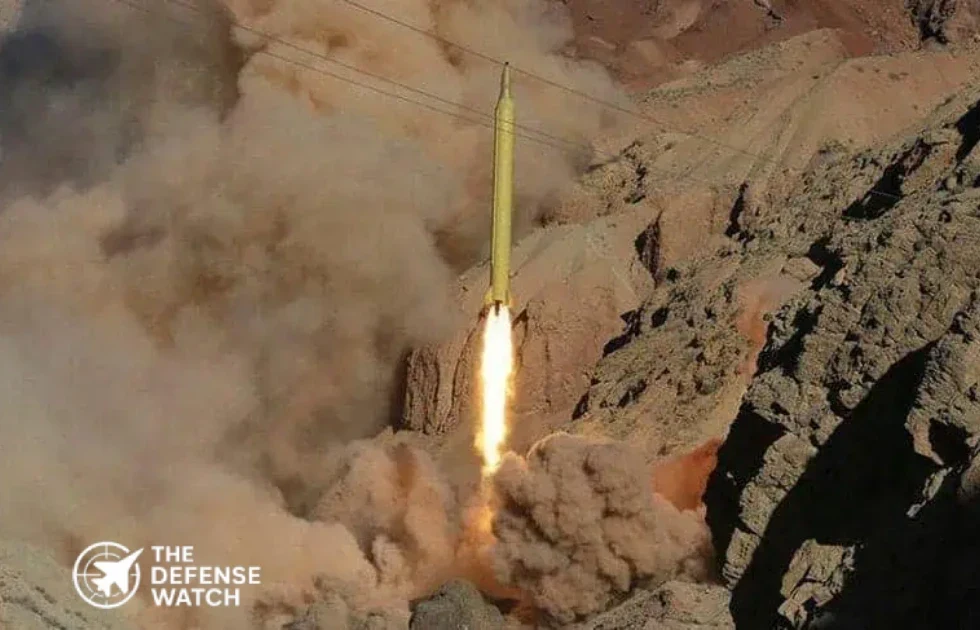
The Ghadr, also written Qadr or Ghadr 1, is an Iranian medium range ballistic missile derived from the Shahab 3 family. Iran publicly displayed the missile in 2007, presenting it as an upgraded system with greater range and improved performance. Open source assessments generally classify the Ghadr 1 as a road mobile, single stage, liquid fueled ballistic missile.
The missile is designed for conventional strategic strike missions against targets at medium distances. Its extended range compared with earlier Shahab 3 configurations gives Iran the ability to threaten targets well beyond its immediate region. Estimates vary because Iranian missile specifications are not consistently disclosed. CSIS lists a range of approximately 1,600 to 1,950 km, while other assessments use about 1,600 km as a practical figure.
Manufacturer
The Ghadr is associated with Iran’s domestic ballistic missile industry, particularly the Aerospace Industries Organization and Hemmat Missile Industries complex. Its development incorporated the Shahab 3 design while introducing changes to the airframe, fuel capacity, reentry vehicle, and guidance system.
Speed and Range
The Ghadr has a reported range of roughly 1,600 to 1,950 km and carries an estimated payload of about 750 kg. Reliable open sources do not provide a definitive maximum speed figure, so a precise Mach number should not be presented as established fact. Its ballistic flight profile means the reentry vehicle reaches very high velocity during atmospheric reentry.
Cost and Price
Iran has not publicly released a verified unit price for the Ghadr missile. Therefore, there is no reliable public acquisition cost suitable for a product listing. Manufacturing costs are also difficult to estimate because information about Iranian production rates, components, and procurement remains limited.
Reviews
Disclaimer Note
The information provided on TheDefenseWatch.com is for general informational purposes only. While we strive to ensure the accuracy, completeness, and timeliness of our content regarding defense and aerospace products, technologies, and specifications, we cannot guarantee that all information is 100% accurate or up-to-date due to the evolving nature of military technology and classified data.TheDefenseWatch.com does not warrant the reliability, suitability, or availability of the information for any specific purpose. Users are advised to consult official sources, such as manufacturers, government publications, or defense agencies, for precise and verified data before making decisions based on our content.We are not affiliated with any defense manufacturers, governments, or military organizations mentioned. Opinions, reviews, and ratings reflect expert analysis but are subjective and should not be considered endorsements. TheDefenseWatch.com is not responsible for any errors, omissions, or consequences arising from the use of this website’s content.External links are provided for convenience and do not imply endorsement. TheDefenseWatch.com reserves the right to update or modify content without prior notice. By using this website, you agree to our Privacy & Cookies Policy.

New Arrivals
Popular Comparisons
-
 Su-57 Fighter Jet vs J-20 Fighter Jet: Stealth and Air Combat Compared
View Comparison →
Su-57 Fighter Jet vs J-20 Fighter Jet: Stealth and Air Combat Compared
View Comparison → -
Mirage 2000 vs Tejas Mk1A: Legacy Combat Power vs Indigenous Modernization
View Comparison →
-
Rafale Fighter Jet vs F-22 Raptor: Which Air Dominance Fighter Has the Edge?
View Comparison →
-
Tejas Fighter Jet vs. Rafale Fighter Jet: India’s Indigenous Fighter Meets France’s Proven Multirole Combat Aircraft
View Comparison →
-
F-22 Raptor vs. F-35 Joint Strike Fighter: Which Fifth Generation Fighter Has the Edge?
View Comparison →
-
F-35A vs. F-22 Raptor: Which U.S. Stealth Fighter Dominates Modern Air Combat?
View Comparison →
-
AGM-114 Hellfire vs. AGM-179 JAGM: Which U.S. Precision Missile Is Better?
View Comparison →
-
Patriot (PAC-3) vs. THAAD: Complete Missile Defense System Comparison, Capabilities, Range, and Strategic Roles
View Comparison →
-
AIM-120 AMRAAM vs. AIM-9X Sidewinder: Complete Air-to-Air Missile Comparison, Range, Speed, and Combat Roles
View Comparison →
-
BGM-109 Tomahawk vs. AGM-158 JASSM: Which Long Range Precision Strike Missile Offers Greater Strategic Advantage?
View Comparison →
- Global Missile Tests: From the V-2 to Hypersonic Weapons

- Does Iran Have Nuclear Weapons? The 2026 Threshold Reality Explained
- UK Expands F-35 Fleet With £2.2 Billion Investment and First F-35A Fighters
- Sweden Secures $729 Million HIMARS Deal To Expand Long-Range Fires
- 9mm Ammunition: Why Militaries Still Use the 9×19mm Cartridge
- Loyal Wingman Drones Explained: MQ-28 Ghost Bat, XQ-58 Valkyrie, and the Race for Collaborative Combat Aircraft
- Lockheed Martin Positions PAC-3 ACE For Battlefield Use As Lower-Cost Patriot Interceptor
- Aveo Engineering Group Brings High-Speed Counter-UAS Interceptors to Future Forces 2026
- Ukraine Seeks EU Funding for First PAC-3 Patriot Missile Purchase
- STARK Acquires Raydiant RF To Expand Electronic Warfare Capabilities