Why Missile Tests Matter
Missile tests are one of the clearest indicators of how military technology evolves from an experimental concept into an operational strategic capability. Since Nazi Germany’s V-2 program during World War II, missile development has progressed through increasingly sophisticated generations of ballistic missiles, submarine launched ballistic missiles, cruise missiles, maneuverable reentry vehicles and hypersonic weapons.
- Why Missile Tests Matter
- Key Takeaways
- Germany and the V-2: The Beginning of the Ballistic Missile Era
- Soviet Missile Tests: From the R-7 to Modern Strategic Weapons
- United States Missile Tests: From Captured V-2s to Strategic Deterrence
- North Korea: From Scud Derivatives to ICBMs
- Iran: From Imported Scuds to Indigenous Solid Fuel Missiles
- China: From Ballistic Missiles to Hypersonic Glide Vehicles
- What Modern Missile Tests Actually Measure
- Missile Tests and the Evolution of Missile Defense
- Comparison of Major Missile Development Eras
- How Missile Technology Has Changed
- Generation One: Liquid Fuel Ballistic Missiles
- Generation Two: Solid Fuel and Rapid Launch
- Generation Three: Mobility and Survivability
- Generation Four: Precision and Maneuverability
- Generation Five: Hypersonic and Multi Domain Weapons
- What the Missile Test Record Reveals About Future Warfare
- The Strategic Importance of Missile Testing in 2026
- Challenges Facing the Next Generation of Missile Tests
- Hypersonic Thermal Management
- Guidance in a Contested Environment
- Missile Defense
- Cost
- Test Infrastructure
- Strategic Stability
- Analytical Conclusion
The V-2 established the basic foundation for modern ballistic missile technology. After World War II, the United States and Soviet Union rapidly expanded that technology into intercontinental ballistic missiles and submarine launched systems. Later, countries including China, North Korea and Iran developed increasingly diverse missile forces, while hypersonic glide vehicles and maneuverable missiles introduced new challenges for missile defense.
The historical record shows that missile testing is not simply about range. Tests provide information about propulsion, guidance, structural performance, reentry, launch reliability, maneuverability and integration with military command systems.
The Missile Defense Advocacy Alliance maintains a broad chronology of notable missile tests covering Germany, Russia, the United States, North Korea, Iran and China.
Key Takeaways
Decades of missile testing have transformed the rocket powered V-2 into modern strategic systems spanning ICBMs, SLBMs, cruise missiles and hypersonic weapons.
Germany and the V-2: The Beginning of the Ballistic Missile Era
Germany’s V-2, originally designated A-4, represents the critical starting point for the history of modern ballistic missiles.
The missile was developed by a German rocket team at Peenemünde under Wernher von Braun and other engineers. NASA identifies the V-2 as the antecedent of both U.S. and Soviet intercontinental ballistic missiles and space launch vehicles. The rocket was successfully launched in October 1942 and later used operationally against targets including London, Paris and Antwerp.
The V-2 used liquid propellant and autonomous guidance. Its ballistic flight profile allowed it to climb to high altitude before following a largely unpowered trajectory toward its target.
This represented a major change from conventional artillery. A ballistic missile could deliver a warhead hundreds of kilometers away without requiring a conventional aircraft to reach the target.
The V-1, meanwhile, represented a different technological path. Its pulsejet propulsion and relatively low altitude flight profile made it conceptually closer to the cruise missiles that would become widespread decades later.
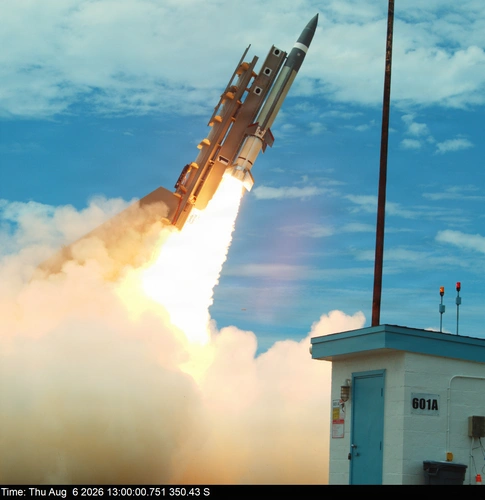
The historical importance of the German program extends beyond the battlefield. Following the war, German rocket expertise, documentation and hardware influenced both American and Soviet rocket development. NASA describes the V-2 as an immediate antecedent of later space launch systems.
The program also carries a major human cost. V-2 production at Mittelwerk used forced labor from the Mittelbau-Dora concentration camp, an essential part of the historical record that should not be separated from the technological story.
Soviet Missile Tests: From the R-7 to Modern Strategic Weapons
The Soviet Union transformed the basic ballistic missile concept into a global strategic system.
A major milestone came on August 21, 1957, when the R-7 successfully completed an intercontinental range test. NASA records the flight as the first successful R-7 ICBM test. The same basic rocket architecture was then adapted to launch Sputnik on October 4, 1957.
This connection between missile technology and space launch systems became one of the defining features of the Cold War.
The Soviet missile program subsequently progressed through several generations:
| Period | System | Significance |
|---|---|---|
| 1957 | R-7 | First successful Soviet ICBM |
| 1961 | R-16 | Major second generation ICBM |
| 1960s | R-36 | Heavy ICBM development |
| 1966 | RT-2 | Early Soviet solid fuel ICBM |
| 1970s | Submarine launched systems | Expansion of sea based deterrence |
| 1980s | RT-23 | Rail based ICBM capability |
| 1990s | Topol-M | New generation strategic missile |
| 2000s | RS-24 Yars | Mobile and MIRV capable strategic system |
| 2010s | Avangard | Hypersonic glide vehicle |
| 2020s | RS-28 Sarmat | Heavy ICBM modernization |
The MDAA chronology records the development of Soviet and Russian systems from the R-7 through the R-36, RT-2, RT-23, Topol-M, RS-24, Avangard and Sarmat.
Russia’s Modern Missile Testing
Modern Russian missile development increasingly emphasizes survivability, multiple warheads, mobility and the ability to complicate missile defense.
The RS-28 Sarmat is intended to replace the older R-36M2 heavy ICBM. However, development has experienced delays and test problems. MDAA’s 2026 assessment describes Sarmat as a major strategic modernization effort while highlighting its troubled development history.
Russia has also pursued hypersonic systems such as Avangard and Zircon. These programs illustrate a broader shift away from relying solely on traditional ballistic trajectories toward weapons designed to introduce greater uncertainty into defensive tracking and interception.
United States Missile Tests: From Captured V-2s to Strategic Deterrence
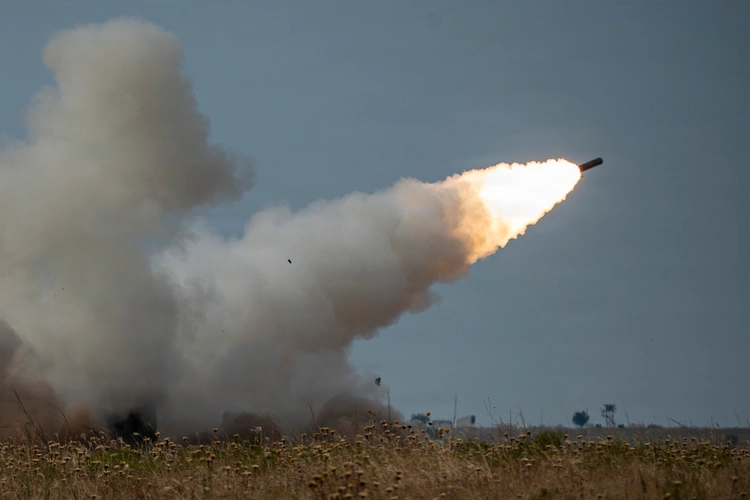
The United States began its postwar missile development partly through captured German technology.
In April 1946, the United States launched an A-4, or V-2, from White Sands Missile Range in New Mexico. This marked the beginning of a major American missile test effort.
The U.S. program then moved rapidly toward indigenous missile designs.
The Atlas ICBM completed its first successful test mission in 1957, followed by Titan and Minuteman programs. The Minuteman represented a particularly important engineering step because solid propellant allowed faster launch preparation and simplified long term readiness compared with earlier liquid fueled ICBMs.
The U.S. Air Force records that the first full Minuteman test flight was successful in 1960, while the National Museum of the U.S. Air Force identifies 1961 as the first successful test flight in its operational timeline. The Minuteman I became operational in 1962.
Submarine Launched Ballistic Missiles
The American missile program also pioneered the operational use of solid fueled submarine launched ballistic missiles.
Polaris A-1 became the first U.S. SLBM, while the USS George Washington conducted the first submerged launch of Polaris in 1960.
Later systems included Poseidon and Trident.
A correction is important here: Poseidon C-3 was a submarine launched ballistic missile, not an ICBM. The same distinction applies to Trident, which belongs to the SLBM category.
The Trident program subsequently became a central element of the U.S. sea based nuclear deterrent.
U.S. Hypersonic Missile Tests
American missile testing has increasingly shifted toward hypersonic systems.
The Advanced Hypersonic Weapon completed a major test in November 2011, traveling from the Pacific Missile Range in Hawaii toward the Reagan Test Site at Kwajalein. A later 2014 test was terminated following a launch vehicle anomaly.
The AGM-183A ARRW program subsequently demonstrated successful boost glide testing in 2022 after earlier failures. The system was designed to accelerate a hypersonic glide vehicle using a rocket booster before release.
These programs demonstrate an important feature of modern missile development: test failures are often valuable engineering events rather than evidence that a technology has no military future.
North Korea: From Scud Derivatives to ICBMs
North Korea’s missile program developed through several stages, beginning with derivatives of Soviet designed Scud technology.
The Hwasong-5 was among the earliest confirmed North Korean ballistic missile systems. Its development created the foundation for longer range Hwasong-6 and No-Dong systems.
North Korea subsequently moved toward solid fuel systems, submarine launched missiles and intercontinental ballistic missiles.
Hwasong-14
On July 4, 2017, North Korea conducted the first successful flight test of the Hwasong-14 ICBM. The missile reached an altitude of approximately 2,802 kilometers and traveled about 933 kilometers on the test trajectory. A second test followed on July 28.
Hwasong-15
The Hwasong-15 represented another major step.
Its November 29, 2017 test reached approximately 4,475 kilometers in altitude and remained airborne for about 53 minutes. Analysts concluded that the system demonstrated the potential for intercontinental reach.
KN-23 and Maneuvering Ballistic Missiles
The KN-23 introduced another important development.
Unlike a traditional ballistic missile that follows a predictable trajectory, maneuverable short range ballistic missile designs can use lower flight paths and terminal maneuvering to complicate defensive tracking.
The first KN-23 test occurred on May 4, 2019. Subsequent tests demonstrated ranges of several hundred kilometers.
North Korea has continued expanding its missile portfolio, including solid fuel ICBMs, cruise missiles and sea based systems. CSIS maintains an independent chronology of North Korean missile launches and distinguishes full flight tests from subsystem tests such as engine firings and cold launch experiments.
Iran: From Imported Scuds to Indigenous Solid Fuel Missiles
Iran’s missile development followed a different trajectory.
Early Iranian ballistic missile development relied heavily on foreign technology, particularly Scud family systems. Over time, however, Iran developed increasingly indigenous designs and production capabilities.
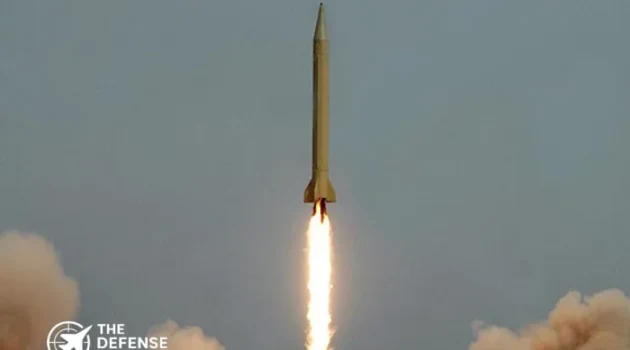
The Shahab-3 became a central milestone.
The missile is a medium range, liquid fueled ballistic missile derived from technology associated with North Korea’s No-Dong program. CSIS records the first Shahab-3 flight test in July 1998 and identifies numerous subsequent tests and variants.
The evolution of the Shahab family produced systems such as the Ghadr and Emad.
The Emad is particularly significant because it introduced modifications to the reentry vehicle and guidance architecture. CSIS identifies it as a Shahab-3 family missile with an estimated range of about 1,700 kilometers.
Sejjil and Solid Propulsion
The Sejjil represents another important step because it uses a two stage solid propellant architecture.
CSIS identifies Sejjil as an Iranian medium range ballistic missile with a road mobile launcher, two solid fuel stages and an estimated range of about 2,000 kilometers. Its development illustrates Iran’s effort to move beyond the limitations of older liquid fueled systems.
Solid fuel technology offers important military advantages because missiles can generally remain stored in a ready condition for longer periods and can be launched with less preparation than traditional liquid fueled systems.
Iran’s missile development therefore demonstrates how testing can gradually convert foreign derived technology into a more independent national missile architecture.
China: From Ballistic Missiles to Hypersonic Glide Vehicles
China has developed one of the world’s most extensive modern missile forces.
Its missile modernization includes conventional ballistic missiles, anti ship ballistic missiles, cruise missiles, ICBMs, submarine launched ballistic missiles and hypersonic systems.
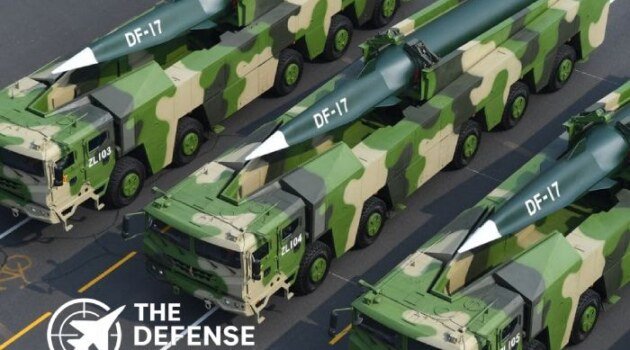
One of the most important developments has been the DF-ZF hypersonic glide vehicle and the DF-17 system.
The first reported DF-ZF test occurred on January 9, 2014. Additional tests followed through 2016. CSIS records at least nine DF-17 related flight tests between 2014 and 2017.
The DF-17 combines a ballistic missile booster with a hypersonic glide vehicle. Unlike a conventional ballistic reentry vehicle, the glide vehicle can operate within the atmosphere while maneuvering across a less predictable flight path.
CSIS estimates the DF-17’s range at approximately 1,800 to 2,500 kilometers and its speed at approximately Mach 5 to Mach 10.
China also tested the Starry Sky-2 hypersonic waverider in 2018, demonstrating continued research into aerodynamic vehicles capable of sustained high speed atmospheric flight.
What Modern Missile Tests Actually Measure
A missile launch is only one part of a much larger test process.
Modern missile testing can evaluate:
Propulsion
Engine tests measure thrust, combustion stability, fuel performance, staging and structural loads.
Guidance and Navigation
Testing evaluates inertial navigation, satellite navigation, guidance computers, control surfaces and other mechanisms required to maintain the intended trajectory.
Reentry
For ballistic missiles, the reentry vehicle must survive extreme aerodynamic heating and mechanical stress while maintaining its intended flight path.
Maneuverability
Modern systems increasingly test terminal or midcourse maneuvering. This is particularly important for hypersonic glide vehicles and maneuverable reentry vehicles.
Command and Control
A missile is only useful within a larger military architecture. Modern testing can therefore involve launch control, communications, surveillance, early warning and battle management systems.
Reliability
Repeated launches help determine whether a missile can perform consistently under different environmental and operational conditions.
This is why a test history often tells defense analysts more than a manufacturer’s advertised range or speed.
Missile Tests and the Evolution of Missile Defense
The history of missile development has always been connected to the development of missile defense.
The V-2 presented an almost impossible interception problem for World War II defenders because of its speed and high altitude trajectory. Modern ballistic missiles are considerably more sophisticated, while hypersonic glide vehicles introduce additional challenges because they can maneuver and fly at different altitudes.
Today’s missile defense architecture increasingly relies on multiple layers:
- Space based missile warning
- Ground based early warning radars
- Naval sensors
- Command and control networks
- Exoatmospheric interceptors
- Terminal interceptors
- Electronic warfare
- Directed energy research
- Counter UAS and short range air defense
The Missile Defense Advocacy Alliance continues to emphasize layered missile defense and integrated sensor, command and interceptor architectures.
The fundamental strategic problem is straightforward. Missile developers seek to make weapons faster, more mobile, harder to detect and harder to intercept. Missile defense developers seek better sensors, faster decision cycles, improved discrimination and more affordable interceptors.
That interaction is likely to remain central to future military technology.
Comparison of Major Missile Development Eras
Country or Program Major Milestone Approximate Era Main Technology Strategic Importance Germany V-2 1942 Liquid fueled ballistic missile Foundation of modern ballistic missile technology Soviet Union R-7 1957 Liquid fueled ICBM First successful Soviet ICBM and space launch foundation United States Atlas 1957 Liquid fueled ICBM First generation American ICBM United States Minuteman 1960s Solid fueled ICBM Rapid launch and persistent strategic deterrence United States Polaris 1960 Solid fueled SLBM Sea based nuclear deterrence Soviet Union R-36 1960s onward Heavy ICBM Large payload strategic deterrence United States Trident 1970s onward SLBM Survivable strategic nuclear force Iran Shahab-3 1998 onward Liquid fueled MRBM Regional long range strike North Korea Hwasong-14 2017 ICBM Demonstrated potential intercontinental reach North Korea Hwasong-15 2017 Heavy ICBM Expanded demonstrated ICBM capability China DF-ZF 2014 onward Hypersonic glide vehicle Advanced maneuvering hypersonic technology China DF-17 2017 onward MRBM plus HGV Operationally oriented hypersonic strike system Russia Avangard 2018 onward Hypersonic glide vehicle Strategic penetration capability Russia Sarmat 2022 onward Heavy ICBM Replacement for older heavy ICBMs How Missile Technology Has Changed
The historical trajectory can be divided into several technological generations.
Generation One: Liquid Fuel Ballistic Missiles
The V-2 and R-7 relied on liquid propulsion. These systems demonstrated long range ballistic flight but required substantial ground infrastructure and fueling operations.
Generation Two: Solid Fuel and Rapid Launch
Systems such as Minuteman and Polaris demonstrated the advantages of solid propulsion. This increased readiness and simplified storage and launch procedures.
Generation Three: Mobility and Survivability
Road mobile and submarine launched systems made missiles harder to locate and destroy before launch.
Generation Four: Precision and Maneuverability
Improved navigation systems and maneuvering reentry vehicles increased accuracy and made defensive interception more difficult.
Generation Five: Hypersonic and Multi Domain Weapons
Modern systems increasingly combine high speed, maneuverability, advanced guidance and networked command systems.
The DF-17, Avangard and American hypersonic programs represent different approaches to this emerging category.
What the Missile Test Record Reveals About Future Warfare
The most important lesson from decades of missile testing is that missile technology rarely develops in isolation.
A modern strike system can depend on:
- Propulsion technology for acceleration and range.
- Guidance systems for navigation and accuracy.
- Sensors for target information.
- Command networks for mission planning.
- Mobile or concealed launch platforms for survivability.
- Reentry technology for ballistic systems.
- Thermal protection for hypersonic vehicles.
- Electronic warfare resistance for operations in contested environments.
- Battle management systems for integration with wider military forces.
This means future missile competition will not be determined solely by who produces the fastest missile.
The decisive advantage may come from the combination of missile speed, sensor coverage, targeting data, launch survivability, electronic protection and the ability to sustain repeated operations.
The Strategic Importance of Missile Testing in 2026
The missile environment in 2026 is significantly more complex than the environment of the early ballistic missile era.
Russia continues strategic modernization while dealing with development challenges surrounding systems such as Sarmat. China continues expanding conventional and strategic missile capabilities, including hypersonic systems. Iran maintains a large regional missile inventory and continues improving precision and survivability. North Korea has developed a broad family of short range, medium range, submarine launched and intercontinental systems.
The modern security environment also demonstrates that missile technology is increasingly connected to actual combat operations.
MDAA’s current 2026 reporting highlights North Korean short range ballistic missiles being integrated into Russian operations against Ukraine, as well as continuing developments in Russian, Chinese and Iranian missile capabilities.
This development matters because it demonstrates that missile proliferation is no longer simply a question of national arsenals. Technology, components, production methods and operational experience can spread between states and military partners.
Challenges Facing the Next Generation of Missile Tests
Future missile programs will face several major engineering and strategic challenges.
Hypersonic Thermal Management
Vehicles traveling at extreme speed experience severe aerodynamic heating. Materials and thermal protection therefore remain major development areas.
Guidance in a Contested Environment
Electronic warfare can interfere with navigation and communications. Future missiles will need increasingly resilient navigation and guidance architectures.
Missile Defense
As missiles become faster and more maneuverable, defensive systems must shorten detection and engagement timelines.
Cost
Advanced missiles can be extremely expensive. Large inventories of relatively inexpensive missiles and drones can create unfavorable cost exchanges for defenders.
Test Infrastructure
High speed weapons require sophisticated ranges, telemetry systems, tracking radars, instrumentation and safety infrastructure.
Strategic Stability
The introduction of missiles that can maneuver unpredictably or carry multiple payload options can create uncertainty about an adversary’s intentions during a crisis.
Analytical Conclusion
The history of missile tests is ultimately a history of accelerating military technology.
The V-2 demonstrated that a rocket could deliver a weapon across hundreds of kilometers using a ballistic trajectory. The Soviet R-7 and American Atlas transformed that concept into intercontinental strategic weapons. Polaris and Trident added survivable sea based deterrence. Minuteman demonstrated the advantages of solid propulsion and rapid readiness.
Later programs in Iran and North Korea showed how missile technology could spread beyond the original Cold War powers and become a central element of regional military strategy.
China and Russia have pushed the technology further through hypersonic glide vehicles and advanced strategic systems, while the United States continues developing new hypersonic and long range strike capabilities.
The next phase of missile competition will therefore not be defined by range alone. Speed, maneuverability, survivability, precision, sensor integration, network connectivity and the ability to defeat or complicate missile defenses will increasingly determine the military value of a missile.
For defense planners, the most important lesson from the historical record is that every major missile breakthrough has also created a new demand for better detection, tracking and defense. That cycle is likely to continue as missile systems move deeper into the hypersonic and multi domain era.