• Home
  • About
  • Defense Systems
  • Manufacturer
  • Comparisons
  • Compare 
  • Tools
TheDefenseWatch.com
  • Aerospace & Aviation
  • Military & Ordnance
  • Naval & Maritime
  • Cyber & Space Defense
  • Policy & Strategy
  • Global News
  • Tools Library
    • Smart Calculator
    • Drone Flight Time Calculator
    • Drone Range Calculator
    • Counter-Drone Jammer Effective Range Calculator
    • Counter-Battery Radar Detection Calculator
    • Artillery Fire Correction Calculator
    • Thermal Camera Detection Range Calculator
    • Missile Range & Time-of-Flight Calculator
    • Radar Detection Range Calculator
    • FPV Strike Drone Payload vs Range Calculator
    • Loitering Munition Endurance Calculator
    • Sniper Ballistic Drop & Windage Calculator
    • Bullet Drop Calculator
    • U.S. Army Combat Fitness Test (ACFT) Calculator
    • Military Pension Calculator
    • Military Retirement Calculator
    • Military Pension Calculator
    • Large Number Calculator
Font ResizerAa

TheDefenseWatch.com

The Defense Watch | U.S. & Global Defense News, Analysis & Military Updates

Search
  • Home
  • About
  • Defense Systems
  • Manufacturer
  • Comparisons
  • Compare 
  • Tools

Stay Updated

Get the latest update

Subscribe

Explore

  • Drone
  • Fighter Jets & Military Aircraft
  • Hypersonic Weapons
  • Aircraft Carriers
  • Strategic History & Missions
  • Tools Library
Home » 9mm Ammunition: Why Militaries Still Use the 9×19mm Cartridge
Conventional Weapons & ModernizationMilitary & Ordnance

9mm Ammunition: Why Militaries Still Use the 9×19mm Cartridge

Samuel Drake | Defense Analyst
Last updated: September 8, 2026 3:50 am
Samuel Drake | Defense Analyst
Share
7 Min Read
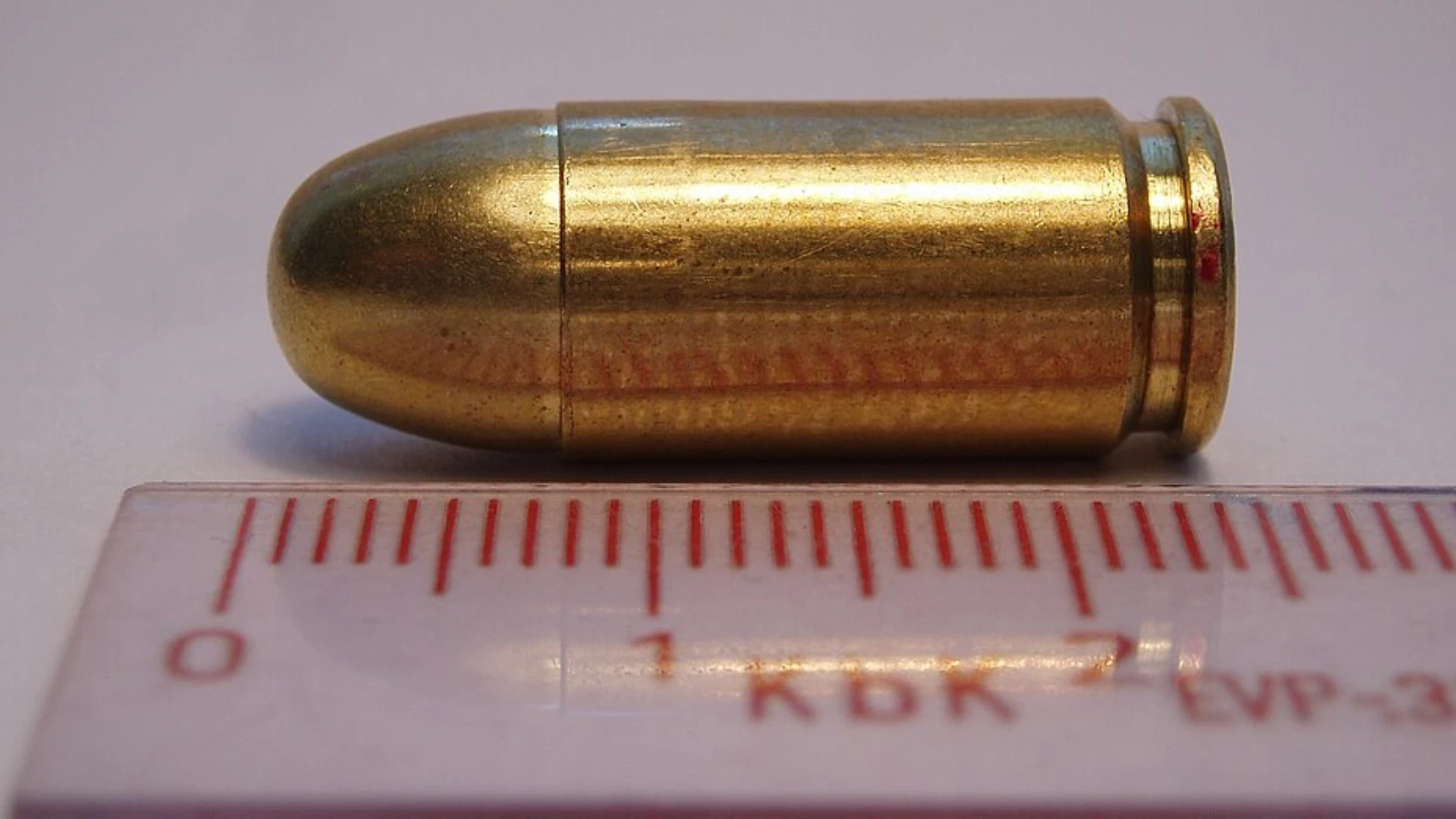
9mm ammunition
Image: Wikipedia
SHARE

The 9×19mm cartridge, commonly called 9mm, has a long and well-established history as a military and law-enforcement handgun caliber. Its widespread adoption across different countries has made it one of the most recognizable pistol cartridges in the world. Even as modern armed forces introduce newer sidearm designs, 9mm continues to have an important place in military handgun inventories.

Why Militaries Chose 9mm

Military organizations generally look for sidearm cartridges that can be supported by established manufacturing and supply systems while working reliably in service pistols. The 9×19mm cartridge became particularly successful because it was adopted by numerous countries and manufacturers over many decades.

Its military history is closely connected with European service pistols and later with NATO-standard ammunition practices. The cartridge eventually became common across a wide range of military handguns, creating an extensive international ecosystem of compatible firearms and ammunition.

- Advertisement -

9mm and NATO Service

One of the major developments in the history of 9mm was its adoption as a standard NATO pistol and submachine-gun cartridge. Standardization helped participating countries simplify ammunition compatibility and logistics.

This did not mean every NATO military used exactly the same pistol. Different nations selected different service handguns, but many of those firearms were chambered for the same basic 9×19mm cartridge.

General Factors Behind Its Adoption

  • Availability: 9mm has been manufactured extensively around the world, giving military organizations access to established production and supply networks.
  • Standardization: Its widespread military adoption has made the cartridge familiar across different armed forces.
  • Firearm compatibility: Many military and service pistols have been designed around the 9×19mm cartridge.
  • Long service history: Decades of military use have created substantial experience with the caliber.

A Longstanding Military Caliber

The history of 9mm ammunition extends well beyond one particular pistol. Numerous military handguns have been chambered for the cartridge, including service designs from manufacturers such as Beretta, SIG Sauer, Heckler & Koch, and Glock.

The United States provides a useful example. The Beretta M9 became the U.S. military’s standard service pistol during the 1980s and used 9×19mm ammunition. The later M17 and M18 pistols selected under the Modular Handgun System program also use 9mm.

Other armed forces have adopted their own 9mm service pistols, reflecting the cartridge’s international reach.

- Advertisement -

How Military 9mm Ammunition Differs

Military ammunition is produced according to specifications established by the relevant armed force or standardization organization. Those specifications can cover factors such as projectile construction, dimensions, pressure, reliability, and manufacturing quality.

Historically, full-metal-jacket ammunition has been strongly associated with military 9mm use. This type of projectile has a metal jacket surrounding its core and has commonly been used for military training and service applications.

The exact ammunition used by a particular military can change over time as contracts, firearms, standards, and procurement requirements change.

The Growth of 9mm Adoption

The following conceptual graph illustrates the broad expansion of 9mm’s military presence over time. It is intended as a historical visualization rather than a numerical count of countries or ammunition purchases.

Conceptual trend in military adoption of 9mm 

The overall trend reflects how the cartridge moved from individual military applications toward broader international adoption, particularly during the second half of the twentieth century.

Why 9mm Remains Relevant

The continued popularity of 9mm is not based on one characteristic alone. Its history, international availability, established manufacturing infrastructure, and compatibility with numerous handgun designs all contribute to its longevity.

For readers researching the cartridge itself, 9mm ammunition represents a broad category that includes different types of 9×19mm cartridges intended for various lawful shooting applications.

Modern Service Pistols and 9mm

Military sidearms have evolved considerably since the earliest 9mm service pistols appeared. Modern designs often incorporate improved ergonomics, modular components, updated safety systems, and contemporary materials.

Despite these changes, many modern service pistols continue to use the same basic 9×19mm cartridge. This continuity allows newer firearm designs to benefit from an ammunition standard with a long-established manufacturing base.

That consistency is particularly valuable for organizations that already have substantial experience with 9mm firearms and ammunition. Moving to a completely different caliber can require changes to training, supply chains, storage systems, and equipment.

The Future of 9mm in Military Use

Military handgun requirements will continue to evolve, and individual countries may choose different cartridges or firearm systems in the future. Nevertheless, 9×19mm has several advantages that make it difficult to overlook.

Its extensive history means that manufacturers have considerable experience producing both firearms and ammunition for the caliber. At the same time, its widespread use means that 9mm remains familiar to military personnel, law-enforcement agencies, competitive shooters, and other lawful users.

For these reasons, 9mm ammunition remains an important part of the history and present-day landscape of military sidearms. While technologies and service pistols may change, the 9×19mm cartridge has demonstrated remarkable staying power.

FAQs

Why is 9mm ammunition widely used by militaries?

Because 9×19mm has a long service history, broad international production base, extensive firearm compatibility, and established NATO standardization.

What does 9×19mm mean?

9×19mm describes the cartridge’s approximate bullet diameter and case length. It is commonly called 9mm or 9mm Luger.

Is 9mm NATO the same as 9mm?

9mm NATO refers to ammunition manufactured to NATO specifications. While it uses the 9×19mm cartridge, specific military ammunition can differ in construction and specifications.

Which military pistols use 9mm?

Examples include the Beretta M9 and the U.S. M17 and M18 pistols, along with numerous service pistols used by other armed forces.

Bottom line: I would keep the article, but strengthen the sourcing and SEO before publishing. The strongest primary keyword for this piece is 9mm ammunition, while 9×19mm ammunition and 9mm military sidearms work well as secondary targets.


TAGGED:its NATO standardization
Share This Article
Facebook Copy Link Print
BySamuel Drake | Defense Analyst
Follow:
Samuel Drake is a defense analyst at TheDefenseWatch.com covering naval warfare, military ordnance, maritime technology, fleet modernization, and defense procurement. His reporting focuses on documented capabilities, procurement programs, and military technology.
Leave a Comment

Leave a Reply Cancel reply

Your email address will not be published. Required fields are marked *

Latest Defense Systems

  • GBU-43/B MOAB Bomb GBU-43/B MOAB Bomb
  • John F. Kennedy Aircraft Carrier John F. Kennedy Aircraft Carrier
  • Voyager Tanker Voyager Tanker
  • YU-20 Tanker YU-20 Tanker
  • China KJ-500 Aircraft China KJ-500 Aircraft
  • SPY-6 Radar SPY-6 Radar
  • Boeing VC-25B Presidential Aircraft Boeing VC-25B Presidential Aircraft
  • SM-3 Block IB Missile SM-3 Block IB Missile
  • USS Abraham Lincoln Aircraft Carrier USS Abraham Lincoln Aircraft Carrier

Recent Compares

  • Tejas vs Gripen: Key Differences and Capabilities Tejas vs Gripen: Key Differences and Capabilities View Comparison →
  • Tejas vs MiG-21 Bison: How India Replaced Its Iconic Supersonic Fighter Tejas vs MiG-21 Bison: How India Replaced Its Iconic Supersonic Fighter View Comparison →
  • F-35 vs F-16: Stealth, Sensors and Combat Roles F-35 vs F-16: Stealth, Sensors and Combat Roles View Comparison →
  • Tejas Fighter Jet vs F-16 Fighting Falcon: Capability Compared Tejas Fighter Jet vs F-16 Fighting Falcon: Capability Compared View Comparison →
  • Rafale Fighter Jet vs F-16 Fighting Falcon : Which Fighter Has the Edge? Rafale Fighter Jet vs F-16 Fighting Falcon : Which Fighter Has the Edge? View Comparison →
  • Su-57 Fighter Jet vs J-20 Fighter Jet: Stealth and Air Combat Compared Su-57 Fighter Jet vs J-20 Fighter Jet: Stealth and Air Combat Compared View Comparison →
  • Mirage 2000 vs Tejas Mk1A: Legacy Combat Power vs Indigenous Modernization Mirage 2000 vs Tejas Mk1A: Legacy Combat Power vs Indigenous Modernization View Comparison →
  • Rafale Fighter Jet vs F-22 Raptor: Which Air Dominance Fighter Has the Edge? Rafale Fighter Jet vs F-22 Raptor: Which Air Dominance Fighter Has the Edge? View Comparison →
  • Tejas Fighter Jet vs. Rafale Fighter Jet: India’s Indigenous Fighter Meets France’s Proven Multirole Combat Aircraft Tejas Fighter Jet vs. Rafale Fighter Jet: India’s Indigenous Fighter Meets France’s Proven Multirole Combat Aircraft View Comparison →
  • F-22 Raptor vs. F-35 Joint Strike Fighter: Which Fifth Generation Fighter Has the Edge? F-22 Raptor vs. F-35 Joint Strike Fighter: Which Fifth Generation Fighter Has the Edge? View Comparison →

Recent Posts

  • US Military Weighs MOAB for Potential Future Strikes on Iran, CNN Reports
  • Saab Wins $120 Million Order for New Gripen Flight Control Computer
  • L3Harris Delivers First VAMPIRE Counter-Drone Systems to U.S. Army
  • Lockheed Martin Invests $300 Million in Texas Munitions Expansion, Plans 6,000 U.S. Jobs
  • Lockheed Martin Taps Avio for ER GMLRS and PrSM Rocket Motor Production

You Might Also Like

Cheongeom missile system South Korea
Artillery & Missile SystemsMilitary & Ordnance

South Korea Completes Cheongeom Missile Final Certification For Light Armed Helicopters

September 7, 2026
British Army RCH 155 wheeled artillery system mounted on Boxer armored vehicle during mobility and firing trials
Artillery & Missile SystemsMilitary & Ordnance

Britain Races To Deploy RCH 155 Artillery Systems Amid Expanding NATO Rearmament Push

October 3, 2026
IBCS network integrated with Patriot missile defense system in Kuwait desert deployment
Military & OrdnanceMissile Defense Systems

U.S. Approves Kuwait IBCS Integration to Strengthen Patriot Defense Against Missiles and Drone Swarms

September 7, 2026
First Romanian-built Cobra II armored vehicle displayed by Otokar as local production begins at the Mediaș manufacturing facility.
Military & OrdnanceTanks & Armored Vehicles

Otokar Expands European Production With Automecanica Acquisition for Cobra II Program

June 4, 2026

Logo

Copyright © 2026 TheDefenseWatch.com

Helpful Links

  • Home
  • About Us
  • Privacy Policy
  • Terms of Use / Disclaimer
  • U.S. Privacy Notice – CCPA Compliance

Defense Systems

  • Defense Systems
  • Comparisons 
  • Manufacturer
  • Tactical Calculators

Popuplar

Which 5 Air Forces Possess the Costliest Fighter Jet Fleets in the World
Evolving Strategic Value: Carrier Strike Groups in the Indo-Pacific’s Future Security Architecture
Autonomous Weapon Systems Spark U.S. Ethics Debate Amid Rapid Military AI Integration

We report on developments involving military forces, governments, defense companies, research organizations, and security institutions around the world. 

Welcome Back!

Sign in to your account

Username or Email Address
Password

Lost your password?