Aveo Engineering Group Expands Its Counter-UAS Portfolio
Aveo Engineering Group is preparing to present its expanding counter-UAS and unmanned systems portfolio at Future Forces Exhibition & Forum 2026 in Prague, with the Czech aerospace company set to display drones, high-speed interceptors, sensors, electronic warfare equipment and unmanned ground vehicles. The Future Forces organization lists Aveo among the event’s current exhibitors at PVA EXPO Prague, while Army Recognition reports that the company plans to present its wider defense portfolio during the October 2026 event.
- Aveo Engineering Group Expands Its Counter-UAS Portfolio
- Takeaways
- ConeHead and Mayhem Address Different Counter-UAS Requirements
- Rocket Assistance Is Central to the Design
- Sensors and Electronic Warfare Form the Other Half of the System
- AirWing Extends the Portfolio Beyond Interception
- Distributed Manufacturing Could Be a Key Differentiator
- Czech Aerospace Base Supports the Defense Expansion
- Why the Future Forces Display Matters
Takeaways
Aveo Engineering Group is preparing to showcase a broad counter-UAS and unmanned systems portfolio at Future Forces 2026 in Prague, including rocket-assisted interceptors designed for different engagement requirements.
The exhibition is scheduled for October 21 to 23, 2026, and is expected to bring defense companies and military delegations from across NATO countries and partner nations to Prague.
For Aveo, the display represents a significant expansion beyond its established aerospace lighting business. Its defense division now spans unmanned aircraft, counter-UAS systems, rocket propulsion, electro-optical sensors, electronic warfare, unmanned ground vehicles and specialized materials.
ConeHead and Mayhem Address Different Counter-UAS Requirements
The most notable elements of the company’s counter-UAS portfolio are the ConeHead and Mayhem interceptors.
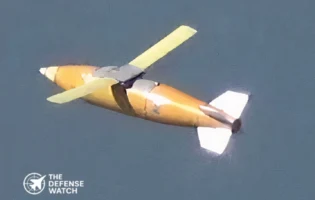
According to Aveo, the ConeHead is designed to engage aerial targets through either kinetic collision or an explosive cone warhead. With optional AveoJolt rocket assistance, the interceptor is stated to reach 350 km/h.
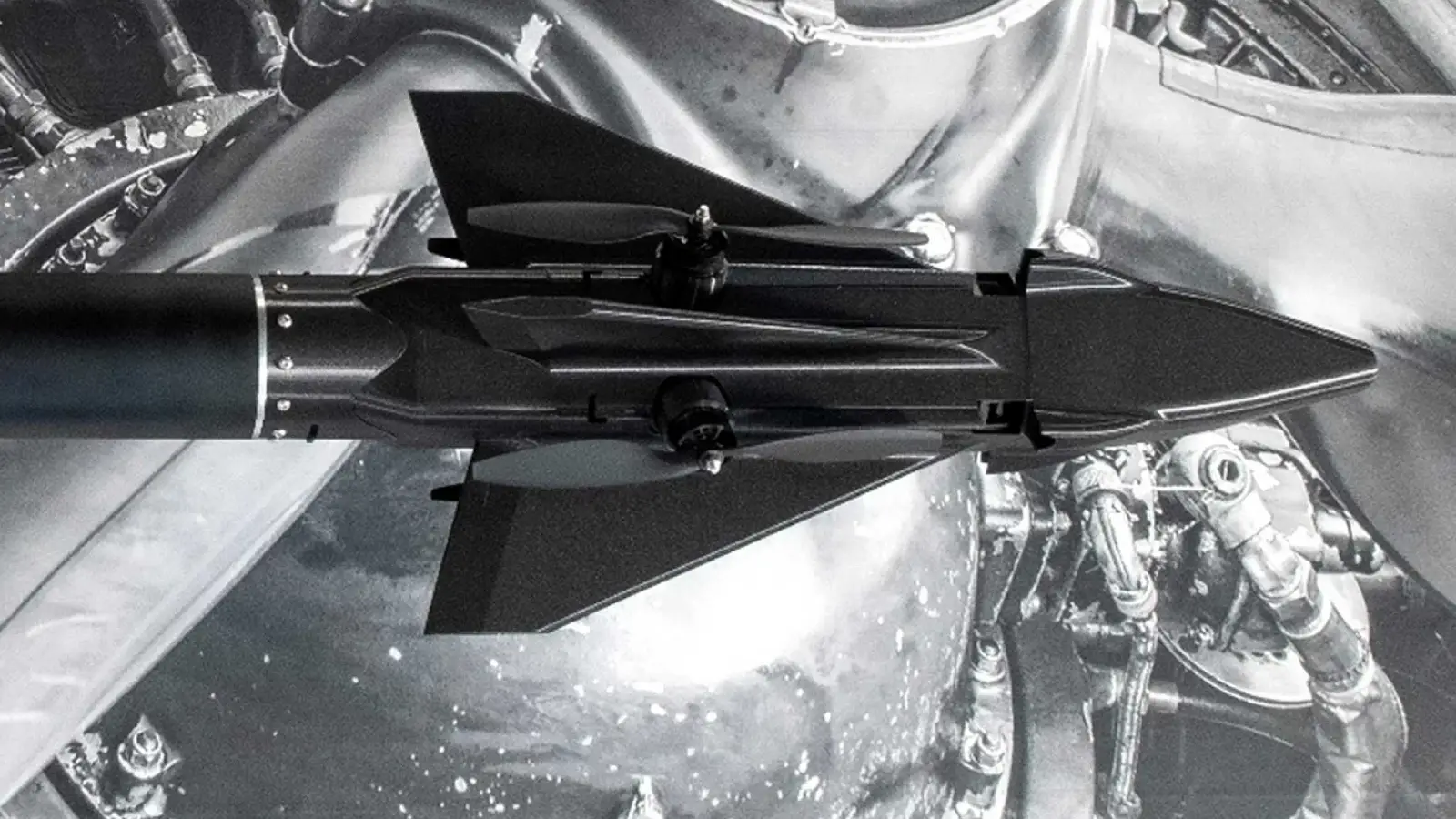
The company describes the Mayhem as a faster interceptor using rocket assistance during its climb before transitioning to electric propulsion. Aveo states that it can reach 800 km/h during the rocket-assisted climb phase.
| System | Company-stated capability | Primary role |
|---|---|---|
| AirWing | More than 175 km/h | Surveillance and modular UAV missions |
| AirWing F-150 | More than 200 km range | Long-range UAV and payload missions |
| ConeHead | Up to 350 km/h with rocket assistance | Counter-UAS interception |
| Mayhem | Up to 800 km/h during rocket-assisted climb | High-speed counter-UAS interception |
The distinction between the two interceptors is operationally important. A counter-UAS architecture does not necessarily require every interceptor to have the same speed, endurance or engagement method.
A slower and potentially lower-cost interceptor can address routine targets, while a rocket-assisted system can provide a rapid response against faster or more time-sensitive threats. The combination gives an operator the option of matching the interceptor to the target instead of relying exclusively on expensive traditional air-defense missiles.
Rocket Assistance Is Central to the Design
Aveo’s AveoJolt propulsion family provides rocket assistance for several of its unmanned systems. The company lists solid rocket motors in 40, 50, 70, 90 and 120 mm classes and describes them as suitable for either rocket-powered flight or short boost phases before electric propulsion.
This architecture addresses a central challenge in counter-UAS operations: reaction time.
Small drones can appear close to defended assets with limited warning. An interceptor that spends too much time accelerating after launch can lose the opportunity to engage the target. Rocket assistance can provide rapid initial acceleration while allowing an electric propulsion system to handle the later phase of flight.
For the Mayhem, Aveo says the rocket stage provides the initial climb, after which propellers are deployed for electric flight. The concept therefore combines high initial acceleration with the efficiency of electric propulsion during the terminal phase.
That approach is particularly relevant to layered counter-UAS defenses, where detection, classification, electronic attack and kinetic interception may need to operate within seconds.
Sensors and Electronic Warfare Form the Other Half of the System
The interceptor itself is only one component of a modern counter-UAS network.
Aveo’s AveoVision portfolio includes visible-spectrum, SWIR, MWIR and LWIR sensing, along with millimeter-wave micro-radars. The company says these systems can support drone detection, obstacle warning, identification and other sensing functions across airborne and ground platforms.
Its ForceField family adds electronic warfare capabilities. Aveo says the system can identify commercial UAV communication characteristics and provide either directional or 360-degree RF jamming.
This combination creates a layered architecture:
- Detection: Radar and other sensors identify potential aerial threats.
- Identification: Electro-optical and infrared sensors provide additional target information.
- Electronic attack: RF effects can disrupt or interfere with susceptible systems.
- Kinetic engagement: Interceptors provide an additional defeat mechanism when electronic effects are insufficient.
- Mobility: Vehicle-mounted launchers can move the defensive layer with tactical formations.
The architecture matters because no single counter-UAS method is effective against every target. Radio-frequency jamming may have limited value against autonomous systems, frequency-hopping systems or threats using alternative navigation and control methods. Kinetic interceptors provide another option when electronic attack is unavailable or ineffective.
AirWing Extends the Portfolio Beyond Interception
Aveo is also developing the AirWing family of fixed-wing unmanned aircraft.
The company states that the baseline AirWing exceeds 175 km/h and can carry daylight and thermal imaging equipment. Its modular architecture allows different mission and payload configurations.
The larger AirWing F-150 is described as having more than 200 km of range and additional internal volume for payloads. Aveo lists potential configurations including cargo, small rockets, bomblets and an explosive nose, as well as a short-range laser intended for counter-drone missions.
The inclusion of surveillance aircraft alongside interceptors points toward a broader unmanned ecosystem rather than a single-purpose counter-UAS product.
For military users, this can be important because the same operational network can potentially support reconnaissance, target detection, communications and defensive missions without requiring every function to rely on a separate platform family.
Distributed Manufacturing Could Be a Key Differentiator
One of Aveo’s more unusual approaches is its emphasis on distributed production.
The company says customers can receive digital airframe files and manufacture selected structures locally using Carbon5D materials, while integrating Aveo-supplied propulsion, electronics, sensors and other components.
This model separates production of comparatively simple airframe structures from higher-value components such as propulsion systems, avionics and sensors.
From a defense-industrial perspective, the approach addresses a problem exposed by recent conflicts: the ability to produce large numbers of unmanned systems can be as important as the performance of an individual vehicle.
Local fabrication can reduce dependence on centralized assembly facilities and potentially shorten logistics chains. It can also allow production closer to deployed forces, although the practical value of such a model depends on quality control, certification, supply of critical components and secure distribution of manufacturing data.
Czech Aerospace Base Supports the Defense Expansion
Aveo’s move into unmanned and counter-UAS systems builds on a longer aerospace manufacturing background.
Army Recognition reports that the group has more than 400,000 square feet of company-owned production infrastructure across Czechia, Slovakia and the United States and supplies aerospace products to customers in more than 110 countries.
The company’s traditional business includes aircraft lighting, searchlights, avionics and related systems. Aveo says it has produced more than 900 aerospace lighting products, with applications spanning commercial aircraft, helicopters, UAVs and other platforms.
That background is relevant to the company’s current defense strategy because counter-UAS systems require expertise in lightweight structures, electronics, optics, thermal management and environmental qualification.
Aveo’s participation in NASA’s Odysseus lunar mission also demonstrates experience with components exposed to demanding environmental conditions, although that experience should not be interpreted as direct evidence of military system performance.
Why the Future Forces Display Matters
The Prague exhibition comes as European militaries increasingly focus on affordable methods of countering large numbers of small unmanned aircraft.
The challenge is economic as well as technical. Using high-value surface-to-air missiles against inexpensive drones can create an unfavorable cost exchange, particularly when an adversary can launch repeated waves of low-cost systems.
Rocket-assisted interceptors offer one possible answer, but their value will ultimately depend on acquisition cost, magazine depth, sensor integration, reliability and demonstrated effectiveness against representative targets.
Aveo’s portfolio also illustrates a broader shift in counter-UAS development. Modern systems increasingly combine radar, electro-optical sensors, electronic warfare and kinetic effects rather than treating the interceptor as a standalone weapon.
For U.S. and European forces, that layered approach is particularly relevant to the protection of forward operating bases, logistics hubs, armored formations, critical infrastructure and other targets vulnerable to small drones.
Aveo’s Future Forces 2026 display will therefore be significant less because of any single specification and more because it shows how a Czech aerospace supplier is building a vertically integrated unmanned and counter-UAS product family around propulsion, sensing, electronic warfare and local manufacturing.
The systems remain company-developed products, and published performance figures should not be treated as equivalent to independently verified operational results. Demonstrations, testing and procurement by military customers will ultimately determine how these technologies perform in real counter-UAS environments.