

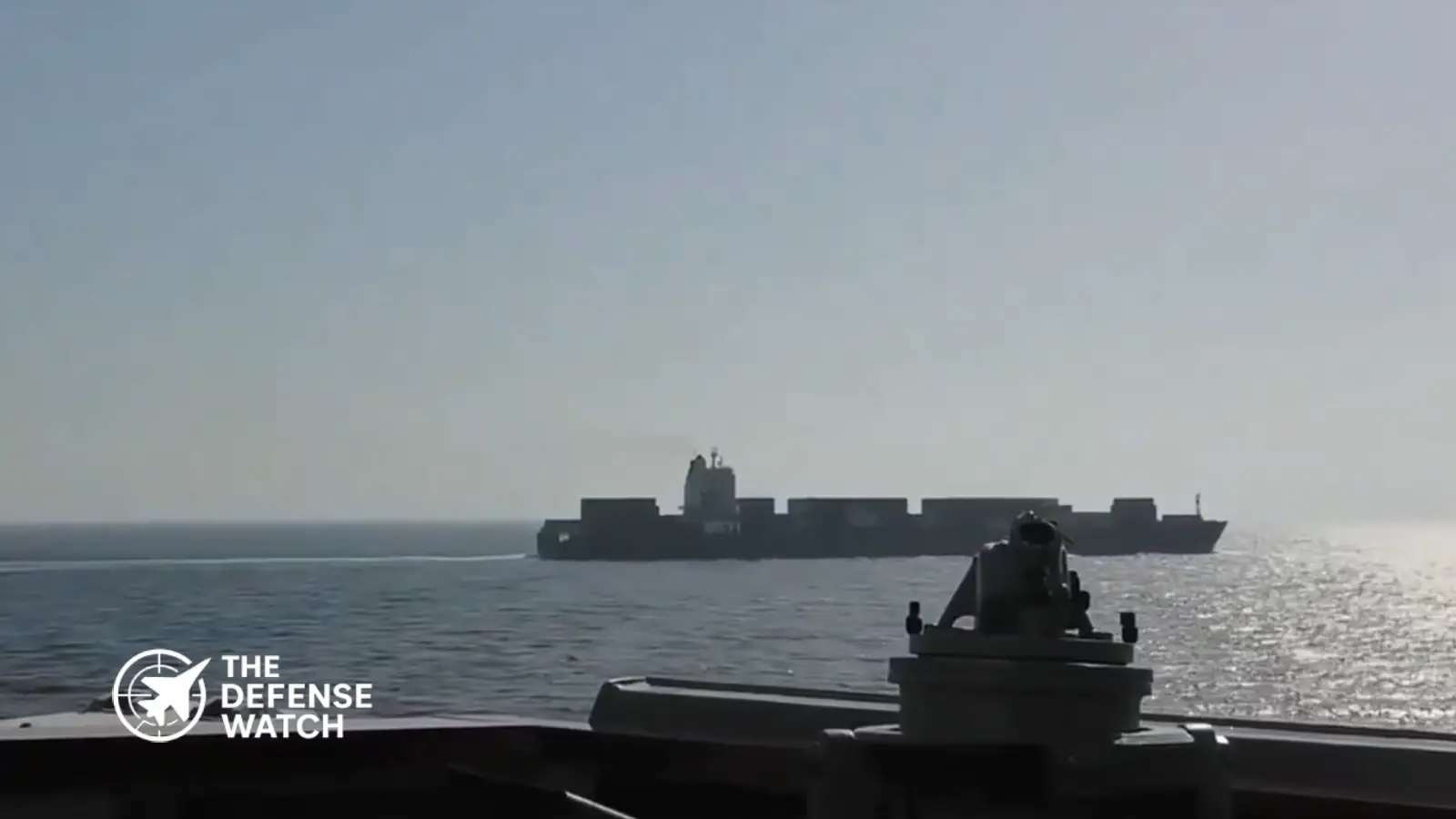
Executive Summary: United States Central Command (CENTCOM) has officially denied reports from Iranian state media claiming that a US Navy vessel was struck by two missiles near Jask Island on May 4, 2026. The alleged incident occurred during the initiation of “Project Freedom,” a US-led effort to escort merchant shipping through the blockaded Strait of Hormuz. Defense officials maintain that all naval assets are accounted for and remain fully operational despite heightened IRGC activity.
Escalation in the Gulf of Oman: Disputed Kinetic Engagement
On May 4, 2026, the Iranian semi-official Fars news agency reported that the Islamic Revolutionary Guard Corps (IRGC) Navy successfully targeted and hit a US Navy vessel with two anti-ship cruise missiles (ASCMs). According to Tehran, the vessel was intercepted after allegedly violating “traffic and shipping security protocols” near the strategic port of Jask.
US Central Command (CENTCOM) issued a rapid rebuttal via official channels, stating, “No U.S. Navy ships have been struck. U.S. forces are supporting Project Freedom and enforcing the naval blockade on Iranian ports.” The denial comes at a critical juncture in the 2026 Iran War, following the expiration of a two-week ceasefire mediated by Pakistan in April 2026.
Comparison: Regional Maritime Strike & Defense Capabilities
The current standoff pits Iran’s “swarm and saturate” coastal defense doctrine against the US Navy’s Integrated Air and Missile Defense (IAMD) architecture.
| Feature | IRGC Ghadir/Noor ASCM | US Arleigh Burke (Flight III) |
| Primary Role | Coastal Defense / Anti-Ship | Multi-Mission Escort / BMD |
| Range | 200–300 km | 1,600+ km (Tomahawk) |
| Status | Active / Mass Produced | Active / Tier 1 Combatant |
| Key Technology | Solid-fuel, Active Radar Homing | AN/SPY-6(V)1 Radar / Aegis Baseline 10 |
Project Freedom: Challenging the Hormuz Blockade
The reported skirmish coincides with the launch of Project Freedom, a directive from the Trump Administration to restore the flow of global energy. Since April 13, 2026, a US naval blockade has targeted Iranian maritime traffic in retaliation for Tehran’s closure of the Strait.
Technical Advantages of US Escort Operations
US naval assets currently deployed—including Carrier Strike Groups 3 and 12—rely on a layered defense network to neutralize the very threats Iran claims were successful:
- Aegis Combat System: Utilizing Baseline 10 software, US destroyers can simultaneously track and engage over 100 atmospheric targets, including low-flying cruise missiles.
- Electronic Warfare (EW): The deployment of the AN/SLQ-32(V)7 Surface Electronic Warfare Improvement Program (SEWIP) Block 3 provides non-kinetic “soft kill” capabilities to spoof incoming missile seekers.
- Multimodal Interception: The use of SM-2, SM-6, and ESSM missiles provides a tiered engagement envelope, starting from over the horizon down to close-in point defense.
Strategic Context: The Failure of the Islamabad Talks
The maritime tension is a direct byproduct of the collapsed Islamabad Talks (April 11–12, 2026). Following the failure to reach a lasting truce, the US military buildup in the Middle East has reached its highest level since 2003, with three aircraft carriers operating in the CENTCOM area of responsibility.
The IRGC’s claim of a successful strike is viewed by Western analysts as a signaling exercise intended to deter commercial shipping from utilizing the “enhanced security area” established by the US-led Joint Maritime Information Center. While Tehran aims to maintain a high “risk premium” for Hormuz transit, the successful passage of two American-flagged merchant ships on May 4 suggests that the US Navy’s defensive posture remains a credible deterrent against Iranian interdiction.
