

Executive Summary:
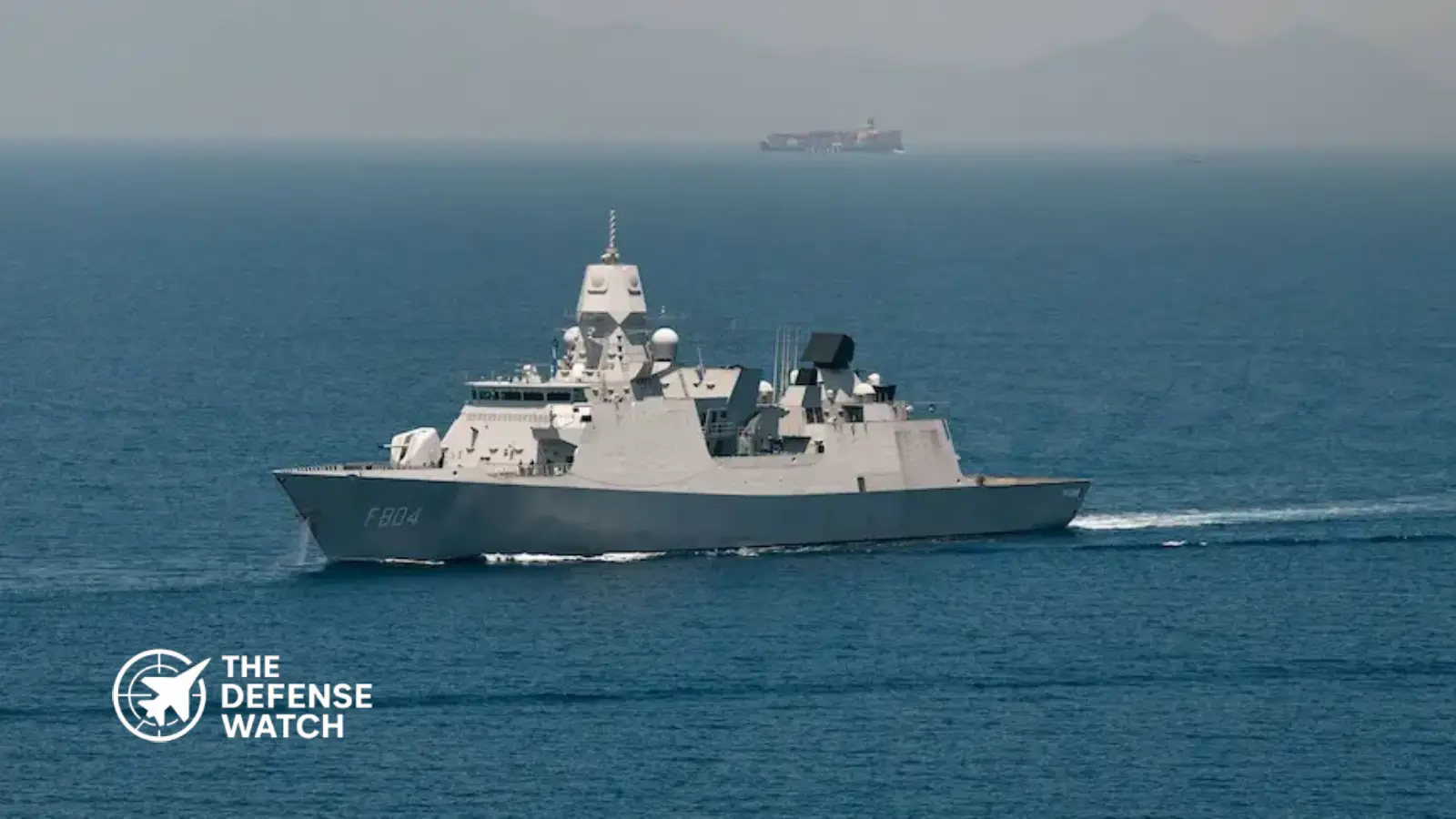
The Netherlands has redirected an air defense frigate toward the Strait of Hormuz as the Dutch government considers joining a potential international maritime security mission. The move reflects growing European efforts to prepare for possible coalition operations aimed at protecting commercial shipping through one of the world’s most strategically important waterways.
Netherlands Air Defense Frigate Repositioned Toward Strait Of Hormuz
The Netherlands air defense frigate deployment marks the latest European effort to prepare for potential maritime security operations in and around the Strait of Hormuz.
Dutch Defense Minister Dilan Yeşilgöz informed parliament that the Royal Netherlands Navy has redirected one of its air defense frigates from the Indo-Pacific region toward the Middle East. The vessel’s new course would enable the Netherlands to participate in a possible international mission should coalition plans move forward. The frigate is expected to require several weeks to reach the region.
The decision does not represent a formal deployment order for combat operations. Instead, it places the warship in a position where it can rapidly support a future multinational maritime security initiative if approved by the Dutch government and partner nations.
Growing Focus On Maritime Security
The Strait of Hormuz remains one of the world’s most important maritime chokepoints, connecting the Persian Gulf to international shipping lanes. Any disruption in the area can have immediate consequences for global energy markets and commercial trade.
European governments have intensified discussions on maritime security following recent tensions in the region. France and the United Kingdom have been leading efforts to explore a multinational naval mission designed to help safeguard commercial shipping and reassure the maritime industry.
Shipping and insurance organizations have also called for enhanced security measures, including mine-clearing capabilities and naval protection, to reduce risks for commercial vessels operating in the area.
Dutch Preparations Have Been Underway For Months
The redirection of the Dutch frigate follows several earlier steps taken by the Netherlands to prepare for potential operations related to the Strait of Hormuz.
In May, the Dutch government announced plans to position a minesweeper within NATO operations in the Mediterranean, allowing for rapid deployment if an international mission was approved. Dutch officials also explored options involving mine countermeasure teams, explosive ordnance disposal specialists, and additional naval personnel.
Government statements have consistently emphasized that no final decision on participation has been made. Instead, Dutch authorities have focused on maintaining readiness while assessing operational requirements and political conditions.
European Coalition Discussions Continue
The Netherlands is not acting alone. Several European nations have examined ways to contribute to a future coalition effort intended to maintain freedom of navigation and secure commercial shipping routes.
France and Britain have reportedly advocated for a multinational maritime security framework involving warships, minehunters, surveillance assets, and support vessels. However, any mission remains dependent on diplomatic developments and regional acceptance.
Germany has already dispatched naval assets toward the Red Sea, including a minesweeper and support ship, to prepare for a potential contribution to maritime security efforts. Berlin has also indicated that any future participation would depend on political approval and regional conditions.
Why The Frigate Matters
The Dutch decision to redirect an air defense frigate carries operational significance beyond symbolic support.
Modern air defense frigates provide advanced radar coverage, missile defense capabilities, command-and-control functions, and protection against aircraft, drones, and missile threats. Such vessels are particularly valuable in coalition maritime operations where commercial shipping may require protection from evolving regional threats.
By repositioning the frigate now, Dutch planners preserve flexibility while avoiding the delays associated with deploying naval forces from Europe at short notice. The move demonstrates a broader trend among European navies toward pre-positioning assets in anticipation of potential security requirements.
From a strategic perspective, the deployment highlights how maritime security has become a central element of European defense planning. Rather than waiting for a formal coalition request, governments are increasingly positioning naval assets in advance to ensure rapid response capability if conditions require action.
Strategic Implications For NATO And European Security
Although discussions surrounding maritime security in the Strait of Hormuz involve several NATO member states, alliance officials have stressed that NATO itself has not developed a formal mission plan for the region. Any future NATO-led operation would require political approval from all member nations.
The Netherlands’ decision therefore reflects national and coalition-level contingency planning rather than a NATO operation.
For European governments, securing maritime trade routes remains a strategic priority. The Strait of Hormuz continues to play a critical role in global energy transportation and international commerce, making stability in the region a matter of economic as well as security interest.
Conclusion
The Netherlands air defense frigate’s redirection toward the Strait of Hormuz represents a significant preparatory step as European allies evaluate options for a potential maritime security mission. While no final deployment decision has been announced, the move positions Dutch naval forces to respond quickly if coalition plans advance.
As France, the United Kingdom, Germany, and other partners continue consultations, the Netherlands’ latest action underscores the growing importance of maritime security planning around one of the world’s most strategically sensitive waterways.
