(adsbygoogle = window.adsbygoogle || []).push({});Executive Summary:
The U.S. military disabled a tanker bound for Iran using a Hellfire missile after the vessel allegedly ignored repeated warnings from American forces. The action marks the latest enforcement measure in Washington’s ongoing maritime blockade campaign aimed at increasing pressure on Tehran during ongoing diplomatic tensions.
US Hellfire Missile Strike Targets Tanker Bound For Iran
The US Hellfire missile strike against a tanker heading toward Iran highlights the increasingly aggressive enforcement measures being employed by Washington in the Persian Gulf and surrounding maritime corridors.
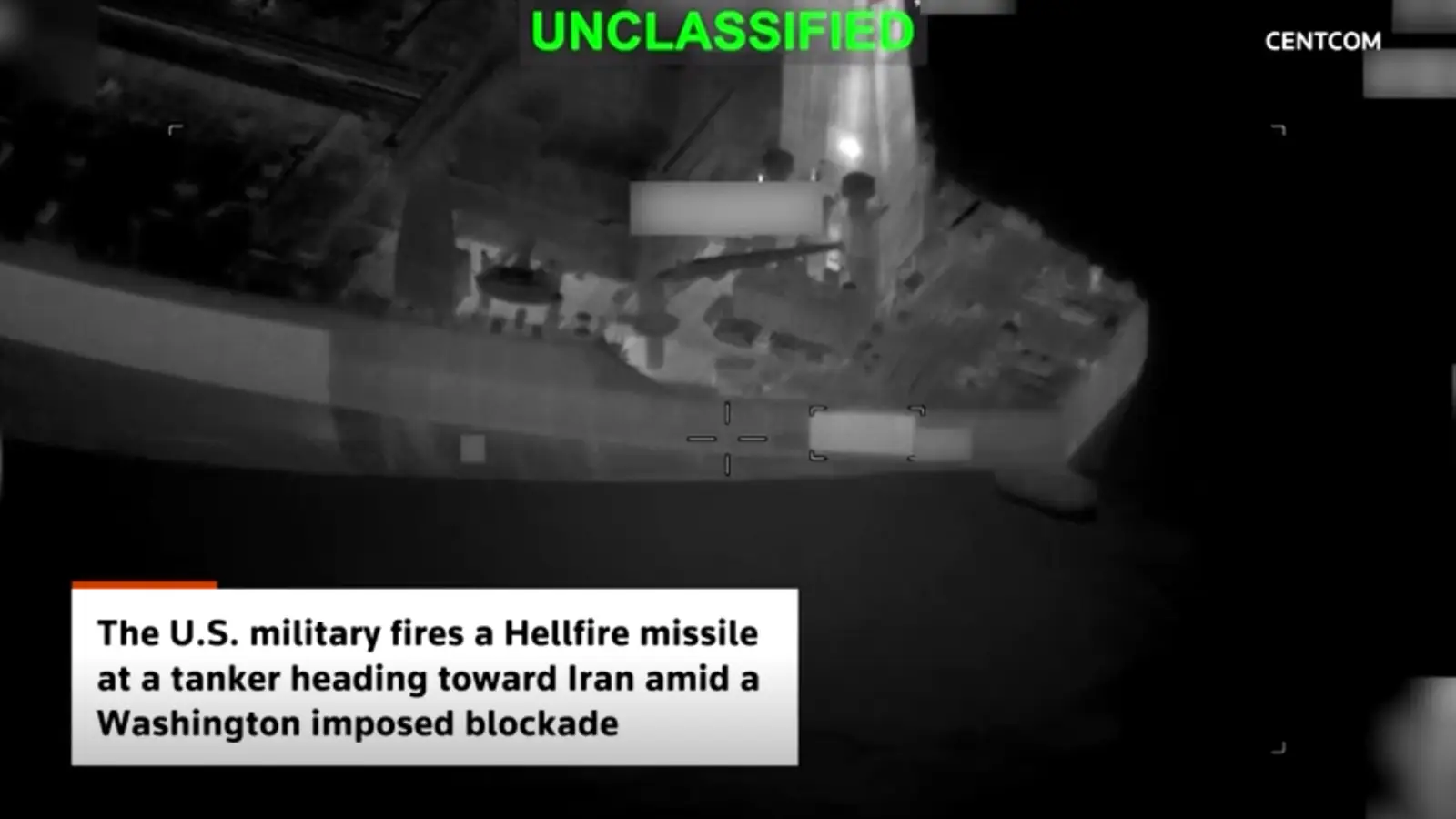
According to U.S. Central Command (CENTCOM), American forces disabled the Botswana-flagged tanker M/T Lexie after the vessel allegedly failed to comply with repeated instructions issued by U.S. military authorities over a 24-hour period.
CENTCOM released video footage showing a Hellfire missile striking the vessel’s engine room. The military stated that the precision attack rendered the tanker incapable of continuing its voyage toward Iranian ports while minimizing risks to the crew and the wider maritime environment.
“The ship’s crew ignored repeated warnings, failing to comply with directions from U.S. forces multiple times over a 24-hour period,” CENTCOM said in a statement.
The command added that a U.S. aircraft subsequently fired a Hellfire missile into the vessel’s engine compartment, preventing it from reaching Iran.
Sixth Vessel Disabled Since April
The incident represents the sixth vessel disabled by U.S. forces since President Donald Trump’s administration initiated maritime enforcement operations on April 13.
According to U.S. military figures, American forces have also redirected 122 vessels attempting to enter or leave Iranian ports during the operation.
The growing number of interdictions suggests Washington is pursuing a sustained maritime pressure campaign rather than isolated enforcement actions. Such operations require significant intelligence, surveillance, reconnaissance, and command-and-control resources to monitor commercial shipping traffic across a vast maritime area.
(adsbygoogle = window.adsbygoogle || []).push({});The latest action demonstrates how the United States is leveraging precision weapons and airpower to enforce maritime restrictions without resorting to large-scale naval engagements.
Why The Hellfire Missile Was Chosen
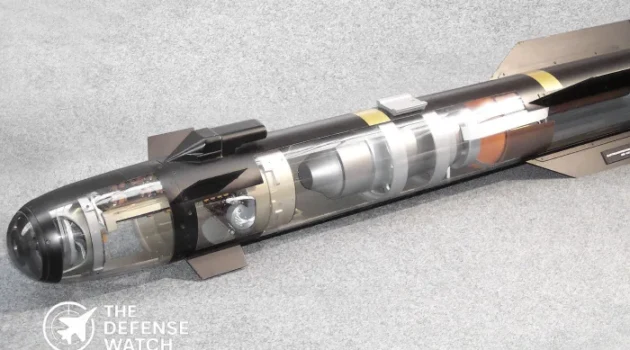
The AGM-114 Hellfire missile has long been one of the U.S. military’s preferred precision-strike weapons. Originally developed as an anti-armor system, the missile has evolved into a versatile platform capable of engaging a wide range of targets.
For maritime interdiction missions, the Hellfire offers several advantages:
- High precision and limited collateral damage
- Ability to disable specific ship systems
- Rapid deployment from aircraft platforms
- Reduced risk to boarding teams and naval personnel
Targeting a vessel’s engine room allows military planners to stop a ship without sinking it, preserving crew safety while achieving the operational objective.
This approach reflects a broader trend in modern maritime security operations, where military forces increasingly seek to disable rather than destroy commercial vessels involved in sanctions violations or prohibited activities.
Strategic Implications For The Middle East
The Iran maritime blockade represents one of the most significant U.S. pressure campaigns in the region in recent years.
By targeting vessels attempting to reach Iranian ports, Washington is seeking to increase economic and diplomatic leverage over Tehran while maintaining military control over key sea lines of communication.
The operation comes amid continuing tensions over regional security, sanctions enforcement, and broader negotiations involving Iran’s political and military activities.
From a strategic perspective, maritime interdiction operations serve multiple objectives:
- Restricting access to international trade routes
- Increasing economic pressure on targeted states
- Demonstrating military presence and readiness
- Reinforcing freedom of navigation enforcement mechanisms
However, such operations also carry risks. Increased military activity around commercial shipping lanes can heighten regional tensions and raise concerns among international shipping companies operating in the Gulf region.
(adsbygoogle = window.adsbygoogle || []).push({});Growing Role Of Maritime Security Operations
The US Central Command operation underscores the growing importance of maritime security missions in contemporary military strategy.
Rather than relying solely on traditional naval warfare concepts, modern maritime campaigns increasingly integrate surveillance aircraft, drones, precision-guided weapons, and networked intelligence systems.
The disabling of the M/T Lexie demonstrates how relatively small, precise military actions can have significant operational and geopolitical effects.
As Washington continues to pressure Tehran, maritime security operations are likely to remain a central component of U.S. strategy in the Middle East.
The latest tanker interdiction illustrates both the capabilities and limitations of modern maritime enforcement efforts, highlighting how precision weapons such as the Hellfire missile are being used to achieve strategic objectives while attempting to avoid broader military escalation.